
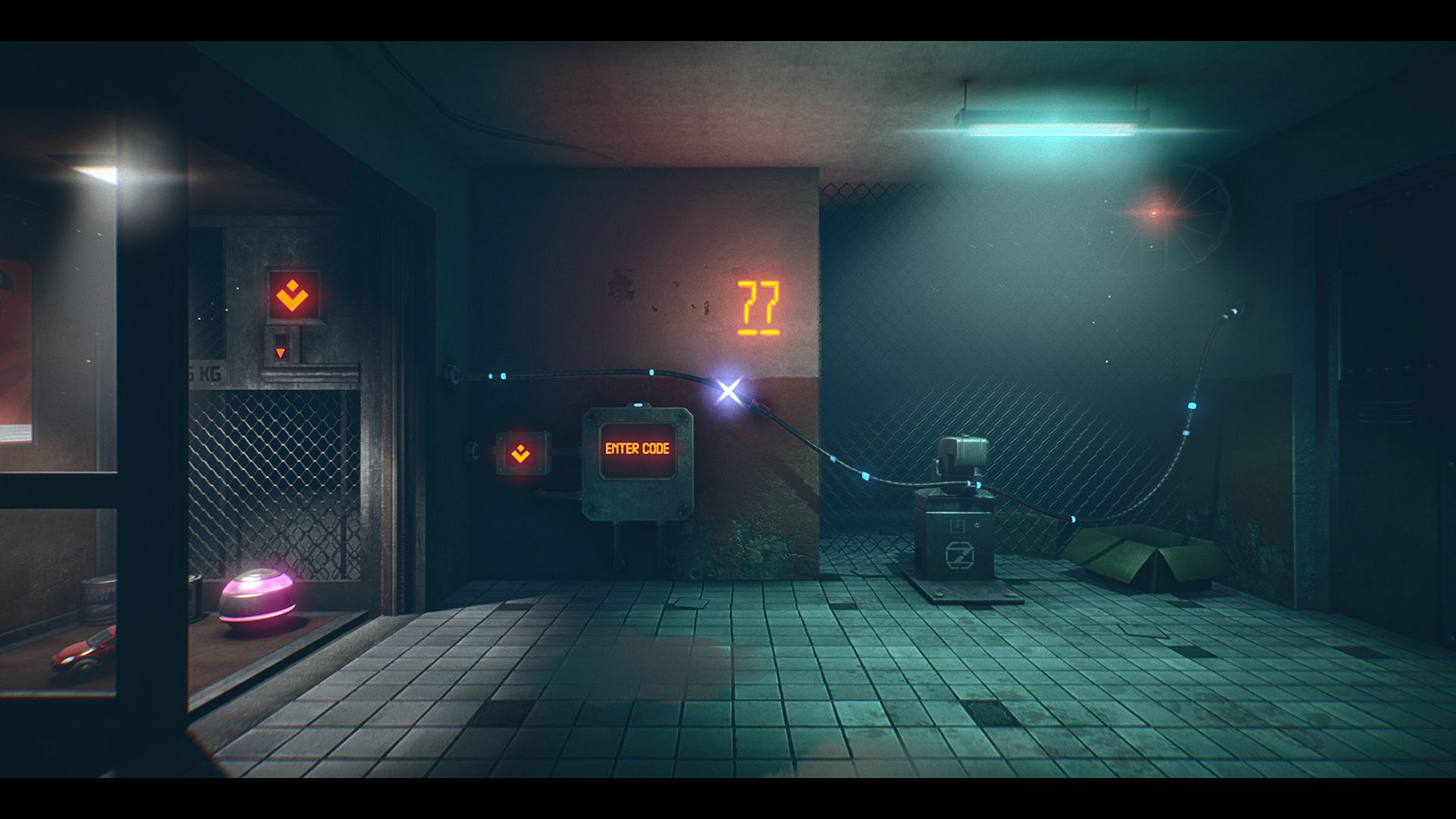
7th Sector is one of the most mechanically inventive and atmospheric cinematic platformers I’ve played. You control a spark of electrical energy moving through wires in a dystopian cyberpunk city filled with heavy industrial machinery, oppressive architecture, and cryptic technology. At first glance, the game looks like a minimalist, side-scrolling puzzle game, but it quickly evolves into something entirely unique.
7th Sector stands out because it takes the traditional definition of a protagonist and strips it down to pure energy. Very few cinematic platformers build their entire progression around shifting between different technological forms, and even fewer manage to connect those transitions to the world-building and narrative mystery as effectively as this game does.

Year: 2019
Developer: Sergey Noskov
Atmosphere: Cyberpunk · Dystopian · Mysterious
Visual Style: Dark Industrial · Gritty Realism
Focus / Pace: Puzzle Solving · Atmospheric Exploration
Platforms: PlayStation 4 · Xbox One · Windows PC · Nintendo Switch
Why 7th Sector stands out
What really makes the game memorable is its perspective on a dystopian world. You are not a human hero fighting an empire, but a silent witness flowing through the literal infrastructure of society. You solve puzzles by hacking into junction boxes, re-routing circuits, and jumping between different delivery systems like security cameras, remote-controlled drones, and mechanical quadrupeds. It sounds highly technical at first, but the game treats these transitions with incredible pacing and cinematic flair rather than relying on dry logic puzzles.
Controlling machines instead of a protagonist is one of the genre’s most unusual ideas — explore the full feature on the most inventive game mechanic in cinematic platformers.
I also appreciated how entirely unpredictable the journey feels. Some moments are quiet and analytical, requiring you to decipher mathematical codes on background monitors, while others become high-speed chases where you must outrun security programs through breaking wires. Underneath the cold, metallic machinery, the narrative handles complex themes of artificial intelligence, state control, and the nature of consciousness, giving the final destination far more weight than I initially expected.
The Story
7th Sector follows a mysterious entity as it traverses the digital and physical networks of a grim, totalitarian cyber-city. As the journey continues, the world becomes increasingly complex and dangerous, revealing a society deeply fractured by technological control and hidden resistance.
The story slowly uncovers deeper layers of ghost-in-the-machine philosophy and the cost of human progress. I thoroughly enjoyed how gracefully the game balances cold, distant technological world-building with sudden, impactful glimpses of human life happening in the background.

Graphics
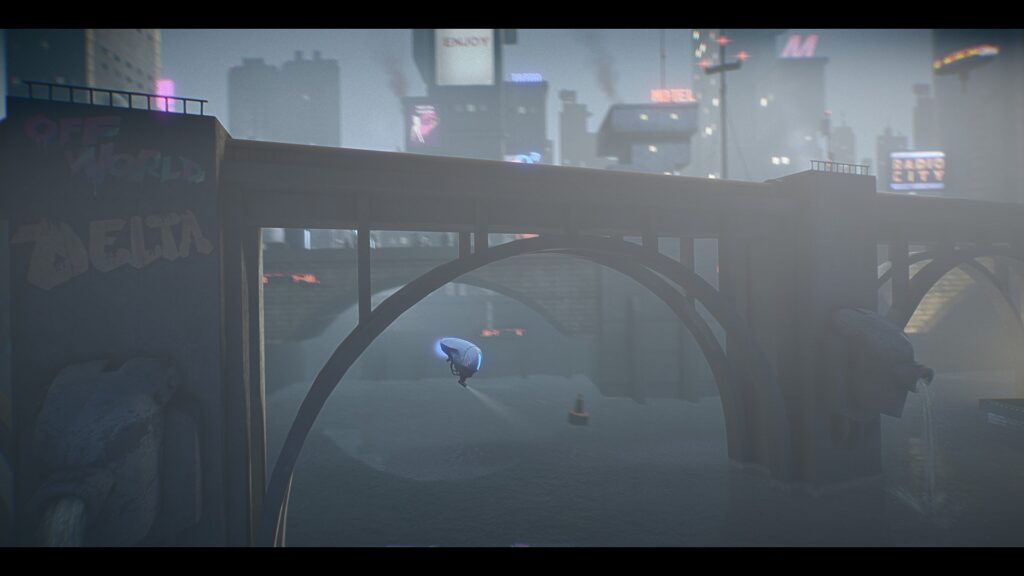
The game utilizes a distinct, stylized 3D visual style filled with rain, abandoned industrial structures, distorted geometry, and unsettling, high-contrast lighting. The art direction constantly oscillates between distorted real-world locations and outright dreamlike nightmare imagery.
What stayed with me visually was the stark contrast between the bright, ordinary island environments and the brutal execution of the body horror mechanics. That visual tension keeps you uncomfortable and gives the game a highly recognizable visual signature.
Gameplay
In 7th Sector, the traditional platforming rulebook is violently thrown away, transforming your very physical form from a human body into an evolving sequence of digital and mechanical vessels. The core loop revolves entirely around your terrifying lack of a permanent shape, which forces you to adapt instantly to entirely new control schemes at the touch of a terminal. Instead of dodging hazards as a standard jumper, you are forced to actively seek out specific data ports, strategically choosing how and when to shed your current form to exploit the unique properties of different machines.
The puzzle-solving mechanics are split across several disturbing forms of mechanical manipulation. You will routinely need to intentionally lock yourself into heavy industrial machinery to redirect high-voltage circuits, using your own electrical frequency to power moving cranes or heavy cargo elevators. If a passage is too tight for a machine, you must eject your consciousness completely, transforming the gameplay into a tense sequence where you control a lone, vulnerable spark navigating bare wires past deadly uninsulated metal beams. Furthermore, the game turns physics upside down; triggering a shift into a rolling combat drone dynamically changes your movement, allowing you to use momentum and weight to smash through reinforced barriers to bypass impossible drops.
Pacing
7th Sector uses a slower story-driven pace focused on atmosphere, puzzles, and environmental tension. Quiet exploration sections where you track wires through empty apartments are regularly interrupted by sudden security alerts or more intense puzzle sequences.
The game climbs into increasingly complex tactical territory as you delve deeper into the city infrastructure, ensuring the journey remains highly unpredictable without ever losing its core focus on mechanical progression.
Atmosphere
The tone shifts seamlessly between deeply unsettling tech-noir, heavy industrial melancholia, and intense systemic breakthrough. Rain-slicked rooftops, cramped server rooms, and massive factories create a world that feels permanently dangerous and emotionally exhausting.
What resonated with me most was the raw, uncomfortable tension generated by your complete isolation. Even after you completely adapt to switching machines to progress, watching the faceless citizens live out their bleak lives in the background remains genuinely distressing.
🎮 My honest opinion
7th Sector is one of the most unique cinematic platformers I’ve played. The concept of playing as an abstract spark of current sounds incredibly abstract or detached on paper, but the developer handles the puzzles and machine transitions with immense thought, execution, and narrative purpose.
While I was initially skeptical about whether a game centered around hacking machinery could win me over, the world integration is so seamless that the gameplay and lore quickly merge into a powerful, cohesive masterpiece. It requires a lot of patience for cryptography, but if you can accept its cold premise, it is a phenomenal experience – i really liked it!
Where can I play 7th Sector?
7th Sector is available on PC, PlayStation 4, Xbox One, and Nintendo Switch.
Games similar to 7th Sector
Honestly, 7th Sector is unique in its style of gameplay. While no other can really replicate that, cinematic platformers focused on dystopian themes, cold atmosphere, and unusual puzzle-driven exploration will likely suit you if you liked 7th sector..
Inside

Inside shares 7th Sector’s oppressive totalitarian atmosphere and silent protagonist, though it leans more into biological horror and stealth. Both games create immense tension through background world-building and minimalist visual storytelling.
Black The Fall

Black The Fall explores a grim, industrial communist dystopia through environmental puzzle-solving and machine manipulation. Like 7th Sector, it combines high-tech hazards with a slower pace and a deeply industrial, hopeless world design.
If you are looking for more tech-heavy or atmospheric cinematic platformers, games like Another World, Flashback, and Somerville also use unique mechanics and environmental storytelling to navigate hostile worlds.