
Description
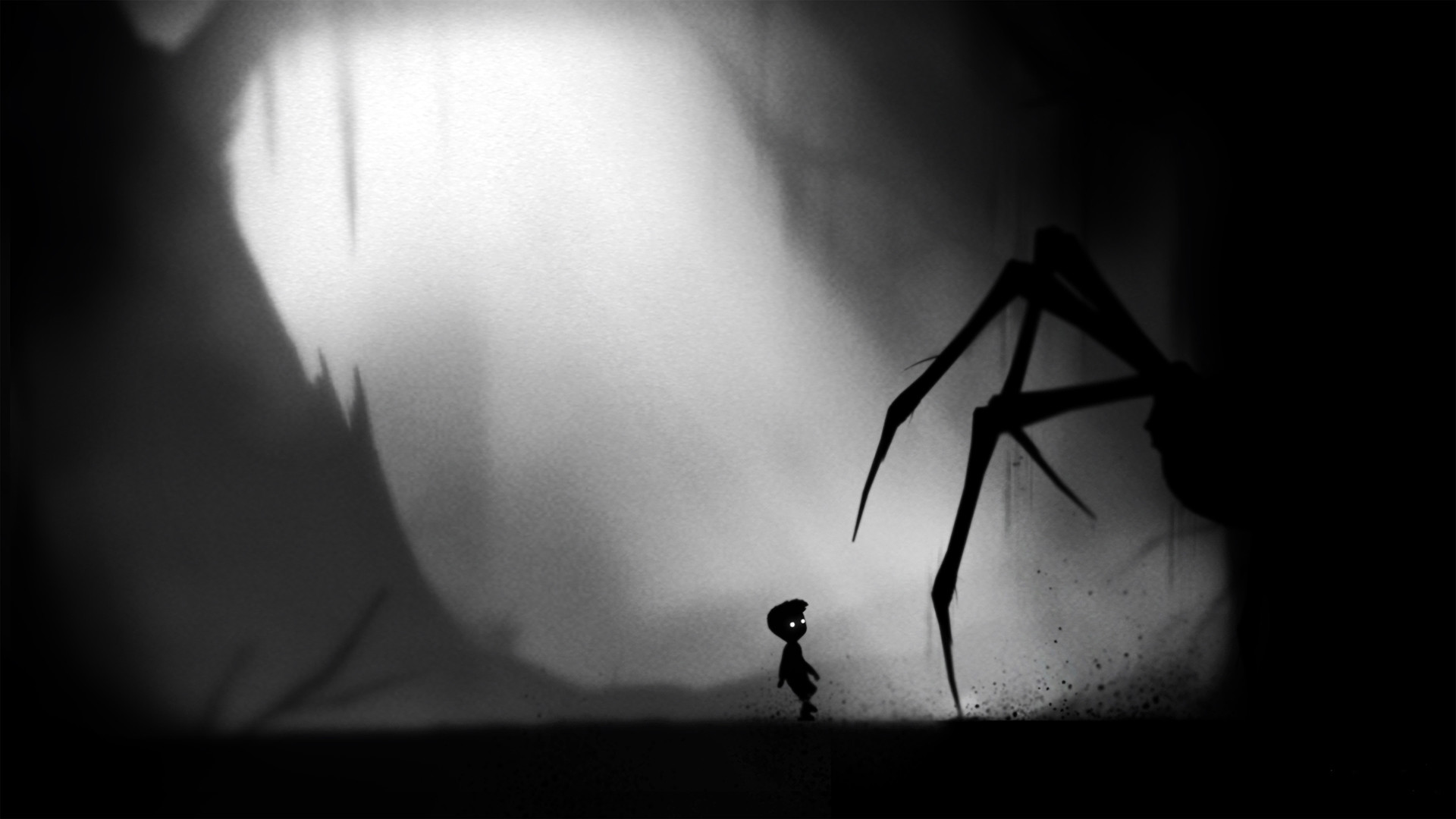
Limbo arrived in 2010 and did something that is genuinely difficult to overstate in retrospect — it made the world pay attention to atmospheric, wordless, monochromatic puzzle platformers at a moment when almost nobody was making them. A small boy enters a dark forest looking for his sister. That is the entire premise.
What follows is two to three hours of some of the most precisely designed environmental puzzles the genre has produced, wrapped in an atmosphere so distinctly its own that it spawned an entire aesthetic movement in indie games. Limbo did not invent the cinematic platformer, but it absolutely revived it for a new generation — and nothing was quite the same afterwards.
Limbo is the game that brought the genre back — find out where it sits in our definitive best of ranking.

Year: 2010
Developer: Playdead
Atmosphere: Dark · Oppressive · Minimalist
Visual Style: Monochrome Silhouette · High Contrast
Focus / Pace: Puzzle Platforming · Methodical
Platforms: Xbox 360 · PlayStation 3 · Windows · macOS · Linux · Nintendo Switch · iOS · Android
Why Limbo stands out
The origin of Limbo is one of the better stories in indie game history. In 2004, Arnt Jensen was working as a concept artist at IO Interactive — the studio behind Hitman — and growing increasingly frustrated with the corporate nature of big studio development. He started sketching a “mood image” of a secret, dark place just for himself. That sketch became an obsession. He spent years trying to prototype the game alone, teaching himself to program in Visual Basic before eventually realising he needed help. By 2006 he had assembled a small team and founded what would become Playdead.
What makes the development story remarkable is how fiercely Jensen and co-founder Dino Patti protected the vision against outside interference. Investors pushed for multiplayer modes, adjustable difficulty levels, and a longer game. All of it was refused. When Microsoft raised concerns about the boy’s death animations being too disturbing, one investor’s solution was to make him appear older — by giving him a moustache. Jensen ignored that too. By the time Limbo shipped, Playdead had discarded seventy percent of the content they had built — an extraordinary act of editorial discipline for a studio on its debut. The result was a game so precisely itself that it had almost nothing to cut.
Historically, Limbo arrived at a pivotal moment. The Xbox Live Arcade Summer of Arcade promotion of 2010 gave it a platform in front of millions of players who had never thought about atmospheric indie platformers. It won the Independent Games Festival’s Excellence in Visual Art and Technical Excellence awards, became the third most award-winning game of that year, and effectively announced that a new kind of cinematic platformer was possible — one built not around rotoscoped movement or sci-fi world-building, but around pure atmosphere and environmental dread. It essentially wrote the modern defintion of a cinematic platfomer.

The Story
Uncertain of his sister’s fate, a boy enters Limbo. That is the complete official description — seven words that tell you everything and nothing simultaneously. You wake up in a dark forest, and you run to the right. There is no tutorial, no exposition, no explanation of where you are or why. The world is hostile from the first seconds, and the game trusts you to keep moving without ever telling you why you should.
What I find quietly extraordinary about Limbo’s storytelling is how much it leaves to the player. The forest gives way to industrial structures, then to stranger, more abstract spaces. What happened here? Who built these things? Where is the sister? The game never answers any of it directly, and that restraint is not laziness — it is a deliberate artistic choice that makes the experience feel genuinely personal. Every player constructs a slightly different version of what Limbo means, and that ambiguity is precisely the point.
The ending divides people, and I understand why. It arrives without warning, resolves nothing explicitly, and asks you to sit with it. For me that landing is exactly right — it feels like waking from a dream you cannot quite hold onto, which is the most honest ending a game called Limbo could have.
Graphics
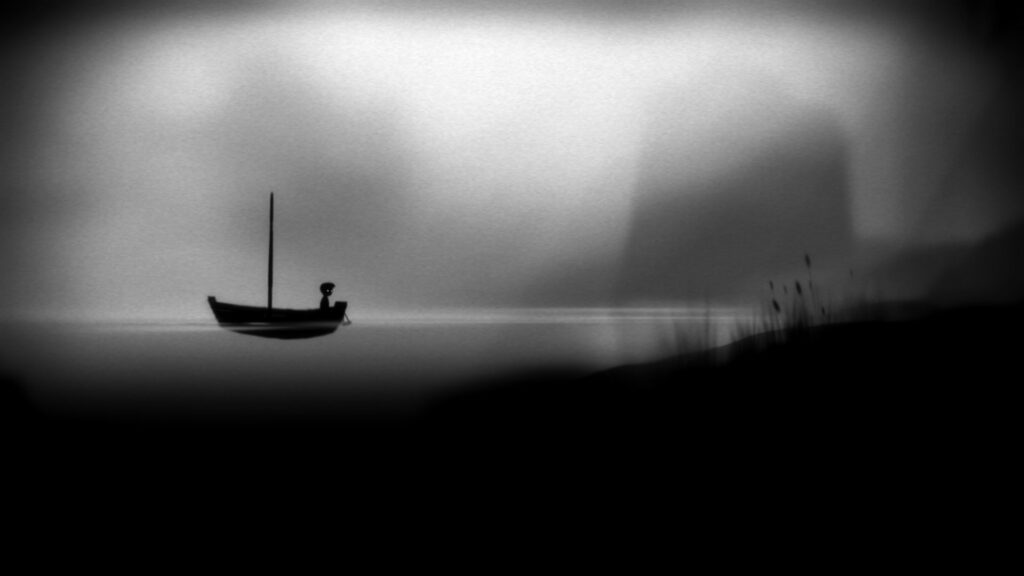
Limbo looks like nothing else that existed in 2010, and it still has an immediately distinctive visual identity today. Everything is rendered in monochromatic silhouette — the boy is a small black shape against gradients of grey, the environments are built from shadow and contrast, and the occasional use of depth of field gives the world a layered, almost diorama-like quality. There is a film grain filter over everything that softens the edges and gives it the feeling of something half-remembered.
For me, what makes the art direction so effective is its discipline. There is no colour anywhere — not a single accent, not a moment of warmth. That total commitment to the monochrome palette means the atmosphere never breaks, and the darkness never becomes comfortable. The boy’s silhouette is always readable against any background, which is both a practical design decision and a visual one that gives him a fragility and anonymity that a fully rendered character could never achieve.
One dedicated animator spent three full years working exclusively on the boy’s movement — including small anticipatory gestures like reaching toward a handle before the player actually grabs it. For a game built on a tight budget with a team of eight, that level of attention to a single character’s physicality is remarkable.
🕹️ Did You Know?
One dedicated animator spent three full years working exclusively on the boy’s movement — including tiny anticipatory gestures like the boy reaching toward a handle before the player actually grabs it. Jensen felt these micro-animations were essential because the boy is always at the centre of the screen and the most important thing the player watches. For a game built by a team of eight on a tight budget, devoting one person entirely to a single character’s physicality for three years says everything about Playdead’s priorities.
Gameplay
Limbo’s puzzle design gives me the impression of a game that genuinely respects your intelligence — each new mechanic arrives simply, gets explored fully, and is then quietly retired before it outstays its welcome. The early forest sections are built around physics and timing: falling logs, swinging ropes, gravity traps. As the world shifts into industrial territory, electricity, gravity reversal and increasingly layered environmental puzzles take over. Nothing ever felt arbitrary to me — every solution has an internal logic that clicks into place with a small, satisfying jolt.
Playdead called their approach “trial and death” rather than trial and error, and I think that distinction genuinely matters. Dying in Limbo never felt like a punishment — it felt like information. The deaths are gruesome enough to be instructive and memorable without ever feeling gratuitous, and the generous checkpointing means failure costs you nothing but a few seconds and a little pride. It is one of the most frictionless learning loops I have encountered in the genre.
My one honest gripe is that the industrial section’s later puzzles lean more heavily on precise timing than lateral thinking, which pushed me toward frustration a couple of times. But it is a small complaint against a game that gets the fundamentals so consistently right.
Pacing
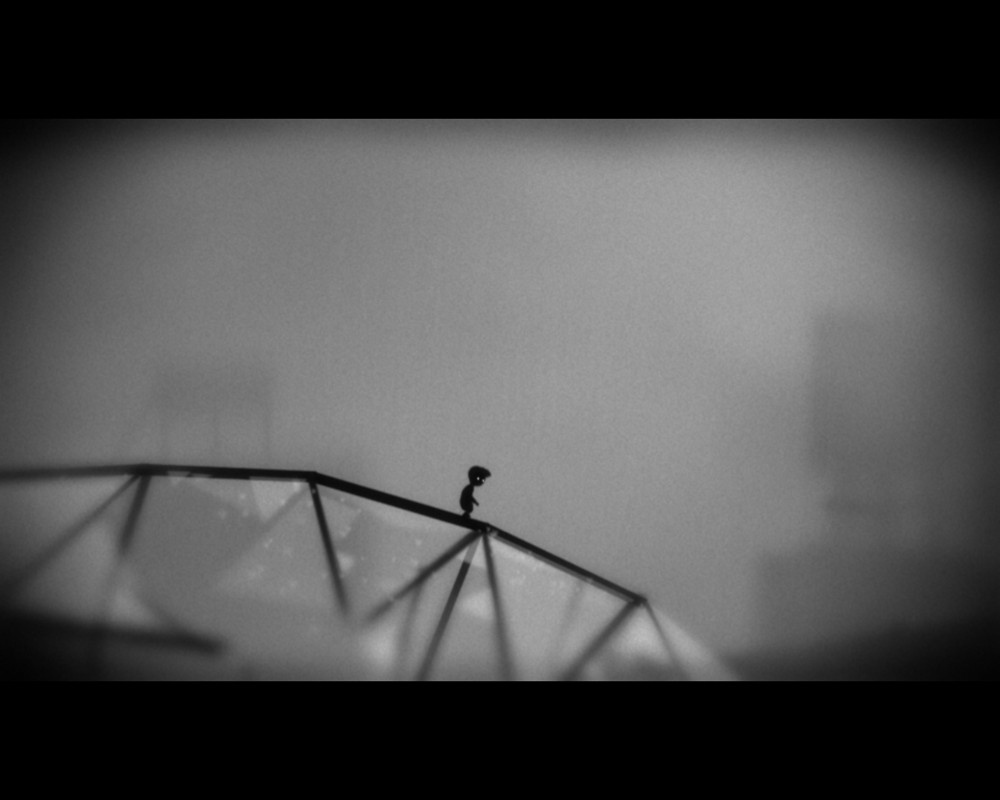
Limbo runs around three hours and I never once felt the seams. What strikes me most is the tonal shift from organic forest to cold industrial machinery — it happens so gradually that I barely registered it until I was already deep inside it, at which point the world had become genuinely strange around me. The game never lets you settle into comfort. Just as a particular puzzle type starts feeling familiar, the environment changes and pulls the rug out.
There are no cutscenes, no loading screens, no moments that break the spell. Limbo moves with the uninterrupted momentum of a bad dream — forward, always forward — and that seamlessness is a huge part of why the atmosphere holds so completely. I finished it in a single sitting without once considering stopping, which for a three-hour game feels like exactly the right outcome.
Atmosphere
Limbo’s atmosphere is, for me, its single greatest achievement. The combination of monochrome visuals, near-total silence, and the constant low-level dread of a world that wants you dead creates a feeling I find genuinely hard to describe — not quite horror, but closer to the specific anxiety of a childhood nightmare, where the danger is real but the logic is slightly off.
Martin Stig Andersen’s sound design is central to this, and I think it is one of the most underappreciated elements of the game. There is no conventional music — instead, acousmatic arrangements sit at the edge of ambient noise and something more intentional, leaving emotional space for the player rather than directing how to feel. The silence between sounds feels as deliberate as the sounds themselves. Paired with the film grain filter and the boy’s small, fragile silhouette moving through all that darkness, the atmosphere of Limbo felt total and unbroken to me from the first screen to the last.
🎮 My honest opinion
Limbo is the game that changed what I thought atmospheric puzzle platformers could be. Before it, the genre felt like it belonged to a specific era — the rotoscoped 90s classics, the Flashbacks and Another Worlds. Limbo proved it could be something contemporary, something that spoke to a completely new audience without abandoning any of the things that made the genre worth loving in the first place.
Is it still worth playing today? Completely and unreservedly yes. It holds up in a way that genuinely surprises me given how much has come after it — including Inside, which is in many ways a more ambitious game. But Limbo has something Inside does not: a purity of vision that comes from being first. There is nothing extraneous here, nothing that should have been cut. It is a game that knows exactly what it is and executes it without a single wasted frame.
My one honest note is that if you play it immediately after Inside, it will feel slightly simpler — the puzzle design is less inventive, the world less layered. Play it first, as it was meant to be experienced, and it will hit exactly as hard as it should.
Six years of work. Seventy percent of content discarded. Investors suggesting the boy needed a moustache. The result is one of the most precisely realised games ever made.
Where can I play Limbo?
Limbo is available on nearly every modern platform, including PC through stores like GOG and Fanatical, as well as PlayStation, Xbox, Nintendo Switch, iOS, and Android devices. The game’s short length and simple controls make it easy to experience in a single evening, though I personally think Limbo works best on a larger screen with headphones where its lighting, sound design, and oppressive atmosphere become much more immersive.
Games similar to Limbo
Players who enjoyed Limbo will likely appreciate other cinematic platformers focused on atmosphere, environmental storytelling, deadly puzzles, and minimalist presentation. Its influence on the modern indie scene has been enormous, particularly among darker side-scrolling puzzle adventures.
Inside

Inside expands many of the ideas introduced in Limbo through more advanced animation, cinematic set pieces, and deeper environmental storytelling. Both games rely heavily on tension, silence, and vulnerability, though Inside feels more narrative-driven and visually detailed. Together, the two games define much of the modern cinematic platformer revival.
Black The Fall
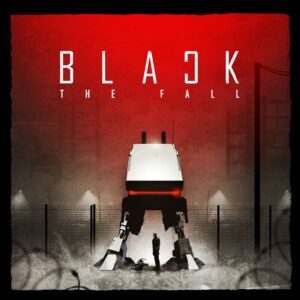
Black The Fall shares Limbo’s oppressive atmosphere and environmental storytelling, but places them within a dystopian industrial setting inspired by Eastern European authoritarianism. Like Limbo, the game emphasizes isolation, puzzle-solving, and dangerous environments while maintaining a slow, methodical pace.
If you are looking for more dark atmospheric cinematic platformers, games like Little Nightmares, Silt, and The Swapper each explore different forms of tension, isolation, and environmental storytelling through distinctive visual styles and unsettling worlds.