
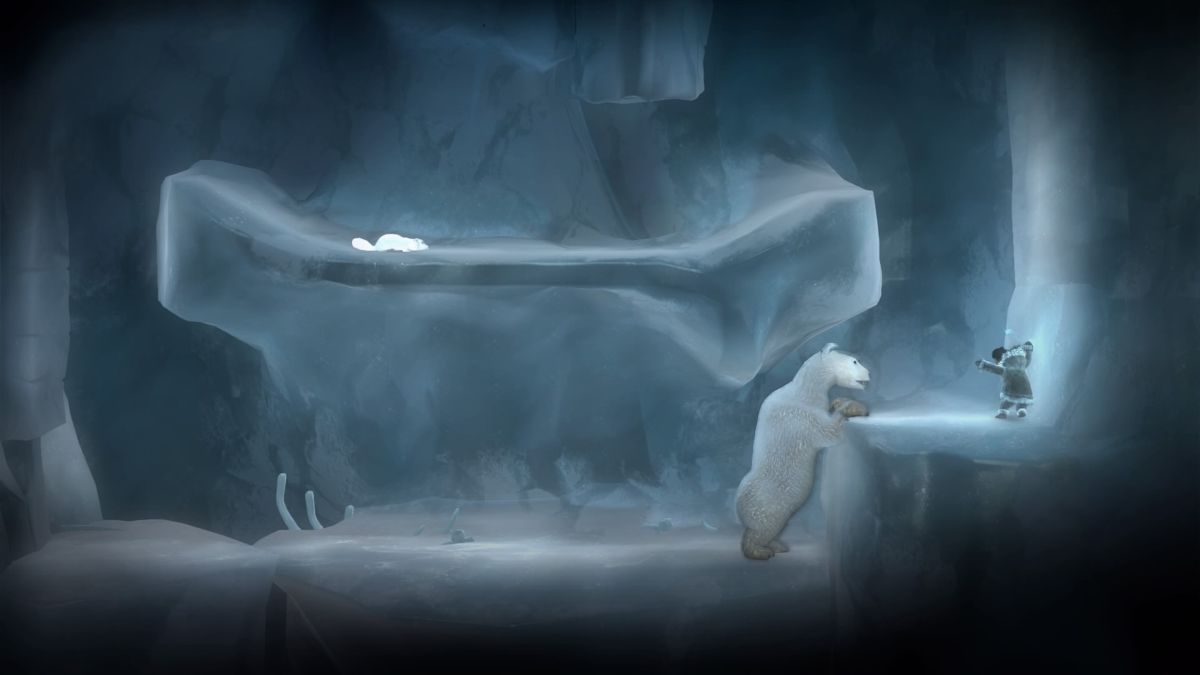
Never Alone is one of the most culturally profound and atmospheric cinematic platformers I have ever experienced. You guide Nuna, a young Iñupiat girl, and her faithful Arctic fox companion across the unforgiving, frozen landscape of Alaska to find the source of an endless blizzard. While it adopts the side-scrolling, environmental structure typical of the genre, the experience quickly transforms into something far richer than a standard puzzle-adventure.
The game truly distinguishes itself by functioning as a piece of living folklore. Rather than simply using a frosty aesthetic for visual flair, the entire project was built from the ground up in direct partnership with Alaska Native elders and storytellers. This collaboration infuses every single puzzle, spirit interaction, and gameplay mechanic with the authentic values, history, and oral traditions of the Iñupiat people.

Year: 2014
Developer: Upper One Games · E-Line Media
Atmosphere: Spiritual · Melancholic · Communal
Visual Style: Soft Atmospheric 2.5D · Mythological Realism
Focus / Pace: Co-op Puzzle Platforming · Cultural Storytelling
Platforms: Windows PC · PlayStation 4 · Xbox One · Nintendo Switch · Wii U
Why Never Alone stands out
What makes this journey unforgettably distinct is how it handles the concept of narrative weight through indigenous storytelling. You are not playing through a modern fantasy script; instead, you are experiencing the traditional Iñupiaq tale “Kunuuksaayuka”. A master storyteller narrates the game entirely in the spoken Iñupiaq language, adding an incredible layer of texture and respect to the progression. Every obstacle you overcome feels less like a mechanical hurdle and more like a lesson in survival, community, and human interdependence with nature.
I was also deeply impressed by the inclusion of unlockable “Cultural Insights” throughout the world. Finding hidden owls rewards you with short, beautifully produced documentary vignettes featuring community elders explaining their philosophies, hunting habits, and relationship with the Arctic. This creates a brilliant gameplay loop where your curiosity in the digital world is immediately rewarded with real-world human history, elevating the entire experience from a mere entertainment product into an essential piece of interactive preservation.
The Story
Never Alone follows Nuna as her village faces starvation due to a relentless, unnatural blizzard that destroys their hunting grounds. Teaming up with a mystical Arctic fox, she ventures into the freezing unknown to save her people from extinction.
The narrative gracefully unfolds across ice floes, abandoned coastal villages, and frozen forests, shifting away from standard survival tropes to focus on spiritual connections. I thoroughly enjoyed how the plot highlights the core Iñupiat principle that we are never truly alone, balancing the harsh brutality of nature with a comforting world of helpful ancestral spirits.
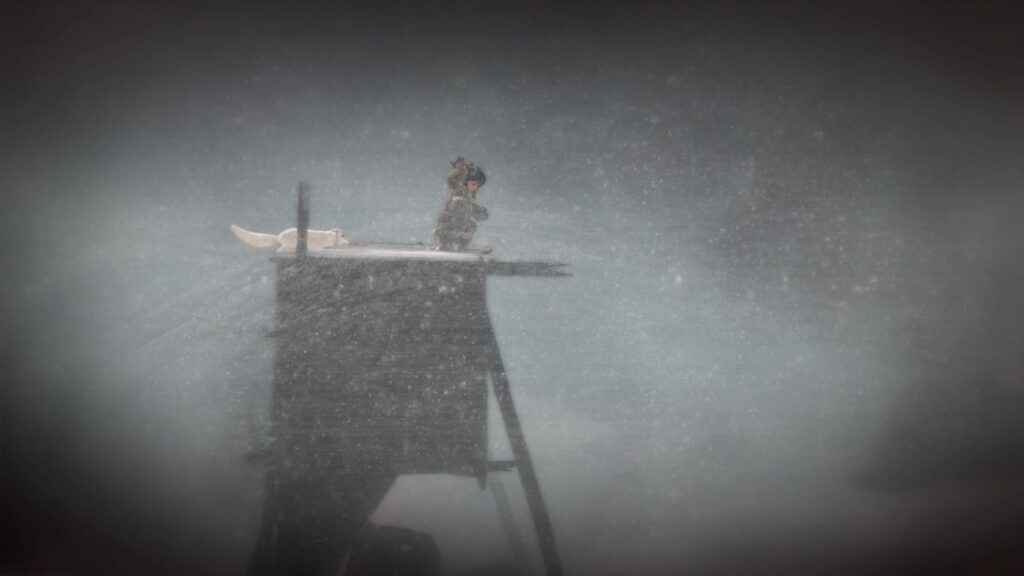
Graphics
The game utilizes a distinct, soft 2.5D visual style filled with swirling snowstorms, ancient wooden villages, scrimshaw-inspired art, and glowing, ethereal lighting. The art direction constantly oscillates between the harsh, blinding reality of a tundra whiteout and outright dreamlike nightmare imagery featuring massive, spectral sky-beings.
What stayed with me visually was the stark contrast between the freezing, monotone blues of the landscape and the warm, vibrant aurora effects that signify the spirit world. That visual tension keeps you uncomfortable yet mesmerized, giving the game a highly recognizable visual signature.
Gameplay
In Never Alone, the traditional platforming rulebook is violently thrown away, transforming solo navigation into a dual-character cooperative puzzle system. The core loop revolves entirely around the contrasting physical traits of Nuna and the Fox, which forces you to constantly switch between them or share the controller with a friend. Instead of relying on a single agile character, you are forced to actively coordinate their unique skills, strategically choosing how and when to deploy Nuna’s projectile bola or the Fox’s ability to summon helper spirits.
The puzzle-solving mechanics are split across several distinct forms of environmental cooperation. You will routinely need to intentionally position Nuna to anchor rope lines against gale-force winds, using her physical weight to keep the Fox from being swept away. If a passage is too high or narrow, you must command the Fox to scramble up sheer walls, transforming the gameplay into a tense sequence where you scramble to drop ropes or unlock platforms for Nuna from above. Furthermore, the game turns physics upside down; triggering a spirit’s aid dynamically shifts the layout of floating ice chunks, allowing you to cross impossible drops.

Pacing
Never Alone uses a slower story-driven pace focused on atmosphere, puzzles, and cultural tension. Quiet exploration sections where you trudge through heavy snow are regularly interrupted by terrifying encounters with a relentless polar bear or more intense platforming sequences.
The game climbs into increasingly mythical territory as you delve deeper into the spirit realm, ensuring the journey remains highly unpredictable without ever losing its core focus on indigenous storytelling.
Atmosphere
The tone shifts seamlessly between deeply grounding cultural reverence, heavy environmental melancholia, and intense spiritual breakthrough. Wind-whipped coastlines, shifting ice floes, and glowing aurora borealis formations create a world that feels permanently dangerous yet profoundly magical and inviting.
What resonated with me most was the raw, uncomfortable tension generated by the dynamic weather mechanics. Even after you completely adapt to using the wind currents to boost your jumps, hearing the roar of the gale and watching Nuna lean heavily into the blizzard to avoid being blown away remains genuinely distressing.
🎮 My honest opinion
I liked the unique idea: The concept of building an entire puzzle-adventure around indigenous folklore and documentary snippets might sound overly educational or dry on paper, but the developer handles the material with immense thought, respect, and narrative purpose.
The game shines brightest because the folklore integration is entirely seamless, allowing the cooperative gameplay and historical depth to quickly merge into a powerful, cohesive masterpiece. It requires a bit of patience for its occasionally floaty character physics, but if you can accept its slower, more deliberate pace, it is a truly phenomenal and culturally eye-opening experience.
Never Alone is one of several cinematic platformers built on genuine cultural research rather than borrowed aesthetics — we explore what makes this corner of the genre special in our feature on cinematic platformers built on real cultural tradition.
Where can I play it?
Never Alone is widely accessible across platforms, making it easy to experience this Arctic journey. You can find it on PC via Steam and GOG, or on home consoles like the PlayStation 4, Xbox One, and Nintendo Switch. An upgraded version called the Arctic Collection is also available, which bundles the main game with its Foxtales expansion.
Similar Games
Players who enjoyed Inmost will likely appreciate other cinematic platformers focused on isolation, environmental storytelling, and darker atmospheric exploration. While the game shares some DNA with well-known titles like Limbo, it also fits nicely alongside several smaller and lesser-known atmospheric platformers.
Unleaving
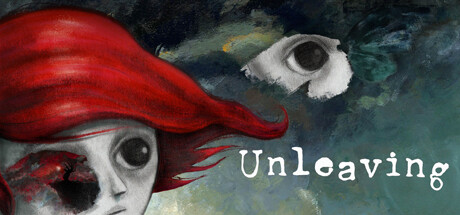
Unleaving shares Never Alone’s focus on vulnerable protagonists navigating a deeply symbolic, dangerous world through physics-based trial-and-error puzzles. Rather than digital graphics, it uses thousands of real-life hand-painted landscapes and graphite textures to build a profoundly poetic, artistic journey centered around change and loss
Gris

Gris explores an incredibly artistic, watercolor world where environmental exploration and light puzzle-platforming serve as a metaphor for processing grief. Like Never Alone, it captures a deep sense of vulnerability, breathtaking visual storytelling, and a highly emotional journey that does not rely on traditional dialogue to leave a lasting impact.
If you are specifically looking for games that share Never Alone’s dedication to real-world preservation and regional folklore, titles like Tchia and Blanc offer wonderful cultural and artistic alternatives, even though they do not fit into the traditional cinematic platformer genre.