
The concept of Typoman stopped me the moment I heard it. You play as a character called HERO — literally assembled from those four letters — navigating a post-apocalyptic world where language is power. Push letters together to form a word and the world responds: spell OPEN and a door unlocks, spell HEAVY and an object becomes weighted, spell GROW and a plant rises to give you a platform. The enemies are made of letters too — DOOM, HATE, FEAR — and the whole visual language of the game is built around typography as a living, physical force.
That is a genuinely brilliant idea. I mean that sincerely. And I wish — throughout my time with Typoman — that the game had been as bold in its execution as it was in its concept.
Developed by German studio Brainseed Factory and originally released as a Wii U exclusive in 2015 before arriving on PC, consoles, and mobile as Typoman: Revised, the game is a dark, atmospheric puzzle platformer that is clearly trying to say something about the power of language and the people who use it to fight oppression. The hero is a tribute, the developer has said, to authors who write for freedom. That is a meaningful ambition. It just does not always translate into meaningful gameplay.

Year: 2015
Developer: Brainseed Factory
Atmosphere: Dark · Abstract · Thoughtful
Visual Style: Monochrome Typography Art
Focus / Pace: Puzzle Platforming · Slow-Paced
Platforms: Wii U · Windows · PlayStation 4 · Xbox One · Nintendo Switch
The World and Story
HERO is missing an arm — quite literally, one of his four letters is absent — and his journey through a dark, crumbling world is one of recovery and resistance. The story is told without dialogue, through environmental details and the symbolic logic of the world around him. Monsters made of words like DOOM and HATE pursue you. The architecture is collapsing. The atmosphere is bleak and consistently atmospheric in ways that recall Limbo without quite matching it.
I think the symbolic ambition here is genuine and interesting. The idea of a hero who literally weaponises language against forces of hatred and fear is a rich premise. My honest feeling is that the story never quite delivers on it — the symbolism is present but thin, and the emotional stakes never build to the kind of conclusion the premise promises. It ends before it has fully said what it was trying to say.
The word mechanic is one of the genre’s most original concepts — explore the full feature on the most inventive cinematic platformers ever made.
Graphics
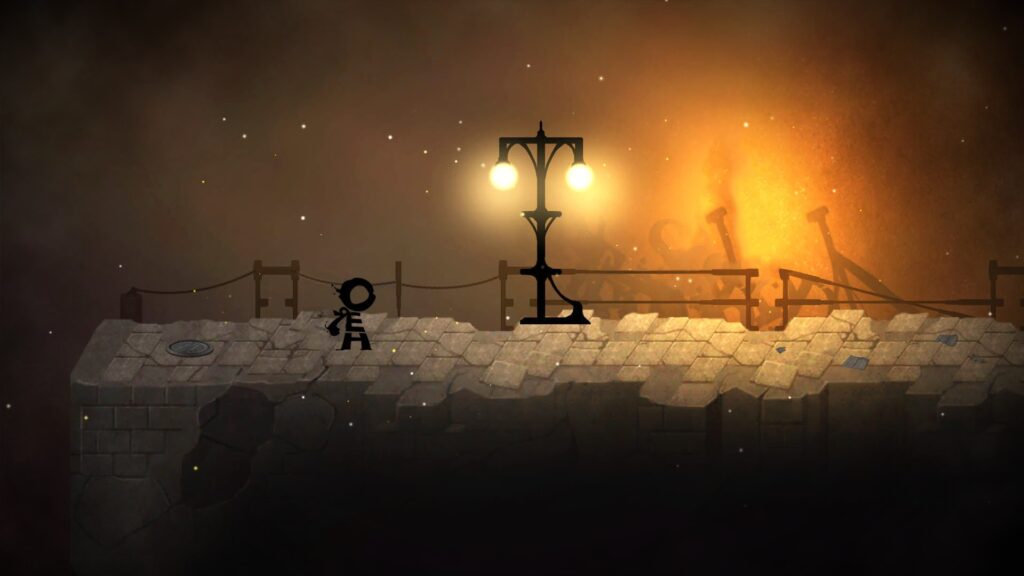
One of the stronger elements. The monochrome silhouette aesthetic is clearly indebted to Limbo, and several reviewers have noted the similarity — but Typoman earns its visual identity through the typography system, which genuinely integrates the letter-based world into every screen. Seeing HERO assembled from his four letters, watching enemies made of words pursue you through a ruined landscape, watching a word you just spelled physically manifest in the environment — these are visually distinctive moments that no amount of Limbo comparison can diminish.
The environments shift between post-apocalyptic ruins, underground sections, and more abstract spaces, each rendered with enough care to maintain the atmosphere. It is not the most technically impressive game in the genre, but the visual concept is strong and consistently applied.
Gameplay
And here is where I have to be honest — because the word mechanic, which should be the star of the show, is where Typoman most clearly falls short of its potential.
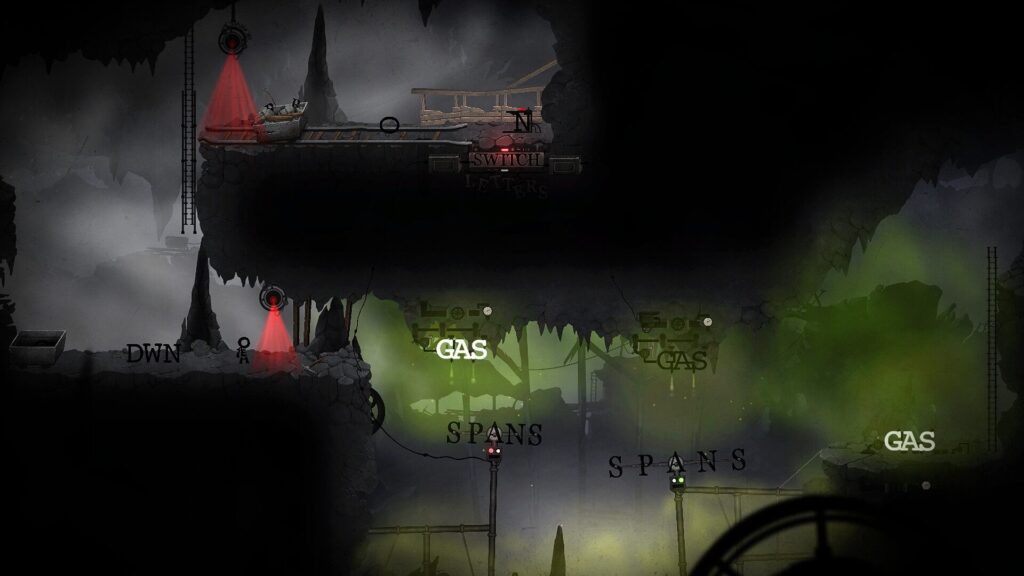
The puzzles built around language are the best moments in the game. Figuring out which word to spell from a set of available letters, understanding how the word will affect the environment, finding the solution that the game has hidden inside its own vocabulary — when this clicks, it feels genuinely clever. There are moments where I felt a specific satisfaction that no other puzzle game in this genre delivers, because the solution is not just logical but linguistic. That is a real and distinctive pleasure.
The problem is that these moments are not frequent enough, and not deep enough. Most solutions involve relatively simple words — ON, OPEN, HEAVY — and the game rarely pushes its own system into the creative territory it is clearly capable of. There are stretches where the word mechanic barely appears at all, replaced by more conventional platforming and combat that feel noticeably weaker by comparison. The combat in particular — spelling words to defeat enemies while under pressure — is the least elegant implementation of the core idea, and it becomes repetitive in the second half.
I kept waiting for a puzzle that would genuinely surprise me with what the language system could do. A few come close. Most do not go far enough.
Atmosphere
Genuinely strong, and probably the element that holds the game together when the word mechanic is not carrying its weight. The sound design is atmospheric and appropriately oppressive, the environments feel genuinely dangerous, and the overall mood is consistent and well-calibrated. The score by SonicPicnic is understated and effective — dark without being melodramatic, which suits the game’s tone well.
🎮 My honest opinion
Typoman is a game I find easier to respect than to love. The concept is one of the most original in the genre — genuinely, I cannot think of another game that does what it is attempting to do with language and world-building — and there are moments where it delivers on that concept with real elegance. But the puzzle design does not push the idea far enough, the combat is a weak link, and the story promises more than it delivers.
If Brainseed Factory ever returns to this concept with more ambition and more time, I think they could make something genuinely remarkable. Typoman is proof that the idea works. It is also proof that the idea has not yet been fully explored.
Where can I play Typoman?
Typoman: Revised is available on PC via Steam, PlayStation 4, Xbox One, and Nintendo Switch. The mobile version — Typoman Remastered — is available on iOS and Android. The Revised version is the recommended edition, with improved mechanics and visuals over the original Wii U release.
Games similar to Typoman
Players who enjoyed Typoman will likely appreciate other cinematic platformers built around unusual mechanics, atmospheric storytelling, and slower puzzle-driven exploration.
Projection: First Light
Projection: First Light also builds its gameplay around a very original central mechanic — manipulating shadows to create platforms and solve puzzles. Like Typoman, it stands out because of its creative visual identity and slower atmospheric pacing.
The Swapper
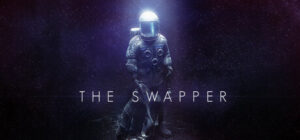
The Swapper focuses on environmental puzzles and philosophical science-fiction storytelling through its cloning mechanics. Both games prioritize ideas and atmosphere over action-heavy gameplay.
If you are looking for more atmospheric cinematic platformers, games like Orphan, and DARQ also combine minimalist storytelling with strong visual atmosphere and environmental puzzle-solving.