
Description
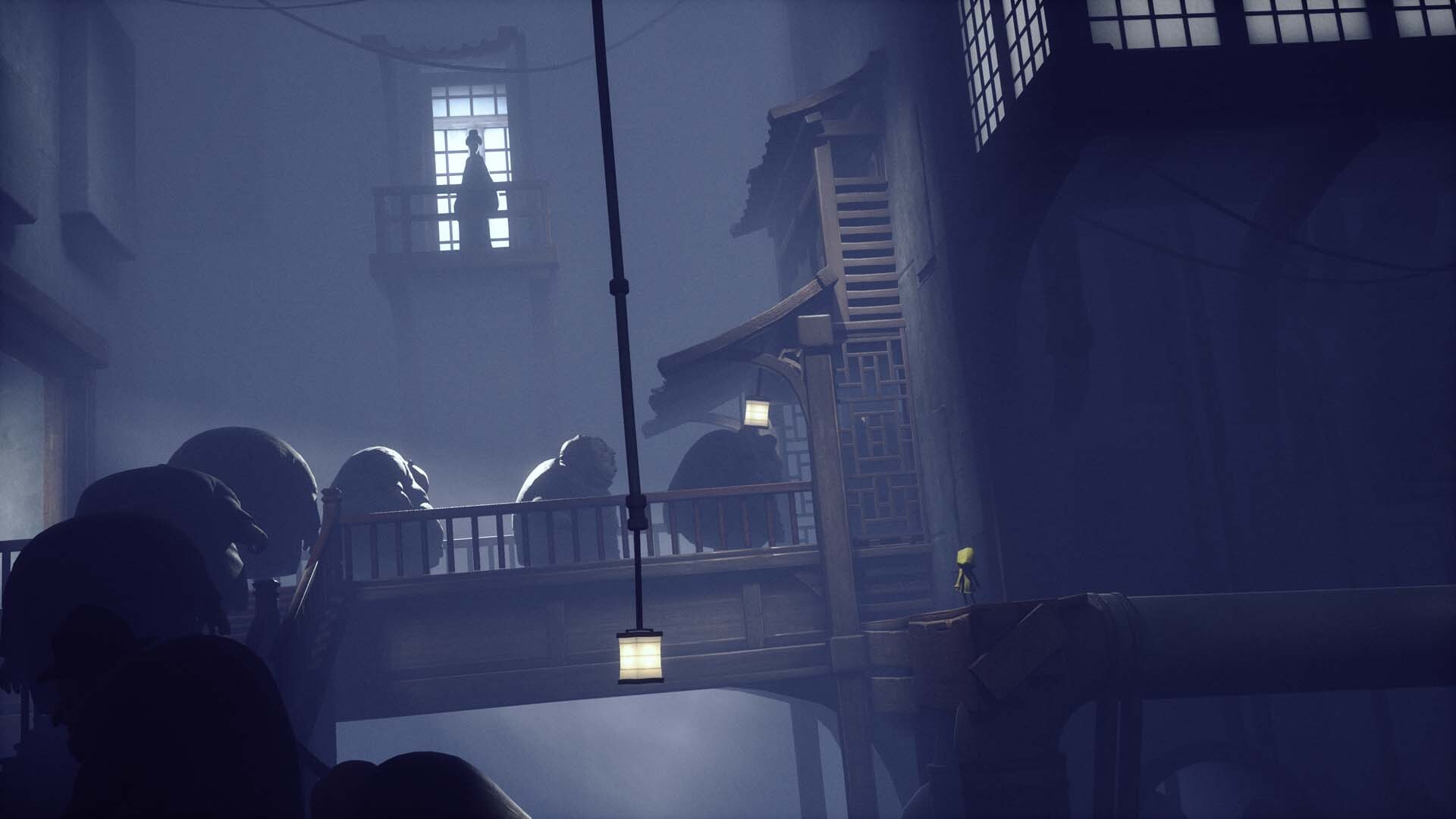
Little Nightmares is one of the most viscerally unsettling games I have played — and I mean that as a wholehearted compliment. Developed by Malmö-based Tarsier Studios and released in 2017, it follows Six, a small girl in a yellow raincoat, escaping from the Maw — an enormous underwater vessel populated by grotesque, oversized creatures who want to eat her.
The premise sounds simple. The execution is anything but. Little Nightmares takes the cinematic platformer’s tradition of the small, vulnerable protagonist in a hostile world and pushes it somewhere genuinely nightmarish — a place where the horror is not just atmospheric but deeply, specifically felt in your stomach.
Year: 2017
Developer: Tarsier Studios
Atmosphere: Horror · Oppressive · Surreac
Visual Style: 2.5D · Dark Fairy Tale
Focus / Pace: Stealth Platforming · Suspenseful
Platforms: PlayStation 4 · Xbox One · Windows · Nintendo Switch
Why Little Nightmares stands out
Tarsier Studios had spent years working as a support studio — contributing to LittleBigPlanet, Tearaway Unfolded, and various Sony projects — before finally getting the chance to make something entirely their own. And what they chose to make was this: a game about being the smallest, most vulnerable thing in a world built entirely around consumption. The Maw was conceived as “a place where all the worst things in the world could be left to rot,” and that intention is felt in every room you move through.
What sets Little Nightmares apart for me is how specific its horror feels. Where Limbo and Inside approach darkness through abstraction, Little Nightmares goes somewhere more immediate and more physical — closer to a child’s nightmare than an adult’s existential unease. The monsters are not distant symbols. They are enormous, hungry, and wrong in ways you feel in your stomach rather than your head.
That shift mattered historically too. Little Nightmares opened the door for a whole branch of the genre — Little Nightmares II, Bramble, Reanimal — built around grotesque scale, childhood dread, and visceral creature design rather than minimalist atmosphere. The game understood that the most effective horror is not what threatens to kill you, but what makes you feel genuinely, helplessly small — and it built an entire genre lineage around that idea. It helped define the modern definition of the genre.
Little Nightmares is one of the modern masterpieces of the genre — see how it ranks among the best cinematic platformers ever made.

The Story
Six wakes up alone in the depths of the Maw with nothing but her yellow raincoat and a gnawing, persistent hunger. She needs to get out. That is the entirety of what the game tells you going in — and somehow it is enough.
What I find remarkable about Little Nightmares’ storytelling is how much it communicates through scale and environment alone. The Maw is a world built from childhood’s worst instincts about adults — the Twin Chefs exist only to cook, the Janitor only to grab, the bloated Guests only to consume. Every creature is a single appetite made monstrous and enormous. Six moves through all of it at ankle height, and that perspective does more narrative work than any cutscene could.
The story has layers that reward thinking about after the credits roll. The hunger that drives Six is not just physical — it grows darker and stranger as the game progresses, until the final act reframes who she is in a way that I found genuinely unsettling. It is a game that leaves you with questions it has no interest in answering, and I think it is better for it.
If you want to go deeper into the world Tarsier built — Six’s hunger, the Lady, and what the Maw is really about — we put together a complete Little Nightmares lore breakdown that covers the full series.
Graphics
Little Nightmares looks like a grotesque dollhouse — and I mean that in the best possible way. The 3D environments have the tactile, slightly greasy quality of something handmade and slightly wrong, every surface textured with the kind of detail that makes you feel the damp and the rot. The scale contrast between Six and her surroundings is used constantly and brilliantly — a kitchen counter becomes a cliff face, a dining table a vast open plain.
What impresses me most is the creature design. The Janitor, the Twin Chefs, the Lady — each one is visually distinct, physically specific, and deeply unsettling in a way that feels rooted in something real. They move with a weight and intention that makes every encounter feel genuinely dangerous rather than merely obstacle-like. The lighting does heavy atmospheric work throughout, keeping the world just dark enough to hide what might be coming while keeping Six’s yellow raincoat always visible as a tiny point of warmth in all that gloom.
Gameplay
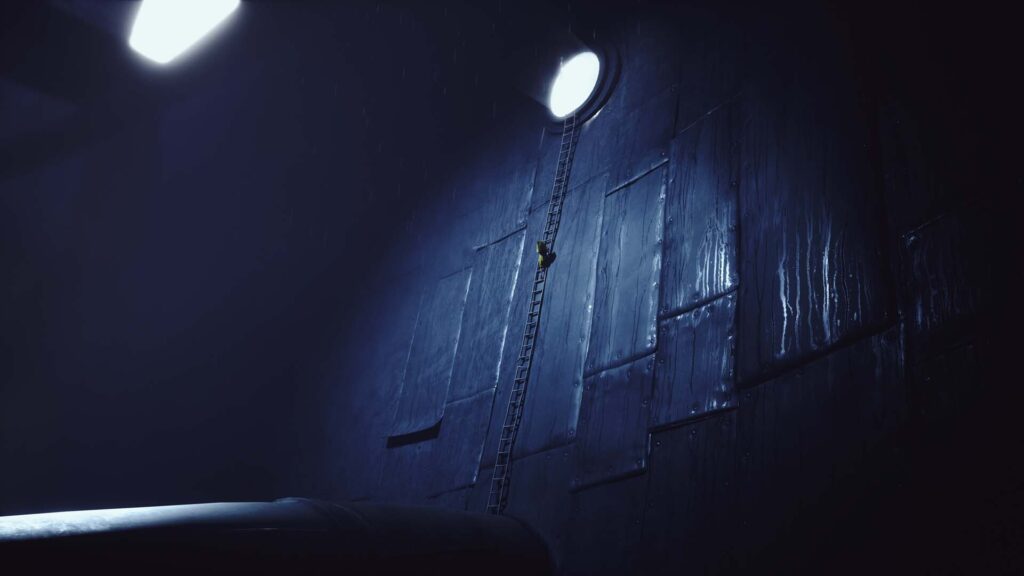
Little Nightmares describes its approach as “hide and seek” rather than stealth, and I think that distinction is exactly right. Six is not empowered — she cannot fight, cannot overpower anything, can only run and hide and think fast. The puzzles are environmental and mostly intuitive, built around using the space around you rather than abstract logic. What keeps the loop tense is that every solution requires moving through the same space as something that wants to catch you, and the game is very good at making that feel genuinely dangerous rather than mechanical.
The encounters with each major creature are the highlights — the Janitor’s blindness turning every movement into a calculation, the Twin Chefs’ lumbering bulk making the kitchen feel genuinely claustrophobic. My one honest note is that the controls can feel slightly loose in the more precise platforming sections, which occasionally tips tension into frustration rather than fear.
🎬 Did You Know?
A television adaptation of Little Nightmares was announced in 2017, with the pilot set to be directed by Henry Selick — the stop-motion filmmaker behind The Nightmare Before Christmas and Coraline. The project has been in development for years without a release date, but the choice of Selick as director says everything about the visual world Tarsier created: it is so distinctly cinematic that Hollywood came calling within months of the game’s release.
Pacing
Little Nightmares runs around three hours and moves through five distinct environments — each one introducing a new creature and a new set of rules. The pacing is relentless in the best way, never letting you settle into comfort. Just as the Janitor’s section starts to feel manageable, you are dropped into the kitchen with something worse. The escalation feels carefully designed rather than arbitrary, and by the final act the accumulated dread lands with real weight.
Atmosphere
This is where Little Nightmares earns everything. The atmosphere is oppressive in a way that feels specifically childlike — not the existential dread of Inside, but the particular horror of being small in a world built for something much larger and much hungrier than you. I felt genuinely uncomfortable in certain sections in a way few games manage, and the sound design — every creak, every distant footstep, every wet, horrible eating sound — deserves enormous credit for that.
The yellow raincoat against all that brown and grey darkness is one of the genre’s great visual choices. It keeps Six visible, keeps her human, and makes you care about keeping her alive in a way that a silhouette never quite could.
🎮 My honest opinion
Little Nightmares is one of those games that got under my skin in a way I did not fully anticipate. I expected atmosphere and got that in abundance — but what surprised me was how emotionally specific the horror felt. This is not a game that frightens you with jump scares or cheap darkness. It frightens you with scale, with helplessness, with the deeply uncomfortable feeling of being the smallest thing in a room full of appetites.
Is it still worth playing today? Completely yes — and I would actually argue it has aged particularly well. The creature design, the environmental storytelling, the sheer tactile wrongness of the Maw — none of it has faded. At around three hours it is also exactly the right length for what it is doing. Long enough to build genuine dread, short enough to play in a single sitting with the lights off, which is absolutely how it should be experienced.
My one honest reservation is the controls, which can work against you in the game’s more demanding platforming sections. It is a minor frustration in an otherwise tightly constructed experience — but worth knowing going in.
A studio that spent years making other people’s games finally got to make their own. The result announced Tarsier as one of the most distinctive voices in the genre — and everything they have made since has lived in Little Nightmares’ shadow, including their own sequel.
Where can I play Little Nightmares?
Little Nightmares is available on PC via Steam, PlayStation 4, Xbox One, and Nintendo Switch. A Complete Edition includes the three DLC chapters collectively known as Secrets of the Maw, which expand Six’s story and are well worth playing immediately after the main game. It is modestly priced and regularly on sale — one of the best entry points in the horror-adjacent branch of the genre.
Games similar to Little Nightmares
Inside

Inside shares Little Nightmares’ focus on tension, environmental storytelling, and oppressive atmosphere. Both games place vulnerable protagonists inside hostile worlds filled with disturbing imagery and deadly encounters, though Inside leans more heavily into minimalist dystopian science fiction while Little Nightmares embraces grotesque horror and dark fairy tale aesthetics.
Little Nightmares II

The direct sequel and, for many people, the more accomplished game. Tarsier took everything that worked in the original — the creature design, the oppressive environments, the wordless storytelling — and expanded it with a companion dynamic and a more ambitious narrative. The Pale City is even more unsettling than the Maw. Play it immediately after finishing this one.
If you are looking for more dark atmospheric cinematic platformers, games like Limbo, Silt, and DARQ each explore different forms of horror, tension, and environmental storytelling through unsettling worlds and vulnerable protagonists. Fans of oppressive environments may also enjoy Black The Fall.
We have also put together a full guide — 20+ games like Little Nightmares — organised by atmosphere, protagonist, and what made the original unforgettable.