

Year: 1991
Developer: Delphine Software
Atmosphere: Lonely · Alien · Cinematic
Visual Style: Pixel Art · Rotoscoped Animation
Focus / Pace: Survival Platforming · Methodical
Platforms: Amiga · DOS · Atari ST · Sega Genesis · Super Nintendo · Modern Platforms
Overview
Another World (also know as Out of of this Worls in the US) is one of the foundational cinematic platformers and one of the games that helped define the genre itself. Created almost entirely by Éric Chahi, the game combines rotoscoped animation, environmental storytelling, cinematic framing, and deadly trial-and-error gameplay into a science-fiction adventure that still feels remarkably unique decades later.
You play as Lester, a young physicist accidentally transported to a hostile alien world after a laboratory experiment goes catastrophically wrong. From the very beginning, the game throws you into dangerous situations with almost no explanation or guidance. I remember being immediately struck by how cinematic everything felt for a 1991 game — the first scene, when you get out of the water told you directly: Ok, this is somethign new and differenT
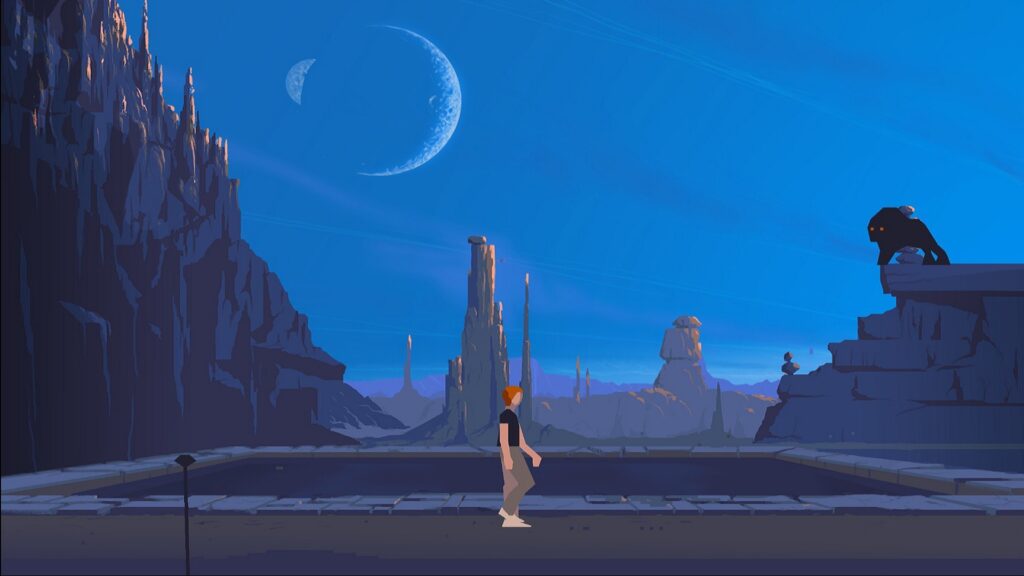
Why Another World stands out
Another World is widely considered one of the most influential cinematic platformers ever made. Long before games like Limbo or Inside popularized minimalist storytelling and atmospheric side-scrolling for modern audiences, Another World was already experimenting with cinematic presentation, environmental narrative, and realistic animation in the early 1990s. Ans also…. It’s just such an awesome game 🙂
What makes the game especially remarkable is how immersive it feels despite its simplicity. Dialogue is minimal, tutorials are nonexistent, and the alien world remains mysterious throughout the journey. The game constantly trusts the player to observe, experiment, and survive through trial-and-error. Even today, many cinematic platformers still borrow ideas that Another World introduced decades earlier.
The Story
Another World begins with young physicist Lester Knight Chaykin conducting a particle experiment during a violent thunderstorm. After a lightning strike disrupts the laboratory, the experiment catastrophically fails and transports him to a hostile alien world filled with dangerous wildlife, armed soldiers, and strange civilizations.
What I love here is how little the game explains directly. There are almost no traditional cutscenes or lengthy conversations, yet the world still feels believable and emotionally engaging through animation and visual storytelling alone. As Lester struggles to survive and eventually forms an unlikely bond with another prisoner, the game creates a surprisingly memorable sci-fi adventure using extremely minimal narrative tools.

Graphics
Another World used rotoscoped animation and cinematic framing in ways that felt revolutionary at the time. Character movement appears fluid and realistic, giving Lester and other characters a sense of physical vulnerability rarely seen in early 1990s platformers. Even decades later, the animation still gives the game a distinctive cinematic identity.
Visually, the game relies on minimalist polygonal environments and strong color contrast to create atmosphere rather than detailed pixel art. Alien deserts, caves, prisons, and futuristic cities all feel strangely lonely and hostile despite their technical simplicity. I still find it impressive how effectively Another World creates tension and immersion with relatively little visual detail compared to modern cinematic platformers.
Gameplay
In Another World, you will spend most of your time running, climbing, solving environmental puzzles, and trying to survive deadly encounters through trial-and-error. The game combines platforming, cinematic action sequences, and combat in a way that felt extremely unusual when it released. You are given very little guidance, forcing you to learn through observation, experimentation, and repeated failure.
The game can also be surprisingly unforgiving. Enemies kill quickly, traps appear suddenly, and many sequences require precise timing. I think this harshness is actually part of the experience’s identity. Much like later cinematic platformers such as Limbo, failure becomes part of the learning process, reinforcing the feeling that Lester is trapped inside a genuinely dangerous alien world.
Pacing
Another World uses pacing very differently from most platformers of its era. Instead of constant action or score-driven gameplay, the game frequently slows down to let players absorb environments, tension, and cinematic moments before suddenly shifting into dangerous escape sequences or combat encounters.
One thing I particularly appreciate is how natural the progression feels. Scenes transition seamlessly into one another without obvious level breaks, helping the journey feel like a continuous adventure rather than a collection of disconnected stages. Even today, the game’s cinematic rhythm still feels remarkably modern and heavily influential on later atmospheric platformers.

Atmosphere
Another World creates a powerful sense of loneliness and vulnerability through silence, hostile environments, and constant uncertainty. The alien planet feels dangerous from the very beginning, filled with strange wildlife, armed guards, dark caves, and unfamiliar technology that Lester barely understands. Even during quieter moments, the world constantly feels unpredictable and slightly threatening.
What stayed with me most was the game’s sense of isolation. There is almost no exposition, very little dialogue, and few moments of safety, which makes every interaction feel meaningful. The minimalist music and ambient sound design also contribute heavily to the atmosphere, allowing the player to focus entirely on the alien world and its strange cinematic tension.
🎮 My honest opinion
Okay, it’s one of my favourit games, so this is obviously biased, but i’ll try to ramin as objective as possible….
Another World remains one of the most impressive and important cinematic platformers ever made. Even decades later, it still feels remarkably bold and different because of how completely it commits to cinematic storytelling and environmental immersion without relying on lengthy exposition or traditional game structure.
For me, Another World is essential not only as a historical game, but as one of the true foundations of cinematic platformers. You can still feel its influence in modern games like Limbo, Inside, and many other atmospheric side-scrolling adventures.
Even decades after it first cam out, it feels new and modern – a timeless experience everythign interested in the genre shoudl play!
Where can I play Another World?
Another World is available on PC through stores like GOG and can also be played on numerous classic and modern platforms thanks to ports and anniversary editions released over the years. The game originally launched on Amiga and DOS before later appearing on consoles such as the Sega Genesis and Super Nintendo.
I personally think the Anniversary Edition is the easiest way to experience the game today, especially for modern players discovering cinematic platformers for the first time. It preserves the original atmosphere while offering updated visuals and controls that make the experience slightly more accessible without losing its identity.
Games similar to Another World
Players who enjoyed Another World will likely appreciate other cinematic platformers focused on environmental storytelling, realistic animation, science-fiction worlds, and challenging trial-and-error gameplay. Its influence can still be felt across many modern atmospheric platformers today.
Limbo
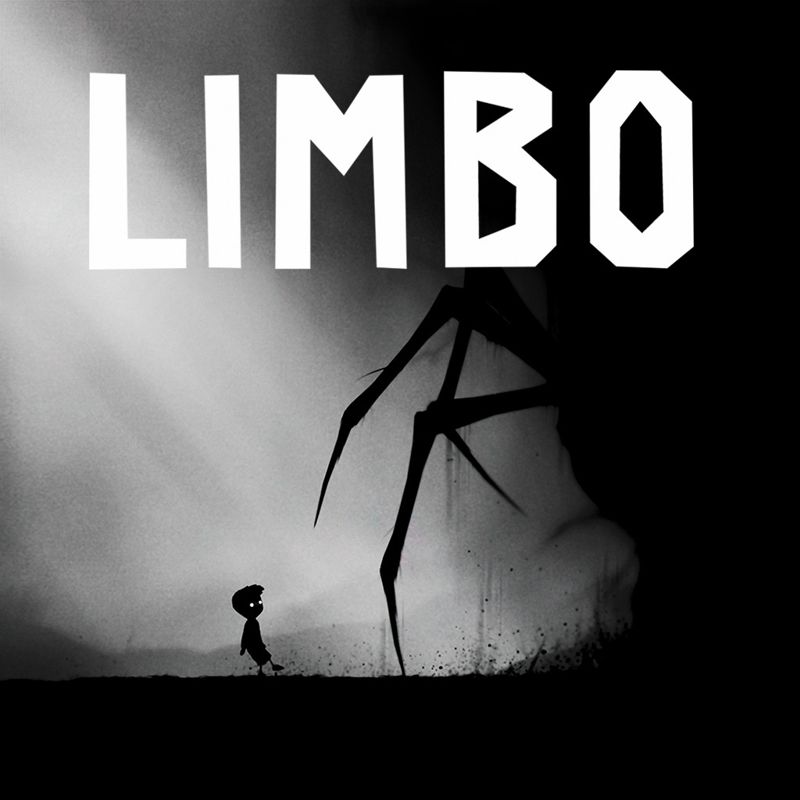
Flashback is often considered the closest spiritual successor to Another World. Both games combine rotoscoped animation, cinematic storytelling, dangerous combat encounters, and science-fiction settings, though Flashback places a greater emphasis on action and exploration. Together, the two games helped define the identity of cinematic platformers during the early 1990s.
Lunark

Lunark was directly inspired by Another World and classic cinematic platformers from the 1990s. The game recreates many of the genre’s defining elements, including rotoscoped animation, sci-fi environments, cinematic framing, and deliberate puzzle-platforming progression, while modernizing the formula for contemporary audiences.
Heart of the Alien

Heart of the Alien directly continues the story of Another World while shifting perspective to Lester’s alien companion. The game preserves the cinematic animation, hostile environments, and atmospheric science-fiction tone of the original, while introducing new weapons and slightly more action-focused gameplay. Although less influential than Another World itself, it remains a fascinating companion piece for players interested in the early evolution of cinematic platformers.
If you are looking for more cinematic science-fiction platformers, games like Prince of Persia, Planet Alpha, and Somerville each explore different sides of the genre — from rotoscoped realism and atmospheric exploration to modern cinematic world-building.