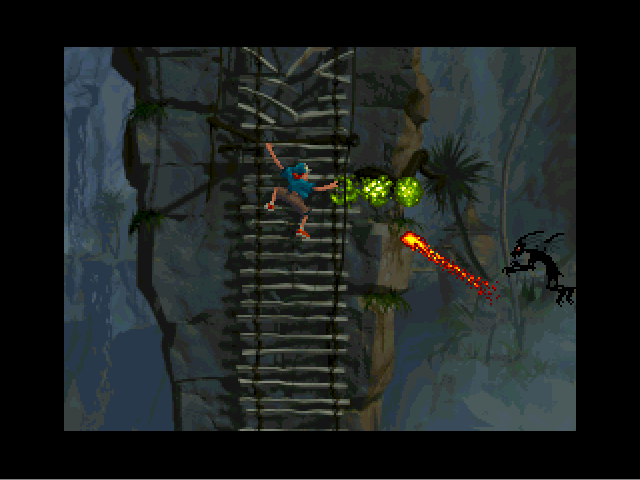
Heart of Darkness is one of those games that carries an enormous amount of history on its shoulders — and somehow manages to live up to most of it. Designed by Éric Chahi along with his team at Amazing Studio, it was a spiritual successor to his pioneering cinematic platformer Another World, and the weight of that legacy is felt in every frame.
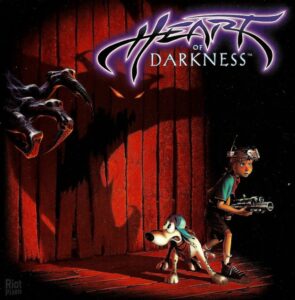
The game places you in the role of a child named Andy as he attempts to rescue his dog, who has been kidnapped by shadow-like spectres — and it does so across thousands of hand-drawn animated frames and nearly half an hour of cinematic sequences. It is ambitious, gorgeous, occasionally maddening, and completely essential for anyone serious about this genre.
Year: 1997
Developer: Amazing Studio
Atmosphere: Dark Fantasy · Dreamlike · Dangerous
Visual Style: Hand-drawn Animation · Cinematic 2D
Focus / Pace: Puzzle Platforming · Deliberate
Platforms: PlayStation · Windows
Why Heart of Darkness stands out
Heart of Darkness might be better known for its lengthy, troubled development than for the game itself. Development began in 1992, the game was not publicly unveiled until 1995, and it spent so long in development that multiple target platforms — including the 3DO and the Sega Saturn — became commercially unviable before it could release.
Virgin Interactive even dropped funding for the project in December 1996, but the team chose to persevere. The fact that the finished game is as polished and cohesive as it is, given everything that happened during its production, feels like a minor miracle. What came out the other side is a dark, cinematic, hand-crafted adventure that anticipated the atmospheric depth later seen in titles like Limbo and Inside — years before either of those games existed.

The Story
Andy is a child who likes playing with his dog Whisky, doesn’t particularly enjoy going to school, and has a knack for inventing complicated gadgets. He is also a boy with a fear of the dark. One day, during a solar eclipse, the shadows come alive and snatch Whisky away into a hostile parallel world known as the Darklands. Without hesitation, Andy boards his homemade spaceship, takes out his plasma gun — another splendid invention — and sets off to fight the evil Master of Darkness and his minions.
The premise sounds deceptively light, almost like a children’s adventure film, and that tonal contrast is precisely what makes the story so effective. The Darklands are genuinely threatening — a shadow-drenched nightmare world populated by creatures that kill Andy in vivid, graphic detail. The first time you see a flying creature pick Andy up and snap his spine, complete with a loud crack, it is hard not to wince and question how this could have possibly slipped past the ratings board. That darkness gives the fairytale premise real teeth, and the tension between Andy’s boyish determination and the genuine horror surrounding him gives the whole journey an emotional texture that stays with you.
Graphics
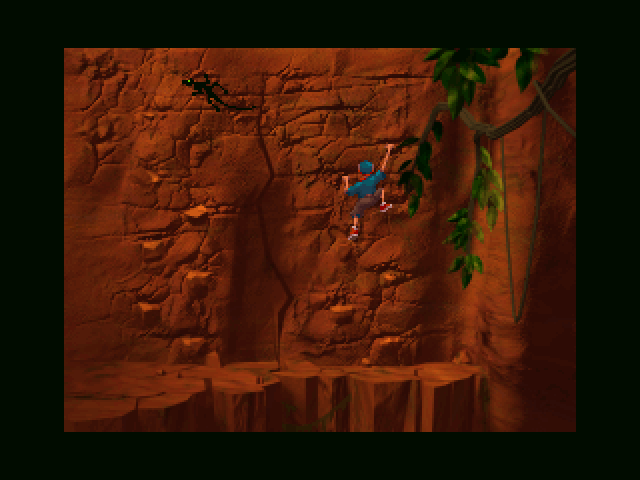
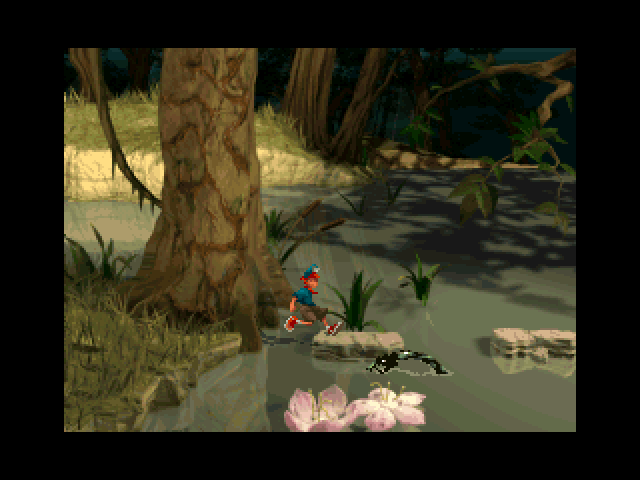
Éric Chahi conceived each screen like a painting — the textures were drawn with the idea of how they would fit together on each screen, and the lights were used to emphasize or attenuate forms and shapes, creating specific moods. The results are stunning even today. Even though the sprites are very pixelated, everything is bright and colorful, and not only are the hero and enemies carefully animated, but so are the backgrounds, full of innumerable details — reeds under water, rocks falling, plants swaying in the wind, red eyes blinking in the darkness.
What gives the visuals their lasting power is the sheer variety of environments Andy moves through. From swampy jungles to volcanic fortresses to dreamlike floating islands, each area has its own distinct visual identity and lighting mood. The game’s shadowy aesthetic and exploration of fear have left a clear mark on later platformers, inspiring developers through a shared emphasis on silhouette-based visuals and narrative-driven tension. Looking at Heart of Darkness now, with the benefit of hindsight, that influence feels completely earned.
🎬 Did You Know?
The soundtrack of Heart of Darkness was composed by Bruce Broughton, an Academy Award-nominated film and television composer. It was one of the first fully orchestral scores ever recorded for a video game — a remarkable creative choice for 1998, and one that gives the game a cinematic grandeur that few of its contemporaries could match.
Gameplay
Heart of Darkness is a platformer with step-based movement, meaning that actions are delayed after you push the button in order to accommodate complex player animations. If you have played Another World, the feel will be immediately familiar — deliberate, weighty, and unforgiving. Andy can sprint, jump, and unusually for a cinematic platformer, he can also double-jump, which is very useful for dodging projectiles and clearing wider gaps.
Where the game gets genuinely interesting is in how it handles combat and puzzle-solving. Andy’s primary means of attack is a magical energy he acquires by touching a glowing rock. You can fire single shots or charge up for a more damaging blast, and that charged shot can also be used to manipulate the environment — making plants grow from seeds, or destroying obstacles in your path. There is also a remarkable shadow mechanic where, in certain situations, you must push an object’s shadow with your own in order to move the object itself. It is one of the most inventive ideas in the entire genre, and the fact that the game does not use it more often is one of its few genuine missed opportunities.
The little caveat is that the gameplay has real rough edges. Enemies take an inconsistently long time to kill, there is no cancel button for firing animations, and the frame rate runs at only around 15 frames per second to accommodate the animation quality. These flaws are most painfully felt in the combat-heavy final chapter, which features a unique enemy type that respawns two more of itself each time you kill it — a wall that feels more like luck than skill to overcome.
Pacing
Heart of Darkness moves with the confident, uncompromising rhythm of a game that knows exactly what kind of experience it wants to deliver. Quiet stretches of environmental exploration — picking your way through a swamp, cautiously crossing a shadow-filled cavern — are punctuated by sudden, high-stakes action sequences that demand fast thinking and precise execution. The contrast keeps you permanently alert, never quite sure whether the next screen will ask you to think or react.
The game is built like a series of tasks, each requiring different approaches — from arcade-style shooting and jumping to interacting with the environment and solving puzzles. That variety is what keeps the pacing feeling fresh across its runtime. The game also features more than 30 minutes of cinematic sequences woven throughout, which add spectacle and atmosphere but occasionally interrupt the flow at inopportune moments. Chahi himself was reportedly aware of this tension — he felt the cutscenes were too long and weakened interactivity, which he believed should always stay the main focus. He was not wrong, but even with that caveat, the overall pacing holds together remarkably well for a game that spent six years in development.
Atmosphere
Heart of Darkness builds its atmosphere around a single, brilliantly simple idea: what if the dark was genuinely alive and hungry? The Darklands are not just a visually gloomy setting — they are a world where shadows have agency, where the absence of light is itself the enemy. These deaths make the darkness of the game feel like an actual nightmare, giving the whole experience the texture of a dark fairytale. That feeling never fully leaves you, even in the game’s brighter, more colourful environments.
The orchestral score by Academy Award nominee Bruce Broughton, one of the first fully orchestral scores in a video game, really heightens the cinematic fantasy feeling throughout. It is a remarkable piece of work — sweeping and dramatic during the action sequences, quietly unsettling during the exploratory stretches, and always perfectly calibrated to the mood of whatever environment Andy is moving through. Combined with the hand-drawn visual detail and the constant sense that something dangerous is just off-screen, the atmosphere of Heart of Darkness achieves something genuinely rare: it makes you feel small, vulnerable, and completely invested in getting Andy home safely.
🎮 My opinion on Heart of Darkness
Heart of Darkness is a game I find genuinely difficult to be objective about, because its strengths are so extraordinary and its weaknesses are so specific and avoidable. The animation, the art direction, the music, the shadow mechanics, the sheer ambition of building a fully cinematic platformer over six years with a small team and dwindling resources — all of it points to something that should be spoken about as one of the great games of its era.
By the time Heart of Darkness released in 1998, it could not help but feel somewhat dated next to games like Ocarina of Time, Half-Life, and Metal Gear Solid. That context is important, because the mixed reception it received on launch has unfairly defined how the game is remembered. Over time it has earned genuine cult classic status, praised for its hand-drawn animations and moody environments as timeless elements that stand apart from its contemporaries. That reassessment feels entirely right to me. The sluggish combat and the abrupt ending are real frustrations, but they do not come close to undoing what the game gets so spectacularly right. If you love this genre and have not played Heart of Darkness, you are missing one of its most important and most beautiful entries.
Where can I play Heart of Darkness?
Heart of Darkness was originally released in 1998 on PlayStation and Windows PC. Unfortunately, it has never received an official digital re-release, which makes it one of the harder games in the genre to access today. Physical PlayStation and PC copies do surface regularly on second-hand marketplaces, and the Windows version can be made to run on modern systems with a little patience. It is absolutely worth the effort.
Games similar to Heart of Darkness
If the dark fairytale atmosphere, hand-drawn animation, and brutal trial-and-error challenge of Heart of Darkness resonated with you, these two cinematic platformers deserve your attention next.
Another World / Out of This World
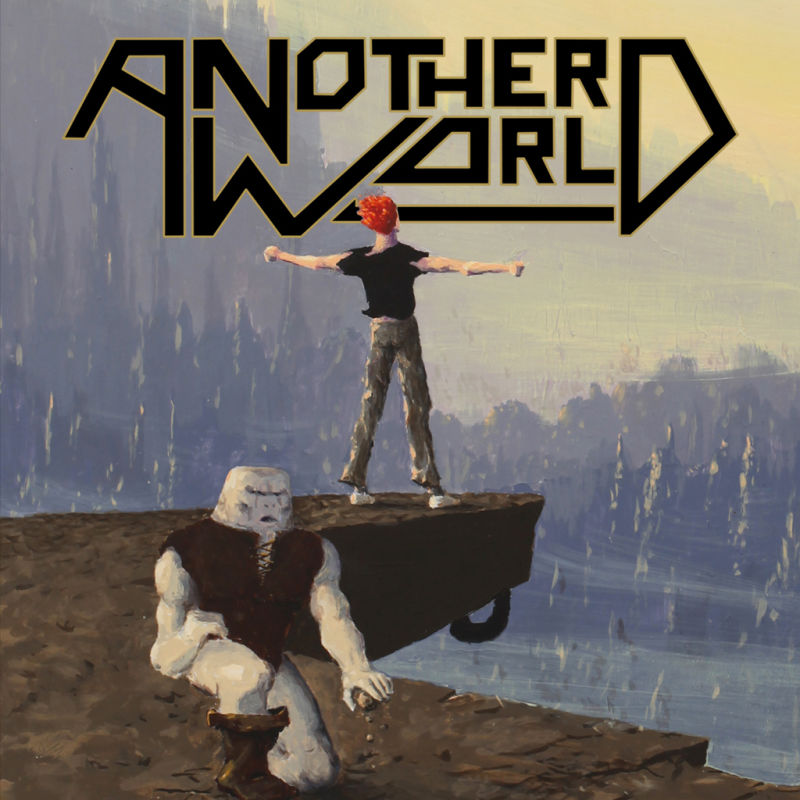
Another World is the direct creative predecessor to Heart of Darkness, and playing both in sequence is one of the most rewarding experiences the genre has to offer. It shares the same deliberate movement, the same wordless environmental storytelling, and the same willingness to kill you suddenly and without mercy. Shorter and more refined than its spiritual successor, it remains the gold standard against which every cinematic platformer is measured.
Little Nightmares
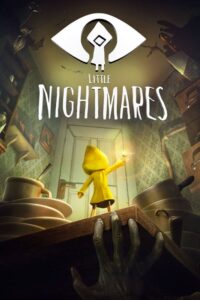
Little Nightmares takes the dark fairytale premise of Heart of Darkness and pushes it into genuinely terrifying horror territory, building its world around the same core idea of a small, vulnerable child navigating a world that is enormous, hostile, and actively trying to consume them. Its cinematic staging, grotesque creature design, and oppressive atmosphere make it the closest modern equivalent to the specific dread that Heart of Darkness does so well.
If you are drawn to games that combine hand-crafted animation, genuinely threatening dark fantasy worlds, and the specific satisfaction of cinematic platforming at its most uncompromising, titles like Oddworld: Abe’s Oddysee, Blackthorne, and Heart of the Alien offer wonderful alternatives that sit right alongside Heart of Darkness in the genre’s classic catalogue.