
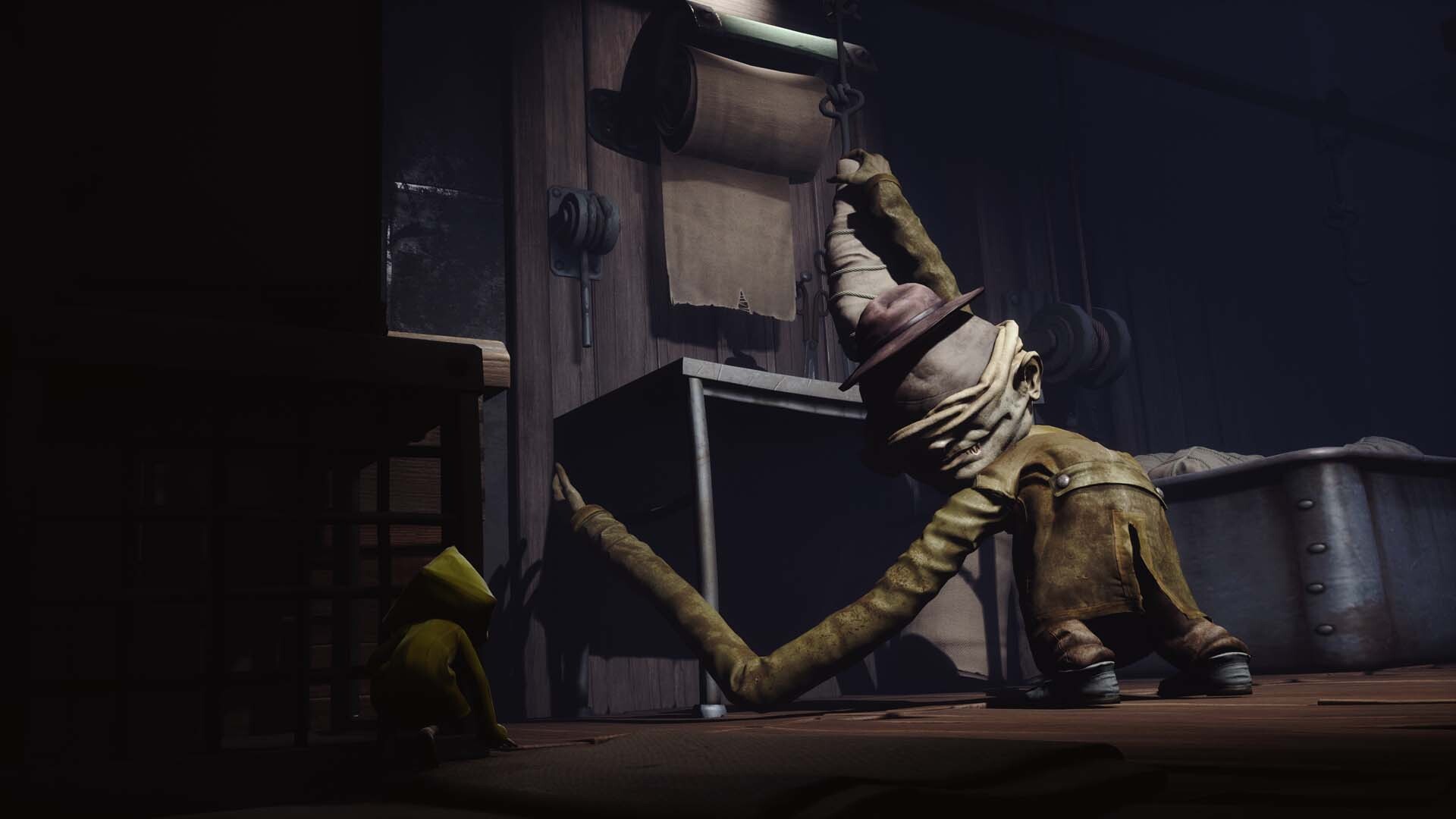
I have played through the Little Nightmares series multiple times, and I still find myself going down rabbit holes at midnight, reading fan theories about what Six’s hunger actually means or whether Mono was always destined to become the Thin Man. That is the specific genius of what Tarsier Studios built — a world that gives you just enough to understand, and just enough ambiguity to keep you thinking long after the credits roll.
This article is my attempt to lay out the lore as clearly as possible across the full series— including the overlooked mobile prequel — in a way that makes sense without flattening the mystery entirely. I will flag where things are confirmed, where they are strongly implied, and where we are genuinely in theory territory. The series rewards careful attention, and I think you deserve a breakdown that respects that.
⚠️ Full spoilers ahead for Little Nightmares I, II, III, and Reanimal. If you have not finished all four, bookmark this and come back.
Story & Timeline: What order does it all actually happen in?
A timeline that loops
Story order, not release order — and one part of it never stops repeating.
Very Little Nightmares
Mobile prequel. The girl in the yellow raincoat, before Six wears it.
Little Nightmares II
Mono & Six reach the Signal Tower. Mono falls.
Little Nightmares
Six, alone in the Maw. The Thin Man is already out there.
Little Nightmares III
Low & Alone, in The Spiral. Loosely connected to the loop.
↻ THE LOOP — Mono becomes the Thin Man, hunts his younger self, falls again.
Reanimal (2026)
Not set in the Nowhere. No confirmed link to the loop above — but the same DNA runs underneath it.
Before diving into each game individually, it’s worth answering the question I get asked more than almost any other: what order is this all actually happening in? The honest answer is that the series is built around a time loop, which makes “chronological order” a genuinely strange thing to pin down — but I’ll give you my best read.
The earliest point in the timeline is Very Little Nightmares, a mobile prequel that most people miss entirely because it never came to consoles. It follows an unnamed girl in a yellow raincoat — not Six, though the two cross paths — trying to escape a cliffside mansion called the Nest. I won’t spoil how it ends, but it’s the reason Six is wearing that raincoat when we meet her properly in the first game, and it retroactively adds a layer of grief to an object I used to think was just a great piece of character design.
From there, my honest ordering is: Very Little Nightmares, then Little Nightmares II, then Little Nightmares, then Little Nightmares III. That looks backwards if you’ve only played the mainline games in release order, and I want to be upfront that this is where the series stops being a simple line and starts being a loop — Mono’s ending in II is also, in a sense, the beginning of what happens to him in I, which is the whole point of that ending landing the way it does. Little Nightmares III sits more loosely connected to this chain; it shares the Nowhere as a setting, but I wouldn’t say it slots into the loop the same way the first two games do.
I’ll also flag, since it’s easy to miss: Tarsier has put out lore beyond the games themselves, including a run of comics and an audio drama series. I haven’t found either essential to understanding the core story, but they’re there if you want to go deeper, and I may cover them properly in a future piece.
None of this is stated outright by the games. It’s my attempt to make sense of a series that, by design, does not want to be fully mapped out — so take the ordering above as my best reading, not gospel.
The world of Little Nightmares — What is the Nowhere?
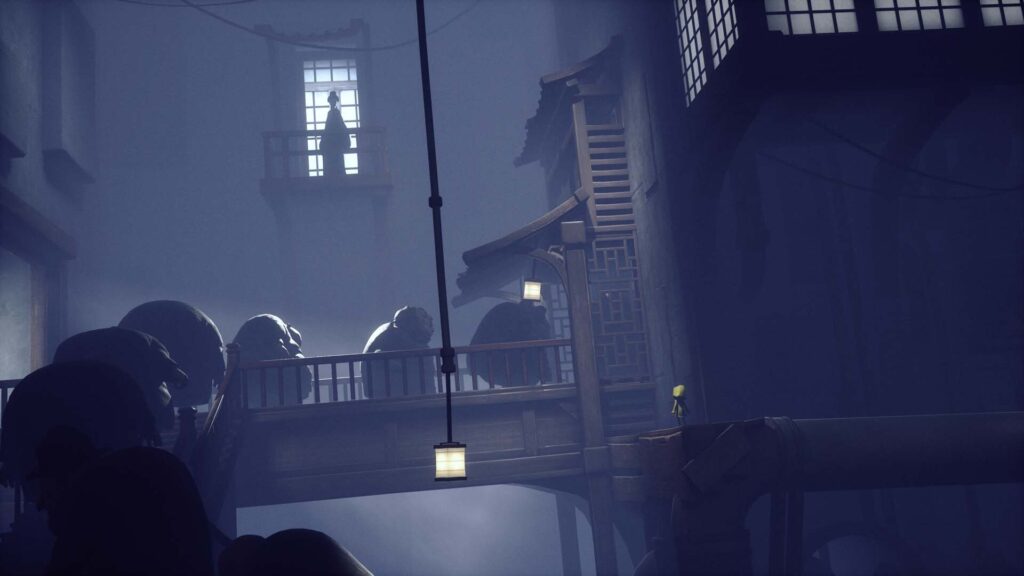
Before getting into individual stories, it helps to understand what kind of world the Little Nightmares series takes place in — because it is not quite our world, and not quite a fantasy world either. It is something stranger and more specific than both.
The series takes place in a reality called The Nowhere — a dimension that exists alongside or beneath the real world, shaped by fear, hunger, and the unconscious anxieties of children. It is not one fixed location but a shifting collection of environments, each built around a specific horror: the Maw is about consumption and appetite, the Pale City is about surveillance and conformity, The Spiral in Little Nightmares III is about childhood trauma and memory. Each world in the series is essentially a materialised nightmare — the physical manifestation of something deeply wrong.
The inhabitants of the Nowhere exist on two scales. There are the children — small, vulnerable, dressed in simple clothes, with no explanation of where they came from or why they are there — and there are the adults, who are grotesquely oversized, deformed, and fixated on consuming, controlling, or destroying the children around them. This scale contrast is not incidental. It is the entire visual logic of the series: the adult world, experienced from a child’s perspective, is monstrous. Every enemy in Little Nightmares is an exaggeration of something real — a hunger, a cruelty, a power that adults hold over children and that children have no language for except fear.
The Nowhere is connected across its different locations — characters and objects recur across games, events in one story ripple through others — but the connections are never made explicit. The series trusts you to notice them.
Little Nightmares I — Six’s story explained
Six is a small girl in a yellow raincoat. That is everything Little Nightmares tells you about her upfront, and honestly it is enough — the yellow raincoat becomes one of the most iconic images in the genre precisely because it says everything through contrast. Small. Bright. Alone. In a world that is dark, enormous, and hungry.
The Maw is a vast underwater vessel — part luxury cruise ship, part slaughterhouse — where grotesque adult guests arrive to be fed and where the children who do the feeding are kept as slaves. Six wakes up somewhere in the bowels of this place and has to climb her way up through it, level by level, past the Janitor with his impossibly long arms, past the Twin Chefs preparing unspeakable meals, and finally to the Lady — the pale, masked figure who rules the whole thing.

The surface reading is a simple escape story. But there are two things that complicate it, and I think they are the heart of what Little Nightmares I is actually about.
The first is hunger. Six is starving throughout the game — visibly, mechanically, insistently. She doubles over with stomach cramps. She eats whatever she can find. And at one point, in the most disturbing moment of the game, she finds a Nome — one of the small, harmless creatures she has been helping — and eats it. Not because she has to. Because she cannot stop herself. My interpretation of this is that Six’s hunger is not just physical. It is the hunger of someone who has been denied everything for so long that she has lost the ability to distinguish between what she needs and what she is becoming. The Maw is turning her into what it produces.
The second is the ending. Six reaches the Lady, absorbs her power through some mechanism the game does not explain, and uses it to drain the life from every guest on the Maw. Then she walks out. No relief. No emotion. Just a small girl in a yellow raincoat stepping over bodies and leaving. My reading is that Six does not escape the Maw unchanged. She escapes it having become something the Maw made her — powerful, hungry, and no longer entirely innocent. The game ends on that note deliberately. There is no rescue. There is only survival, and what survival costs.
Little Nightmares II — Mono and Six explained
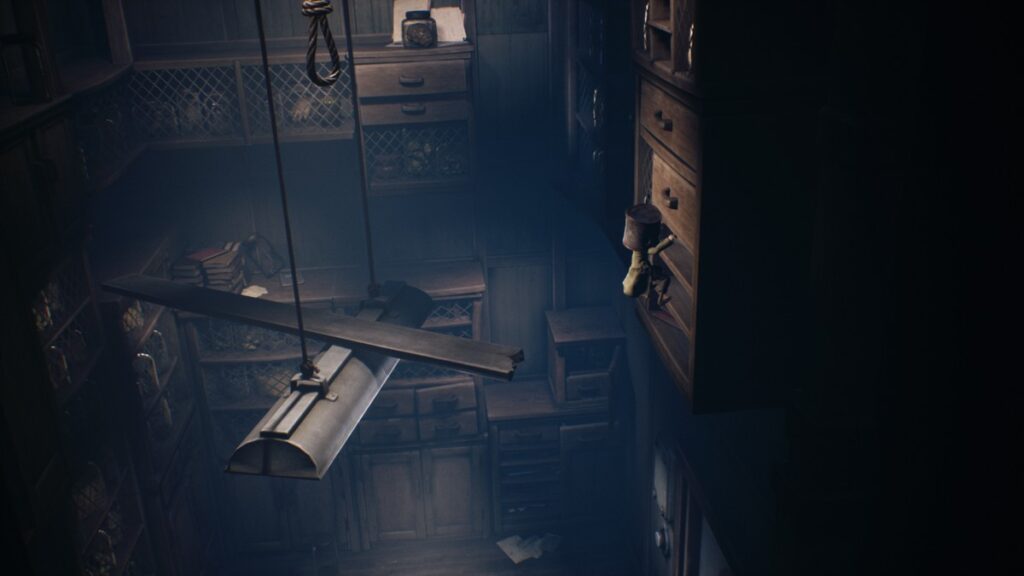
Little Nightmares II is the game I think about most, because its ending does something genuinely remarkable — it reframes everything that came before it and leaves you with a specific kind of dread that I find hard to shake even now.
You play as Mono — a boy with a paper bag over his head — who meets Six early in the game and the two of them travel together through the Pale City, a television-haunted urban nightmare where the population has been turned into distorted, shambling creatures by signals broadcast from a tower on the horizon. The Signal Tower is the source of everything wrong with this world, and Mono and Six are trying to reach it and shut it down.
The journey takes them through some of the most frightening environments in the series — a school ruled by a sadistic Teacher, a hospital full of hands, the grotesque streets of the Pale City itself — and the relationship between Mono and Six is the emotional core of all of it. They help each other, protect each other, and by the end I genuinely cared about both of them in a way the first game never asked me to care about Six alone.
And then the ending happens.
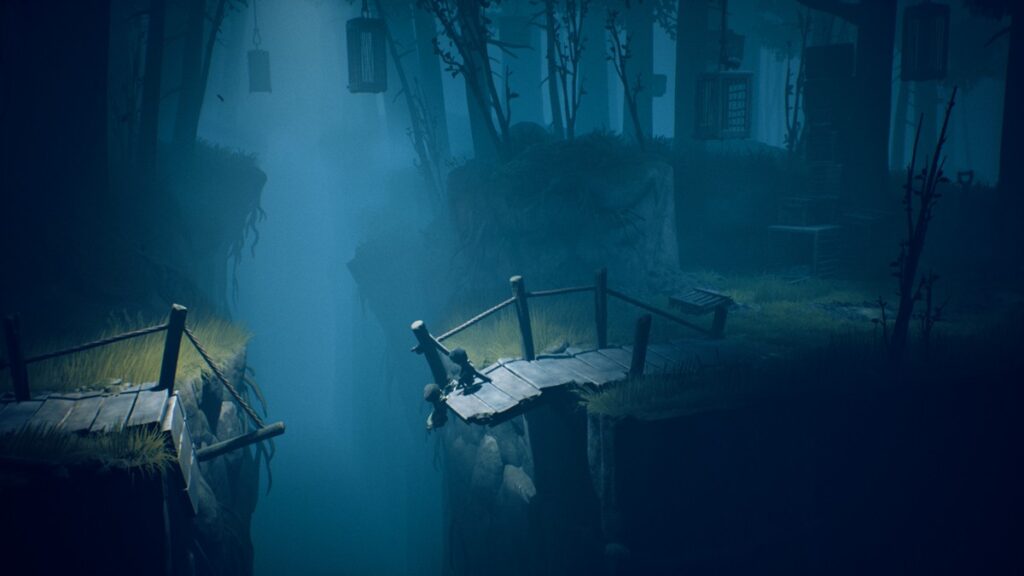
Mono reaches the top of the Signal Tower and defeats the Thin Man — a tall, suited figure who has been hunting them throughout the game. In doing so, he absorbs the Tower’s power and briefly becomes something else. Six, watching this transformation, lets go of his hand and drops him into the void below. She escapes. He does not.
The first time I saw this I genuinely sat back from my screen. Not because it was shocking in a horror sense, but because it was emotionally devastating — Six, who I had been protecting for the entire game, who I thought was my friend, made a choice I could not fully understand in the moment.
The explanation comes in the final reveal. Trapped in the Signal Tower, Mono grows up — slowly, impossibly — into the Thin Man. The very figure who was hunting Six and Mono throughout the game. He becomes his own antagonist. He is always going to hunt them. Six is always going to drop him. It is a closed loop — a time loop — and there is no escape from it.
My interpretation is that Six drops Mono not out of cruelty but out of self-preservation and perhaps something darker — the hunger again. The same thing that made her eat the Nome. The same thing the Maw built into her. She has learned, somewhere in that world, that survival requires letting things go. Even things you love. Whether that makes her a victim or a monster is the question the series leaves deliberately unanswered, and I think that ambiguity is the most honest thing about it.
Little Nightmares III — Low and Alone’s story explained
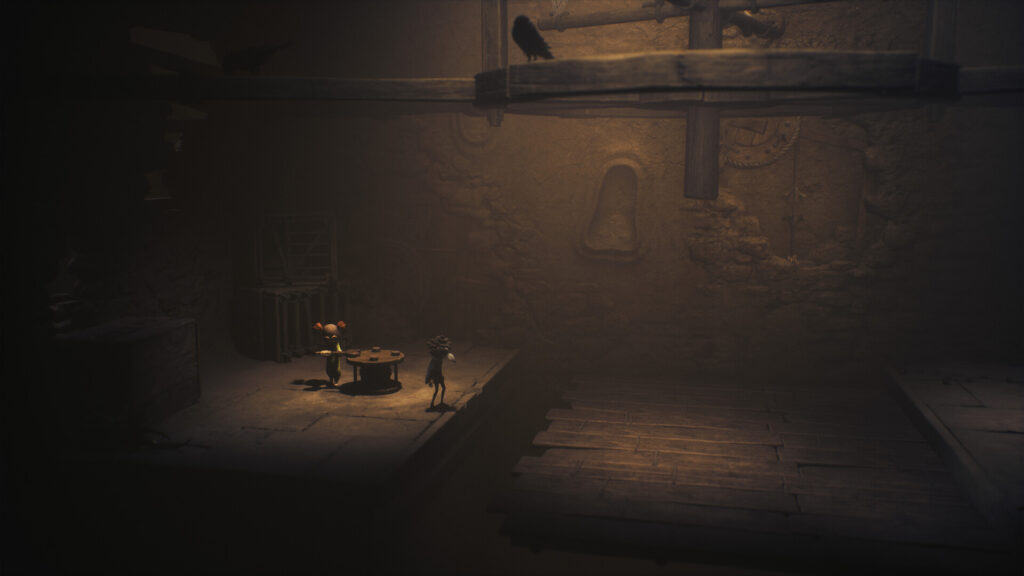
Little Nightmares III introduces two new protagonists — Low, a girl with a bow, and Alone, a boy with a wrench — and a new corner of the Nowhere called The Spiral. Unlike the Maw or the Pale City, The Spiral is explicitly described as a place made of lost and forgotten things — a kind of purgatory for children who have been swallowed by the dreamworld and cannot find their way out.
Low and Alone are trying to escape through four distinct worlds: a necropolis full of the dead, a dusty wasteland where birds are slaughtered industrially, the Carnevale — a twisted carnival that is the most visually inventive section of the game — and a final abstract environment where the nature of The Spiral becomes clearer. Each world has its own oversized antagonist and its own specific horror logic, connected by the central thread of two children who have only each other.
I want to be honest about my experience of the story here: it is the least legible of the three games, and I think that is partly a consequence of Supermassive not having Tarsier’s instinct for environmental storytelling. The broad strokes are clear — two lost children trying to find a way home, a world that is fundamentally hostile to their existence, a series of encounters with adults who represent different kinds of threat. But the connective tissue between worlds is thin, and some of what the game is trying to say about memory and loss gets lost in the noise of the spectacle.
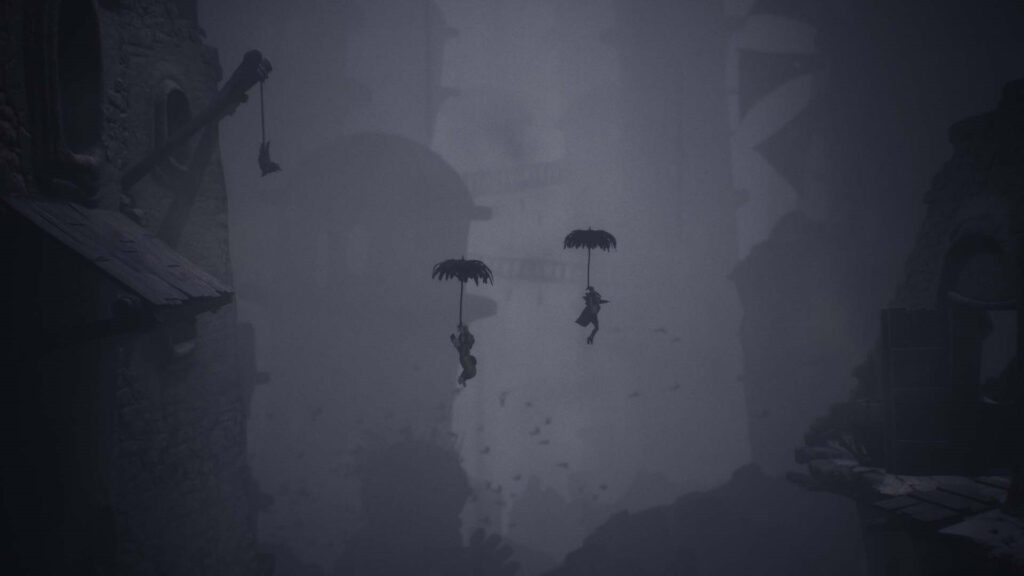
What does land is the relationship between Low and Alone. The game earns genuine warmth between them in ways that feel less calculated than the Mono and Six dynamic — simpler, less tragic, more straightforwardly about the comfort of not being alone in a terrifying place. The ending is darker than that warmth suggests, and deliberately so. I will not spoil it here, but my reading is that The Spiral is less a place you escape from and more a place that changes you — and the question of whether Low and Alone leave it as the same children who entered is left deliberately open.
My honest feeling after finishing it: Little Nightmares III adds to the mythology of the Nowhere without deepening it. It expands the world laterally rather than vertically. For fans who want more time in this universe, that is enough. For fans who want the kind of gut-punch storytelling that Little Nightmares II delivered, it falls short.
Reanimal — How it connects to little nightmares
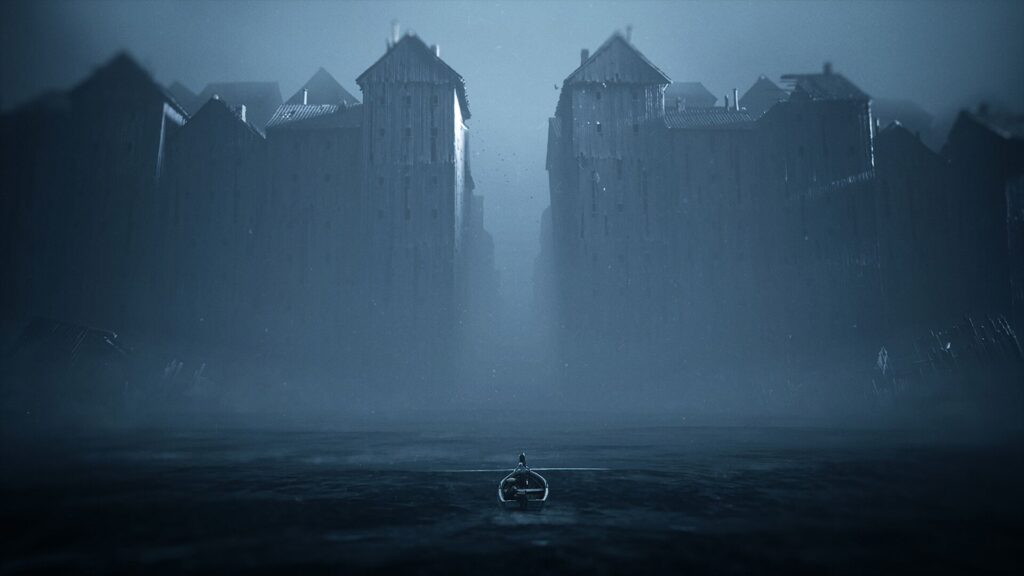
This is the section I find most interesting to write, because the connection between Reanimal and Little Nightmares is real but deliberately unmapped — and I think that ambiguity is intentional on Tarsier’s part.
Reanimal is not set in the Nowhere. It does not feature Six or Mono or any character from the Little Nightmares series. It has its own world, its own mythology, its own story. On the surface, the two are separate.
But spend any time with both and the thematic DNA is impossible to ignore. Both series are built around small, vulnerable children navigating an adult world that is grotesquely oversized and fundamentally hostile. Both use environmental horror rather than jump scares. Both tell their stories wordlessly, trusting image and atmosphere to carry the emotional weight. Both are interested in what childhood trauma looks like when given physical, monstrous form.
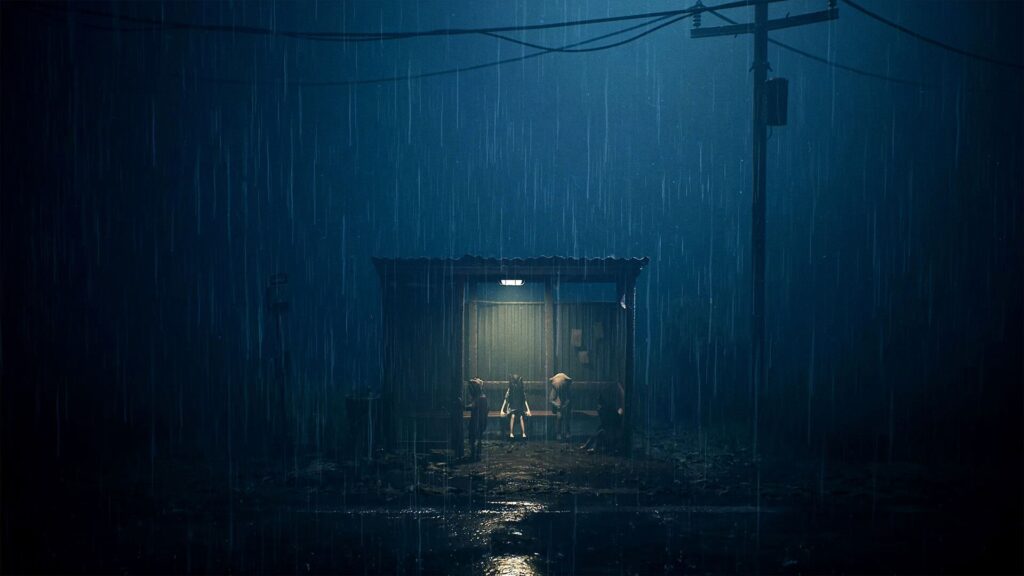
Where I think Reanimal connects most specifically is in the treatment of the companion dynamic. The bond between the siblings in Reanimal — the shared camera, the proximity mechanic, the way the game punishes separation — feels like Tarsier answering a question Little Nightmares II raised and never fully resolved: what does it actually mean to stay together? In Little Nightmares II, Six and Mono are together until Six makes the choice to let go. Reanimal is built around the premise that letting go is not an option. The siblings die if they separate. The game makes the emotional logic of the companion relationship mechanical in a way Little Nightmares never did.
My interpretation is that Reanimal is not a sequel to Little Nightmares but a response to it — Tarsier working through the same obsessions with more creative freedom, more mature themes, and the benefit of everything they learned across three games in the earlier series. Whether the two universes are literally connected is something Tarsier has never confirmed and I suspect never will. But thematically, emotionally, and visually, Reanimal feels like the continuation of something Little Nightmares started.
The biggest unanswered questions
The Little Nightmares series is built on deliberate ambiguity, and I think respecting that means being honest about what we genuinely do not know — rather than presenting fan theories as confirmed lore. Here are the questions I find most interesting, and my honest read on each.
Why does Six have hunger powers? The game never explains where Six’s ability to absorb the Lady’s power comes from, or why her hunger manifests as something supernatural rather than just physical. My interpretation is that the Maw created it — that the specific horror of that place, which runs on appetite and consumption, somehow amplified something already in Six. But that is a reading, not a confirmation. Tarsier has never explained it directly, and I think that is deliberate.
Is the Thin Man always Mono? The time loop ending of Little Nightmares II strongly implies yes — Mono falls into the Signal Tower, grows into the Thin Man, hunts his younger self, gets defeated by his younger self, and the cycle repeats. It is one of the most elegantly cruel structures in the series. But the game does not confirm it with complete certainty, and there are details — the Thin Man’s behaviour, his relationship to the Tower — that do not map perfectly onto a simple loop. I believe it is true. I cannot prove it.
What are the Nomes? The small, hooded creatures that appear throughout the series are one of its most persistent mysteries. They are clearly significant — they appear across multiple games, they interact with the protagonists, and Six eating one in the first game is one of the most disturbing moments in the series. My best reading is that they are children who have been in the Nowhere so long they have been transformed — remnants of people who lost themselves to the world. But I hold that loosely.
What is the Lady’s relationship to Six? There is a theory — supported by DLC content and environmental details — that the Lady and Six are connected in ways that go beyond simple antagonist and protagonist. Some fans read the Lady as a future version of Six, or as what Six is being shaped to become. I find this compelling but unconfirmed. What I do believe is that the Lady is not simply a villain — she is a prisoner of the Maw as much as anyone else, maintaining a system she did not choose and cannot escape.
Is The Nowhere the same world across all games? My reading is yes — the Maw, the Pale City, The Spiral, and the island of Reanimal all exist within the same broader dreamworld — but the series never confirms this explicitly. The recurring visual motifs, the similar scale logic, and the occasional crossover details suggest a shared universe. Whether Tarsier ever intends to make that connection explicit is another question entirely.
FAQ
Six is the protagonist of the first game — a small girl in a yellow raincoat trying to escape the Maw. She returns as a supporting character in Little Nightmares II. She is not a straightforward hero, and the series is deliberately ambiguous about what she becomes over the course of her journey.
The game never explains it directly. My reading is that Six sees something in Mono’s transformation and makes a survival calculation — shaped by everything the Maw did to her, she lets go. Whether that makes her a villain or a victim is the question the series leaves deliberately unanswered.
A vast underwater vessel — part luxury resort, part slaughterhouse — ruled by the Lady. Grotesque adult guests arrive to be fed, and the children who serve them are kept as slaves below decks. What exactly is being served is left deliberately unclear.
Not officially. But thematically and visually, the connection is impossible to ignore — same DNA, same obsessions, same visual language. My reading is that Reanimal is Tarsier working through the same ideas with more freedom. Whether the two universes are literally connected has never been confirmed.
The dreamworld in which the series takes place — a dimension shaped by fear and childhood anxiety. The Maw, the Pale City, and The Spiral are all locations within it. Whether anyone ever truly escapes the Nowhere is one of the series’ most persistent open questions.