
Description
Little Nightmares III was not made by Tarsier Studios — the team who created the series. After the franchise changed hands, Bandai Namco gave the third entry to Supermassive Games, the studio behind Until Dawn. Tarsier went away and made Reanimal.
That context matters. What Supermassive delivered is atmospheric, faithful, and occasionally genuinely frightening — but it feels, at times, like a game made by people who studied Little Nightmares carefully rather than people who invented it.
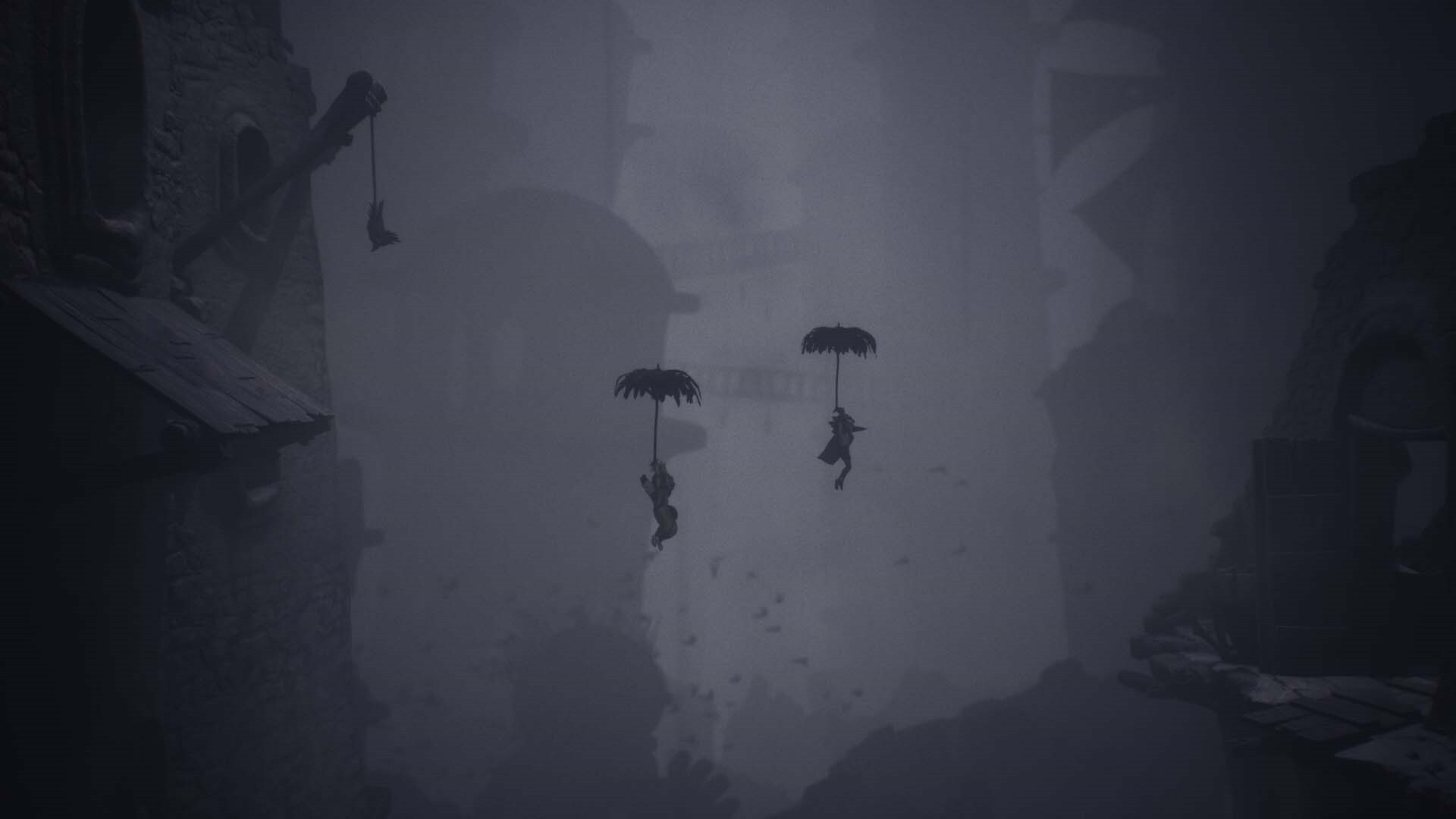
Developed by Supermassive Games and published by Bandai Namco, Little Nightmares III released in October 2025. You play as Low and Alone — two children trapped in The Nowhere, a dreamworld of interconnected horrors — navigating four distinct environments and trying to find a way out. Low has a bow. Alone has a wrench. For the first time in the series, it is designed as a cooperative experience.

Year: 2025
Developer: Supermassive Games
Atmosphere: Surreal Horror · Dark Fantasy · Oppressive
Visual Style: 3D Cinematic · Series Visual Language
Focus / Pace: Stealth Platforming · Methodical
Platforms: PlayStation 4 · PlayStation 5 · Xbox One · Xbox Series X/S · Windows · Nintendo Switch · Nintendo Switch 2
Little Nightmares III vs Tarsier’s Games
The honest comparison is uncomfortable to make but necessary. Tarsier built the Little Nightmares series on a very specific foundation: the sense that the world was created by someone who had genuinely disturbing things to say, not just disturbing images to show. Every nightmare in Little Nightmares I and Little Nightmares II felt personal and specific — rooted in real childhood fears rather than generic horror imagery. Supermassive have recreated the visual language with considerable skill. What they have not quite managed is that underlying sense of personal investment.
Btw, for the full picture — how Little Nightmares III connects to the earlier games, what The Nowhere actually is, and the biggest unanswered questions across the series — our complete lore breakdown is a good place to start.
The environments are well designed. The creature designs are creepy. The atmosphere is intact. But I noticed — particularly in the first half — that the set pieces feel more like references to what Little Nightmares does than genuine extensions of it. And then, four months after Little Nightmares III came out, Reanimal arrived, and the contrast was stark. Reanimal felt raw and personal in a way Little Nightmares III never quite does. If you want to know what Tarsier was always really trying to build, Reanimal is the answer. If you want more Little Nightmares and you are not too precious about who made it, this delivers.
The Story
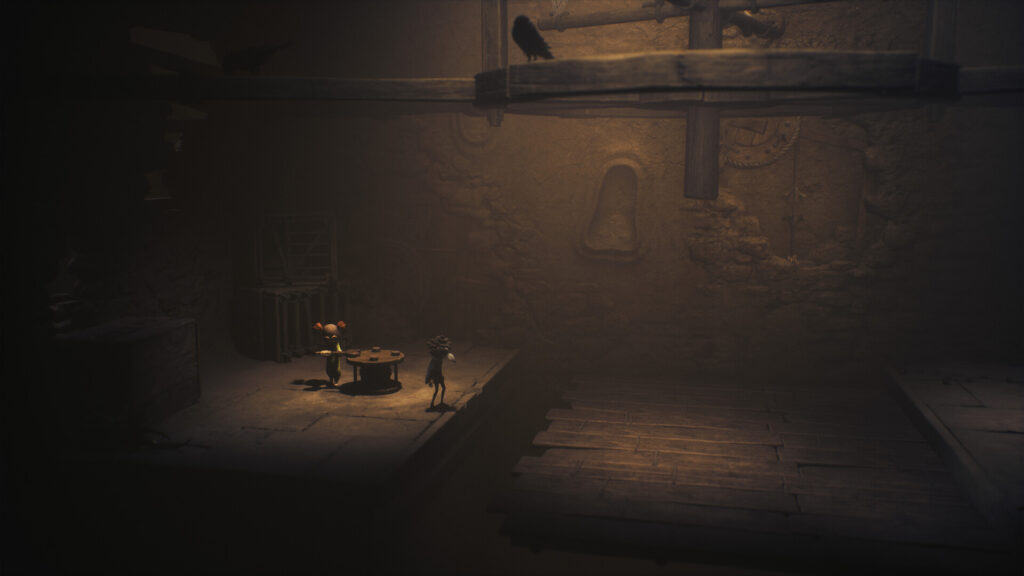
Low and Alone are trapped in The Nowhere — a shifting dreamworld — and need to find a way out. The story is told in the series’ trademark wordless style, with environmental details and brief visual sequences doing the narrative heavy lifting. The emotional core of the relationship between the two protagonists is handled warmly, and I found myself more invested in them than I expected.
The four chapters take you through a necropolis, a dusty wasteland, a carnival, and a more abstract final environment. The Carnevale chapter is the standout — visually the most inventive and the most frightening of the four, and the one where Supermassive feels most confident. The first chapter, by contrast, is the weakest — too light in tone and too slow to establish the sense of dread the series depends on. The game finds its footing around the halfway point and does not let go.

Graphics
Strong and faithful to the series’ visual language. Supermassive’s backgrounds and creature designs look like Little Nightmares, which is both a strength and — occasionally — a limitation. There are moments of genuine visual inventiveness, particularly in the Carnevale, and the technical execution is polished throughout. But there are also stretches where it feels like the team is colouring inside lines rather than drawing new ones.
Gameplay
The addition of tools — Low’s bow and Alone’s wrench — was the most anticipated new mechanic, and I think the honest verdict is that they are underutilised. There are satisfying moments where the bow creates solutions that feel genuinely clever, but these are less frequent than the game’s marketing suggested. The core loop remains what it has always been — stealth, observation, puzzle solving, chase sequences — and it works because the series built a solid foundation. There are no revelations here, just competent execution of a known formula.
The depth perception issue is real and occasionally frustrating — the 3D environments make it harder to judge jump distances than the more controlled perspective of the earlier games, and I died more than once in ways that felt unfair rather than instructive.
The online-only co-op is the decision I find hardest to forgive. A game built around two characters being physically together, communicating, sharing the same space of fear — and you cannot play it on the same couch. The AI companion is serviceable but never creates the specific shared panic that makes the co-op concept worthwhile. Playing with a friend online gets much closer, but the absence of local co-op feels like a significant missed opportunity.
👾 Did You Know?
Little Nightmares III and Reanimal — Tarsier’s own new IP — were released just four months apart, in October 2025 and February 2026 respectively. The gaming press immediately drew comparisons, and the contrast was not kind to Little Nightmares III.
It is a genuinely unusual situation: the original creators of a franchise and their replacement releasing competing games in the same season, letting players vote with their playtime on which vision they preferred.

Atmosphere
Where Little Nightmares III succeeds most consistently. Supermassive clearly studied the series’ sound design and environmental craft with care, and the result is a game that sounds and feels like Little Nightmares throughout. The creature encounters are well staged, the ambient audio is appropriately oppressive, and the back half of the game generates genuine dread in ways the first two chapters do not.
Pacing
This is where Little Nightmares III struggles most. The first chapter is notably lighter in tone than the rest of the game — less threatening, less atmospheric, less urgent — and it takes longer than it should to establish the specific sense of dread the series depends on. I found myself waiting for the game to properly begin for the first hour, which is not a feeling the original Little Nightmares ever gave me.
Once it finds its rhythm — roughly around the Carnevale chapter — the pacing clicks into something much closer to what the series does best. The encounters become more memorable, the tension more consistent, and the final act genuinely gripping. But the road to get there is bumpier than it should be, with stretches that feel more like level design exercises than the flowing nightmare logic Tarsier perfected. The game plays better in co-op, where a second player fills the quieter sections with its own kind of tension. Solo, those stretches can feel genuinely empty.
🎮 My honest opinion
Little Nightmares III is a good game that I wanted to be a great one. It carries the series’ visual and atmospheric identity faithfully, delivers some genuinely memorable moments in its second half, and the Carnevale chapter alone is worth the entry price for genre fans. But it plays it safe in ways the series never used to, and the shadow of Tarsier’s departure — and Reanimal’s subsequent existence — makes the whole thing feel slightly like a tribute act rather than a continuation.
If you love Little Nightmares and want more of it, this delivers. If you want to know where Tarsier’s specific vision went after leaving the series, play Reanimal. Both are worth your time. Just know which one you are looking for.
Where can I play Little Nightmares III?
Little Nightmares III is available on Windows via Fanatical, and also on PlayStation 4, PlayStation 5, Xbox One, Xbox Series X/S, Nintendo Switch, and Nintendo Switch 2. The Friend’s Pass allows a friend to join your game for free without owning the full title.
Games similar to Little Nightmares III
If you loved Little Nightmares III, we have put together a full guide — 24 games like Little Nightmares — organised by atmosphere, protagonist, and what made the series unforgettable. Start there for your next game, or check these out:
Little Nightmares (2017)
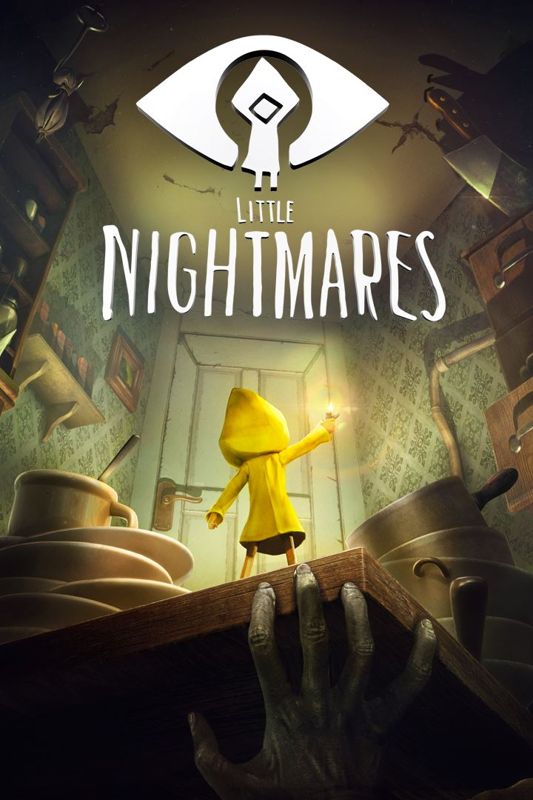
The original — and still the most purely effective entry in the series. If you have not played it, start there before coming to the third game. Everything that makes Little Nightmares III work traces directly back to what Tarsier built in 2017.
Reanimal (2026)

The elephant in the room. Reanimal is what Tarsier built after leaving the Little Nightmares series — darker, more personal, and in my view the more complete realisation of what the studio was always trying to achieve. Playing both back to back tells you everything about what changes when a creative team loses control of their own IP.
If you are working your way through the Little Nightmares series, the order matters. Start with the original, play Little Nightmares II, then come here — and then play Reanimal. That sequence tells the full story: where the series came from, what it became, where Supermassive took it, and where Tarsier’s own vision ultimately led.