
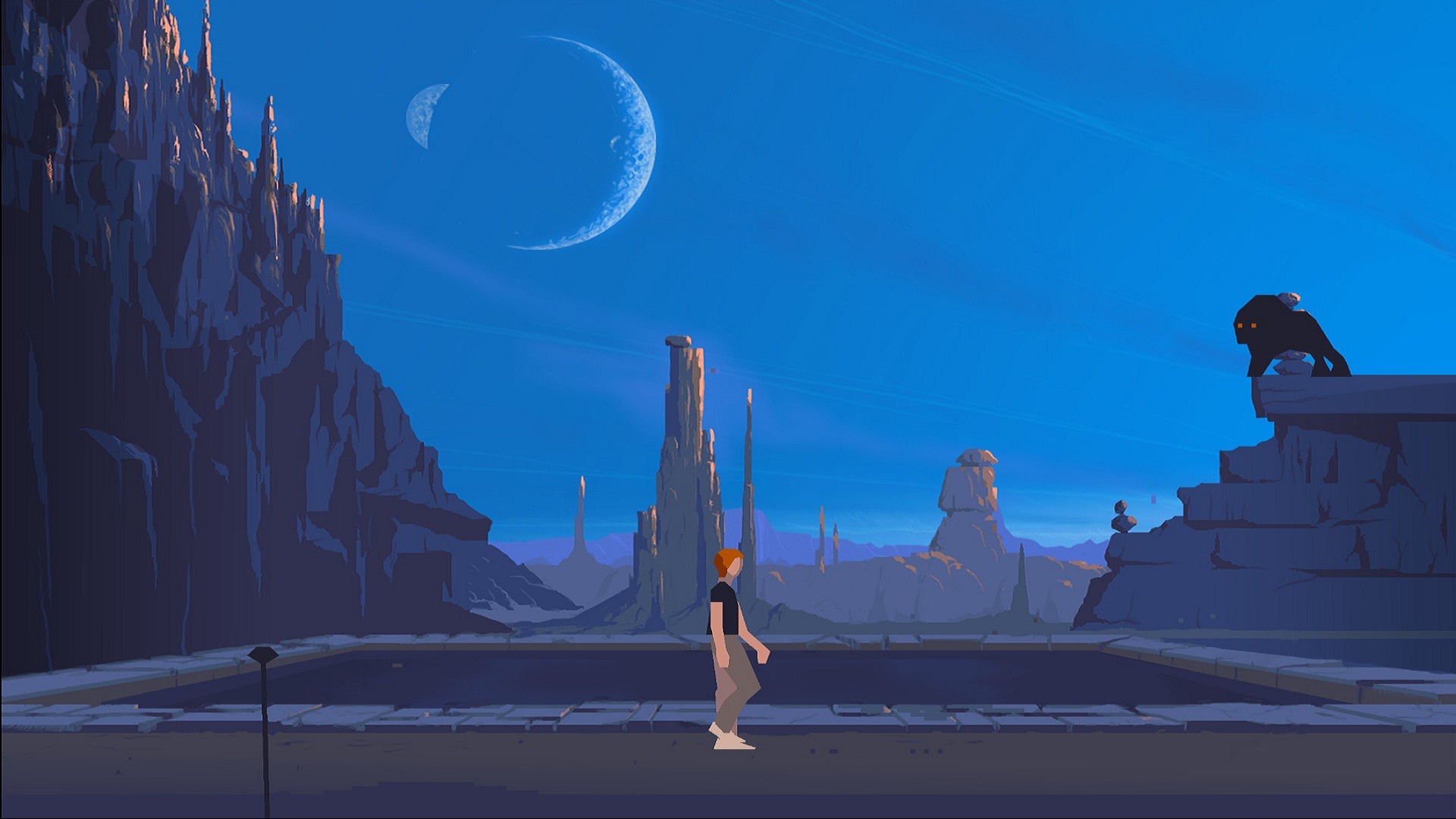
There is a specific feeling that the best cinematic platformers give you — and if you have felt it, you know exactly what I mean. It is the feeling of being inside a world rather than playing through one. A world that moves deliberately, that breathes, that has weight and atmosphere and a sense that something genuinely important is at stake. It is the feeling I got the first time I played Prince of Persia on an old IBM PC in 1990, at seven years old, watching a sprite move with a fluidity I had never seen in a video game before. I have been chasing that feeling ever since.
Cinematic platformers are one of gaming’s most distinctive genres — and one of its most misunderstood. They are not defined by difficulty, or by length, or by how many platforms you jump between. They are defined by a philosophy: that atmosphere, movement, and visual storytelling matter more than mechanics. That how a game feels to inhabit is as important as what you do inside it. That silence can carry a story further than dialogue. The best ones feel less like games and more like experiences — things that happen to you rather than things you play.
The genre was born in the late 1980s with Prince of Persia and Another World — games that used rotoscoped animation and cinematic framing to create something that looked and moved unlike anything that had come before. It survived the 1990s through Flashback and Oddworld and Heart of Darkness. It was reborn in the 2010s with Limbo and Inside, found new audiences through Little Nightmares and Gris, and is currently in what I think is its most creatively fertile period — with games like Replaced, Neva, Silt, and Reanimal pushing the genre in directions nobody anticipated.
This is my attempt to map the best of it. Not a simple ranked list — cinematic platformers resist that — but a curated guide through the genre’s history, its highlights, and the games that I think every fan should know about. It ends with my personal top ten, which is the only ranking that felt honest.
The essentials — cinematic platformers everyone should play
Some cinematic platformers are historically important. Others are simply unforgettable to experience. These games are both. If someone asked me where to start with the genre, these are the titles I would recommend first without hesitation. They helped define cinematic platformers through atmosphere, animation, environmental storytelling, and immersive side-scrolling design that still influence games today.
Another World (1991)

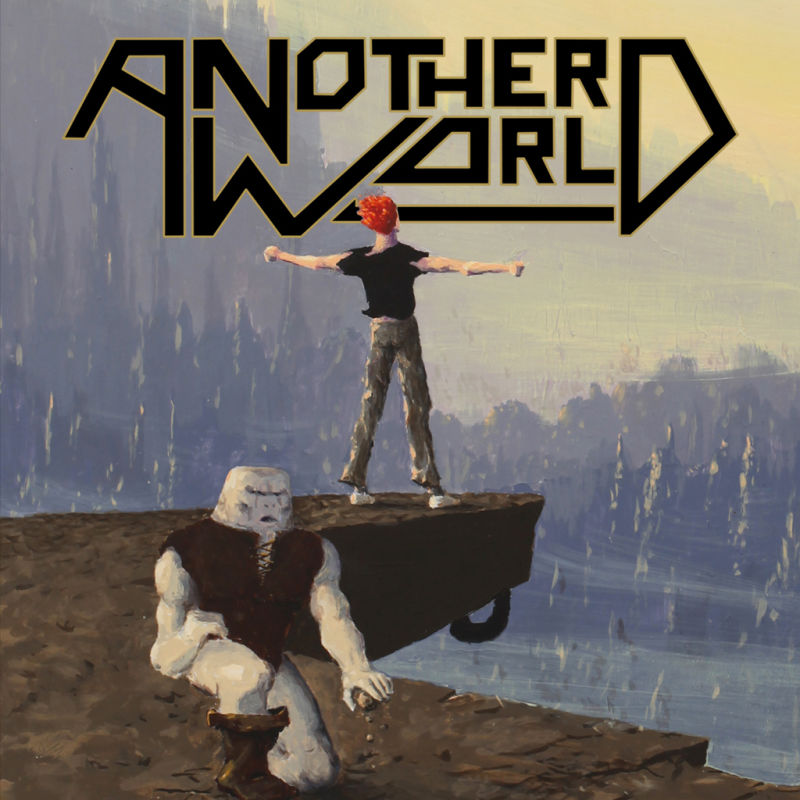
A physicist is transported to an alien planet after a particle accelerator accident during a thunderstorm. No HUD, no dialogue, no explanation — just Lester, a hostile world, and the specific feeling of being completely, irreversibly alone somewhere you were never meant to be. Built almost entirely by one person, Éric Chahi, on an Amiga 500 in his parents’ house in France.
Why it belongs here: Another World invented the template every game on this page follows. The atmospheric minimalism, the wordless storytelling, the cinematic framing — it all starts here. Nothing has fully replaced it in thirty-five years, and I do not expect anything to.
Inside (2016)
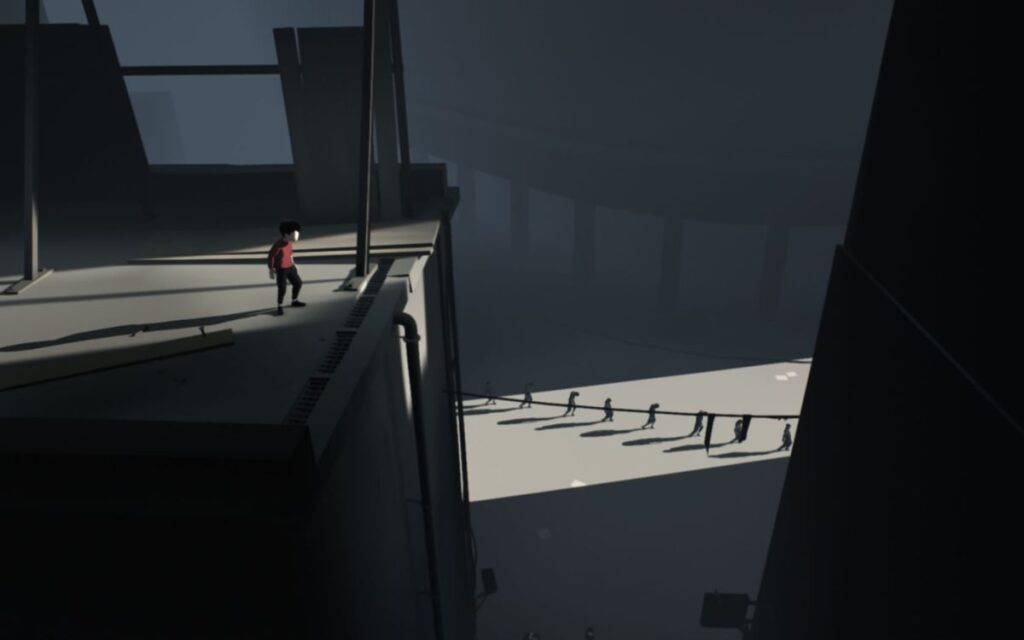
A small boy runs through a grey, authoritarian world toward an ending that nobody who has reached it has fully agreed on. Wordless, relentless, and built around a puzzle design so elegant it barely feels like puzzle design. Playdead’s follow-up to Limbo, and in almost every respect the more complete and more disturbing game.
Why it belongs here: Inside is the most perfectly realised cinematic platformer of the modern era. Every design decision serves the atmosphere, every atmospheric detail serves the story, and the ending stays with you for days. It is the game I recommend to anyone who wants to understand what this genre can do at its absolute best.
Flashback (1992)

A sci-fi action platformer from Delphine Software — the same studio that published Another World — following a resistance agent who wakes on Titan with no memory of who he is or why someone is trying to kill him. At the time of release, the best-selling French video game of all time. The most mechanically accomplished cinematic platformer of the 1990s.
Why it belongs here: Flashback took everything Another World started and built a fuller, richer, more narrative-driven game on top of it. If Another World is the poem, Flashback is the novel. Together they are the two essential texts of the genre’s founding era.
Limbo (2010)

A small boy moves through a monochrome forest and industrial world, solving physics puzzles and dying in creative, increasingly elaborate ways. The game that introduced the cinematic platformer to a modern audience — and the one that proved the genre could survive into the indie era with its identity intact.
Why it belongs here: Limbo is the entry point. It is short, immediately accessible, and atmospheric enough to hook anyone who has never thought about this genre before. Every person I have recommended it to has come back asking what to play next. That is the mark of a genuinely essential game. And it is the one tht started the modern revival – which we will see next.
Why isn’t Prince of Persia in the essentials?
It is not in the Essentials, and I want to be honest about why. Prince of Persia is one of the founding games of the entire genre — the rotoscoped movement, the cinematic framing, the realistic animation that influenced everything that followed. Historically, it belongs on any list like this without question.
But the Essentials section is about the games that best represent the full cinematic platformer experience today — atmosphere, environmental storytelling, immersion, cinematic pacing. While Prince of Persia is perfect in its own way, it misses a few elements that make it harder to return to cold nowadays.
The modern masterpieces
The 2010s and 2020s brought cinematic platformers back into the spotlight. These games modernized the genre through stronger atmosphere, cinematic storytelling, emotional pacing, and striking visual presentation while still preserving the immersive side-scrolling identity that made classic cinematic platformers so memorable.
If the Essentials are the foundation, these are the proof that the genre is still finding new ways to matter.
Little Nightmares (2017)

A small child in a yellow raincoat navigates a vast underwater vessel filled with grotesque, oversized adults. No dialogue, no explanation — just atmosphere, dread, and creature design that belongs in a nightmare. Tarsier Studios’ breakthrough game and one of the most visually distinctive entries in the genre.
Why it belongs here: Little Nightmares took the atmospheric minimalism of Inside and pushed it somewhere darker and more visceral. The scale contrast between the tiny protagonist and the monstrous adults around her is one of the most effective horror conceits in modern gaming. It created its own sub-genre almost overnight.
Gris (2018)
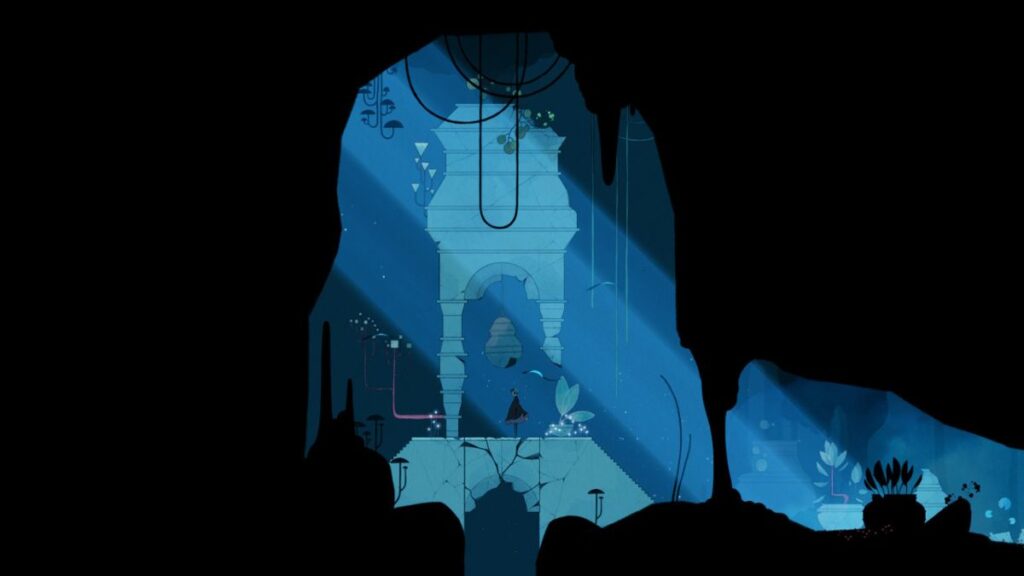
A young woman moves through a hand-painted world that shifts and rebuilds itself around her grief — from colourless and barren to rich and vivid as she finds her way back. No combat, no fail states, no explanation. Just one of the most visually extraordinary games ever made.
Why it belongs here: Gris proved that a cinematic platformer could be genuinely moving without being dark. The watercolour aesthetic, the wordless emotional arc, the score by Berlinist — everything works together with a coherence that most games never achieve. It is the game I recommend to people who think they do not like video games.
Planet of Lana (2023)
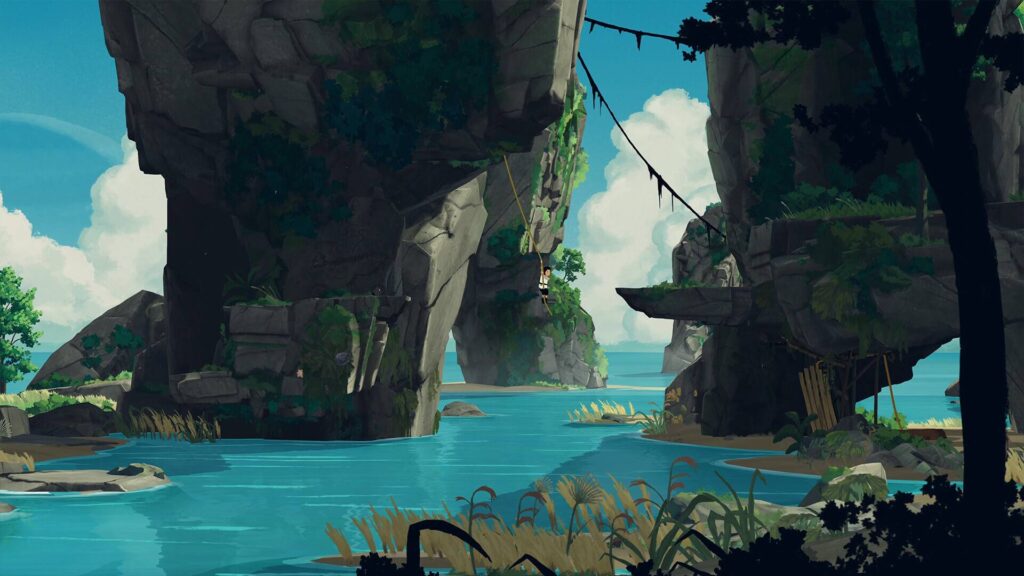
A hand-painted sci-fi platformer following a girl and her animal companion across a stunning alien world threatened by invading machines. Warm, generous, and visually extraordinary — the most accessible modern entry point into the genre after Gris.
Why it belongs here: Planet of Lana is what the genre looks like when it is firing on all cylinders — beautiful environments, intuitive puzzle design, an emotional core that earns its ending. It introduced a new generation of players to cinematic platformers and delivered something genuinely special in the process.
Replaced (2026)
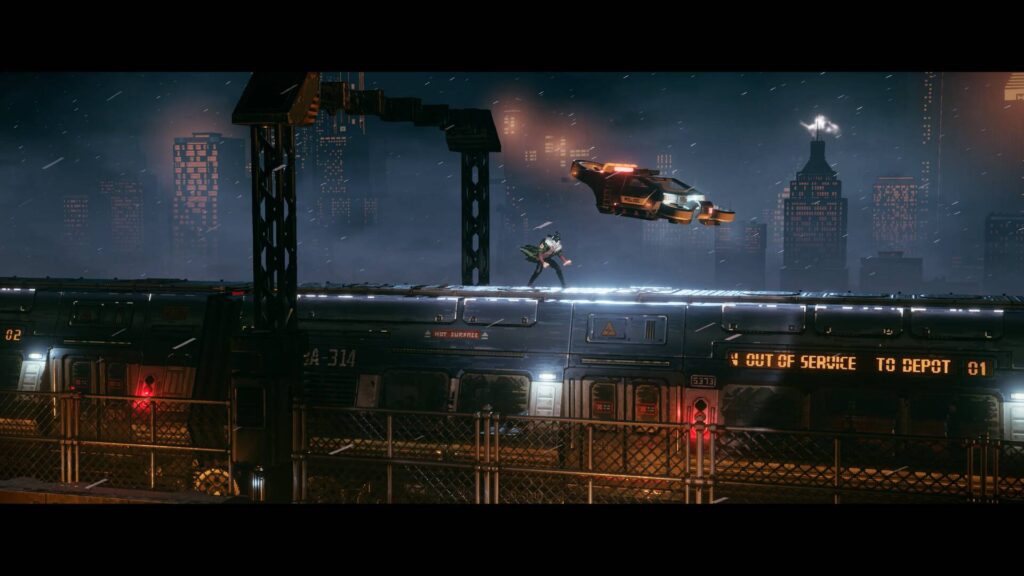
Replaced combines cinematic side-scrolling with pixel-art cyberpunk visuals, dystopian world-building, and fluid action sequences. Inspired by classic cinematic platformers like Flashback and Another World, the game blends retro-futuristic atmosphere with modern animation and cinematic presentation.
Why it belongs here: Replaced is the most ambitious cinematic platformer of 2026 — visually stunning, narratively complex, and built with a level of craft that debut games almost never achieve. It is the game that proved pixel art still has something genuinely new to say in the genre.
Somerville (2022)
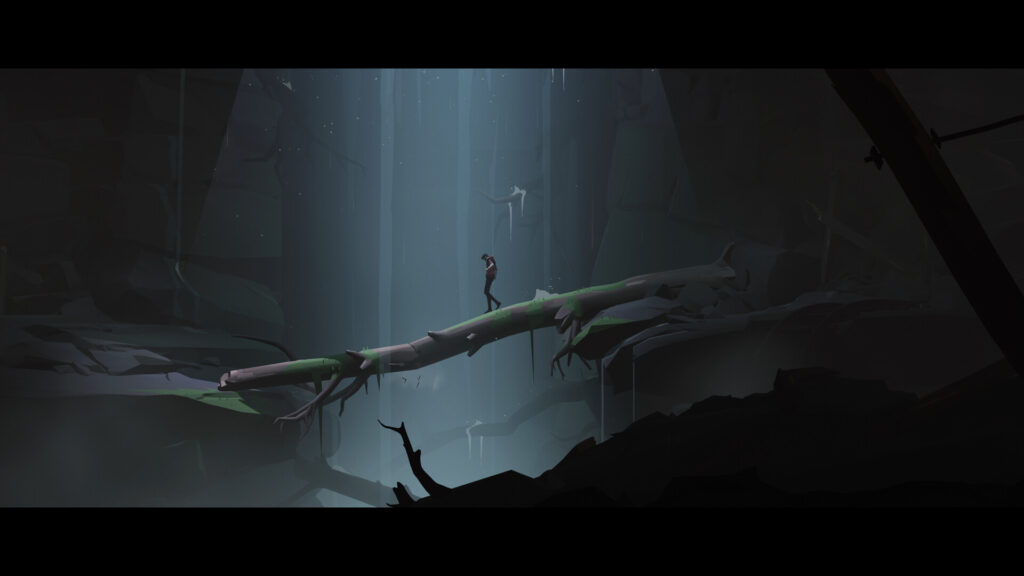
A family is separated during an alien invasion in rural England. One parent — and later his son — must find a way through a world that has been quietly, completely transformed overnight. Made by one of the co-creators of Inside, and it shows in every design decision.
Why it belongs here: Somerville is the most underappreciated game on this list. The light manipulation mechanic is genuinely inventive, the alien presence is unsettling in ways that feel fresh rather than familiar, and the domestic setting — a farmhouse, a child’s bedroom, a flooded field — makes the horror feel closer to home than anything else in the genre. It deserved a much larger audience than it found.
The most visually unique
Some cinematic platformers are great because of their gameplay, their story, or their atmosphere. These ones are great because of something harder to define — a visual identity so distinctive that you would recognise a screenshot instantly, even without the title. These are the games where the art direction is the whole point, and where the experience of looking at them is inseparable from the experience of playing them.
Silt (2022)
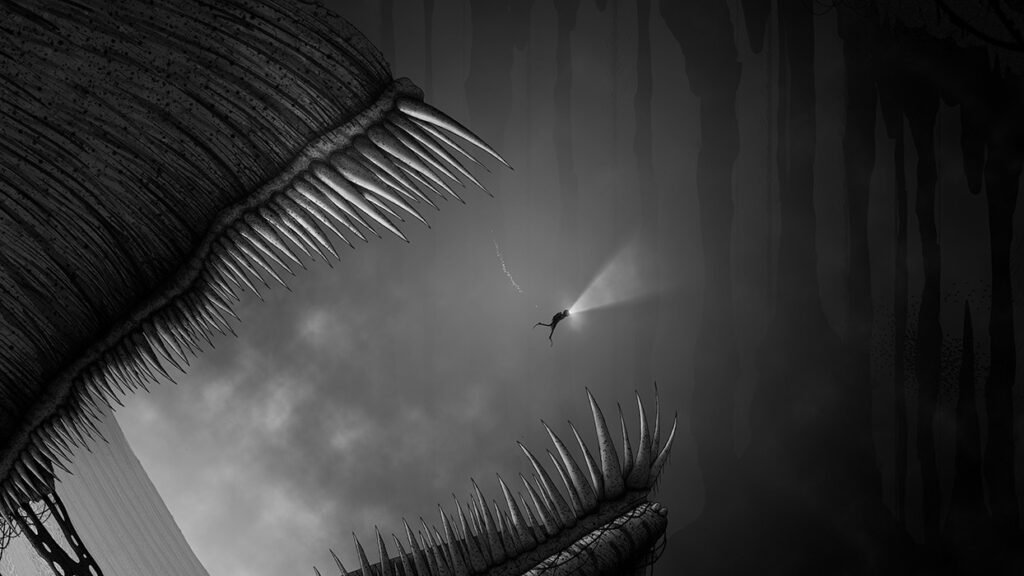
A lone diver descends into a monochrome underwater abyss, possessing sea creatures to survive and solve puzzles. Everything is hand-drawn in ink — sooty, frantic penstrokes that make the ocean feel ancient and genuinely threatening. Built by a two-person studio on their debut.
Why it belongs here: There is nothing else in the genre that looks like Silt. The ink-blot aesthetic gives it a physical, tactile quality that no digital art style can replicate — it looks like someone illustrated a nightmare in a sketchbook and then animated it. One of the most purely distinctive visual identities in modern gaming.
Projection: First Light (2020)
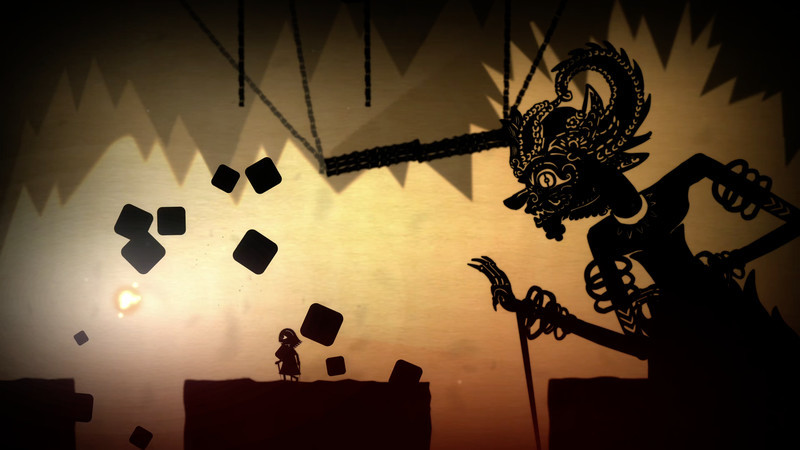
A young girl travels through five distinct cultural worlds — Indonesia, China, Turkey, Greece, and Victorian England — each presented as a shadow puppet performance, complete with visible rods and assembling backdrops. Built in consultation with a real shadow puppeteer and historian.
Why it belongs here: Projection commits to its theatrical conceit so completely that the shadow puppetry stops feeling like a style choice and starts feeling like the only way this world could possibly exist. It is the most culturally specific visual identity in the genre — and the most carefully researched.
The Eternal Castle Remastered (2019)
![The Eternal Castle [REMASTERED] Screenshot](https://cinematicplatformers.com/wp-content/uploads/2026/04/The-Eternal-Castle-Screenshot-1-1024x576.png)
A cinematic platformer presented as a fictional remaster of a lost DOS game that never actually existed — complete with fake CRT scanlines, deliberately degraded visuals, and a retro aesthetic so committed that some players genuinely wondered if the original was real. It was not. Made from scratch in 2019.
Why it belongs here: The Eternal Castle is a game about visual identity as much as it is a game with one. The fictional nostalgia conceit — the idea that you are playing something rescued from a hard drive — is pulled off with such conviction that it becomes genuinely affecting. No other game in the genre has used its art direction as a conceptual statement this boldly.
Hoa (2021)
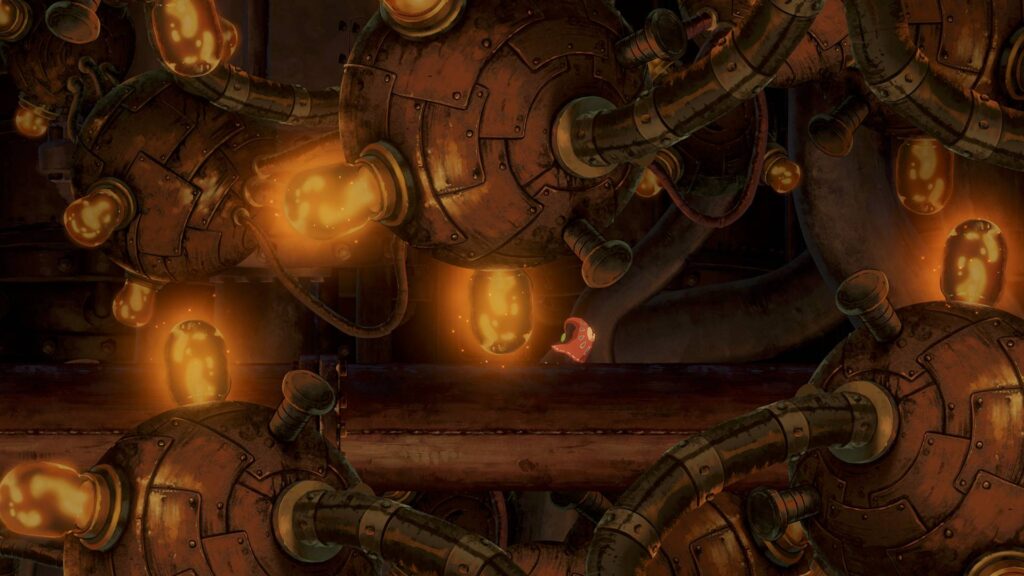
Hoa is a gentle cinematic platformer focused on peaceful exploration, hand-painted environments, and relaxing atmosphere. Inspired by Studio Ghibli-style animation, the game emphasizes calm traversal and environmental beauty rather than danger or tension.
Why it belongs here: Hoa is the purest expression of hand-painted beauty in the genre. Game director Cao Sơn Tùng started the project with one goal — make a side-scroller that looks stunning — and achieved it completely. Every frame functions as a standalone illustration. No notes.
Neva (2024)
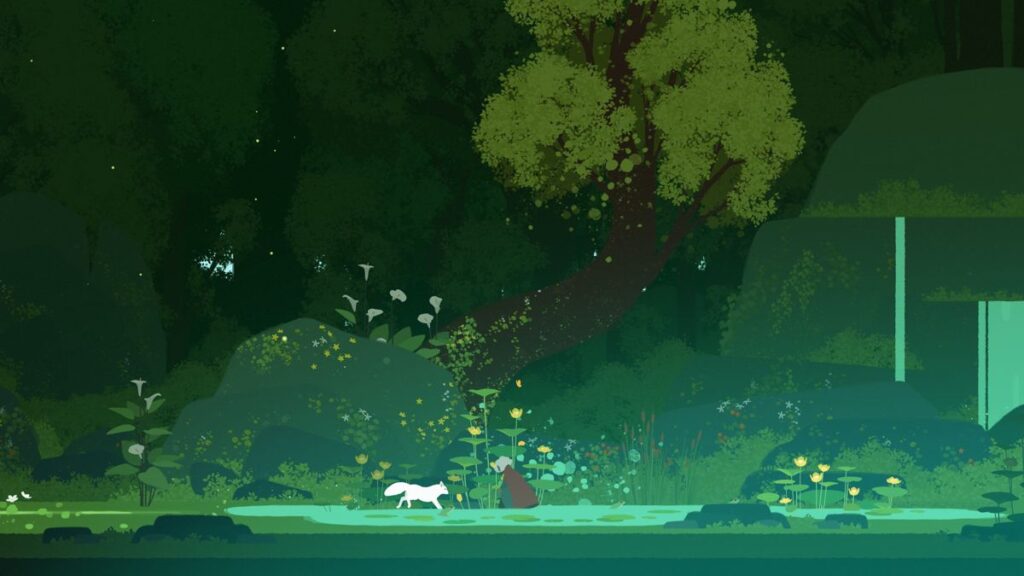
A woman in a red cloak and her wolf companion move through four seasons of a decaying world — spring greens giving way to summer heat, winter bleakness, and the unsettling beauty of corruption spreading through otherwise gorgeous landscapes. Nomada Studio’s follow-up to Gris, and visually more ambitious than anything they had made before.
Why it belongs here: Neva stands out through its emotional presentation and visual elegance. Its animation, artistic direction, and companion-driven storytelling push cinematic platformers further toward interactive animated cinema.
The hidden gems — essential but overlooked
Not every great cinematic platformer became a major hit. Some of the genre’s most interesting games flew under the radar despite offering fantastic atmosphere, creative ideas, or strong cinematic presentation. These hidden gems may be lesser known, but they absolutely deserve more attention from fans of cinematic platformers.
Lunark (2023)
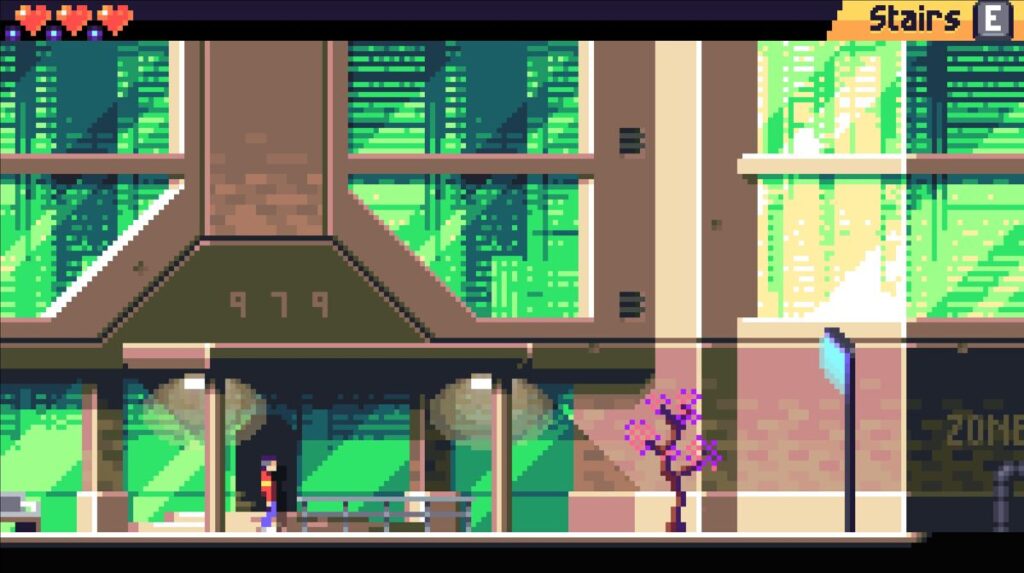
A sci-fi dystopian platformer built from the ground up as a love letter to Another World and Flashback — rotoscoped animation, fixed screens, deliberate movement, a solo developer working for years to get every detail right. One of the most faithful modern tributes to the genre’s 1990s golden era.
Why it belongs here: Lunark successfully modernizes classic cinematic platformer design without losing the slower pacing and immersive atmosphere that made the genre special in the first place. That specific weight and consequence to every action — the feeling that you are committed to your movements and the world will not forgive carelessness — is extraordinarily difficult to recreate, and Joel Nyström nailed it.
The Way (2016)
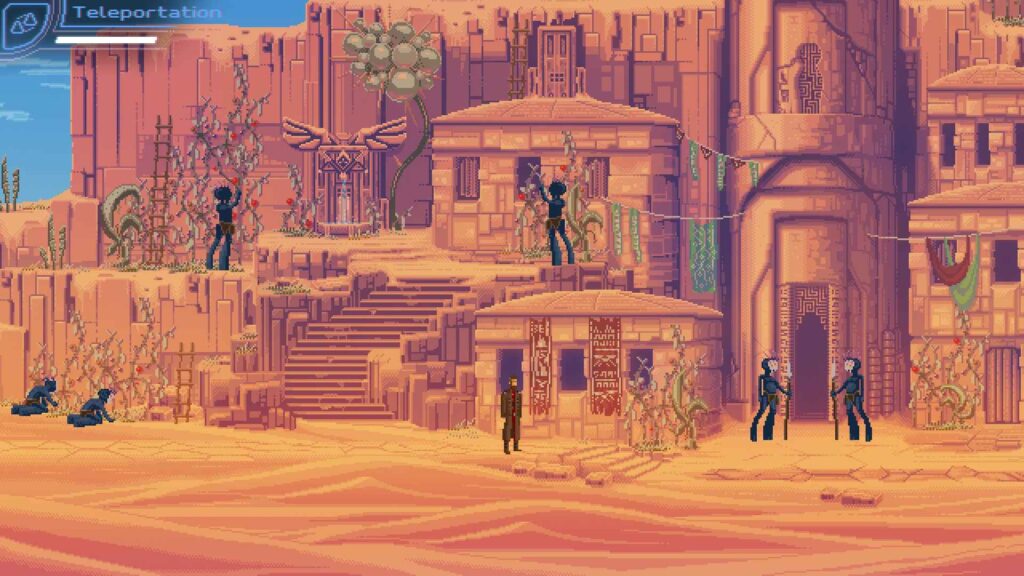
A Ukrainian indie studio’s loving tribute to Flashback and Another World — a sci-fi adventure following a man who uses alien technology to resurrect his dead wife, across a journey that takes him further from home than he ever anticipated. Criminally overlooked on release.
Why it belongs here: The Way is one of the most complete Another World successors ever made — the rotoscoped movement, the sci-fi mystery, the deliberate puzzle design. For fans of the genre’s classic era who want more of that specific feeling, this is the first recommendation I make. It has been waiting for you.
Orphan (2018)
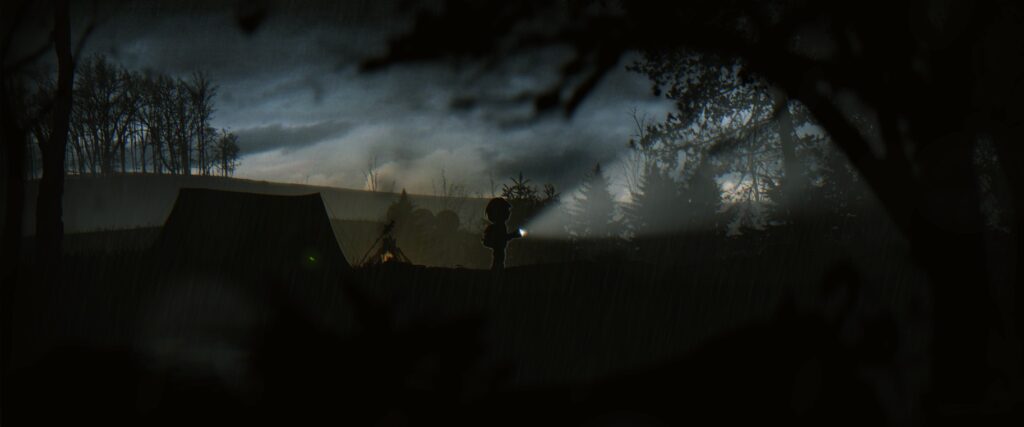
A dark sci-fi platformer following a boy navigating a world colonised by alien machines, told almost entirely through environmental detail. Atmospheric, melancholic, and built with a visual craft that punches well above its budget.
Why it belongs here: Orphan is one of those games that slipped through every crack — too small for mainstream coverage, too niche for casual recommendation. But spend an hour with it and the quality is immediately apparent. The atmosphere is genuinely distinctive, and the environmental storytelling is more confident than most games twice its size.
Black The Fall (2017)
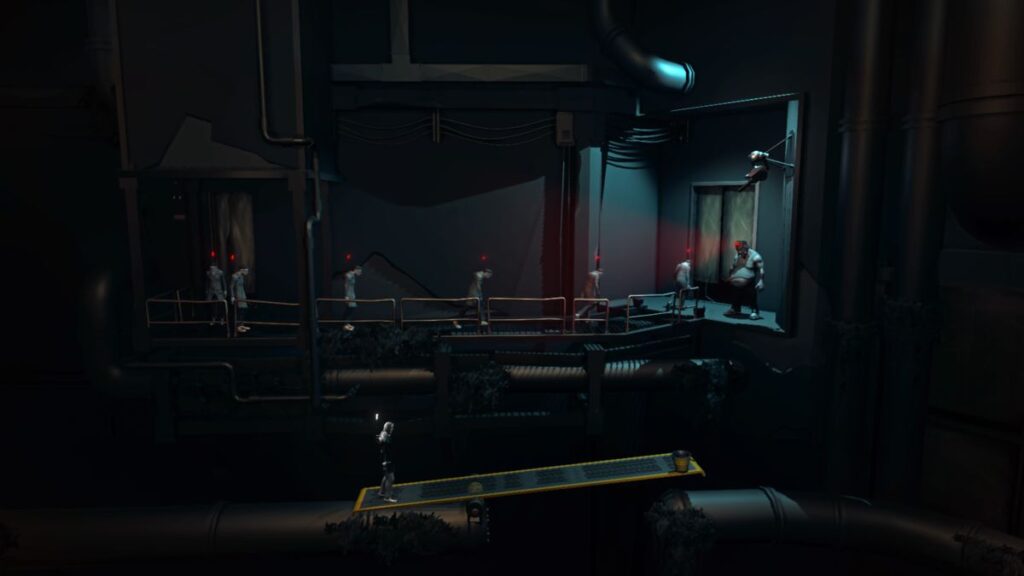
A Romanian studio’s bleak, methodical puzzle platformer following a factory worker escaping a totalitarian regime — grey, oppressive, and built around stealth and environmental manipulation. Inside meets communist-era Eastern Europe, made by people who understood that setting from the inside.
Why it belongs here: Black The Fall has a specificity that most cinematic platformers cannot match — the regime it depicts is not generic dystopia but something with genuine historical roots, and the game is better for it. It is one of the angriest games in the genre, and one of the most honest.
The Mooseman (2017)
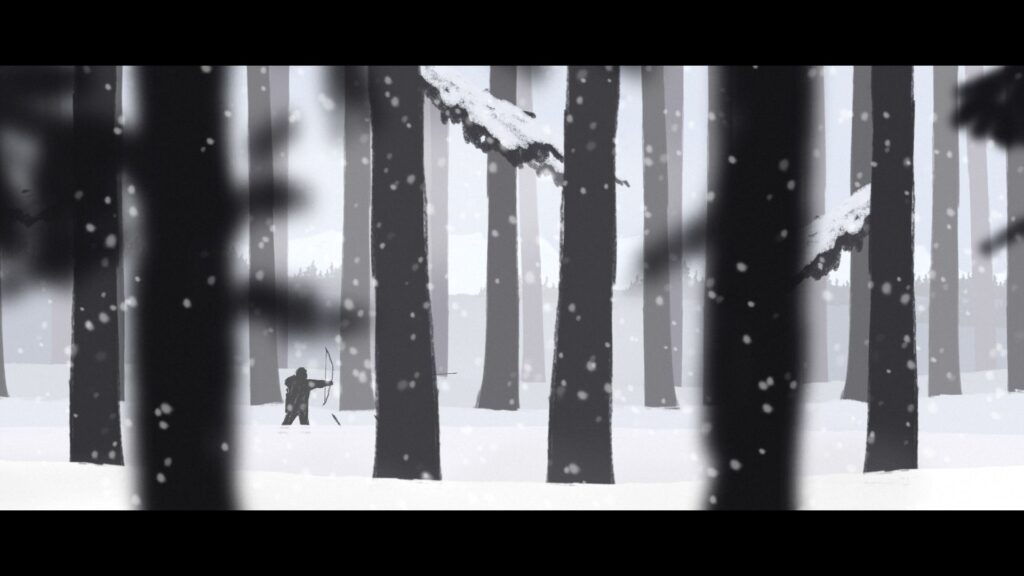
A deeply atmospheric puzzle platformer built around the mythology of the Komi people — a Finno-Ugric indigenous group from the Perm region of Russia whose traditions are almost entirely absent from popular culture. Silent, monochromatic, and genuinely strange in ways that feel earned rather than arbitrary.
Why it belongs here: The Mooseman is one of the most culturally specific games in the genre — rooted in a tradition most players will have no prior reference point for, and all the more valuable for it. I came away from it knowing that the Komi people exist and wanting to know more. For a two-hour game, that is an extraordinary outcome.
Full Void (2023)
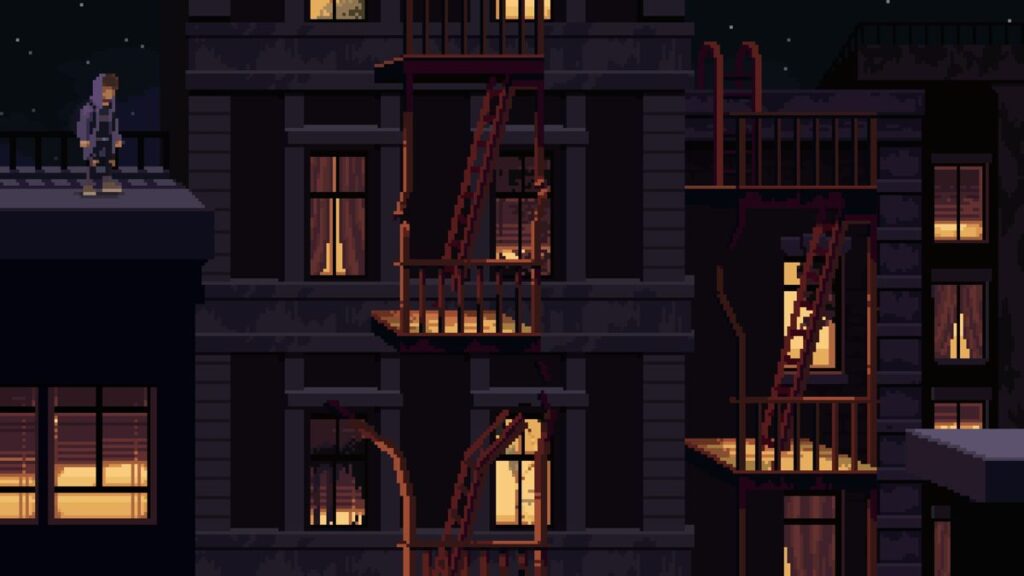
A pixel art cinematic platformer from a small London studio set in a dystopian city controlled by a rogue AI — fixed screens, committed movement, sparse atmospheric storytelling, death animations that make dying feel part of the experience. Another World’s DNA is in every design decision, and the studio does not try to hide it.
Why it belongs here: Full Void is the most faithful modern homage to what Another World actually felt like to play — not just aesthetically but structurally. The hacking mechanic gives it its own identity, the checkpoint system is more forgiving than its inspirations, and the whole thing is made with a love for the genre that comes through in every frame.
DARQ (2019)
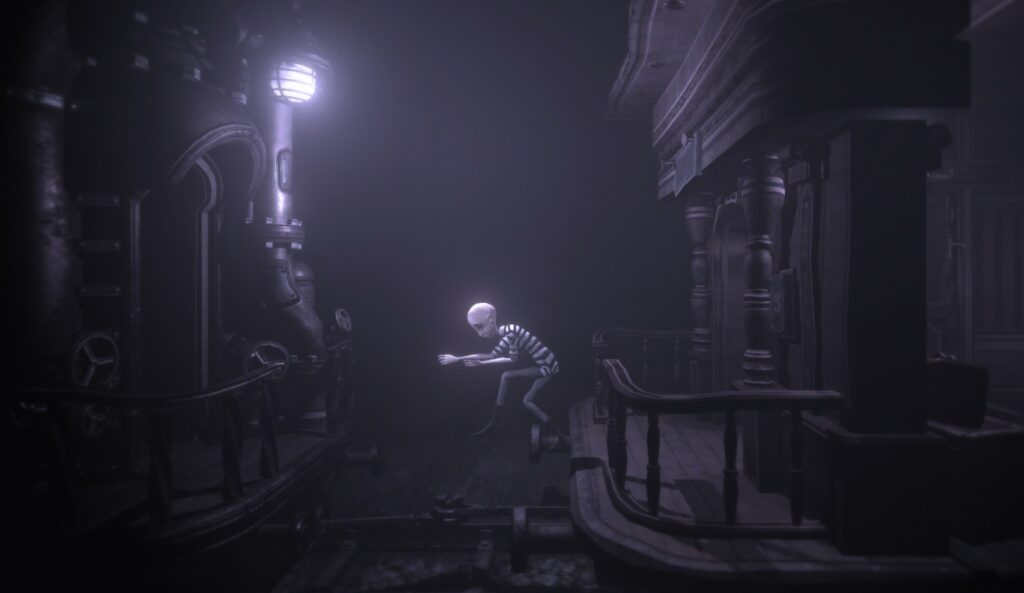
A puzzle platformer set in a lucid nightmare, following a boy who cannot wake up navigating a world where gravity and geometry follow dream logic rather than physical rules. Dark, inventive, and built around environmental puzzles that reward lateral thinking over reflexes.
Why it belongs here: DARQ is one of the most mechanically creative games in this section — the gravity manipulation and dream logic give the puzzle design a freedom that most cinematic platformers never attempt. It is also one of the most atmospheric, with a sound design that makes the nightmare feel genuinely oppressive. It deserved a much larger audience.
Best cinematic platformers for beginners — the easiest entry points
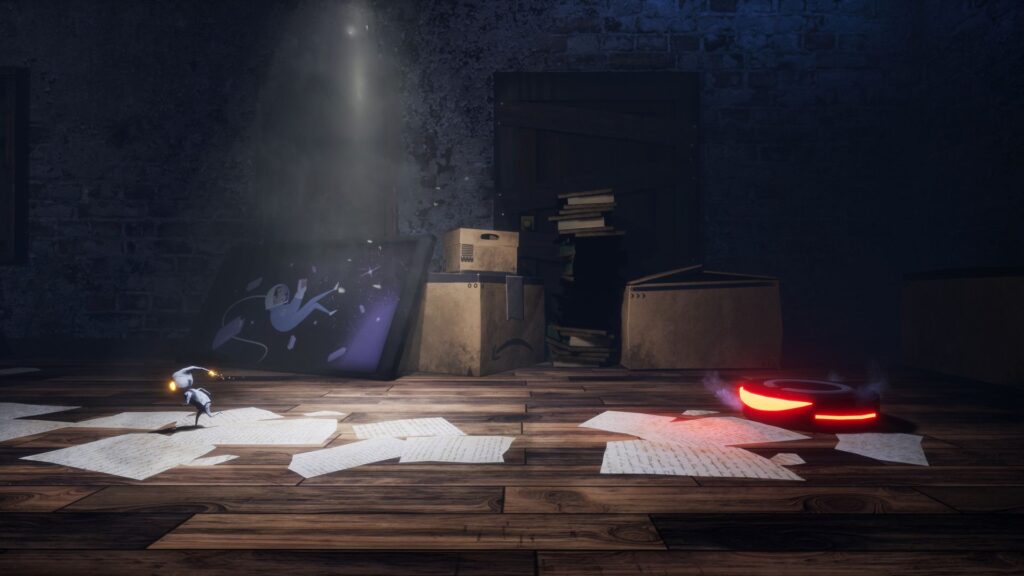
Some cinematic platformers can feel intentionally harsh, cryptic, or emotionally heavy. These games are much easier starting points for newcomers while still capturing the atmosphere, immersion, and cinematic storytelling that define the genre. If you are discovering cinematic platformers for the first time, these are excellent places to begin.
Planet of Lana (2023)
Warm, hand-painted, and built around a girl and her animal companion navigating a beautiful alien world. Gentle puzzle design, no real fail states to speak of, and one of the most immediately gorgeous games in the genre. The perfect first cinematic platformer for anyone who wants atmosphere without darkness.
Hoa (2021)
A hand-painted fairy returning to a forest that raised her. Two hours long, completely peaceful, and so visually beautiful that the experience of looking at it is half the point. The gentlest entry point in the genre — almost meditative in its pacing.
Little Nightmares (2017)
The best starting point for anyone drawn to horror and atmosphere over warmth. Short, immediately gripping, and mechanically accessible enough that the challenge never gets in the way of the experience. The one I recommend to people who want to feel genuinely unsettled by a game for the first time.
A Tale of Paper (2020)
A Tale of Paper follows a small paper character capable of transforming into different origami forms while navigating emotional environments and environmental puzzles. The game combines relaxing pacing with simple but creative mechanics.
🧭 Where should you start?
Not all cinematic platformers feel the same. Some focus on horror and tension, while others lean toward emotional storytelling, science-fiction exploration, or artistic atmosphere.
- Want horror? → Little Nightmares
- Want sci-fi? → Another World
- Want atmosphere? → Limbo
- Want emotional storytelling? → Planet of Lana
- Want retro classics? → Flashback
- Want experimental ideas? → Typoman
- Want surreal horror? → DARQ
- Want something relaxing? → Hoa
My personal Top 10 cinematic platformers
As a conclusion to this guide, here is the only ranked list I felt comfortable making — and it is entirely personal. These are the ten games I keep coming back to, the ones that shaped how I think about the genre, and the ones I would save if cinematic platformers somehow disappeared tomorrow.
This list will probably look different next year. It does not include everything that deserves to be here — Oddworld, Bramble, Full Void, The Cub, and a dozen others have a legitimate claim on these spots. But a top ten has to end somewhere, and these are the ten that felt honest today 🙂
- 1. Another World (1991) — my favourite game of all time. Built by one person, on hardware with 1MB of RAM, and nothing has replaced it in thirty-five years.
- 2. Flashback (1992) — the most complete cinematic platformer of the classic era. If Another World is the poem, Flashback is the novel.
- 3. Inside (2016) — the most perfectly executed modern entry. Every design decision serves the atmosphere. The ending stays with you for days.
- 4. Silt (2022) — the most visually distinctive game I have encountered in the genre. Nothing else looks or feels like it.
- 5. The Swapper (2013) — one mechanic, five hours, more ideas than most science fiction novels.
- 6. Little Nightmares (2017) — the game that proved cinematic platformers could genuinely terrify. Still the benchmark for atmospheric horror in the genre.
- 7. Limbo (2010) — the one that brought the genre back and made everything that followed possible.
- 8. Replaced (2026) — the most ambitious debut in the genre in years. Pixel art that has no right being this cinematic.
- 9. Neva (2024) — the most emotionally affecting cinematic platformer of recent memory. The ending hit me harder than I expected.
- 10. The Eternal Castle Remastered (2019) — a game about the genre as much as a game in it. One of the most committed and convincing acts of fictional nostalgia in indie gaming.
FAQ
Honestly, Another World. It invented the genre’s visual language, its atmospheric philosophy, and its commitment to wordless storytelling — and nothing has fully replaced it in thirty-five years. Inside is the strongest argument against that answer, and my personal top ten reflects how close the two are.
Planet of Lana if you want warmth and beauty. Little Nightmares if you want atmosphere and dread. Limbo if you want something short, dark, and immediately gripping. Any of the three will tell you immediately whether this genre is for you — and they are all under five hours.
It is the most perfectly executed. Every design decision serves the atmosphere, every atmospheric detail serves the story, and the ending is one of the most discussed in gaming. Whether it is the best depends on whether you weight execution over influence — in which case Another World still has a claim.
Start with Little Nightmares — same dark atmosphere, same small protagonist, same wordless dread. Then DARQ for the surreal puzzle design, Somerville for the sci-fi atmosphere, and Silt for the most distinctive visual identity in the genre. If you want something older, Heart of Darkness covers similar emotional territory from 1998.
Alright, that’s it!
There are games that did not make this list and probably should have. Oddworld: Abe’s Oddysee deserves to be here on political conviction alone. The Cub deserves it for Radio Nostalgia from Mars and a world I keep thinking about. Bionic Bay deserves it for a swap mechanic that made me feel genuinely clever in ways I did not expect. The genre is deep enough that a top ten is always an argument, never a verdict.
Keep exploring. And btw: The cinematic platformers database is here whenever you need it!