
Description
I think what I like most about The Cub is that it does not take itself too seriously — and yet somehow manages to say something genuinely serious anyway. It is a post-apocalyptic platformer where the ultra-rich have fled to Mars after destroying the Earth, and you play as a feral child raised by wolves who is being hunted across the ruins of civilization like some kind of mutant Mowgli. On paper that sounds absurd. In practice, it is one of the most charming and quietly affecting cinematic platformers I have come across in years.
Developed by Serbian studio Demagog Studio and published by Untold Tales, The Cub is set in the same universe as Golf Club: Nostalgia — the studio’s previous game about a lone golfer playing through the ruins of Earth while an in-game radio station plays melancholic apocalypse-wave music from Mars. You do not need to have played that game to enjoy this one, but if you have, you will notice familiar faces and locations, and the whole thing lands with a bit more weight.

Year: 2023
Developer: Demagog Studio
Atmosphere: Post-Apocalyptic · Satirical · Lonely
Visual Style: Hand-Painted 2D · Retro-Inspired Animation
Focus / Pace: Exploration Platforming · Deliberate
Platforms: PlayStation 4 · PlayStation 5 · Xbox One · Xbox Series X/S · Windows · Nintendo Switch
Why The Cub stands out
I notice two things immediately with The Cub: the visuals and the sound. The art style is hand-painted and immediately distinctive — somewhere between the classic SEGA platformers of the 90s (The Jungle Book, Aladdin, The Lion King) and the more cinematic animation of Primal or Samurai Jack. And then Radio Nostalgia from Mars kicks in through the Cub’s helmet, and the game becomes something else entirely.
Radio Nostalgia from Mars is one of the most inventive worldbuilding tools in the genre — explore the full feature on the cinematic platformers with unique game mechanics.
The Story
After the Great Ecological Catastrophe, the ultra-rich fled to Mars and left everyone else to die. A few mutant children developed immunity and survived, living wild in the ruins. You are one of them — the Cub — raised by wolves, immune to the radiation, and now being hunted by the returning Martian elites who want to study you like an animal.
The story is told without dialogue, through environmental details, newspaper clippings, and the Radio Nostalgia broadcasts playing in your helmet. What I find interesting is how the game handles its satire. The Martian elite are thinly veiled stand-ins for billionaire tech bros — their companies, their language, their logic all recognisably skewered — and the radio commentary is genuinely funny in places. It can be a little on-the-nose at times, but I think that is part of the point. This is not a subtle game. It is a game about a feral child sticking it to the people who destroyed the world, and it is comfortable being exactly that.

Graphics
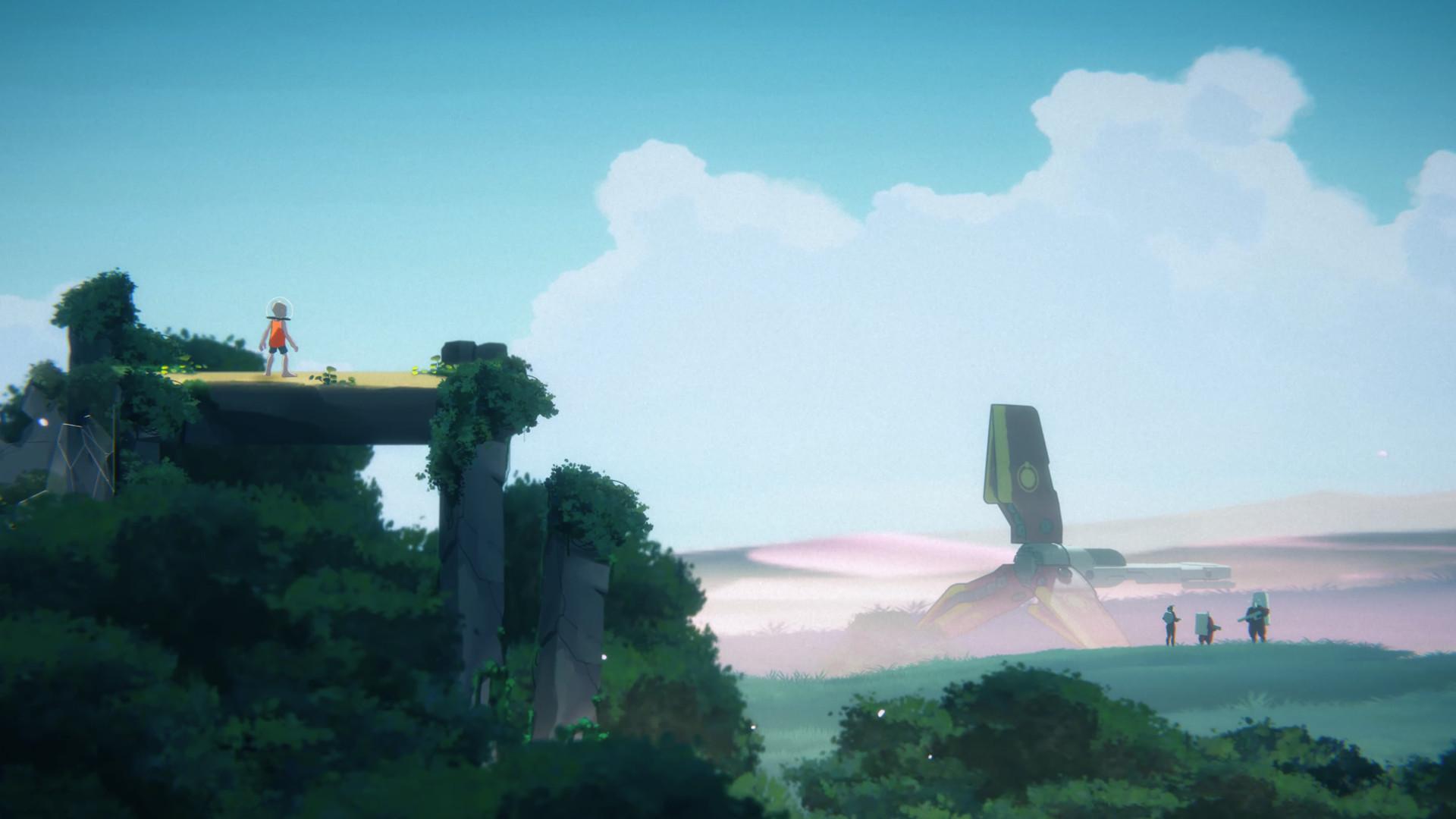
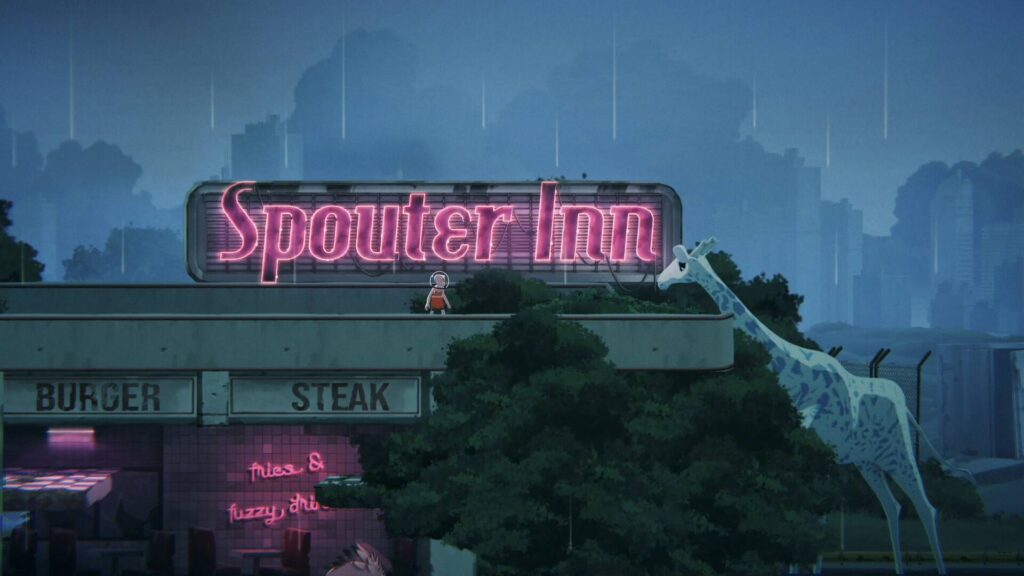
I think this is where The Cub genuinely earns its place. The hand-painted visual style is lush and immediately striking — rich greens of jungle reclaiming skyscrapers, purple chemical forests, flooded city streets reflecting neon signs, vast open plains with bison roaming between windmills. Each area looks completely different from the last, and every screen feels like it was composed individually rather than tiled together.
The animation in particular impressed me. The Cub himself moves with a loose, fluid energy that feels genuinely feral — scrambling, sliding, swinging, mouthing off to his pursuers. The death animations are also worth mentioning: brief, brutally funny little sequences that, in a nice nod to the SEGA games that inspired this, make dying feel part of the experience rather than just a punishment.
🤖 Did You Know?
The studio behind the game, “Demagog Studios” is deliberately named after “demagogue” — a populist leader — because founder Igor Simic’s background is as an editorial cartoonist. The studio sees itself as making interactive political satire, not just games. That context reframes everything about The Cub.
Gameplay
The core platforming is deliberately old-school — run, jump, swing, slide, die, try again. Inspired by the classic SEGA platformers of the 90s, the movement has that specific committed weight where you are locked into your animations and precision matters. I noticed the controls feel slightly stiffer than I expected coming in, but I think that is intentional — it is part of the genre DNA the game is working from, and it stops being noticeable after the first chapter.
What gives The Cub its own character is how it mixes things up. Stealth sections, chase sequences, environmental puzzles, a completely unexpected bullet hell segment late in the game — there is enough variety that the two to three hour runtime never feels repetitive. The Martian hunters each have different methods of pursuit, which keeps you on your toes in ways that feel genuinely creative rather than random.
My one honest frustration is the precision required in some platforming sections. For a game this short and this relaxed in tone, there are moments where the difficulty spikes sharply without much warning. Generous checkpoints mean it never becomes truly punishing, but it can jar against the otherwise breezy pacing.
Pacing
Short and well-judged. I think The Cub is exactly the right length — long enough to develop its world and characters, short enough that no single idea overstays its welcome. The environments shift frequently enough to maintain a sense of momentum, and the radio broadcasts do something clever: they fill the quieter traversal sections with just enough story to keep you engaged even when the platforming slows down.
The one pacing issue I noticed is the ending, which feels slightly rushed — a little too tidy given how dark the preceding two hours have been. I wanted it to sit with me a bit longer. But I understand the impulse toward something hopeful, and it does not significantly diminish what came before.
Atmosphere
This is where The Cub really separates itself from the crowd. Radio Nostalgia from Mars is one of the most effective worldbuilding tools I have encountered in a cinematic platformer — a smooth-voiced DJ spinning apocalypse-wave music and running sardonic commentary on life in Tesla City, interspersed with survivor stories and barely-disguised swipes at modern capitalism. It turns the background noise into something you actually listen to, which I did not expect and found genuinely impressive.
Combined with the vivid, hand-painted visuals and the loose energy of the Cub himself, the atmosphere of the game achieves something I think is quite hard to pull off: bleak and joyful at the same time. This is a world that has ended, and it is kind of beautiful.
🎮 My honest opinion
I came away from The Cub genuinely surprised by how much I liked it. I expected a solid retro-inspired platformer with nice visuals. What I got was a game with a real personality — funny, sad, energetic, and quietly angry about the state of the world — delivered through one of the most inventive soundtracks in the genre.
It is not mechanically groundbreaking. The platforming is occasionally rougher than it needs to be, and the satire is sometimes laid on thick. But I think Demagog Studio is doing something genuinely interesting with this shared universe they are building — and The Cub is the most fully realised and most playable version of it yet.
Where can I play The Cub?
The Cub is available on PC via Steam, PlayStation 4, PlayStation 5, Xbox One, Xbox Series X/S, and Nintendo Switch. The Radio Nostalgia from Mars: The Cub soundtrack is also available separately on all major music platforms — and honestly worth listening to on its own.
Games similar to The Cub
Full Void (2023)

Full Void shares The Cub’s love of classic cinematic platformer DNA and its dystopian AI-controlled future setting. Both are short, atmospheric, and made by small studios who clearly grew up on the 1990s originals. If one clicked for you, the other almost certainly will too.
Oddworld: Abe’s Oddysee (1997)

The Cub owes something to Abe’s Oddysee that I think goes beyond the obvious post-apocalyptic setting. Both games are fundamentally about the powerless navigating a world designed to exploit them, told with dark humour and a genuine satirical edge. Abe is slower and more methodical, but the spirit is recognisably similar.
If you are drawn to cinematic platformers that combine a strong visual identity with a real point of view about the world — games that are actually about something — Ministry of Broadcast, Black The Fall, and Headcrab all sit in the same angry, atmospheric corner of the genre.