
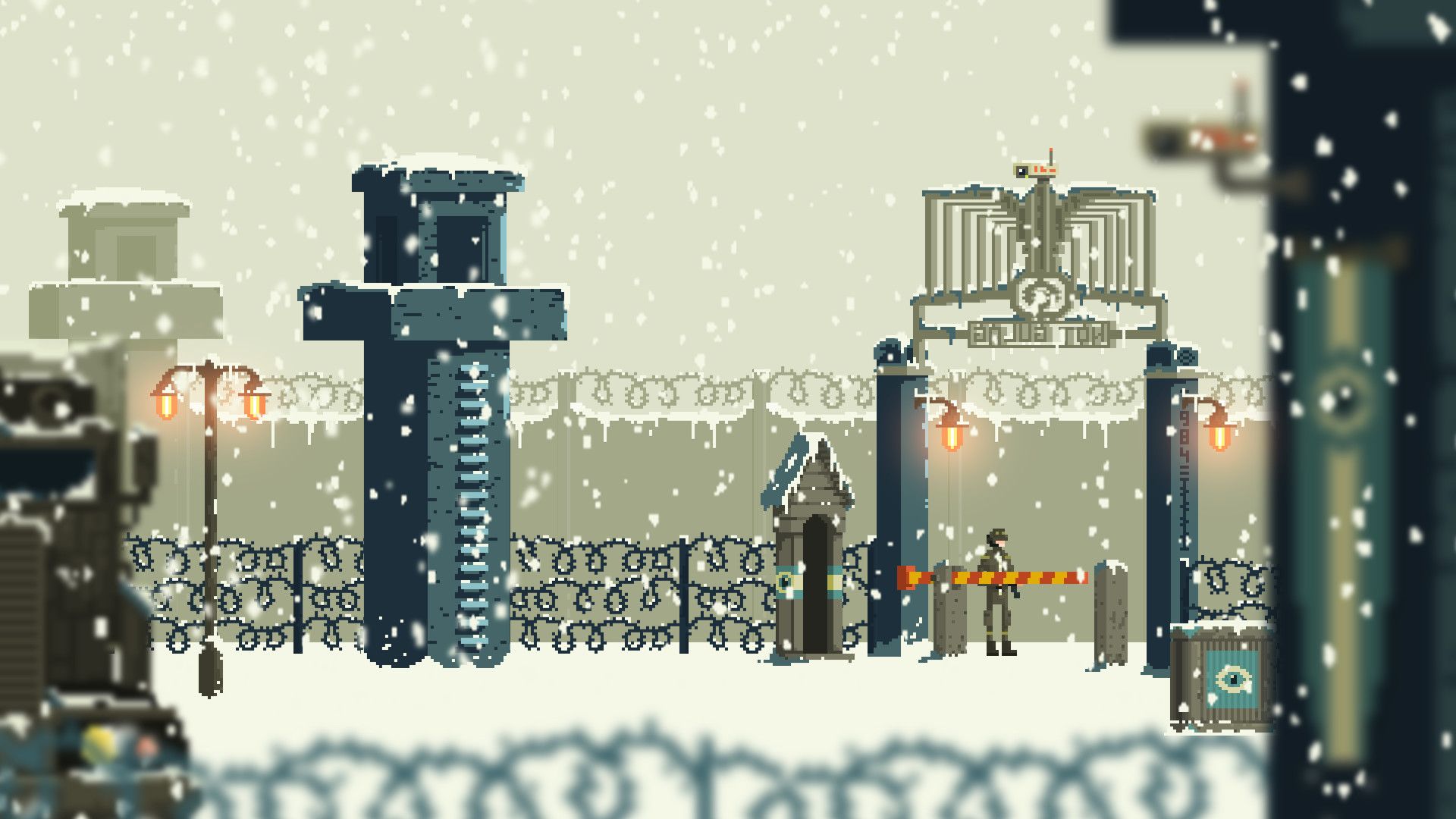
Descripton
Ministry of Broadcast is one of those games that sneaks up on you with how much it has to say. On the surface it looks like a pixel-art cinematic platformer in the mould of the classics — deliberately so — but underneath that familiar shell is something sharper, funnier, and more uncomfortable than you’d expect. It’s Orwell’s 1984 crossed with a dystopian reality TV show, made by four people from the Czech Republic who clearly had something on their mind when they made it.
The setup is simple: a country is divided by a Wall. To get to the other side and reach your family, you have to compete in — and survive — a televised competition run by the Regime. What follows is about four hours of platforming, dark humour, moral compromise, and a creeping feeling that the game is making a point you can’t quite shake off.
Year: 2020
Developer: Ministry of Broadcast Studio
Atmosphere: Dystopian · Oppressive · Dark Humor
Visual Style: Pixel Art · Cinematic Side-Scrolling
Focus / Pace: Puzzle Platforming · Methodical
Platforms: Windows · Nintendo Switch
Why Ministry of Broadcast stands out
What makes Ministry of Broadcast different from most cinematic platformers is the framing. You’re not just running a lethal obstacle course — you’re doing it on live television, broadcast by the Regime as propaganda. The Wall Show is state-sponsored entertainment, and your desperate attempt to reach your family is the content.
That single idea colours everything — the environments plastered with cameras and show logos, the NPCs who feel like fellow contestants rather than background decoration, the dark humour that makes the whole thing feel like a grotesque gameshow. It’s a simple concept, but it gives the game a personality that’s completely its own.
Behind it are four people from the Czech Republic — two programmers and two pixel artists from different cities who met at game conferences and decided to build something together. Growing up in a country that lived through the Soviet era, the idea of state-controlled media and walls dividing people wasn’t abstract to them. That background shows.
The Story
You play as Orange — a nickname, not a name, which tells you something about how the Regime sees its citizens. The only way across the Wall to reach your family is to win the Wall Show, a state-run reality TV competition where contestants navigate lethal obstacle courses while the cameras roll.
What surprised me most is how funny it is. The writing is dry and sardonic — Monty Python by way of Orwell — and it sits in deliberate contrast with the grimness of everything happening around it. It reminded me of Oddworld in that way: dark comedy built on top of a world that’s genuinely awful.
But what gives the story its real weight is the mechanic underneath it. To progress through the arenas, you will sometimes have to sacrifice other contestants. Use them as counterweights. Send them into traps you won’t survive yourself. The game never draws attention to this — it just quietly makes you do it, and then moves on. By the end, every contestant you met is dead, and your choices put most of them there. That lands harder than any cutscene could have managed.
There are two endings, and neither is particularly comfortable. I won’t spoil them, but I’ll say that the game is consistent right to the last frame about what it’s actually about.
Graphics
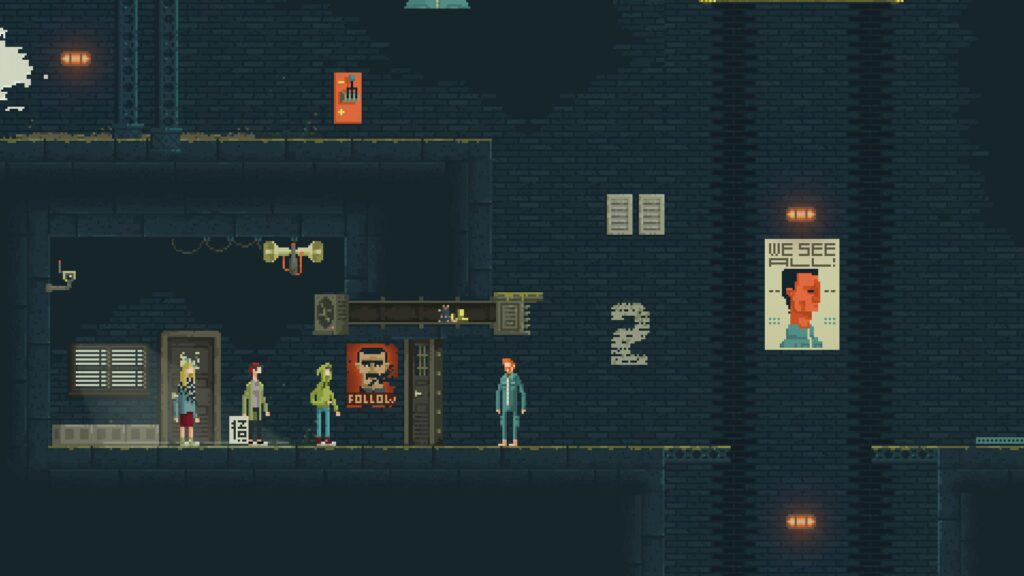
Ministry of Broadcast wears its influences openly — the movement and weight of Prince of Persia, the oppressive industrial palette of Oddworld — but the pixel art has a character of its own that I think deserves more credit than it usually gets.
The environments are grimy and detailed in a way that feels lived-in rather than designed. Crumbling concrete, rusted scaffolding, propaganda posters peeling off walls — the world looks like a place that existed long before Orange arrived and will keep grinding along after he’s gone. What I particularly enjoyed was how the art carries the satire. The Regime’s aesthetic is this absurd blend of Soviet brutalism and cheap television production values — flickering monitors, garish show logos plastered on collapsing infrastructure — and the contrast is quietly hilarious and quietly horrifying at the same time.
The animation is smooth and physical in that classic cinematic platformer way. Orange stumbles, grabs ledges, crashes into things — he moves like a person rather than a player character, which is exactly what the genre demands.
Gameplay
At its core this plays like a classic cinematic platformer — deliberate movement, momentum-based jumps, instant death from falls and traps. If you’ve played Prince of Persia or Flashback, your muscle memory will kick in almost immediately. Orange runs, grabs ledges, drops carefully, and dies a lot. That part felt immediately familiar and comfortable to me.
What’s layered on top is more interesting. The puzzles are built around interacting with other contestants and the environment — using NPCs as weights, timing your movement around guards, reading the arena before committing to anything. There’s a ruthlessness to some of the solutions that the game clearly enjoys making you sit with.
The difficulty is old-school in the best and worst sense. Trial and error is baked in, and some sections will kill you repeatedly before the solution clicks. I didn’t always find that fair, but I rarely found it boring.
Pacing
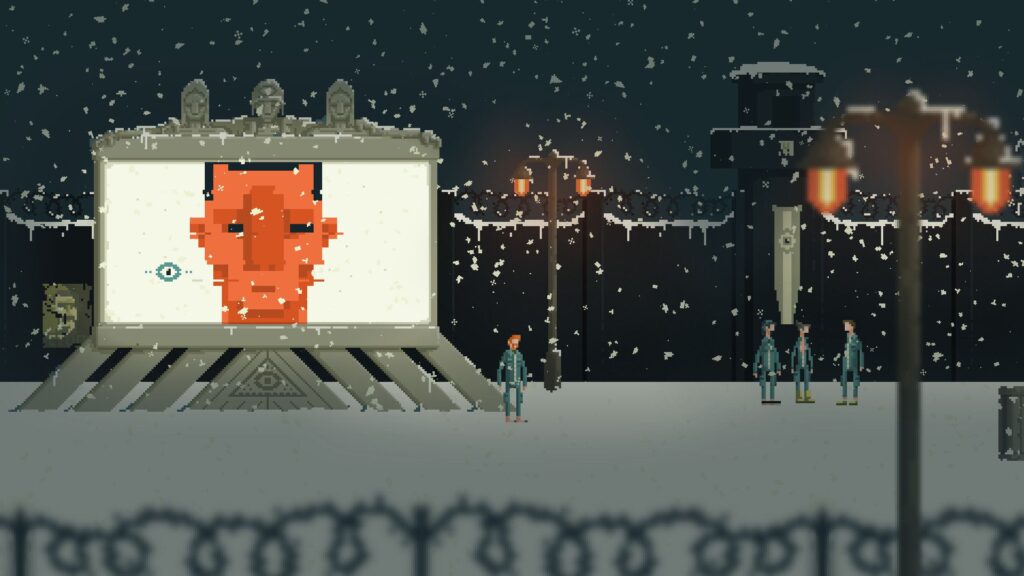
Ministry of Broadcast runs around four hours and moves at a confident clip for most of it. The arenas are varied enough that the game rarely feels repetitive — each one has a distinct look and introduces something new to the formula before moving on.
My one honest gripe is the back half, where the difficulty spikes a little unevenly and a couple of sections outstay their welcome. But the story keeps pulling you forward, and the ending earns the journey. It’s the kind of game that feels exactly the right length when you finish it, even if a few moments in the middle tested my patience.
Atmosphere
Ministry of Broadcast has a very specific mood that I haven’t quite felt in another game in this genre — oppressive and absurd at the same time, which shouldn’t work as well as it does. The world feels totalitarian in a way that’s immediately recognisable without being tied to any specific real place, which I think is a deliberate choice. It’s Eastern European in flavour, Soviet in aesthetic, but universal enough in its targets that it never feels like a history lesson.
The soundtrack does a lot of quiet work here — industrial, repetitive, vaguely menacing in the way that only music designed to sound like state-approved entertainment can be. Combined with the propaganda that lines the walls of every arena, the atmosphere builds into something that genuinely gets under your skin by the final act.
What I keep coming back to is how consistent the tone is. The dark humour never breaks the oppressive mood — somehow it deepens it.
🎮 My honest opinion
Ministry of Broadcast is a game I think about more than I expected to. It’s not the most polished cinematic platformer in this list, and the difficulty spikes in the second half are genuinely frustrating. But it has a point of view — a clear, sharp, uncomfortable one — and it delivers it through the mechanics rather than just the writing, which is harder to pull off than it sounds.
Making you sacrifice other people to progress isn’t a story beat. It’s a design choice. And the fact that it all happens on live television, broadcast as wholesome state entertainment, makes it worse. You’re not just doing terrible things to survive — you’re doing them on camera, for an audience, exactly as the Regime intended. By the time the credits roll, you feel it.
Where can I play Ministry of Broadcast?
Ministry of Broadcast is available on PC via Steam and GOG, and on Nintendo Switch. The PC version is the easiest to recommend — it runs well, it’s frequently on sale, and at its regular price it’s already modest enough that the four-hour runtime doesn’t feel like a problem. If you’re a Switch player it’s a natural fit for handheld play, the kind of game you can pick up and put down between sessions without losing the thread.
Similar Games to Ministry of Broadcast
If you enjoyed Ministry of Broadcast, these two share its combination of classic cinematic platforming and something more uncomfortable underneath.
Oddworld: Abe’s Oddysee (1997)
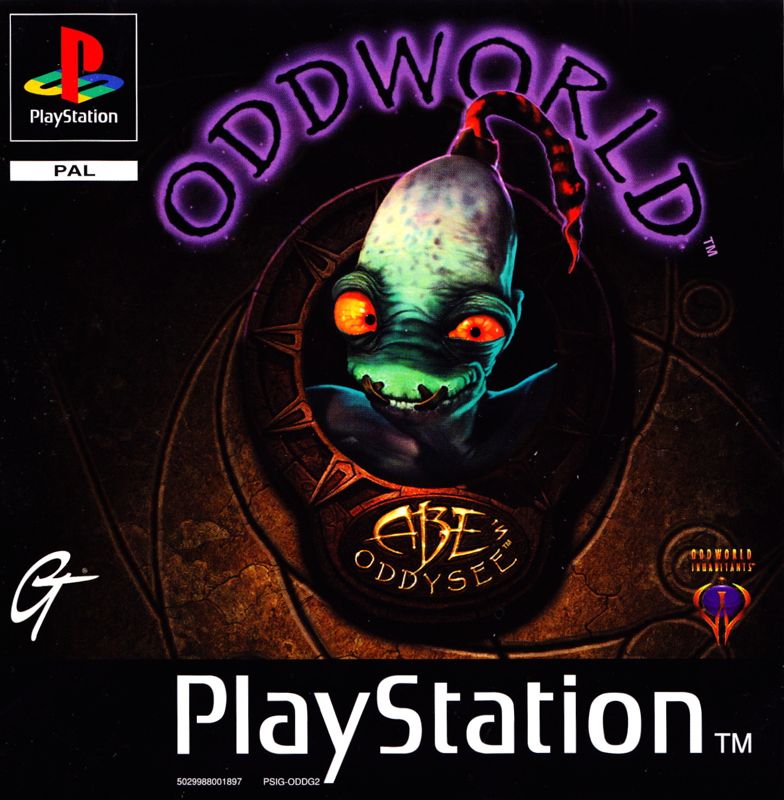
The most direct ancestor. Same dark satirical world, same mechanic of moving through a system designed to grind you down, same uncomfortable relationship between your protagonist and the people around him who don’t all make it out. Abe’s Oddysee is bleaker and more demanding, but the DNA is unmistakable. If Ministry of Broadcast made you want to go deeper into the genre’s darker side, this is the obvious next stop.
The Cub (2023)

The Cub is the natural next step — a post-apocalyptic cinematic platformer with a sharp political edge and a world that has something to say. Where Ministry of Broadcast uses dark humour to skewer authoritarianism, The Cub is more melancholic, built around a feral child navigating a world the wealthy abandoned. Different tone, same sense that the genre can carry real ideas. One of the more underrated recent entries in the genre.
If the blend of classic platforming and political bite is what drew you to Ministry of Broadcast, it’s worth knowing the genre has more of that to offer — Deadlight trades the satire for straight survival tension, and Monochroma shares the same oppressive industrial mood with a companion mechanic that adds its own quiet emotional weight. The lineage runs deep!