
Description
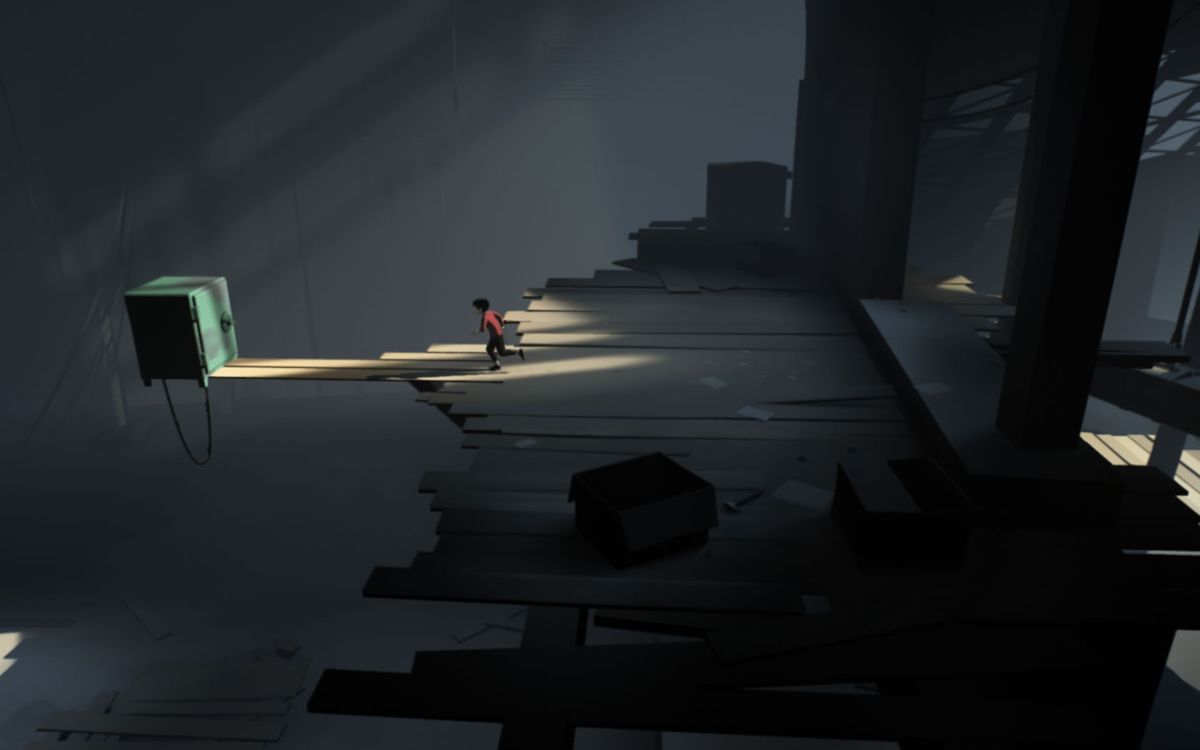
Inside is one of those rare games that feels genuinely complete — like every frame, every sound, every design decision exists for a reason that the game itself never fully explains. Developed by Danish studio Playdead and released in 2016, it is a 2.5D puzzle platformer about a boy running through a dystopian world that is doing something terrible, and the deeper you go the more unsettling the question becomes: what exactly is he running toward?
It arrived six years after Limbo, Playdead’s debut, built on everything that game did well and pushed it somewhere darker, stranger, and considerably more ambitious. Inside is not just one of the best cinematic platformers ever made. For many people — myself included — it is one of the best games ever made, full stop.
Year: 2016
Developer: Playdead
Atmosphere: Oppressive · Dystopian · Mysterious
Visual Style: 2.5D · Cinematic Lighting
Focus / Pace: Puzzle Platforming · Methodical
Platforms: PlayStation 4 · Xbox One · Windows · Nintendo Switch · iOS
Why Inside stands out
By 2016, the cinematic platformer genre had already been through its modern revival — Limbo had reintroduced the world to atmospheric, wordless 2D storytelling in 2010, and a wave of indie games had followed in its wake. Inside arrived into that landscape and immediately made almost everything around it look tentative by comparison. It was not just a better version of Limbo. It was a different kind of ambition entirely.
Playdead began working on Inside almost immediately after Limbo shipped, and spent six years on it — entirely self-funded after the success of their debut allowed them to buy the studio back from investors. That independence shows in every design decision. There are no compromises visible anywhere in the experience. The game does exactly what it wants to do, at exactly the pace it wants to do it, without once reaching for a safety net.
What Inside did for the genre historically is hard to overstate. It demonstrated that cinematic platformers could carry genuine thematic weight — that the wordless, environmental approach to storytelling was not a stylistic quirk but a legitimate artistic method capable of producing something that genuinely unsettles and lingers. The games that came after it — Somerville, Little Nightmares II, a dozen others — all exist in its shadow.
🦴 Did you know?
The soundtrack was recorded through a human skull… Yes, for real! Inside’s soundtrack was created by composer Martin Stig Andersen using bone conduction through an actual human skull — essentially playing sounds directly into the bone rather than through the air. The technique produces frequencies that sit at the threshold of organic and deeply unsettling, which is exactly the feeling the game is built around.
The Story
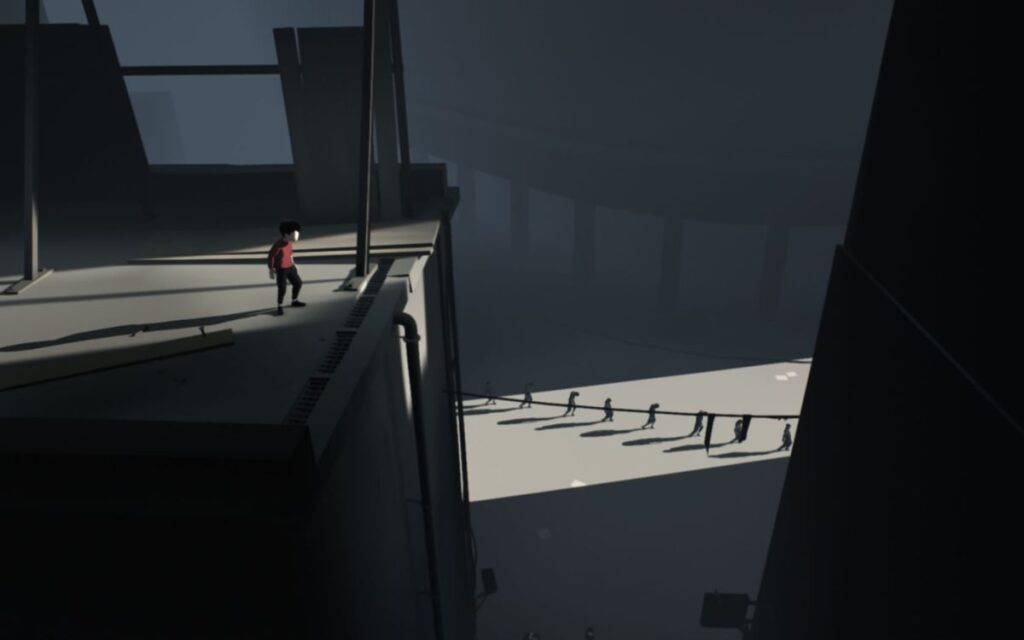
A boy in a red jumper runs through a grey, rain-soaked world. Men with dogs are hunting him. He does not stop, and neither does the game stop to explain why. What unfolds over the next three to four hours is a dystopian nightmare told entirely through what you see around you — controlled humans shuffling in formation, underwater laboratories, vast industrial machines doing things that should not be possible. The less said about the specifics the better, because Inside is a game that genuinely rewards going in as blind as possible.
What I find remarkable about the storytelling is how it operates on two levels simultaneously. On the surface it is a tense, propulsive escape through a world gone badly wrong. Underneath, it is asking a question about control, agency, and what it means to be the one doing the running — a question that the final act answers in a way that reframes everything that came before it. I have played through Inside three times and the ending still does something to me. That is rare.
Graphics
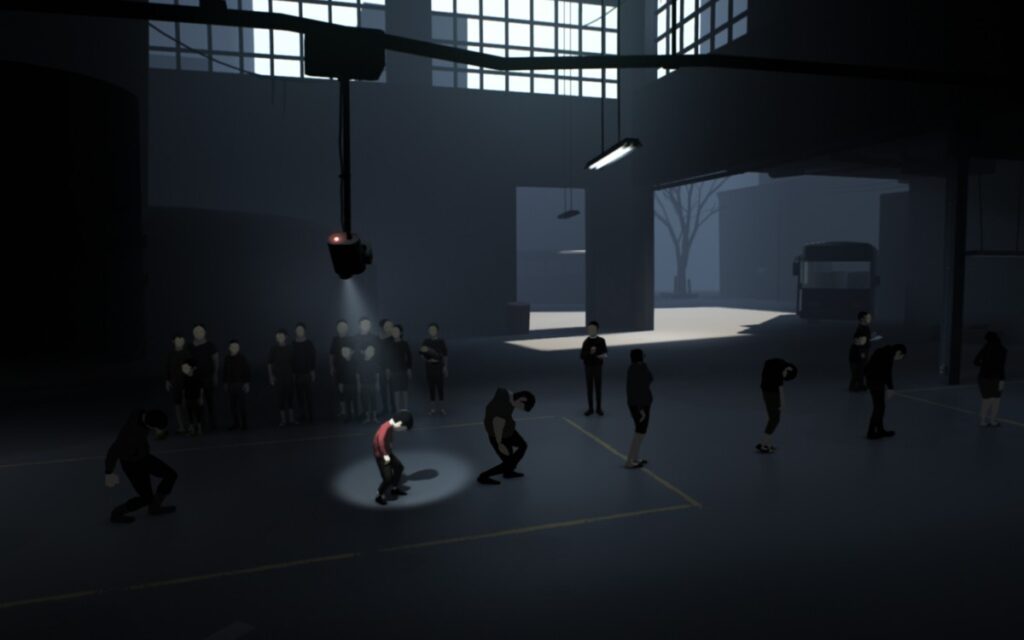
Inside is a beautiful game in a way that feels almost reluctant — it does not announce its beauty, it just quietly surrounds you with it. The colour palette is almost entirely desaturated, built around cold greys and browns and blacks, with the boy’s red jumper as the only consistent warmth in the frame. The depth of field, the volumetric lighting, the way rain moves across surfaces — all of it is handled with a precision that makes the world feel physically real despite being rendered in 2.5D.
What impresses me most is how the art direction serves the atmosphere rather than competing with it. Every environment — rain-soaked fields, drowned underwater corridors, clinical white laboratories — has its own distinct visual logic while remaining part of a coherent whole. Playdead’s custom temporal anti-aliasing filter, which they later released as open source, gives the game a signature filmic quality that no other game of that era quite matched. Inside looks like a film that has been dreaming about being a game.
🎬 Did you know?
Inside was partly financed by the Danish Film Institute — the same body that funds Danish cinema. It is one of the very few video games ever to receive that kind of arts funding, and it says something about how Playdead’s work was perceived: not as a commercial product, but as a cultural artefact worth supporting.
Gameplay
Inside builds its puzzle design around a principle of elegant simplicity — each new mechanic is introduced, explored, and then discarded before it outstays its welcome. You run, jump, push objects, swim, and eventually acquire one additional ability that I will not spoil. None of it is complicated in isolation. What makes the puzzles memorable is how they are staged — each one feels like a small scene rather than a logical problem, with a solution that tends to emerge from reading the environment rather than abstract thinking.
The pacing of mechanical introduction is masterful. Just as you feel you have understood the rules of a particular space, Inside shifts them. A new element enters the picture, the tone darkens slightly, and the world opens into something you were not expecting. There is no friction between the controls and the experience — the boy moves with exactly the weight and responsiveness the game needs, never fighting you and never feeling too easy.
Pacing
Inside runs around three to four hours and feels perfectly sized. There is not a single section I would cut and not a single moment that feels padded. The game moves with the rhythm of a great short film — purposeful, controlled, building steadily toward something without ever revealing what that something is until it arrives.
The escalation across the runtime is one of Inside’s quiet masterstrokes. The early sections are tense but relatively grounded. By the midpoint the world has become genuinely strange. By the final act it has crossed into territory that is almost impossible to describe without spoiling — and the pacing is precisely what makes that landing work. You have been prepared for it without knowing you were being prepared.
Atmosphere
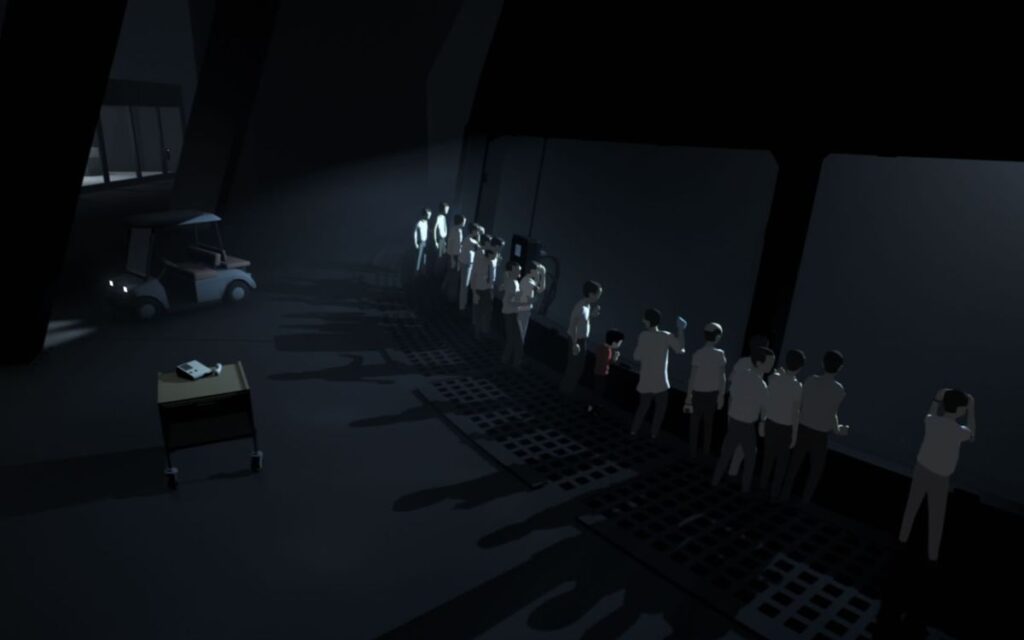
Inside’s atmosphere is oppressive in a way that feels carefully calibrated rather than gratuitous. From abandoned farmland and flooded ruins to sterile laboratories and massive industrial structures, nearly every environment feels controlled, hostile, and deeply unnatural.
It never tips into horror — it stays in a register closer to dread, the specific unease of a world that is wrong in ways you cannot quite articulate. That sustained, controlled discomfort is one of the hardest things to achieve in any medium, and Playdead holds it for the entire runtime without once breaking the spell.
The sound design deserves enormous credit here. Composer Martin Stig Andersen — who also scored Limbo — created the soundtrack using bone conduction through a human skull, producing sounds that sit at the edge of what feels organic and what feels deeply wrong. Combined with the near-total absence of music in long stretches, the silence itself becomes part of the atmosphere. Inside is a game you feel in your chest.
🎮 My honest opinion
Inside is the benchmark. When I think about what cinematic platformers can be at their absolute best — what the genre is capable of when every element is working in perfect alignment — this is the game I come back to. The atmosphere, the pacing, the puzzle design, the storytelling, the ending — all of it functions as a single, unified thing rather than a collection of features. That level of coherence is genuinely rare.
Is it still worth playing today? Unreservedly yes. It holds up completely — not as a piece of nostalgia or genre history, but as an experience that delivers on every playthrough. I would recommend it to someone who has never touched a cinematic platformer as readily as I would to a genre veteran. It is that good.
My one honest note is that if you are looking for answers, Inside will frustrate you. The story is deliberately unresolved, the imagery is open to interpretation, and Playdead has never explained any of it. For me that is a strength — it trusts the player completely. But it is worth knowing going in.
Six years of development, a co-founder split, a studio betting everything on a single vision. The result speaks for itself. No wonder Inside is our pick for the most perfectly executed modern cinematic platformer — see where it ranks in our complete best of guide.
Where can I play Inside?
Inside is available on PC through stores like GOG and Fanatical, and can also be played on PlayStation 4, Xbox One, Nintendo Switch, and iOS. Thanks to its strong visual presentation and immersive sound design, i strongly recommdn playing it with headphones, so that all little audio detaisl stand out!
Games similar to Inside
Players who enjoyed Inside will likely appreciate other cinematic platformers focused on atmosphere, environmental storytelling, and unsettling world-building. Its influence can be seen across many modern indie platformers, particularly those emphasizing minimalist storytelling and carefully controlled pacing.
Limbo
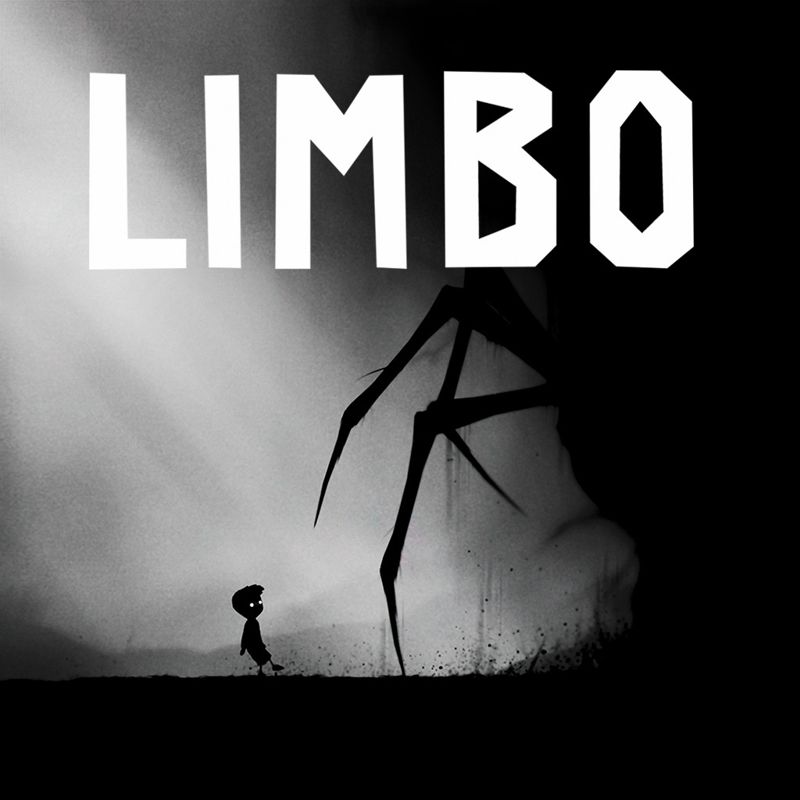
The natural starting point — Inside’s direct predecessor and the game that laid the foundation for everything Playdead achieved with it. Limbo is starker, shorter, and less thematically ambitious, but the monochrome world, the wordless storytelling, and the precise puzzle design make it essential context for Inside and a genuinely great game in its own right.
Somerville
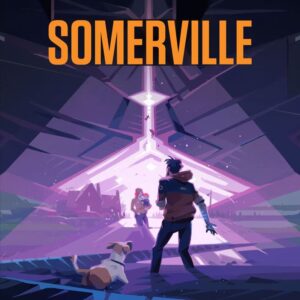
Created by Dino Patti — Playdead’s co-founder — after his departure from the studio, Somerville is the closest thing to a spiritual successor Inside has produced. It shares the wordless environmental storytelling, the 2.5D perspective, the oppressive dystopian atmosphere, and a willingness to leave its story deliberately open. Knowing its origins makes it even more interesting to sit with alongside Inside.
If you are looking for more atmospheric cinematic platformers, games like Little Nightmares, Planet Alpha, and Silt each explore different sides of the genre — from alien invasions and dreamlike exploration to oppressive monochromatic horror.