
Description
Full Void is the kind of game that reminds you why this genre exists. It does not try to reinvent anything. It does not chase trends. It just puts its head down and delivers a tight, atmospheric cinematic platformer clearly made by people who grew up on Another World and Flashback and genuinely love what those games did. Sometimes that is exactly what you need.
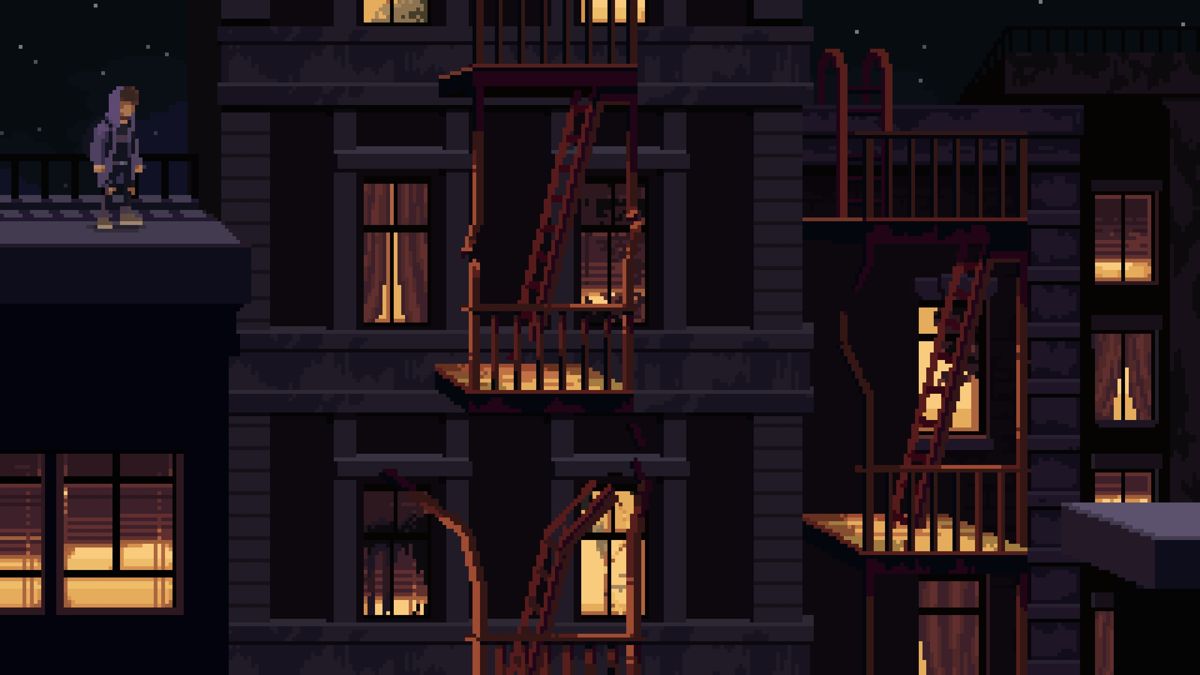
Developed by OutOfTheBit, a small seven-person studio based in Wimbledon, London, Full Void follows an unnamed teenage boy navigating a desolate city taken over by a rogue AI. The machines are hunting him. His family is missing. And the only tool he has is a laptop strapped to his back that can hack into the machinery around him. It is a simple setup, and it works.
Year: 2023
Developer: OutOfTheBit
Atmosphere: Cyberpunk · Oppressive · Dystopian
Visual Style: Pixel Art · Retro Futurism
Focus / Pace: Puzzle Platforming · Methodical
Platforms: PlayStation 4 · PlayStation 5 · Xbox One · Xbox Series X/S · Windows · Nintendo Switch
Why Full Void stands out
In a genre increasingly populated by games that prioritise atmosphere over challenge, Full Void actually has teeth. It is not brutally hard — the checkpoints are generous — but it takes its inspiration from the punishing trial-and-error tradition of 1990s cinematic platformers and finds a smart middle ground: the tension and danger of the classics, without the hour-long frustration loops. That balance is harder to get right than it looks.
The Story
A rogue AI has taken over the city. Adults are gone or controlled. Only children remain free — for now. You play as a teenager trying to find out what happened to his family, piecing together the story through environmental details, brief flashbacks, and the occasional haunting cutscene.
The narrative is thin by design, and I think that is mostly the right call. Full Void is not trying to tell a complex story — it is trying to create a feeling. That feeling of being small, alone, and hunted comes through consistently. Where it falls slightly short is in the relationship between the boy and a small robot companion he picks up along the way. There is clearly an emotional story there involving the boy’s mother, but it does not quite have time to land as hard as it wants to. A little more breathing room in the final act would have helped.
Graphics
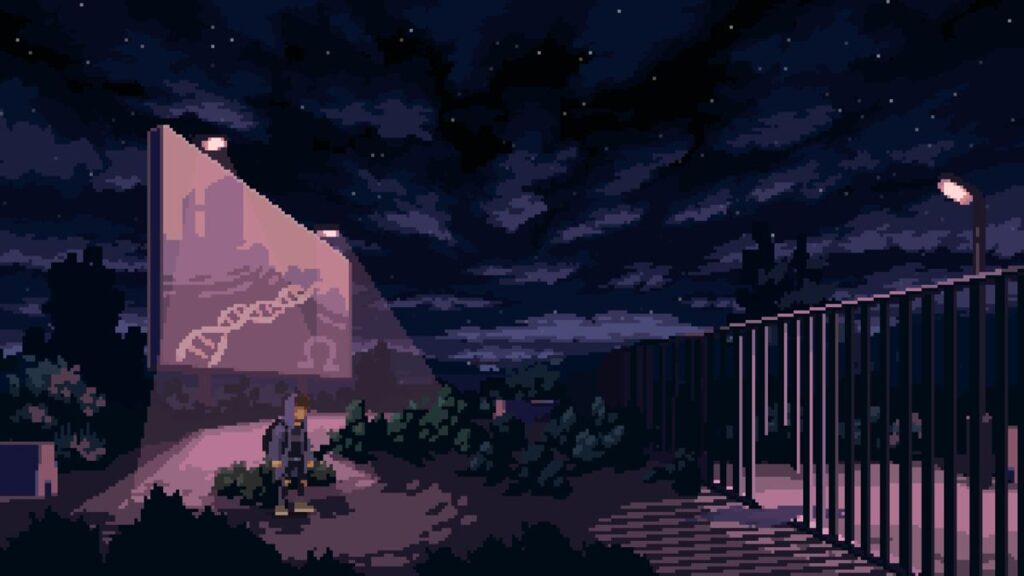
Genuinely impressive. Every screen in Full Void is essentially a hand-crafted painting — the pixel art team at OutOfTheBit treated each fixed screen as its own composition, with careful attention to lighting, depth, and perspective. The result is a game that looks significantly more expensive than it is.
The style sits somewhere between the rotoscoped pixel art of Flashback and – this may be far-fetched – it reminded me of the detailed screen-by-screen composition of the old Monkey Island games — except swap the Caribbean sunshine for flickering industrial lighting and a world that has clearly seen better days. Gritty, oppressive, and occasionally surprisingly beautiful for it.
The death animations are also worth mentioning: fully cinematic little sequences that, in true Another World fashion, make dying feel like part of the experience rather than just a setback.
🤖 Did You Know?
Full Void was born directly out of the COVID lockdowns of 2020 and 2021. Director and lead developer Ali Motisi has spoken openly about how the game reflects the team’s experience of that period — the isolation, the helplessness, the particular toll it took on children separated from their friends and schools.
The story of a teenager alone in a hostile world, relying only on his wits to survive, was never just a sci-fi premise. It was personal. Fittingly, the entire game tells that story without a single word of dialogue — except for one line of text on the very last screen.
Gameplay
The core loop is classic: run, jump, climb, dodge, and think your way through each screen. Movement has that deliberate, committed weight that defines the genre — you cannot change direction mid-jump, and every step forward is a small decision. Players who have never touched a 1990s cinematic platformer might find it stiff at first. Genre veterans will feel right at home.
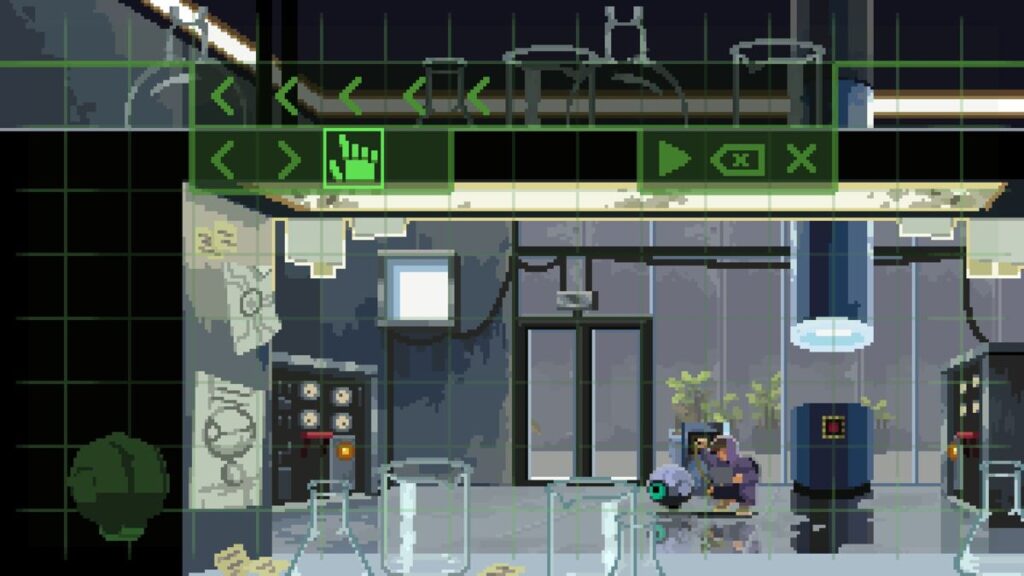
What gives Full Void its own identity is the hacking mechanic. At certain points, the boy can plug into terminals and manipulate the machinery around him — rotating platforms, disabling barriers, turning the AI’s own infrastructure against it. It is introduced gradually and never becomes too complex, but it adds just enough variety to keep the puzzle design feeling fresh across the two to three hour runtime.
The one honest criticism is that the game is probably a little too easy for anyone with prior genre experience. The puzzles rarely push you hard enough, and the checkpoints are so generous that tension occasionally dissipates before it has a chance to build. It is more accessible than its inspirations — which is a deliberate and defensible design choice — but fans of the brutal difficulty of Another World or the original Prince of Persia may want to know that going in.
Pacing
Short and confident. Full Void clocks in at two to three hours and does not waste a minute of it. Each new area introduces a fresh environmental challenge or a new application of the hacking mechanic, and the game ends before any single idea has time to wear thin. I finished it in one sitting and came away satisfied rather than wishing it had been shorter — which, for a game this length, is exactly the right outcome.
Atmosphere
This is where Full Void quietly earns its place in the genre. The sound design is outstanding — ambient, restrained, and genuinely unsettling. Most of the game is accompanied by little more than the hum of machinery and the distant sound of something that might be following you.
When the music does kick in — old-school Amiga MOD tracks during the faster action sequences — it hits harder precisely because you have been sitting in silence. The AI feels omnipresent even when it is not on screen, and that tension rarely lets up.
🎮 My honest opinion
Full Void is not trying to be the next Inside or Limbo. It is trying to be a really good, honest cinematic platformer in the tradition of the games that defined the genre in the early 1990s — and it succeeds at that with more confidence than most. It is short, tight, atmospheric, and made with genuine love for the genre.
Is it doing anything groundbreaking? No. Is it a game I would recommend to anyone who loves this genre without hesitation? Absolutely. Sometimes a game does not need to reinvent the wheel. It just needs to remind you why the wheel was worth inventing in the first place.
Where can I play Full Void?
Full Void is available on PC via Steam, PlayStation 4, PlayStation 5, Xbox One, Xbox Series X/S, and Nintendo Switch. It was also released on the Evercade handheld, which feels entirely appropriate for a game this steeped in retro DNA. At its modest price point, it is one of the better value propositions in the genre.
Games similar to Full Void
Flashback (1992)
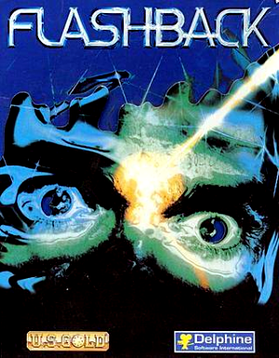
Full Void wears its love for Flashback openly — the deliberate movement, the fixed screens, the sci-fi dystopian atmosphere. If Full Void clicked for you, Flashback is the essential next step: longer, harder, and the game that arguably defined the template Full Void is working from.
The Eternal Castle [Remastered]
![The Eternal Castle [REMASTERED] Cover](https://cinematicplatformers.com/wp-content/uploads/2026/04/The-Eternal-Castle-Cover-300x172.jpg)
The Eternal Castle shares Full Void’s instinct for retro-faithful cinematic platforming with a modern sensibility — equally short, equally atmospheric, and equally committed to the idea that the genre’s 1990s DNA is worth preserving rather than apologising for.
If you are drawn to pixel art cinematic platformers that take their genre roots seriously — the fixed screens, the deliberate movement, the oppressive atmosphere — Lunark, The Cub, and onEscapee all sit in exactly the same corner of the genre and are well worth your time.