
![The Eternal Castle [REMASTERED] Screenshot](https://cinematicplatformers.com/wp-content/uploads/2026/04/The-Eternal-Castle-Screenshot-1.png)
I want to tell you something that will reframe everything about this game before you play it: The Eternal Castle [REMASTERED] is not a remaster of anything. There is no original. The bracketed REMASTERED tag, the CGA visuals, the fake scanlines, the vintage font — all fiction. A game presented as a lost artefact from 1987, rescued from a floppy disk, lovingly restored. None of it happened. Three people built it from scratch in a garage in 2019.
When I found that out, I sat back and thought: that is one of the most committed creative ideas I have encountered in this genre. And then I played it and realised the concept is not just a marketing gimmick — it is the whole point. The Eternal Castle feels like a memory. Not a reliable one. The kind that gets hazier the more you try to focus on it.
Developed by Leonard Menchiari, Daniele Vicinanzo and Giulio Perrone, and released on Steam in January 2019, The Eternal Castle follows a pilot who crash-lands on a strange planet and must recover parts scattered across four distinct worlds to repair their ship. The story is minimal. The atmosphere is not.
![The Eternal Castle [REMASTERED] Cover](https://cinematicplatformers.com/wp-content/uploads/2026/04/The-Eternal-Castle-Cover-300x172.jpg)
Year: 2019
Developer: Leonard Menchiari · Daniele Vicinanzo · Giulio Perrone
Atmosphere: Dystopian · Retro-Futuristic · Oppressive
Visual Style: 4-Color CGA Pixel Art · VHS Sci-Fi
Focus / Pace: Action Platforming · Tense
Platforms: Windows · Nintendo Switch · PlayStation 4 · PlayStation 5
Why The Eternal Castle [REMASTERED] stands out
Most cinematic platformers pay tribute to the genre’s past through aesthetic choices. The Eternal Castle goes further — it presents itself as the past. As something you might have played and half-forgotten. I think that is a genuinely bold conceptual move, and it gives the whole experience a texture that no amount of pixel art could achieve on its own.
The GameSpot review described it perfectly: it feels less like how those classic games actually played, and more like our unreliable memory of how they felt. That distinction is everything. And this unique concept helped The Eternal Castle [REMASTERED] getting featured in our article about the best cinematic platformers.
The Story
A pilot. A crashed ship. Four worlds to explore and loot for spare parts. The story is told almost entirely through what you see — the ruins of a post-AI civilisation, the creatures that inhabit what is left, the environmental details that suggest a history without explaining it.
I find this approach works brilliantly here. The game is pretending to be something you half-remember, so a story that resists full comprehension is exactly right.
![The Eternal Castle [REMASTERED] Screenshot](https://cinematicplatformers.com/wp-content/uploads/2026/04/The-Eternal-Castle-Screenshot-4-1024x576.png)
Graphics
Every scene is rendered in four colours — black, white, and two others that shift from world to world. Characters are mostly silhouettes, chunky pixels arranged in ways that genuinely evoke CGA graphics from the late 1980s. And yet the animation is more fluid than anything that actually ran on CGA hardware — more frames, more naturalism, more expressiveness. It is the best possible version of a game from 1987, not what games from 1987 actually looked like.
What impresses me most is how much atmosphere Menchiari extracts from those four colours. A cemetery lit by lightning flashes. A bombed-out skyscraper at dusk. An underground laboratory in clinical white and green. Each world looks completely different from the last despite using the same technical constraints. That is genuinely clever art direction.
💾 Why [REMASTERED]?
The Eternal Castle [REMASTERED] is not actually a remaster of anything. There is no original game. The whole premise — the “[REMASTERED]” tag, the retro CRT aesthetic, the deliberately degraded visuals — is an elaborate fiction designed to make the game feel like a lost DOS-era classic being rediscovered.
The fiction goes deeper than most people realise. Menchiari has said the “original” game is based on a real childhood memory — a game he played on the family PC that disappeared when a floppy disk got stuck in the drive. Not wanting to tell his father, he said nothing. The disk was thrown away, the game was gone forever. Years later, he rebuilt the game he half-remembered — except the memory was so hazy that what he actually made was something entirely new.
To sell the conceit, fake screenshots of the “original” were uploaded to classic Prince of Persia forums. Some people genuinely wondered if they had played it as children. Welll… They had not 🙂
Gameplay
You choose which of the three main levels to tackle in any order — a smart modern addition that removes the brutal frustration of the games it is imitating while preserving their difficulty and atmosphere. Gear upgrades carry over between levels, ammo is scarce, and you can only carry two weapons at once. Every bullet counts in a way that creates real tension.
The platforming is classic genre DNA — committed movement, deliberate animation, a world that rewards patience over aggression. My honest criticism is the same one almost every reviewer flagged: close-range melee combat against multiple enemies collapses into button mashing. The stamina system and block mechanic suggest something more nuanced, but in practice I found myself just swinging until things stopped moving. It is the weakest element by some distance and the one that most clearly shows the indie budget. It never ruins the experience, but it does interrupt it.
![The Eternal Castle [REMASTERED] Screenshot](https://cinematicplatformers.com/wp-content/uploads/2026/04/The-Eternal-Castle-Screenshot-2-1024x576.png)
Pacing
The game uses uneven pacing in a way that actually strengthens the atmosphere. Quiet exploration sections suddenly give way to intense action scenes, horror imagery, or unexpected cinematic moments that make the journey feel unpredictable.
Rather than building toward one consistent rhythm, the experience often feels fragmented and unstable. That strange pacing fits the dystopian world surprisingly well and helps the game maintain tension throughout the adventure.
Atmosphere
The synth-wave soundtrack is one of my favourites in the genre — warped, slightly wrong, shifting between worlds without losing its underlying sense of something ancient and broken.
Combined with the four-colour visuals and the sparse sound design, The Eternal Castle creates an atmosphere I genuinely struggle to put into words. It feels like standing in front of something you used to know and no longer quite recognising it. Which is, of course, exactly what Menchiari intended.
🎮 My honest opinion
The Eternal Castle [REMASTERED] is one of the most conceptually original games in this genre — a game that uses fiction, nostalgia, and a four-colour palette to say something genuinely interesting about how we remember the games we love. The combat has real weaknesses. The runtime is short. But the world is distinctive, the atmosphere is extraordinary, and the commitment to the central conceit never wavers.
It sits in my personal top ten (well, depending on my mood of the day) for a reason. There is nothing else quite like it.
Where can I play it?
Available on PC via Steam and itch.io, Nintendo Switch, PlayStation 4, and PlayStation 5. A New Game+ mode unlocks after completion for players who want a genuine challenge. Modestly priced and completable in a focused evening.
Similar games
Players who enjoyed The Eternal Castle [REMASTERED] will likely appreciate other cinematic platformers focused on dystopian atmosphere, experimental storytelling, and retro-inspired sci-fi worlds.
Full Void

Full Void shares The Eternal Castle’s love of classic cinematic platformer structure and retro DNA — fixed screens, committed movement, death animations that feel part of the experience. Both games are made by small teams who grew up on the classics and built something faithful without being derivative.
Black The Fall
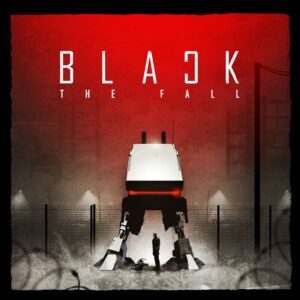
Black The Fall combines oppressive industrial environments, environmental storytelling, and dystopian imagery in a way that feels very close to The Eternal Castle’s atmosphere. Both games focus heavily on tension, visual mood, and dangerous traversal.
If you are looking for more cinematic platformers with a similar retro-futuristic visual style, games like Lunark, The Way, and Flashback all share pixel-art sci-fi environments, cinematic side-scrolling, and dystopian atmosphere inspired by classic cinematic platformers of the 1990s.