Descripton
I’ll be upfront: Hoa is not a game that challenges you. If you come to it hoping for the puzzle depth of Gris or the mechanical satisfaction of Limbo, you will probably bounce off it fairly quickly. But if you approach it the way its creators clearly intended — as a hand-painted world you wander through slowly, letting the music wash over you — it is one of the most quietly beautiful things the genre has produced in years.
Developed by Vietnamese indie studio Skrollcat Studio and published by PM Studios, Hoa follows a small fairy as she drifts back to the forest that raised her and works to restore life to a world damaged by encroaching machines. It is a simple premise and it tells its story without a single word of dialogue — and honestly, it doesn’t need any.
Year: 2021
Developer: Skrollcat Studio
Atmosphere: Peaceful · Dreamlike · Natural Visual Style: Hand-Painted 2D · Animated Illustration
Focus / Pace: Exploration Platforming · Relaxed
Platforms: PlayStation 4 · PlayStation 5 · Xbox One · Xbox Series X/S · Windows · Nintendo Switch
Why Hoa stands out
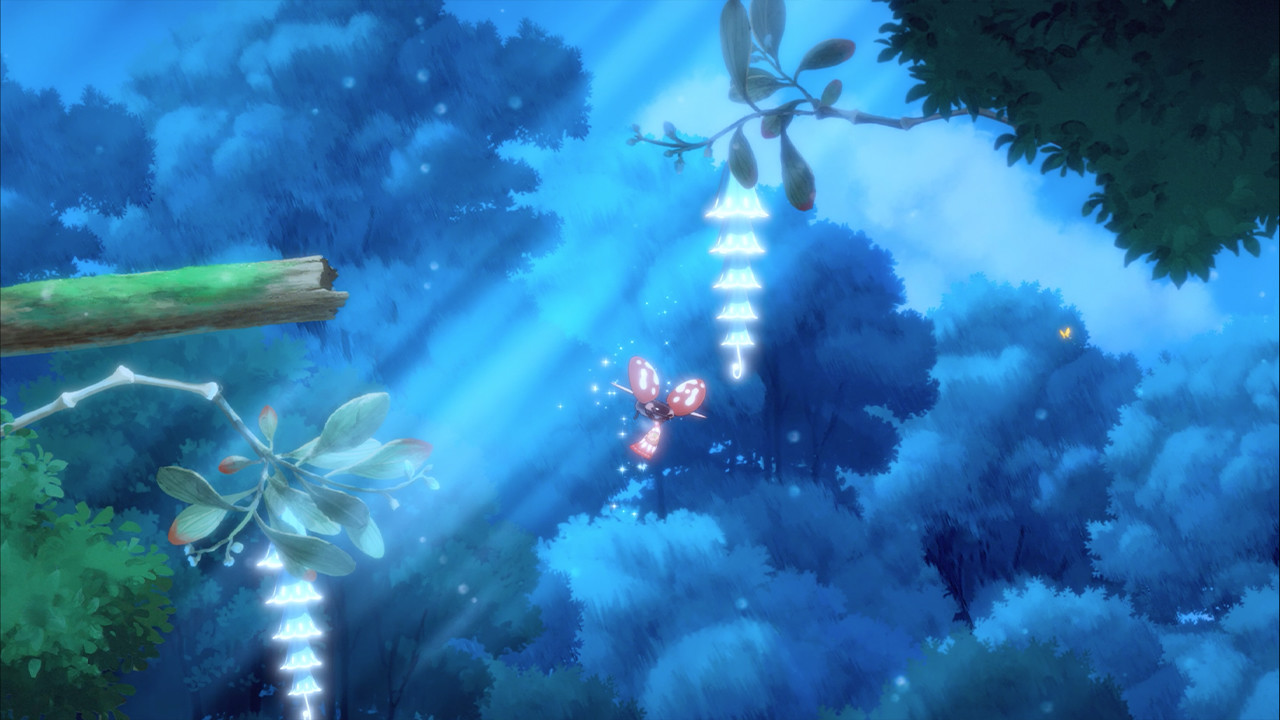
Everything in Hoa is hand-painted. Every background, every character, every flower petal and leaf and ripple of water. The moment you see it in motion, you understand why it exists. Game director Cao Sơn Tùng started the whole project with one goal: make a side-scroller that looks stunning. Aaaaaand he got there!
The Story
Hoa wakes up on a leaf boat and makes her way back to a forest she once called home, now threatened by industrial machines. The story unfolds in pieces as she awakens sleeping guardians — gentle rock creatures, curious insects — who each fill in a fragment of her past. The narrative is thin by design, and I think that is mostly fine. The world itself does the storytelling.
Where it loses me slightly is in the dialogue of those guardians. The translation choices are a little clunky in places — one character is referred to repeatedly as “that guy,” which is tonally jarring in an otherwise wordless and delicate experience. It is a small thing, but it snaps you out of the reverie more than it should.
Graphics
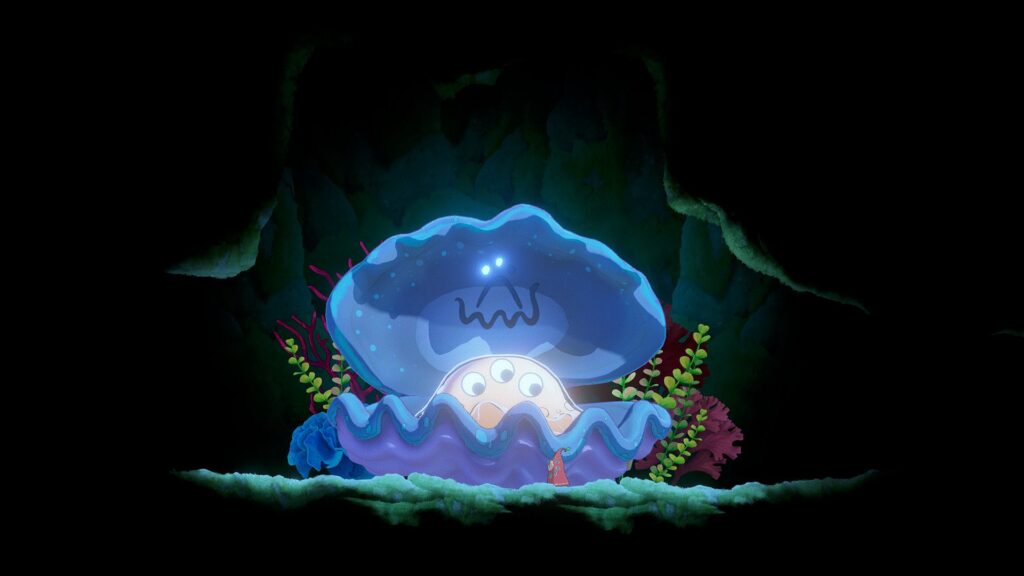
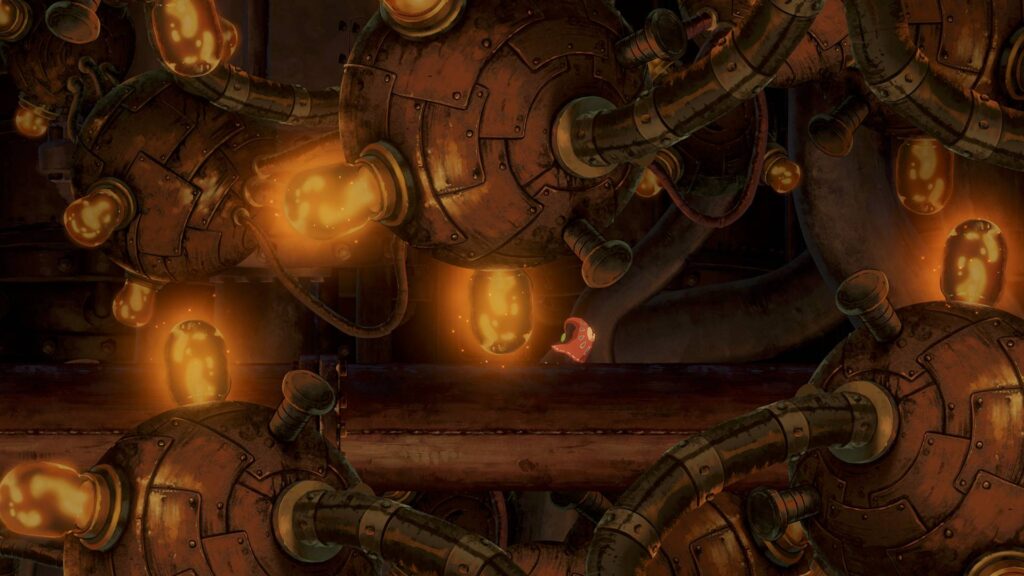
Genuinely stunning. There is no other word for it. The hand-painted backdrops have a warmth and texture that no procedural or digital art style can replicate — you can almost feel the brushstrokes. Each environment has its own palette and mood: lush forest greens, cool underwater blues, the harsh oranges of the industrial levels late in the game. The contrast between the natural and the mechanical in those final chapters hits harder precisely because the early game has made you fall so completely in love with the world Hoa is trying to protect.
If you have ever played Gris and thought I want more of this feeling — Hoa is probably the closest thing to it, visually speaking.
🎵 Did You Know?
The first thing that struck me about Hoa — before the visuals even had time to sink in — was the soundtrack. It sounds like a big-budget animated film, which felt completely at odds with what I knew about the game.
So I looked it up: turns out it was recorded with a full live orchestra, with composer Johannes Johansson, orchestrator Lauri Koivisto, and sound engineer Simon Evig delivering something that genuinely rivals AAA production standards. For a debut game made part-time by a small Vietnamese studio, that is no small achievement.
Gameplay
This is the honest part. Hoa plays closer to a walking sim than a traditional platformer. You jump, you double jump, you push the occasional rock onto a pressure plate. As you awaken guardians you pick up new movement abilities — a hover, a stronger jump — but none of them dramatically change what you are doing. It is deliberate and extremely low-stakes; enemies nudge you back a few steps at most, and there are no real fail states to speak of.
For most of the game, that gentleness is a feature. It feels like Ori and the Blind Forest dialed all the way down to its most peaceful register, with none of the precision platforming and all of the atmosphere. But there is one exception: a late-game section with rotating screens and inverted controls that feels completely out of character with everything that came before it. Several reviewers flagged it, and I agree — it is genuinely frustrating in a way the rest of the game simply is not, and it sits oddly against the otherwise serene experience.
Pacing
Length is almost beside the point here — what Skrollcat got right is the rhythm. The game moves in a gentle wave: a quiet stretch of exploration, a guardian to awaken, a new ability, a new environment. It never rushes you, and it never lingers long enough to become dull. Each chapter feels like turning the page of a picture book.
What I love most is how comfortable it is with silence. There are stretches where almost nothing happens mechanically — you are just walking through a beautifully lit forest or drifting underwater — and the game never feels the need to fill that space. It reminded me of FAR: Lone Sails in the best way: a game that trusts you to slow down and just be somewhere for a moment.
The one place that rhythm breaks is the late-game rotating screen section, which feels genuinely out of character with everything around it. It passes — and the ending more than recovers — but it is hard to ignore.
Atmosphere
The soundtrack, composed by Johannes Johansson with orchestrator Lauri Koivisto, is genuinely beautiful — piano-led and orchestral, shifting with the environment in a way that feels completely organic.
Combined with the hand-painted visuals, the atmosphere Hoa creates is something I find hard to put into words. It is warm. It is the kind of game you play when you need the world to slow down for a couple of hours.
🎮 My honest opinion
Hoa is not for everyone, and it knows it. It is a game about being somewhere beautiful more than it is about doing anything challenging — and if that sounds like your idea of a good time, it absolutely delivers. I finished it in one sitting and felt genuinely moved by the ending, which is more than I can say for games ten times its scope.
Hoa is our pick for the purest expression of hand-painted beauty in the genre — see how it ranks among the best cinematic platformers ever made.
Just go in with the right expectations. This is not Limbo. It is not even Gris in terms of mechanical depth. It is closer to a playable Studio Ghibli short film — and for the right mood, on the right evening, there is nothing better.
I would recommend Hoa to anyone who has had a long week and needs two hours where nothing explodes, nothing chases you, and the worst thing that can happen is sliding off a ladybug.
Where can I play Hoa?
Hoa is available on PC via Steam and on PlayStation 4, PlayStation 5, Xbox One, Xbox Series X/S, and Nintendo Switch. It is affordably priced across all platforms, and a bundle including the soundtrack is available on Steam.
Games similar to Hoa
A Tale of Paper (2020)
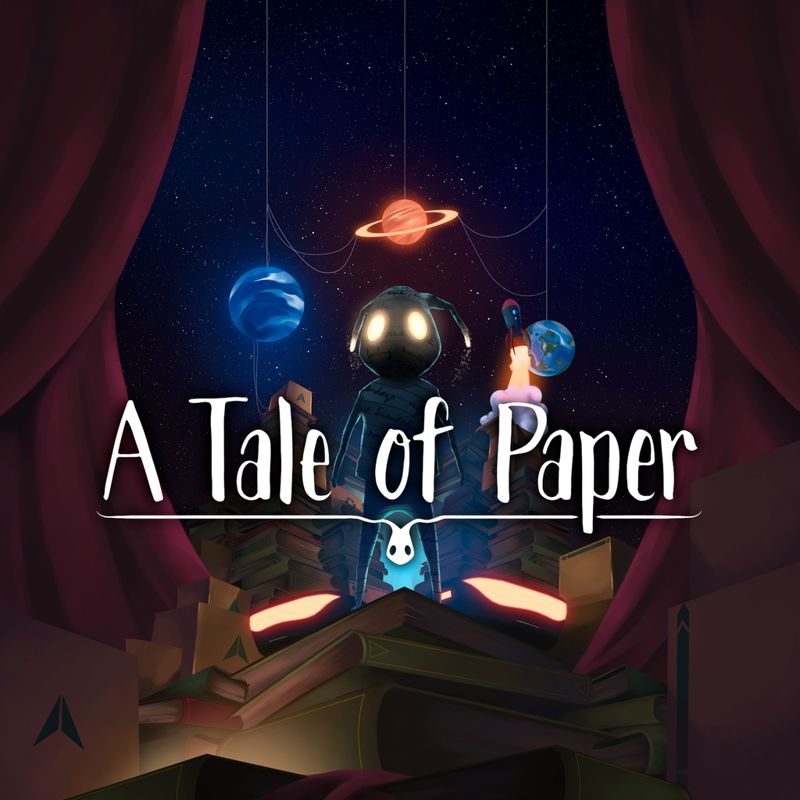
A Tale of Paper shares Hoa’s gentle pacing, wordless storytelling, and the specific feeling of being a tiny creature navigating an enormous, indifferent world. Both games are short, handcrafted, and far more emotionally effective than their simple premises suggest.
Gris (2018)
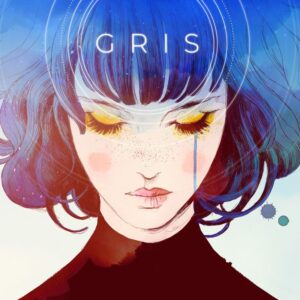
If Hoa’s hand-painted world resonated with you, Gris is the natural next step — more mechanically interesting, equally stunning visually, and just as committed to carrying its emotional weight entirely through art direction and music rather than dialogue or exposition.
If you are drawn to games that prioritize atmosphere and beauty over challenge — where the point is the feeling of being in the world rather than conquering it — Voyage, Aspire: Ina’s Tale, and Planet Alpha all sit in the same peaceful corner of the genre.