
Descripton
Gris is the kind of game I find almost impossible to recommend without immediately second-guessing the words I am using — because nothing I say quite captures what it actually feels like to be inside it. Developed by Barcelona-based Nomada Studio and published by Devolver Digital in 2018, it is a wordless platformer about a young woman moving through a world drained of colour, gradually reclaiming it as she heals.
There is no combat, no death, no fail state. What there is instead is some of the most breathtaking hand-painted visual art ever put into a game, a soundtrack that I still think about years later, and an emotional journey that manages to feel both deeply personal and completely universal. Gris does not play like most games. It feels more like being walked through someone’s grief and coming out the other side.
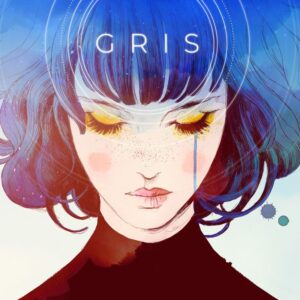
Year: 2018
Developer: Nomada Studio
Atmosphere: Dreamlike · Emotional · Melancholic
Visual Style: Watercolour Art · Painterly Animation
Focus / Pace: Exploration Platforming · Relaxed
Platforms: Windows · macOS · Nintendo Switch · PlayStation 4 · Xbox One · iOS · Android
Why Gris stands out
The origin story of Gris is one of my favourites in indie game history, partly because it sounds so unlikely. Two programmers — Adrián Cuevas and Roger Mendoza, both veterans of AAA studios including Ubisoft Montreal and Ubisoft Barcelona — returned home to Barcelona and met Conrad Roset, a celebrated watercolour and ink illustrator known for his Muses series, in a bar. Roset had long wanted to bring his art into games but had no idea how. Cuevas and Mendoza had the technical skills but were hungry for something more personal than franchise work. They clicked immediately, founded Nomada Studio, and within two years had made Gris.
What strikes me about that origin is how completely it explains the finished game. Gris is not a game that started with mechanics and then found an art style — it is an artist’s vision that needed a game to live inside. Every design decision flows from that: the absence of combat, the absence of death, the colour-based progression, the refusal to explain the story in words. This is Conrad Roset’s world, and you are a visitor inside it.
Historically, Gris arrived at a moment when the “games as art” conversation was still contested, and it landed like a definitive argument. It won the Games for Impact award at The Game Awards 2019 and appeared on countless end-of-year lists — not as a curiosity or a tech demo, but as a genuinely great experience that happened to also be one of the most beautiful things anyone had ever put on a screen.
The Story
Gris begins with a young woman singing, her voice shattering, and the world around her crumbling into grey dust. From that opening image alone — before you have pressed a single button — the game tells you everything you need to know about what you are walking into. This is a story about loss. About the specific, physical weight of grief and what it does to the world around you.
What follows is a wordless journey through five distinct emotional landscapes, each one representing a different stage of processing pain. The world starts entirely colourless and gradually reclaims its hues — red, green, blue, yellow — as Gris finds new abilities and pushes forward. The metaphor is not subtle, but it does not need to be. What makes it work is how completely the game commits to it — every environment, every mechanical shift, every musical swell is in service of the same emotional arc.
I find the storytelling in Gris genuinely moving in a way that surprised me the first time I played it. It never tells you what happened. It never names the loss or explains the collapse. It just puts you inside the feeling of it, and trusts you to bring your own experience to fill the gaps. That openness is what makes it land differently for different people — and what makes it stick.
Graphics
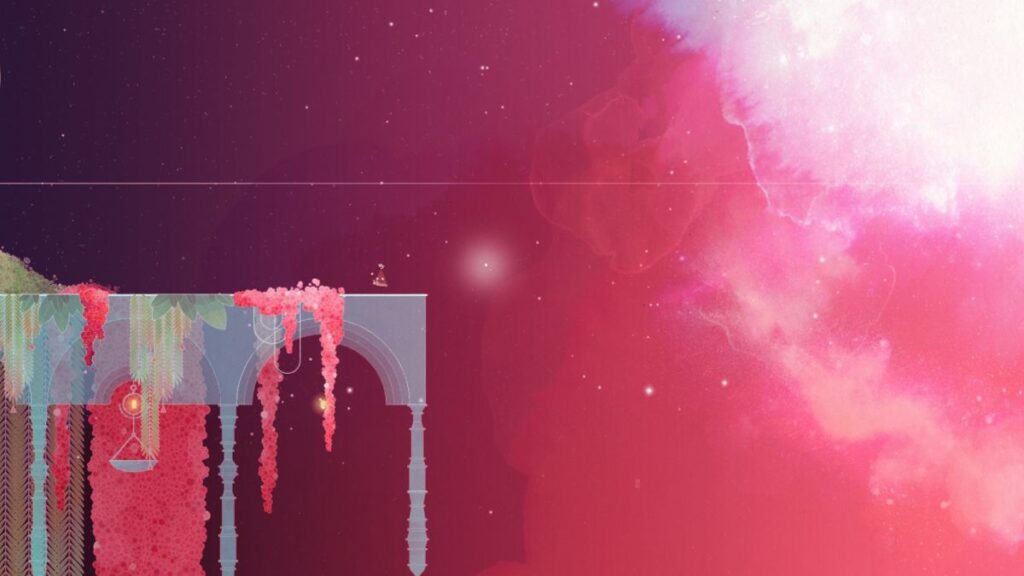
I struggle to think of another game that made me stop moving just to look at the screen as often as Gris did. The art direction — built entirely from Conrad Roset’s watercolour and ink aesthetic — is genuinely unlike anything else in the genre. Soft washes of colour bloom across paper-textured environments. Ink lines curl and dissolve. Light behaves like it does in a painting rather than a simulation. The whole thing feels handmade in a way that I know intellectually required months of custom shader development, but that never once reads as digital.
What impresses me most is how the visual design evolves alongside the emotional arc. The early grey sections have a spare, almost architectural beauty — vast empty spaces that feel genuinely desolate. As colour returns, the environments become richer and more layered, until by the final act the world is so saturated and alive that the contrast with the opening feels almost overwhelming. The game uses its own visual progression as storytelling, and it does it with a precision that I find remarkable for a debut project.
Gameplay
Gris is deliberately the gentlest game in this genre — there are no enemies, no death, no fail states of any kind. What there is instead is a series of movement abilities that Gris acquires as she progresses, each one tied to the emotional stage she is moving through. A heavy stone form that lets her break through obstacles. A double jump that feels like the first breath after surfacing from water. A bird transformation that opens the world vertically in the final act. None of it is mechanically demanding, and I think that is entirely the right choice.
The puzzles are environmental and observational — reading the space, finding the path, occasionally timing a movement to music. I never felt challenged in a conventional sense, but I also never felt bored. The game kept showing me something new often enough that the lack of friction felt like a feature rather than a limitation. What Gris asks of you is attention rather than skill, and I found that genuinely refreshing.
My honest note is that players looking for mechanical depth will not find it here. Gris is closer to an interactive experience than a traditional game, and approaching it on those terms makes all the difference.
🏆 Did You Know?
The visual development of Gris originally began with real brush-and-paper techniques — the team actually painted by hand and scanned the results, hoping to achieve that handcrafted quality directly. It quickly became clear this approach was too time-consuming to scale across the entire game.
So instead, they spent months developing custom shaders, scanning watercolour stains and paper textures, and experimenting with pencil stroke techniques — all to recreate in software what they could not practically do by hand. The result looks so authentically painted that most players never suspect it was not.
Gris is our pick for the most visually extraordinary cinematic platformer of the modern era — see where it sits in our best cinematic platformers of all time.
Pacing
Gris runs around three to four hours and moves with the rhythm of something carefully composed rather than designed. Each new environment arrives just as the previous one has given you everything it has — there is no overstaying, no repetition, no padding. I was consistently surprised by how purposeful each transition felt, how the world seemed to know exactly when I needed something to change.
The pacing slows deliberately in certain sections — quiet stretches where you simply move through a beautiful space with no puzzle in sight — and I felt those moments were some of the most effective in the game. They give you room to sit inside the atmosphere rather than pushing through it. For a game about grief, that willingness to simply let you be still feels exactly right.
Atmosphere
The atmosphere of Gris is, for me, inseparable from its soundtrack — and I mean that as the highest possible compliment to both. Berlinist, a Barcelona-based chamber pop ensemble, composed the music in close collaboration with the development team, playing early builds and writing directly to what they experienced. The result is a score that feels genuinely grown from the game rather than applied to it — piano, strings, and vocals that shift with the emotional register of each environment in a way I have rarely heard matched in any medium.
Combined with Roset’s visual world — the way colour bleeds back into grey spaces, the way environments respond to Gris’s movement — the atmosphere achieves something I find genuinely rare. It does not tell you how to feel. It just creates a space in which feeling something becomes almost inevitable. I came out of my first playthrough in a state I can only describe as quietly shaken, which for a game with no combat and no death is a remarkable thing to have pulled off.
🎮 My honest opinion on Gris
Gris is not a game for everyone, and I think it is worth being upfront about that. If what you want from a cinematic platformer is mechanical challenge, precise controls, and hard-won progress, this is not your game. Gris asks almost nothing of you in those terms. What it asks instead is harder to articulate — a willingness to slow down, to pay attention, to let a wordless watercolour world do something to you without fully explaining what it is doing.
For me, it delivered completely. I find it one of the most purely affecting experiences the genre has produced — not despite its gentleness but because of it. The absence of death, of combat, of failure removes every layer of friction between you and the emotional core of the thing, and what is left is something closer to moving through a piece of music than playing a game in any conventional sense.
A celebrated watercolour artist, two AAA refugees, a bar in Barcelona, and a two-year debut. The result is one of the most quietly extraordinary games this genre has ever produced. It is also short enough to play in a single sitting, which I think is exactly how it should be experienced. Start it in the evening, finish it before bed, and sit with it for a while afterwards.
Where can I play Gris?
Gris is available on PC DRM-free on GOG — also worth checking Fanatical for deals. Also on Nintendo Switch, PlayStation 4, Xbox One, iOS, and Android. Modestly priced and frequently on sale. Nomada Studio’s follow-up Neva shares the same painterly aesthetic and emotional ambition — the natural next step once you have finished Gris.
Similar Games
If Gris resonated with you, these two games share its commitment to atmosphere, emotional storytelling, and worlds that communicate entirely through art and music.
Neva (2024)
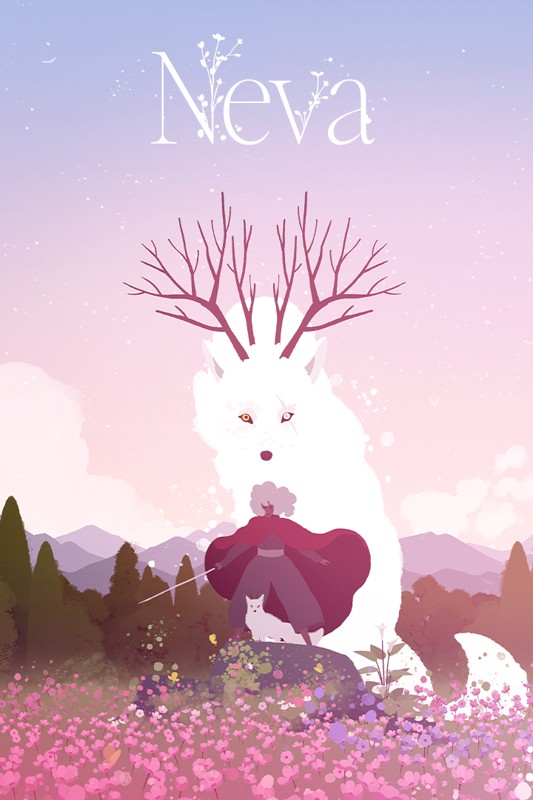
Nomada Studio’s follow-up is the most direct recommendation — same painterly visual world, same emotional ambition, same commitment to atmosphere over mechanics. But where Gris is entirely gentle, Neva introduces combat and a relationship between two characters that gives it a different kind of emotional weight. If Gris moved you, Neva will too — just in a slightly different way.
A Tale of Paper (2020)

A Tale of Paper shares Gris’s core commitment — wordless storytelling, handcrafted visual beauty, a quiet emotional journey carried entirely by atmosphere and music. It is warmer and more playful in tone, but the same trust in the player to feel things without being told how runs through both games. A natural next step for anyone Gris resonated with.
Deer & Boy (2026)
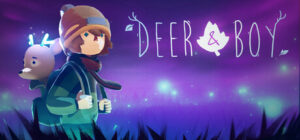
A runaway boy and an orphaned fawn across forests, caves, and dreamlike landscapes — no dialogue, just a bond built through shared danger and small gestures of affection. The companion mechanic evolves as the deer grows from a fragile newborn into a powerful equal. Warm, emotionally affecting, and one of the most distinctive cinematic platformers of 2026.
If you are drawn to games that use visual beauty and wordless narratives to explore grief, loss, and emotional recovery, our full guide to games like Gris has 22 recommendations organised by visual style, emotional register, and how dark you want to go.