
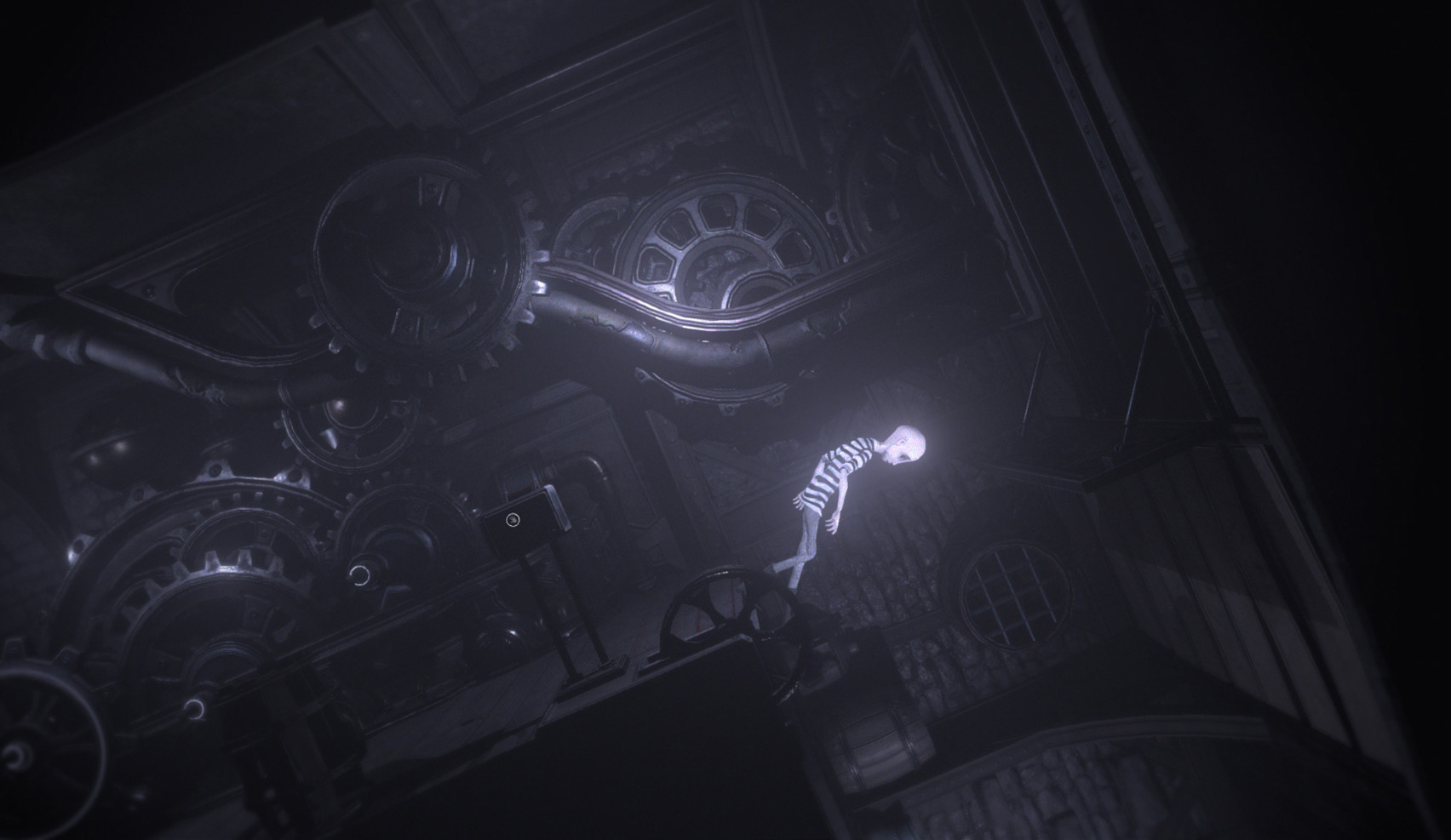
DARQ is a game about a boy named Lloyd who cannot wake up. He is trapped in a lucid nightmare — a world where the rules of physics apply only when the game decides they do, where walls become floors, where corridors fold back on themselves, where the geometry of a room changes the moment you stop expecting it to.
I noticed within the first ten minutes that something about this premise felt genuinely unsettling in a way that most horror games never manage. Not because anything jumps out at you. But because the world itself refuses to behave, and the specific anxiety of being somewhere that keeps shifting underneath you is remarkably effective.
Developed almost entirely by Wlad Marhulets — a first-time solo developer who moved from Poland to New York with $300 to his name and taught himself game development — and published by Feardemic, DARQ released in August 2019 after three and a half years of work. It won Best Art at Dreamhack 2019, landed on the front page of Reddit multiple times, and became one of the most wishlisted games on Steam in the weeks before launch. For a debut solo project, that is an extraordinary outcome.

Year: 2019
Developer: Unfold Games · Wlad Marhulets
Atmosphere: Surreal · Nightmarish · Claustrophobic
Visual Style: Dark Stylized 2.5D · Dreamlike Horror
Focus / Pace: Puzzle Platforming · Slow-Paced
Platforms: Windows · PlayStation 4 · PlayStation 5 · Xbox One · Xbox Series X/S · Nintendo Switch
The Story and World
Lloyd falls asleep and cannot wake up. The nightmare he is trapped in is rendered as a decaying, industrial world — factories, hospitals, circuses, churches — each location more twisted than the last, each one operating according to its own internal logic that you have to understand before you can navigate it. The story is told entirely without dialogue, through environmental details and the slow accumulation of visual information. By the end there is something like a narrative — about trauma, about the unconscious, about what a mind does to itself when it cannot find rest — but DARQ never spells it out. It trusts you to feel it rather than understand it.
I find this approach mostly works. The environments are atmospheric and specific enough that the world feels genuine rather than random. The one honest criticism is that the emotional stakes never quite connect — Lloyd is a vessel rather than a character, which means the story lands intellectually rather than emotionally. It is a world I find fascinating to move through. I just never felt particularly attached to the person moving through it.
Graphics and Atmosphere
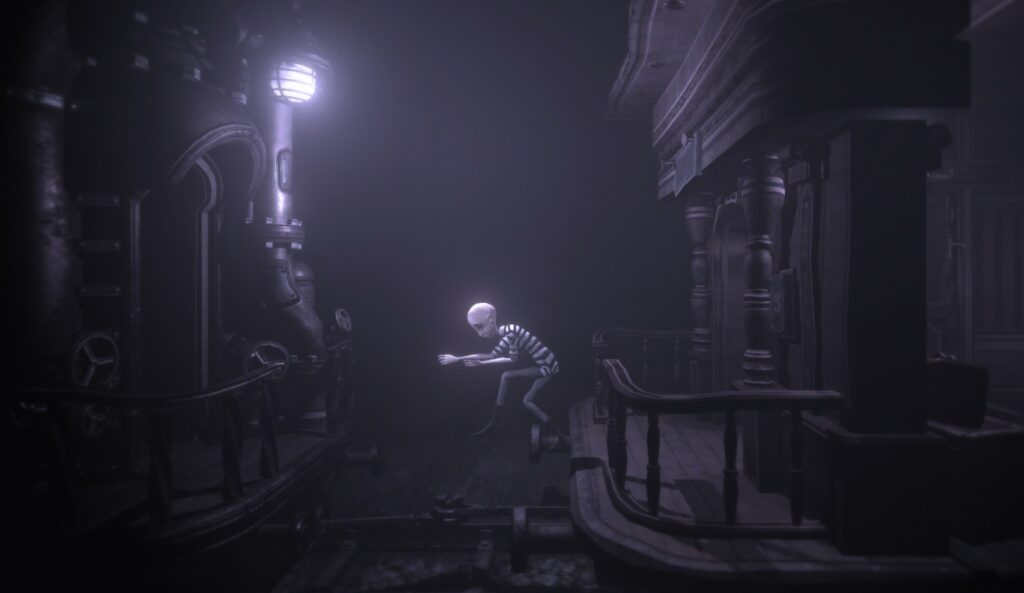
Dark, beautifully composed, and immediately distinctive. DARQ uses a 2.5D visual style with dynamic lighting that gives every scene a theatrical quality — pools of light against deep shadow, figures silhouetted against industrial machinery, corridors that seem to breathe. The art direction is consistently impressive, and the creature design is excellent: genuinely unsettling without resorting to gore or conventional horror imagery.
The sound design is the strongest atmospheric element. The ambient noise of the nightmare — mechanical groans, distant footsteps, the specific silence of a room where something is waiting — creates a tension that the visual design reinforces rather than creates. DARQ won the Audience Choice Award at the Game Audio Awards 2020, and listening to it I understand why. It is the kind of game that I find difficult to play with headphones on at night, which is probably the highest compliment I can give a horror-adjacent cinematic platformer.
🌙 Did You Know?
One week before DARQ’s launch, Epic Games offered Wlad Marhulets an exclusivity deal — keep the game off Steam, release it only on the Epic Games Store. At the time, Epic was aggressively pursuing exclusives and the deal would almost certainly have meant more money.
Marhulets turned it down flat, citing the loyalty of the Steam community that had supported the game through development. He announced the rejection publicly, which landed him on the front page of Reddit and generated more attention for the game than any marketing campaign could have. It was, he later said, the best decision he made.
Gameplay
The central mechanic is the most interesting thing about DARQ, and the one that gives it a genuine identity separate from the Limbo and Little Nightmares comparisons that follow it everywhere. Lloyd can rotate the gravity of the room — literally walking up walls and across ceilings — which turns every environment into a spatial puzzle as much as a traversal challenge. Combined with stealth sections where you must avoid enemies who cannot be defeated, and environmental puzzles that require understanding the logic of each specific nightmare rather than applying a universal ruleset, the gameplay has a variety and inventiveness that I find genuinely satisfying.
The gravity rotation mechanic puts DARQ in rare company — find out why it made the list of the most inventive cinematic platformers ever made.
The difficulty is well calibrated for most of the game. Puzzles are challenging without being obtuse, and the stealth sections generate real tension without becoming frustrating. There are a handful of moments — particularly in the later chapters — where the solution requires a precision that the controls do not quite support, and I noticed my patience wearing thin on two or three specific screens. But these are exceptions rather than the rule, and the checkpoint system is generous enough that frustration rarely accumulates.
The Complete Edition includes two free DLC chapters — The Tower and The Crypt — which add several hours of content and some of the most inventive level design in the game. Worth playing through to the end.

Pacing
DARQ uses a slow and deliberate pace that reinforces the unsettling dream atmosphere. Quiet exploration sections regularly allow players to absorb the bizarre environments before introducing new visual distortions, puzzle mechanics, or disturbing encounters. The game rarely rushes the player, instead building tension gradually through atmosphere and environmental discomfort.
I also appreciated how each chapter introduces new visual ideas and gameplay twists without dramatically changing the core structure. The experience remains consistently immersive because the game constantly finds new ways to manipulate perspective and dream logic while maintaining its oppressive tone throughout the journey.
🎮 My honest opinion
DARQ is one of the most atmospherically accomplished debut games I have encountered in this genre. The gravity mechanic is genuinely inventive, the sound design is extraordinary, and the dream logic of the world creates a specific kind of unease that most horror games never achieve. It sits in the hidden gems category on this site for a reason — it deserved a much larger audience than it found, and I think the Epic Games Store rejection story, while ultimately the right decision, probably cost it some of the mainstream visibility it would have had otherwise.
If you want a cinematic platformer that is genuinely dark without being gratuitously violent, that challenges you intellectually rather than through reflexes, and that builds its atmosphere through sound and geometry rather than jump scares — DARQ is exactly that. One of the best in its category.
Where can I play DARQ?
DARQ Complete Edition — including the base game and both DLC chapters — is available on PC via Steam, PlayStation 4, PlayStation 5, Xbox One, Xbox Series X/S, and Nintendo Switch. The Complete Edition is the recommended version and is frequently available at a very modest price during sales.
Games similar to DARQ
Players who enjoyed DARQ will likely appreciate other cinematic platformers focused on surreal horror, environmental storytelling, and unsettling atmosphere. While the game clearly draws inspiration from titles like Limbo and Inside, its dreamlike visual design and gravity-based puzzles give it a more surreal psychological identity.
Limbo
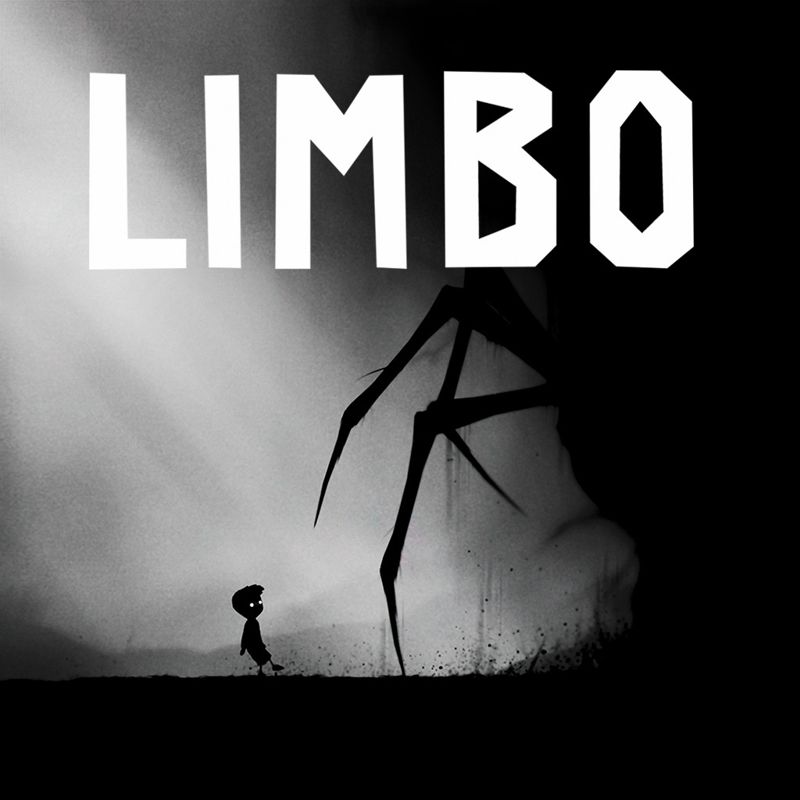
The most obvious companion piece — another dark, atmospheric puzzle platformer where a small protagonist navigates a world that operates by its own cruel logic. Limbo is more purely environmental in its puzzle design; DARQ is more spatially inventive. Both are essential.
Little Nightmares
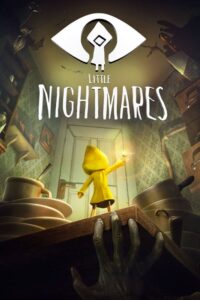
Little Nightmares shares DARQ’s focus on oppressive environments, disturbing creature design, and cinematic horror atmosphere. Both games rely heavily on visual storytelling and vulnerable protagonists trapped inside hostile surreal worlds.
If you are looking for more atmospheric horror cinematic platformers, games like Inside, Silt, and The MISSING: J.J. Macfield and the Island of Memories each explore different forms of psychological tension, surrealism, and environmental storytelling. If you loved the mechanic, check out Shady Part of Me.