
There is a specific kind of game that announces itself and immediately makes you want to drop everything. Shady Part of Me did that to me — it was revealed at The Game Awards 2020 and released the same night, with no warning, no hype cycle, no waiting. I saw the trailer, thought that looks extraordinary, and was playing it within an hour. That specific combination of discovery and immediate availability is rare enough that I remember it clearly.
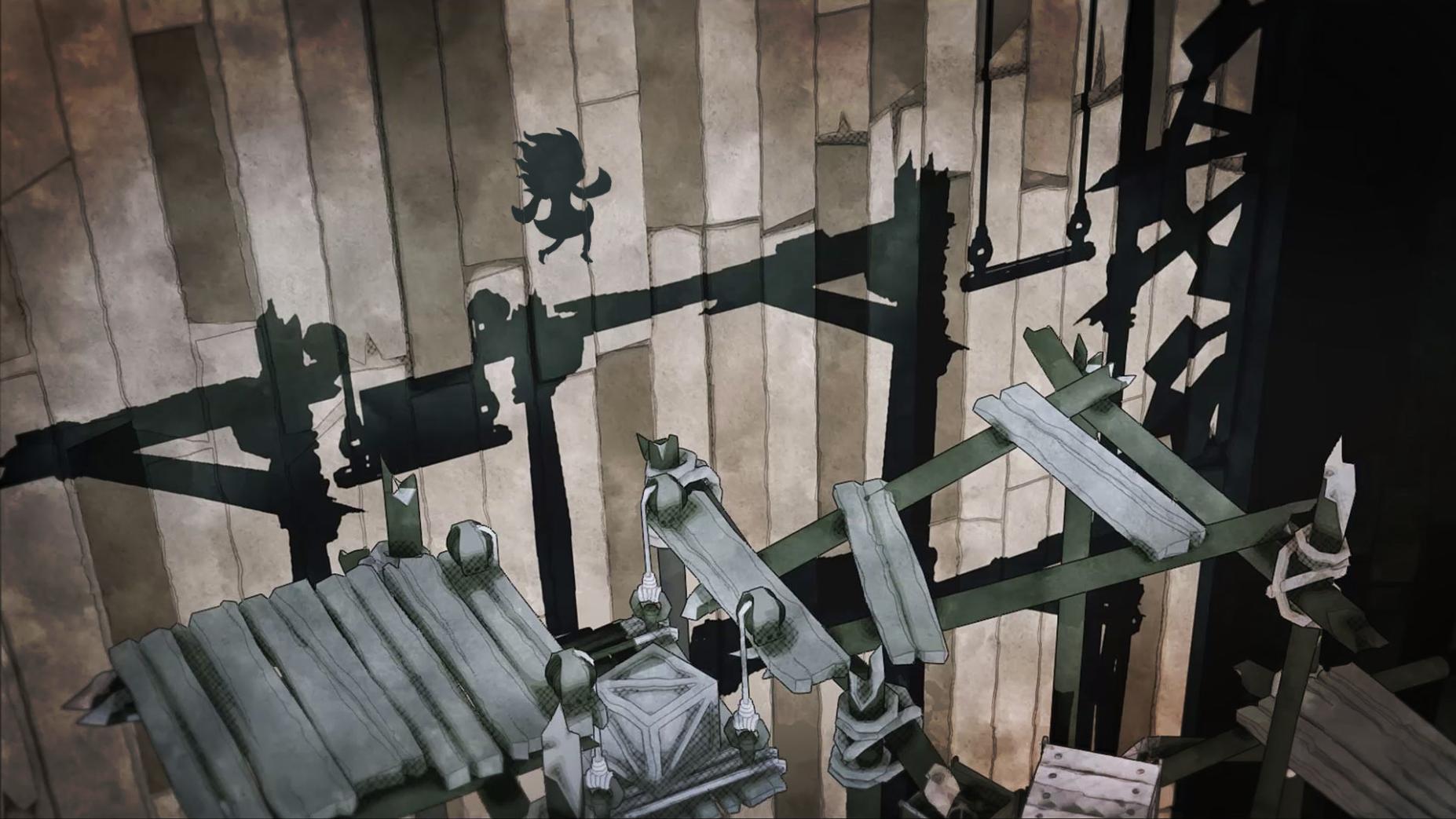
What the trailer showed was something I had not seen before: a girl who cannot stand light navigating a 3D world through shadow, while her two-dimensional shadow travels across the walls around her. Two characters. Two dimensions. One world. And solving puzzles for one requires manipulating the space of the other. I had no idea how that was going to work in practice. Within the first ten minutes I understood — and I was completely hooked.
Developed by French debut studio Douze Dixièmes and published by Focus Home Interactive, Shady Part of Me follows a young girl navigating what gradually reveals itself to be a mental health journey — a series of dreamlike environments that shift between the mundane and the surreal as the story peels back layers of anxiety, self-doubt, and the slow work of accepting yourself. It is not a subtle game about what it is trying to say. It is honest about it. And I found that directness more affecting than ambiguity would have been.

Year: 2020
Developer: Douze Dixièmes
Publisher: Focus Home Interactive
Atmosphere: Psychological · Dreamlike · Melancholic
Visual Style: 2D/3D · Sketchbook Watercolour Aesthetic
Focus / Pace: Puzzle Platforming · Deliberate
Platforms: Windows · PlayStation 4 · Xbox One · Nintendo Switch
The Mechanic
I want to spend proper time on this because it is genuinely the most interesting puzzle design I encountered in the genre all year.
The girl moves in three dimensions but is destroyed by any light source — she can only exist in shadow. Her shadow, projected onto the 2D surfaces around her, moves independently through that flat world and is destroyed by darkness. To progress, you need both of them at the end of each section. Which means every puzzle is a question of two simultaneous problems: how does the girl reach the end without stepping into light, and how does the shadow reach the end without falling into darkness — while the solution to one creates the conditions for the other.
In practice this means moving objects in 3D to change the shadows they cast in 2D, or positioning the shadow on a surface to create a darker path for the girl, or using light sources to simultaneously block one character and open a route for the other. The game keeps finding new applications for these same basic rules without ever adding mechanical complexity — every puzzle uses the same system, just pushed further. That is elegant design.
Loved the gameplay mechanic? Shady Part of me is featured in our article about cinematic platformers with unique gameplay mechanics. Check it out if you are looking for something similar!
The Story
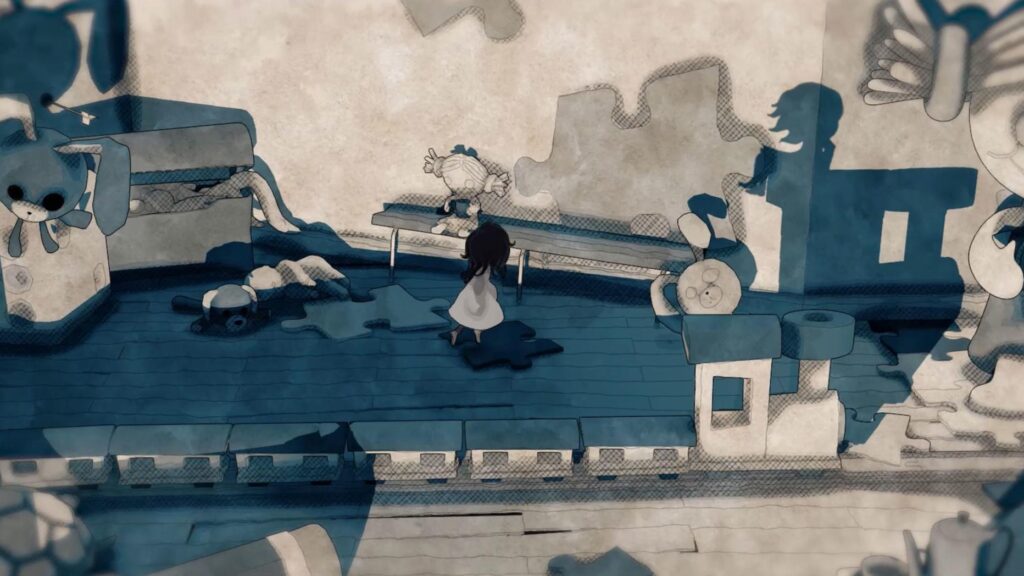
A girl is in what seems to be a hospital or institution. She is trying to escape — or understand why she is there, or forgive herself for something that happened. The story unfolds slowly and impressionistically, told through environmental details and brief exchanges between the girl and her shadow. It is deliberately vague in the early sections, which some reviewers found frustrating. I found it appropriately dreamlike — the kind of story that withholds meaning until you have earned it.
By the ending — which I will not describe — the game has said something specific and honest about the experience of struggling with your own mind, and the relationship between the girl and her shadow has become something genuinely moving. I did not expect to feel what I felt. The mechanic and the story earned each other completely.
Graphics
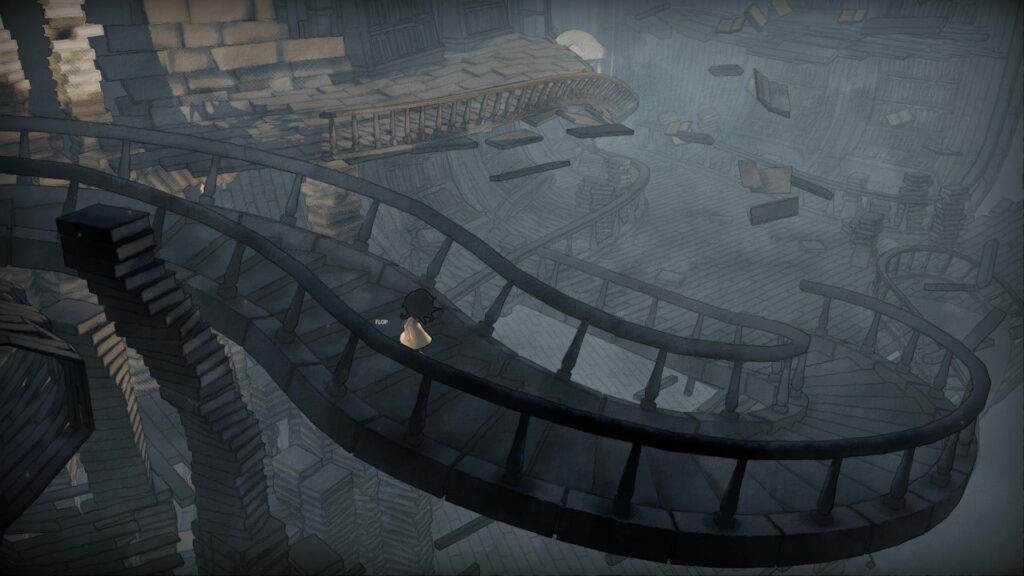
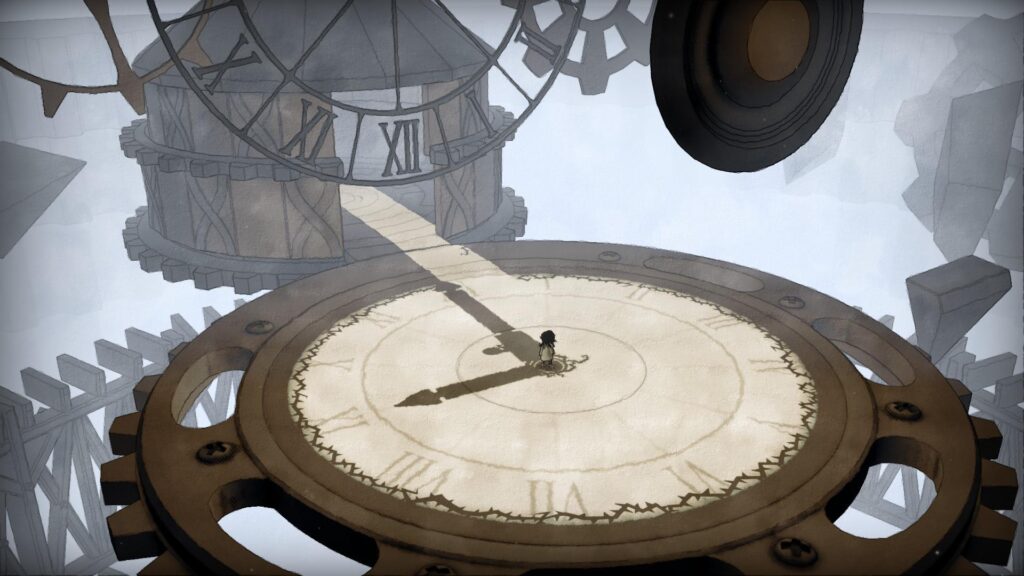
Immediately distinctive. The sketchbook watercolour aesthetic — pencil-sketch tones in the 3D environments, crayon-stroke colouring in the 2D shadow world — gives the game a visual texture that looks hand-made in a way very few games achieve. The contrast between the two visual registers also does real thematic work: the 3D world is grey, cold, and physically threatening, while the 2D shadow world is warmer and more illustrative, as if the shadow is more at home in the world of imagination than the girl is in the world of reality.
🌑 Did You Know?
The girl in Shady Part of Me is voiced by Hannah Murray — best known as Cassie in Skins and Gilly in Game of Thrones. It is a quieter, more internal performance than either of those roles, but it gives the character an immediately recognisable vulnerability that grounds the more surreal sections.
The development team at Douze Dixièmes has said the casting was one of the earliest creative decisions and shaped how the writing developed around the character’s emotional journey.
Gameplay
The puzzles are the heart of the experience and they are consistently well-designed — inventive without being obtuse, demanding without being frustrating. The difficulty is calibrated to keep you thinking rather than stuck, which is the right call for a game that wants emotional momentum rather than challenge. A few mid-game sections lean slightly too hard on the same puzzle type before introducing something new, and there is one late section where the timing requirements felt slightly at odds with the game’s contemplative tone. Neither complaint lingers long.
The game also has no title screen, no save file menu, and no conventional UI — it simply resumes from where you left it, and when you finish, the credits roll with no return to any menu. A small detail that reinforces the sense of a single unbroken experience rather than a product you open and close.

Atmosphere
The score by Nicolas Gueguen is quiet, piano-led, and exactly right — present without intruding, shifting register as the game’s emotional tone shifts without ever announcing those shifts. Combined with Hannah Murray’s voice work and the visual language, the atmosphere is consistently melancholic without tipping into oppressive. It is the kind of game you want to play on a quiet evening when you have the headphones on and the room to yourself.
🎮 My honest opinion
Shady Part of Me is one of the most quietly impressive debut games I have played in this genre. The mechanic is genuinely original — I have not seen the 2D/3D duality done this way elsewhere — and the story earns its emotional ending through the design rather than around it. It is short, it is occasionally too vague for its own good, and the title is genuinely not great. None of that changes the fact that it is one of the most distinctive cinematic platformers of 2020, made by a French studio on their first game, announced and released on the same night at The Game Awards.
Play it on a quiet evening. It will stay with you.
Where can I play Shady Part of Me?
Shady Part of Me is available on PC via Steam, PlayStation 4, Xbox One, and Nintendo Switch. It is short — around three to four hours — and frequently available at a very modest price during sales.
Games similar to Shady Part of Me
Lost in Shadow (2010)

Lost in Shadow shares Shady Part of Me’s central obsession — a world built entirely around the relationship between a character and their shadow, and the puzzles that emerge from manipulating light and darkness. The Wii game is rougher around the edges and considerably longer, but the conceptual kinship is direct and worth exploring.
Contrast (2013)

Contrast is the most obvious predecessor — a 3D world with a 2D shadow world that the protagonist can shift between. Shady Part of Me is a more polished and emotionally sophisticated game, but Contrast got there first with the core dual-dimension concept.
If you are drawn to cinematic platformers where the mechanic and the emotional theme are genuinely inseparable — games where the puzzle design says something about what the game is about — The MISSING: J.J. Macfield, The Swapper, and DARQ all share that same unity of form and content.