
Overview
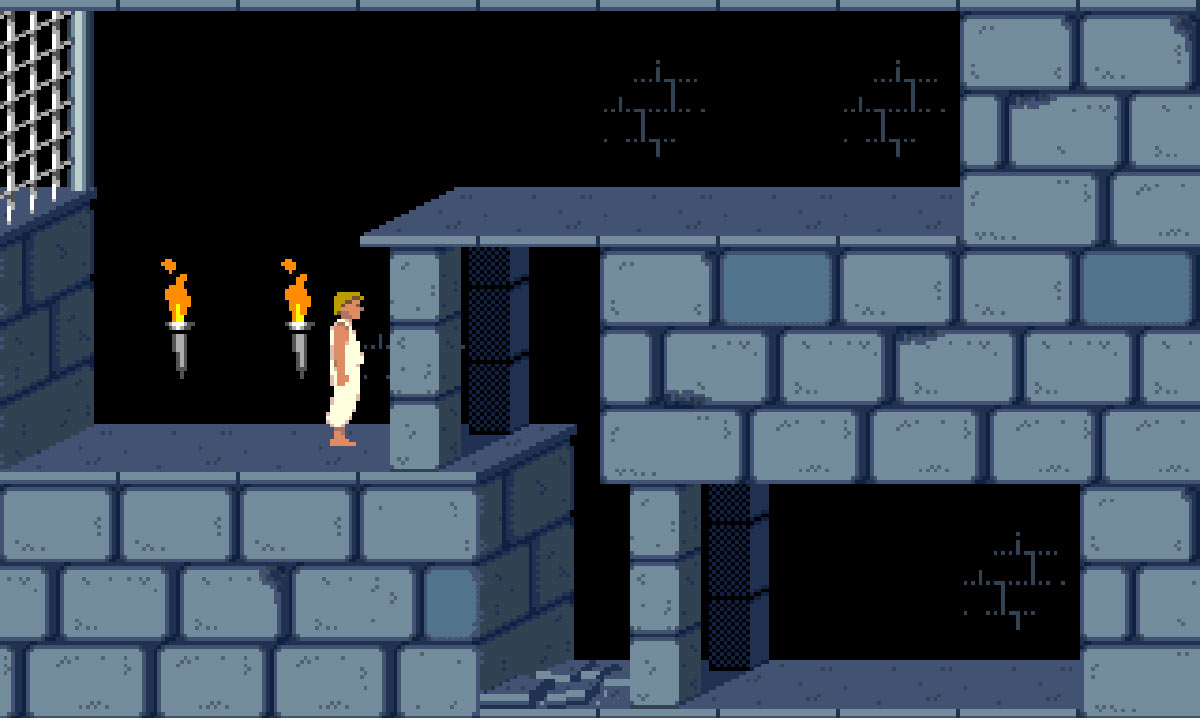
Prince of Persia is one of the most important cinematic platformers ever created and a true milestone in video game history.
Jordan Mechner graduated from Yale in 1985, went home, and immediately started filming his fifteen-year-old brother David running and jumping in pyjamas in their high school parking lot. He needed reference footage for a game he was building. Three years later, that footage — traced frame by frame into an Apple II — became the animation system for Prince of Persia, and the genre we now call the cinematic platformer had its defining text.
Where Karateka planted the seed, Prince of Persia grew it into something fully realised. It is the game that Another World’s Éric Chahi cited as a direct influence. It is the game that showed the industry what a video game could look like when someone cared as much about how a character moves as about what they are doing.
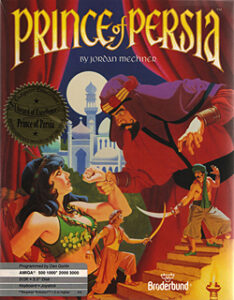
Published by Brøderbund in 1989, Prince of Persia follows an unnamed hero — a foreign adventurer imprisoned in the dungeons of a Persian palace — who has one hour to escape, defeat the Grand Vizier Jaffar, and rescue the princess. The clock is always running. Every second counts.
Year: 1989
Developer: Broderbund
Atmosphere: Tense · Adventurous · Cinematic
Visual Style: Pixel Art · Rotoscoped Animation
Focus / Pace: Precision Platforming · Methodical
Platforms: Apple II · DOS · Amiga · Sega Genesis · Super Nintendo · Modern Platforms
Why Prince of Persia stands out
Prince of Persia laid many of the foundations that would later define cinematic platformers throughout the 1990s and beyond. Long before Another World, Flashback, Limbo, or Inside, the game already emphasized realistic animation, environmental storytelling, vulnerable protagonists, deadly traps, and methodical movement built around tension rather than speed.
The game also stands out because of how physical everything feels. Jumps require precision, movements carry weight, and every spike pit, collapsing floor, or mistimed leap can quickly lead to death. I still think Prince of Persia captures vulnerability better than many modern platformers because the character never feels superhuman. Every action feels deliberate, grounded, and slightly dangerous, which gives the adventure an incredible cinematic quality even decades later.
The Story
A nameless hero, a captive princess, a scheming vizier, and sixty minutes. The story of Prince of Persia is its structure — the ticking clock that turns every stumble, every wrong turn, every death into something with real consequence. There is no respawning away the lost time. Every minute matters.
What I always liked about the story is how efficiently it creates tension with very little exposition. The game barely interrupts gameplay, yet the time limit, dungeon escape, and cinematic presentation immediately establish a strong sense of urgency and adventure. Even simple moments like opening prison gates or entering new chambers feel dramatic because of the game’s atmosphere and pacing.
Graphics
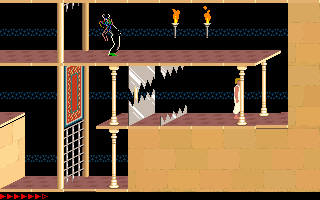
The rotoscoping is as impressive today as it was in 1989 — possibly more so, because we now understand exactly how much work went into it. The prince moves with a naturalism that no other game of the era approached: walking, running, creeping along ledges, dropping carefully from heights, drawing his sword with a specific hesitation that makes him feel like a person rather than a character. The dungeon environments are sparse but atmospheric — torchlit stone corridors, crumbling floors, spike traps that have clearly been there for centuries.
The shadow doppelgänger encounter — a puzzle built entirely around the physics of the movement system — remains one of the most elegant moments in the genre’s history.
🎬 Did You Know?
To animate the game’s swordfighting, Mechner did not film his brother or his karate teacher. Instead he spent days studying the final duel scene between Errol Flynn and Basil Rathbone in the 1938 film The Adventures of Robin Hood, spreading VHS freeze-frames across the floor of his office and tracing the movements frame by frame.
The result is one of the most fluid sword combat animations in any game of the era — built from a forty-year-old Hollywood swashbuckler and the obsessive patience of a twenty-three-year-old developer.
Gameplay
Methodical, deliberate, and completely unforgiving of carelessness. The prince moves through dungeons one screen at a time, navigating spike traps, pressure plates, portcullises, and guards with a movement system that rewards patience and punishes rushing. The sword combat — rotoscoped from Errol Flynn, remember — is a parry-and-thrust rhythm game before rhythm games existed, and landing a clean sequence of hits against a guard still feels satisfying in a way that has not aged at all.
The time limit is the masterstroke. It transforms a puzzle game into something with genuine tension — you can afford to think carefully, but you cannot afford to stop thinking. Every room is a small problem to be solved, and the clock is always there.
Pacing
At around two hours for a skilled playthrough — and considerably longer for a first run — Prince of Persia is perfectly sized. The dungeon levels escalate in complexity without becoming arbitrary, and the variety of trap types and guard encounters keeps each screen feeling distinct.
The final confrontation with Jaffar is a genuine climax rather than an afterthought, and the ending — brief and wordless — lands with a completeness that most games of the era never achieved.

Atmosphere
The Arabian Nights setting gives Prince of Persia a visual and tonal identity that nothing else in the genre shared. The music — composed by Francis Mechner, Jordan’s father, for the Apple II version — is sparse and appropriately exotic, and the ambient sound design of the dungeons does quiet, effective work.
The ticking clock is the real atmosphere though: that constant pressure that turns every room into something slightly more urgent than it would otherwise be.
🎮 My honest opinion
I played Prince of Persia first around 90-91 on an old IBM PC. I was 7 at that that time and it was actually one of my very first games – passed on to my father on some old floppy disks by a friend and it then landed on the – even at that time – old second-hand family PC… But boy was it good, i clearly remember playing hours on it. The neighbour kid had to come over to show me how to get past when i was stuck and i remeber how real it felt, way ahead of other games at that time.
Needless to say, Prince of Persia is one of the most important games ever made — and one of the most enjoyable to return to. Unlike many genre-defining classics it has aged genuinely well: the movement system is still satisfying, the puzzle design is still elegant, and the one-hour structure is still brilliantly conceived. It is absolutely still worth playing today — opt for the SNES version if you want slightly more polished graphics — and it will give you the same satisfaction as something made yesterday.
And for history freaks: If you want the full story of how it was made, Mechner’s journal The Making of Prince of Persia is one of the best books about game development ever written.
Where can I play Prince of Persia?
Prince of Persia has been released on a huge number of platforms over the years, including DOS, Amiga, Sega Genesis, Super Nintendo, Macintosh, and many modern digital collections. The original DOS version is available on GOG and remains historically important, but the game is still widely accessible today through retro compilations, emulation, and classic PC storefronts.
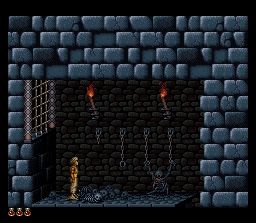
I personally think the Super Nintendo version is especially worth playing. Its improved visuals, smoother presentation, expanded environments, and additional animations make it one of the most impressive versions of the original game while still preserving the atmosphere and tension that made Prince of Persia so influential in the first place.
Games similar to Prince of Persia
Players who enjoyed Another World will likely appreciate other cinematic platformers focused on environmental storytelling, realistic animation, science-fiction worlds, and challenging trial-and-error gameplay. Its influence can still be felt across many modern atmospheric platformers today.
Another World
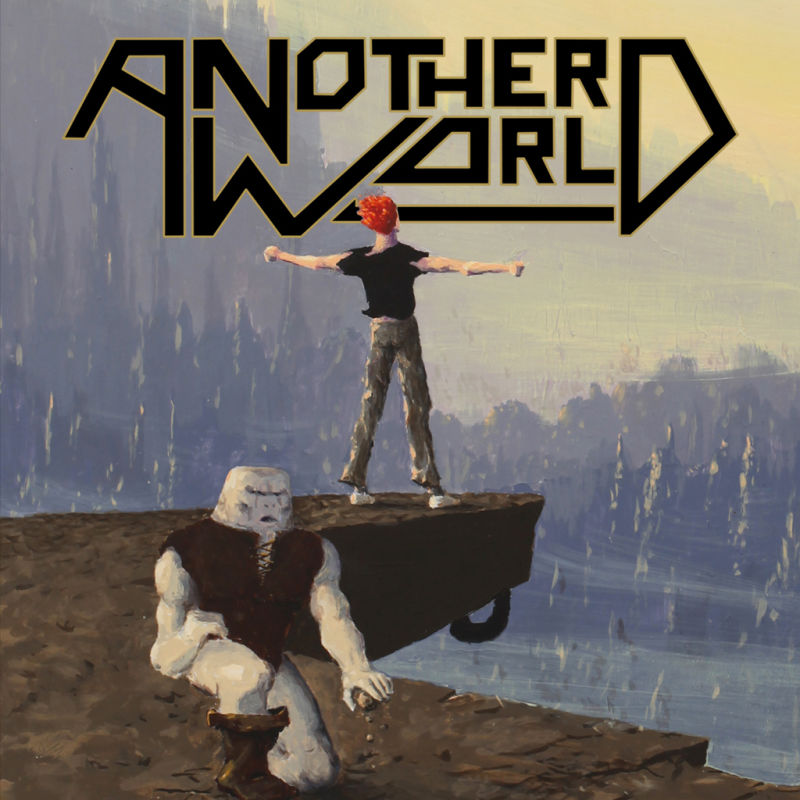
Another World pushed cinematic storytelling and environmental immersion even further through rotoscoped animation, minimalist narrative design, and dangerous trial-and-error gameplay. Like Prince of Persia, it focuses heavily on vulnerability, realistic movement, and cinematic pacing rather than arcade action.
Flashback

Flashback built directly upon the cinematic foundations established by Prince of Persia, combining realistic animation, science-fiction storytelling, combat, and exploration into one of the defining cinematic platformers of the 1990s. The game feels like a natural evolution of many ideas introduced by Jordan Mechner’s original classic.
If you are looking for more cinematic platformers built around realistic animation and dangerous traversal, games like Lunark, Blackthorne, and Limbo each reinterpret different aspects of the genre through their own distinctive atmospheres and gameplay styles.