

Description
Heart of the Alien is a game that Éric Chahi — the creator of Another World — disowned almost immediately after release. He called the animations mediocre, said the game was not up to the job, and made clear it did not represent his vision.
And yet I find myself genuinely fond of it. Not because it is better than Another World — it is not — but because it is the only game that takes you back to that world, those characters, that atmosphere. If you finished Another World and immediately wanted to know what happened next, Heart of the Alien will answer the questions.
Developed by Interplay Productions and published by Virgin Interactive in 1994, exclusively for the Sega CD, the game picks up immediately where Another World ends — this time putting you in control of Buddy, the alien companion, with flashbacks revealing who he was before the two of them ever met.

Year: 1994
Developer: Interplay Productions
Atmosphere: Alien · Dark · Cinematic
Visual Style: Rotoscoped Animation · Polygon Environments
Focus / Pace: Puzzle Platforming · Methodical
Platforms: Sega CD
The Story
Buddy lands the ship after the events of Another World, settles Lester somewhere safe, and sets out through his ruined home village — triggering flashbacks to his past as he goes. The story gradually reveals who Buddy is, where he came from, and why he was imprisoned in the same dungeon where Lester found him. It is a genuinely compelling premise — filling in the backstory of a character who communicated entirely through gesture and shared survival in the original — and the execution is better than Chahi’s dismissal suggests.
I will not say more about what happens. The ending is controversial, and it is better discovered than described.

Graphics
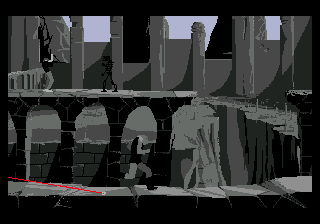
Rougher than Another World, and noticeably so. The rotoscoped animation is less fluid than Chahi’s original work — the characters move with slightly less naturalism, and the environments feel less carefully composed. That said, the visual style is recognisably faithful to Another World’s polygon-based world, and there are moments — particularly in the flashback sequences and the more elaborate cutscenes — where it genuinely matches the cinematic quality of its predecessor.
The Sega CD’s CD-ROM capabilities allowed for more elaborate cutscenes than Another World ever had, and while they are choppy by modern standards, they add a narrative richness that the original’s more stripped-back presentation could not accommodate.
Gameplay
Familiar and slightly harder. Buddy controls similarly to Lester — deliberate, committed movement, screen-by-screen progression, trial-and-error puzzle solving — with one significant addition: an energised whip that can be used for combat, swinging from stalactites, and activating switches. It gives Buddy a slightly different physical vocabulary from Lester, which feels appropriate given that he is an alien navigating his own world rather than a human lost on someone else’s.
The difficulty is brutal — possibly more brutal than Another World, which is saying something. Every screen has multiple ways to die, checkpoints are sparse, and the game rarely telegraphs what is about to kill you before it does. I found this frustrating in stretches, but it is consistent with the original’s philosophy: the world does not explain itself, and dying is how you learn.
👾 Did You Know?
Chahi never wanted a sequel. He felt Another World was complete as it was — an ending that said everything it needed to say — and had no interest in continuing the story. Interplay pushed for it anyway, specifically to take advantage of the Sega CD’s CD-ROM capabilities.
When Chahi did engage, he pitched something genuinely interesting: a game that would tell the same story simultaneously from both perspectives, with Buddy and Lester visible in the same scenes from different angles. Interplay simplified that into a straightforward continuation. Chahi walked away, and the game was developed without him.
Atmosphere
The strongest element, and the main reason I recommend it to Another World fans despite everything. The world of Another World is intact — the alien architecture, the oppressive atmosphere, the specific feeling of being somewhere ancient and hostile — and Tommy Tallarico’s score gives it a sound design that is arguably richer than the original. There are moments in Heart of the Alien that feel exactly like being back in Chahi’s world, which for a game made without his involvement is a genuine achievement.
🎮 My honest opinion
Heart of the Alien is a flawed, obscure, officially disowned sequel to one of the greatest games ever made — and I still think Another World fans should play it.
It may not be as good as the original, but it is the only continuation of that world that exists, and it is definitely better than its reputation suggests. The core atmosphere is intact, the premise is genuinely interesting, and Buddy is a more compelling protagonist than he is given credit for.
Chahi did not want this game to exist. But as a player i liked it. The closest analogy i find here perhaps may be Star Wars. It is not George Lucas vision anymore, but it is still good!
Where can I play Heart of the Alien?
Heart of the Alien was released exclusively on the Sega CD in North America and has never been officially re-released on any modern platform. It is playable via Sega CD emulation, and an open-source fan rewrite of the game engine called Heart of the Alien Redux is available on SourceForge, making it more accessible than it has ever been.
The original Sega CD release came bundled with a remastered version of Another World — still probably the most complete physical package either game has ever had.
Games similar to Heart of the Alien
Players who enjoyed Another World will likely appreciate other cinematic platformers focused on environmental storytelling, realistic animation, science-fiction worlds, and challenging trial-and-error gameplay. Its influence can still be felt across many modern atmospheric platformers today.
Another World (1991)
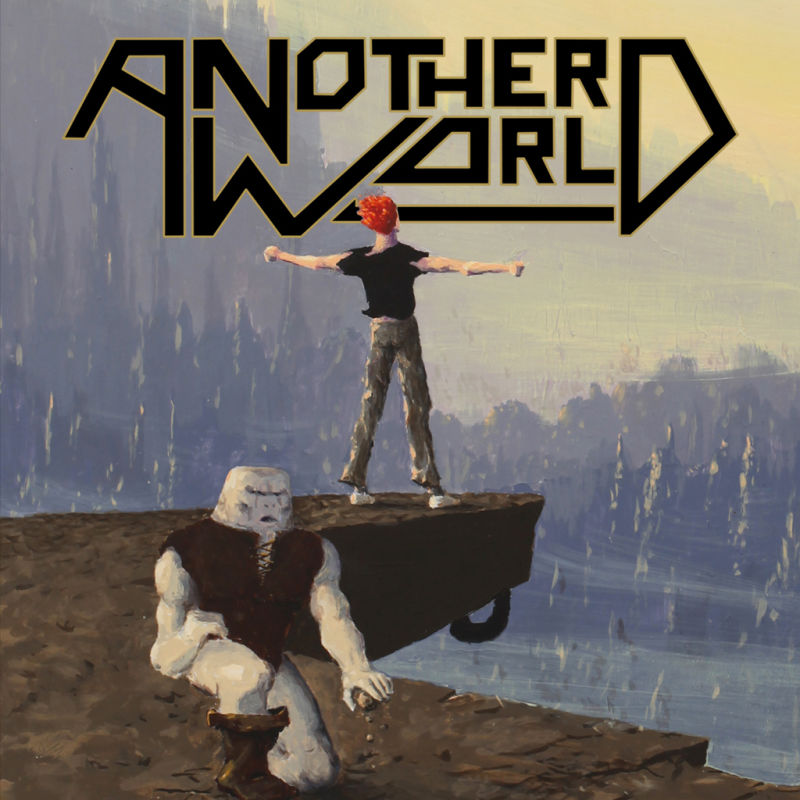
Obvious choice, but play the original first if you have not already. Heart of the Alien makes considerably more sense — and hits considerably harder — if you arrive at it directly from Another World’s ending. Everything in this game is a response to what Chahi built, and the emotional weight of the story depends entirely on your attachment to the characters from the first game.
Flashback (1992)

If Heart of the Alien left you wanting more of that early 1990s cinematic platformer feel — the rotoscoped movement, the sci-fi atmosphere, the deliberate trial-and-error structure — Flashback is the natural next step. Made by Delphine Software the same year, it is a more complete and more polished game than Heart of the Alien, and one of the best in the genre.
If you are working your way through the Another World family tree, Heart of Darkness — Chahi’s own follow-up — is the essential next stop. Beyond that, Bermuda Syndrome and onEscapee both share the same early 1990s cinematic platformer DNA and deserve far more attention than they get.