
Descripton
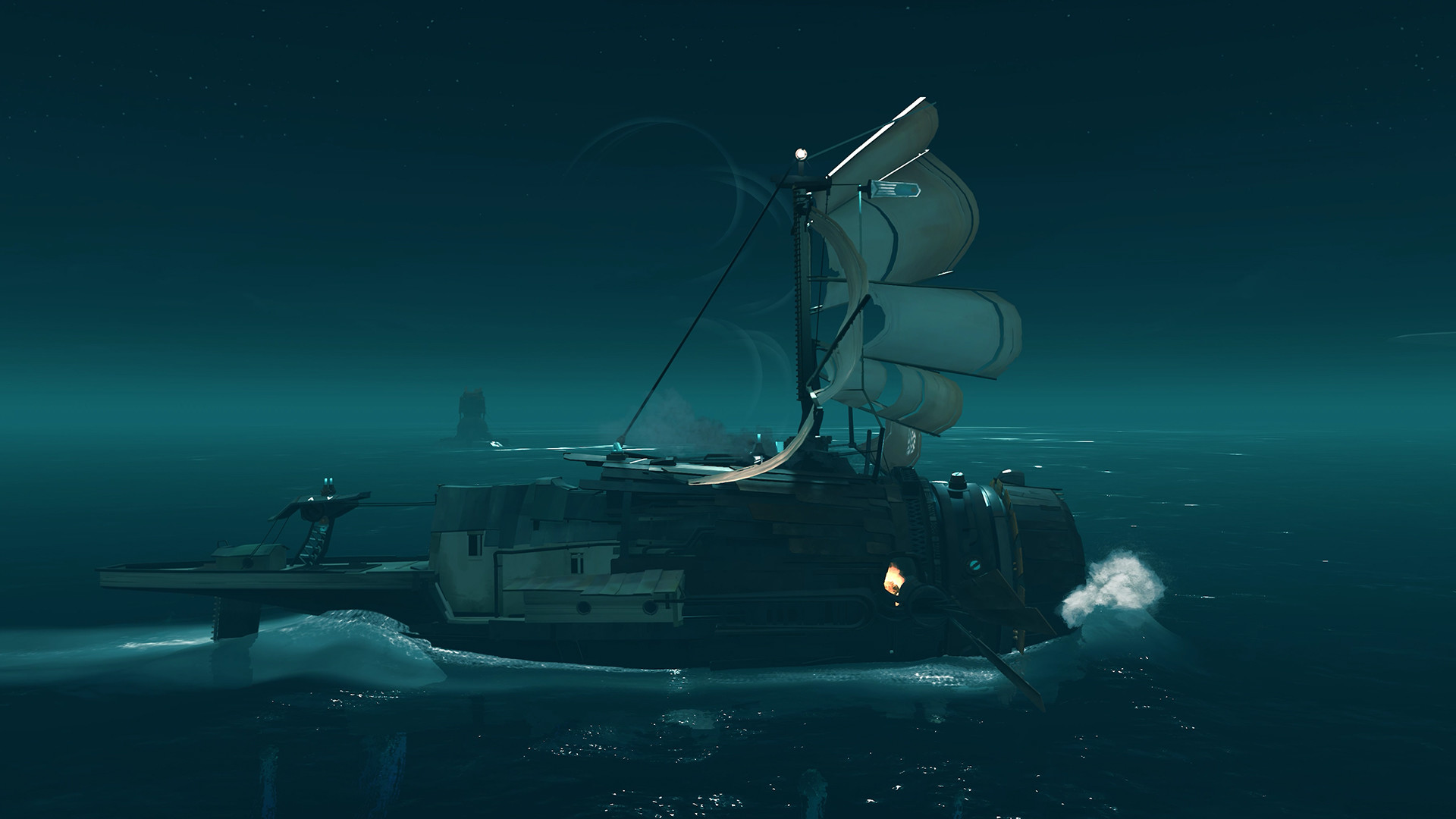
FAR: Changing Tides is Okomotive’s follow-up to their quietly beloved debut, and it does exactly what a good companion title should — it takes everything that worked, moves it somewhere new, and asks what changes when the ground beneath you becomes the ocean.
Where Lone Sails crossed a vast dried seabed in a steam-powered land vehicle, Changing Tides puts you on the water, aboard a sailing vessel that can also dive below the waves. Same meditative spirit, same wordless storytelling, same relationship between a lone protagonist and a remarkable machine. But the shift from land to sea opens up more than you might expect.

Year: 2022
Developer: Okomotive
Atmosphere: Lonely · Post-Apocalyptic · Meditative
Visual Style: Painterly 2.5D · Minimalist
Focus / Pace: Exploration · Relaxed
Platforms: Windows · PlayStation 4 · PlayStation 5 · Xbox One · Xbox Series X/S · Nintendo Switch
Lone Sails vs. Changing Tides: What does the sequel bring?
The clearest answer is: more of everything. Changing Tides is longer — around five to six hours versus Lone Sails’ three — more visually varied, and more mechanically ambitious. Okomotive described it as a companion title rather than a strict sequel, and that framing is honest. You do not need to have played Lone Sails to understand it, but if you have, the parallels are immediately familiar and comforting.
The biggest new addition is verticality. Because the world has flooded rather than dried out, your vessel can submerge entirely and become a submarine — diving through sunken cities, navigating underwater tunnels, surfacing into storms. That shift from a strictly left-to-right journey to something with genuine depth — literal and figurative — meaningfully expands the puzzle design and gives the environments a sense of layered mystery that Lone Sails, for all its beauty, did not have.
The vehicle itself is also more complex to manage, with sails that need to be retracted before entering tunnels, a buoyancy system for the submarine sections, and more elaborate upgrade modules to discover along the route. Where Lone Sails kept things almost deliberately simple, Changing Tides leans into the mechanical side with more confidence — and mostly pulls it off.
The Story
Changing Tides follows Toe — a young boy who wakes up alone in a flooded world and discovers a vessel that will carry him toward something, somewhere, beyond the horizon. Like Lone Sails, the narrative is told entirely without words, through the environments you pass through and the ruins you sail past. Submerged buildings, ancient structures half-visible beneath the waves, remnants of a civilisation that made a terrible mistake with forces it could not control.
The environmental storytelling is as carefully constructed as ever — Okomotive clearly spent real time choreographing what you see and when, using the side-scrolling perspective to time each discovery with precision. A flooded cathedral emerging from the mist. A billboard for a world that no longer exists. These moments land quietly and linger.
Where I feel Changing Tides is slightly more honest than its predecessor about its limitations is in the emotional core. Lone Sails had a theme that ran underneath everything — loss, letting go, the frailty of the things we build. Changing Tides is a little harder to pin down in that way. The journey is beautiful, the world is rich, but the emotional resonance does not quite reach the same depth. It is a companion title in the truest sense — it complements Lone Sails wonderfully, but it does not surpass it.
Graphics
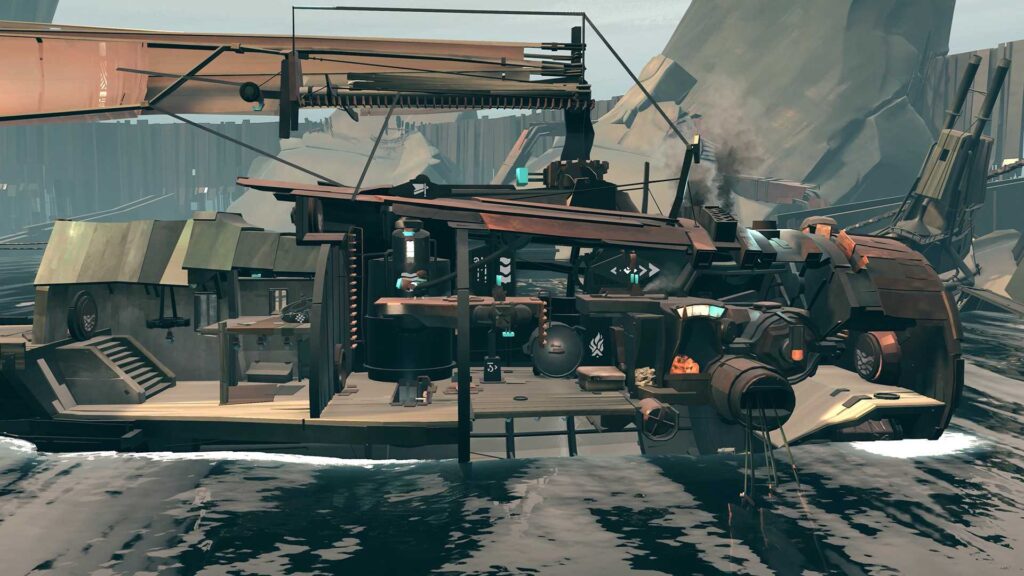
Changing Tides is a visually richer game than Lone Sails, and that is both its strength and occasionally its weakness. Where the original had a faded, almost monochromatic beauty that felt timelessly painterly, Changing Tides introduces more colour, more variety, and more visual spectacle — stormy open seas, luminous underwater caverns, flooded urban ruins catching the light in extraordinary ways. It is genuinely stunning in places.
The art direction does exactly what Schmocker described — each zone is visually distinct enough that the world never feels repetitive despite the strictly horizontal progression. The underwater sections in particular are some of the most atmospheric environments Okomotive has created, with light filtering down through the water in a way that makes you want to stop and just sit in it for a moment.
My only slight reservation is that the increased realism occasionally works against the timeless quality that made Lone Sails feel so distinctive. But that is a minor note against what is, overall, a game of considerable visual ambition.
Gameplay
Changing Tides builds on Lone Sails’ core loop — fuel the engine, manage the boiler, hop out to solve environmental puzzles — and adds enough new mechanics to keep things feeling fresh without losing the meditative quality that makes the series special. The sailing itself feels wonderful, angling the mast to catch the wind, combining sail and engine power for extra speed, retracting everything before a tunnel entrance.
The submarine sections are the real highlight. Diving below the surface into flooded ruins, managing buoyancy while navigating tight spaces, surfacing into a storm — it adds a dimension to the experience that genuinely surprised me. The puzzles are more elaborate than Lone Sails too, though never unfairly so.
The one honest criticism is that the increased mechanical complexity occasionally tips the balance from meditative into slightly fussy. A few stretches where wind is scarce and fuel is running low can feel more like a chore than a challenge. It never derails the experience, but it is worth knowing going in.
Pacing
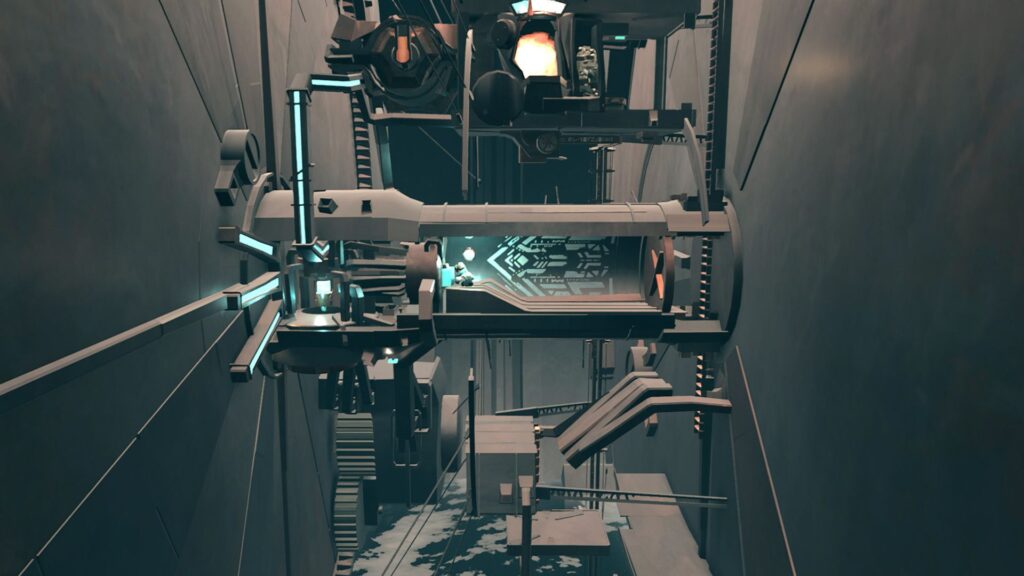
At five to six hours, Changing Tides is noticeably longer than Lone Sails — and most of that extra time is well spent. The variety of environments keeps things moving, and the new mechanics are introduced at a pace that feels considered. That said, a handful of open-water stretches between puzzle sections do drag slightly, where Lone Sails would have filled that space with something to catch your eye on the horizon. Occasional rather than habitual, but noticeable.
Atmosphere
The atmosphere is where Changing Tides most faithfully carries the torch of its predecessor. The sense of solitude, the hiss of the engine, the creak of the mast in the wind — it all feels exactly right. Joel Schoch returns on soundtrack duties, and his score is as quietly effective as ever, reacting dynamically to what is happening around you rather than simply looping in the background.
The underwater sections add something genuinely new atmospherically — a stillness and an eerie calm that contrasts beautifully with the storm-battered surface above. Some of the most memorable moments in the game happen below the waves, in the silence of a submerged world that was once full of life.
🎮 My honest opinion on FAR: Changing Tides
FAR: Changing Tides is a worthy successor that does almost everything right — and the places where it falls slightly short of Lone Sails are more a testament to how special that first game was than any real failing on its own terms. The submarine mechanics are a genuine addition to the formula, the world is visually stunning, and the meditative atmosphere remains fully intact.
Where I land on it personally is this: Lone Sails felt like a complete, perfectly sized idea. Changing Tides feels like a generous expansion of that idea — broader, longer, more varied — but occasionally missing the quiet emotional precision of the original. If Lone Sails was a short story, Changing Tides is a novella. More to explore, slightly less to feel.
That is not a reason to skip it. Far from it. Taken together, the two FAR games form one of the most distinctive and affecting pairs of atmospheric experiences the genre has produced. Play them back to back if you can.
Where can I play FAR: Changing Tides?
Changing Tides is available on PC via Steam, PlayStation 4, PlayStation 5, Xbox One, Xbox Series X/S, and Nintendo Switch. It was also a day one Xbox Game Pass title, so it may already be waiting for you there. Like its predecessor it is modestly priced and well worth picking up on sale.
Similar Games
FAR: Lone Sails (2018)
The obvious starting point — and honestly, the essential one. Lone Sails is shorter, simpler, and in my impression slightly more emotionally precise than its sequel. If you somehow arrived at Changing Tides first, go back immediately. The two games share a world and a spirit, and experiencing them in order makes both feel richer.
Planet Alpha (2018)

Planet Alpha shares Changing Tides’ core pleasures — a wordless journey through a visually stunning alien world, told entirely through atmosphere and environment. It is more focused on platforming and light stealth than vehicle management, but the sense of solitude, the painterly landscapes, and the quietly devastating environmental storytelling place it in very similar emotional territory.
Interested in more similar games? Check out our full databse below: