
Description
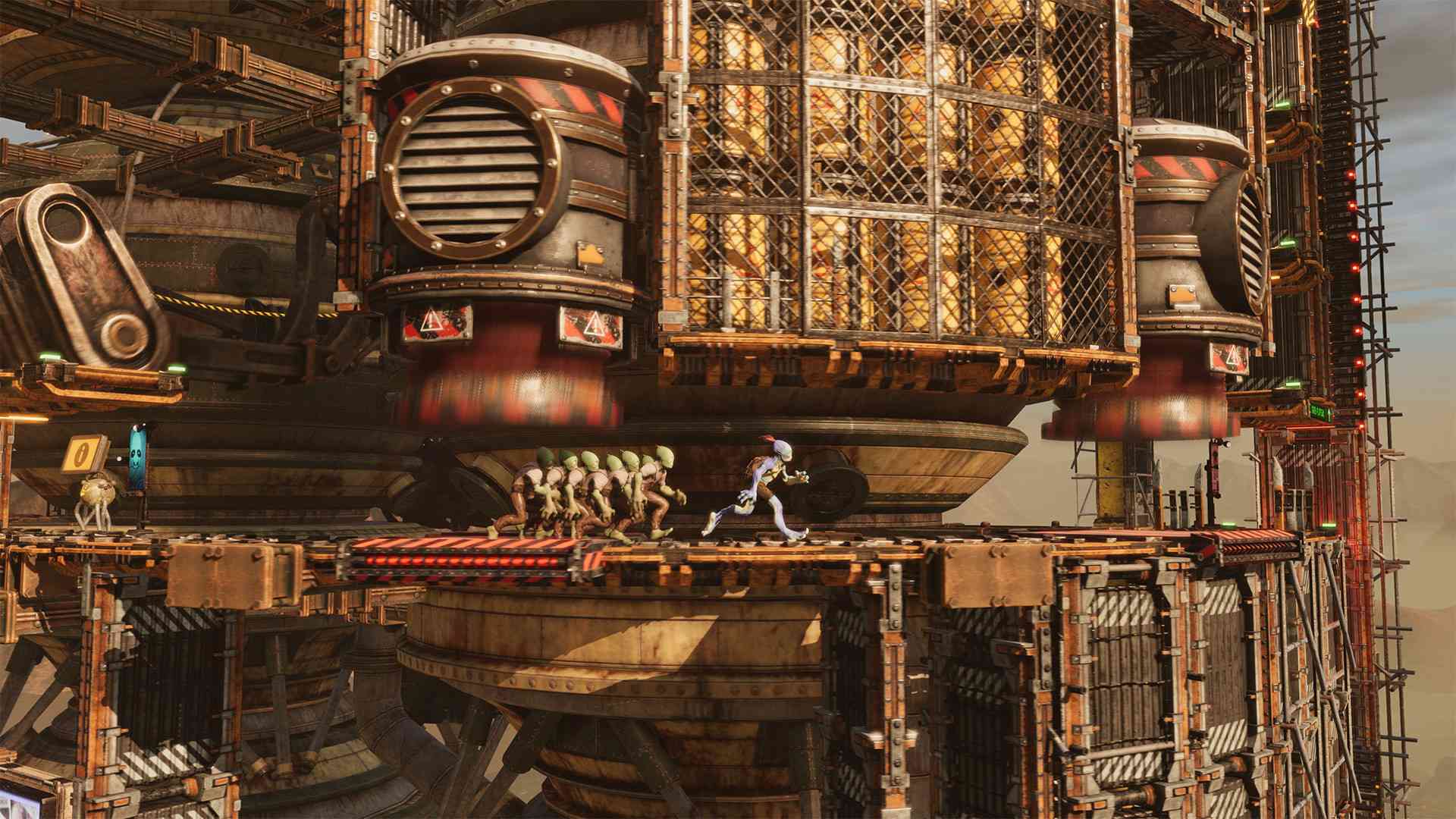
Soulstorm is the game Lorne Lanning has been trying to make since 1998. When Abe’s Exoddus was developed — in nine months, under publisher pressure, with a scope that had to be dramatically cut down — Lanning made peace with the compromise and moved on. Twenty-three years later, with New ‘n’ Tasty having re-established the series and no publisher dictating timelines, he finally got to build the version of the second story he actually wanted to tell.
The result is the most ambitious Oddworld game ever made — visually extraordinary, narratively braver than anything the series had attempted before, and at launch, genuinely frustrating to play. The Enhanced Edition released later in 2021 addressed many of the technical issues, and the Nintendo Switch version released in 2022 refined things further. If you are coming to Soulstorm now, in its current state, you are playing a significantly better game than the one that launched. That context matters.
Developed and published by Oddworld Inhabitants and released in April 2021, Soulstorm is a reimagining of Exoddus rather than a direct remake — the same broad story, but told with different emphases, new mechanics, expanded lore, and a darker, more psychologically complex tone. Abe continues the uprising that began in Oddysee, leading hundreds of Mudokons away from their oppressors and toward something that might, eventually, resemble freedom.
Year: 2021
Developer: Oddworld Inhabitants
Atmosphere: Dark · Industrial · Satirical
Visual Style: 3D Cinematic · Spectacular Set Pieces
Focus / Pace: Stealth Platforming · Methodical
Platforms: PlayStation 4 · PlayStation 5 · Xbox One · Xbox Series X/S · Windows · Nintendo Switch
Soulstorm vs Exoddus — What Changed?
Almost everything, and that is both the most exciting and most divisive thing about it. Where Exoddus was a bigger, more forgiving version of Oddysee — same structure, same logic, same vocabulary — Soulstorm is a genuinely different game built around a genuinely different set of ideas.
In my opinion, the most significant addition is the crafting system. Abe can now scavenge items from the environment and combine them into tools — smoke grenades, stun mines, Molotov cocktails, chant suppressors. It is described as “crafting-lite” and that is accurate — it never becomes a survival game — but it changes the fundamental relationship between Abe and the world around him. He is no longer entirely powerless. He has options. The series’ signature tension between helplessness and resourcefulness tips slightly toward the latter, and not everyone thinks that is the right direction.
The stealth design is also more complex — multiple enemy types with different patrol behaviours, chant suppression mechanics that force new approaches, increasingly elaborate multi-stage levels that require careful planning. Soulstorm is harder and more layered than Exoddus, and the level design reflects a team with twenty years more experience.
What i think is lost is some of the elegant simplicity of the originals. Exoddus was a game you could understand completely within its first hour. Soulstorm takes longer to reveal itself, and when it does, not everything it reveals is fully realised.
The Story
Abe’s uprising has begun. The Glukkons are losing control. And the SoulStorm Brew — an addictive drink that keeps the Mudokon workforce compliant — is the key to everything. What Soulstorm does with this premise is more interesting than Exoddus ever attempted: this is explicitly a game about addiction, substance dependency, and what liberation actually looks like for people who have been chemically pacified their entire lives. Lanning’s satire has always been pointed, but Soulstorm takes it somewhere more uncomfortable and more personal than the earlier games.
The narrative is told through elaborate in-engine cutscenes that are genuinely cinematic — some of the best the series has produced — and a Quarma system that gives you different endings based on how many Mudokons you save or lose. The good ending is extraordinary. Getting there requires a level of dedication that will not be for everyone.
The one honest criticism is that the story occasionally loses itself in its own ambition — there are plot threads that do not fully resolve, and the pacing in the middle section sags before the spectacular final act. But the emotional core is real, and the ending hit me harder than I expected.

Graphics
Genuinely stunning. Soulstorm is the most visually impressive game in the series by a significant margin — 3D environments rendered with a level of detail and dynamic lighting that makes Oddworld feel like a living, breathing, terrible place in a way no previous entry achieved. The set pieces are spectacular: a burning train station, a flooding brewery, a midnight escape across a bridge under searchlights. These are moments that justify every year of development.
The art direction balances the series’ dark humour with something more genuinely oppressive in the later levels — the industrial horror becomes less cartoonish and more pointed — and it works precisely because the visual craft is strong enough to carry the tonal shift.
Gameplay
The crafting system is the centre of the gameplay debate and I think the honest verdict is: it works more often than it does not. Scavenging items from the environment and assembling tools that suit your playstyle gives the game a flexibility the earlier entries lacked, and the best sections use it to create genuinely creative puzzle solutions. The satisfaction of clearing a complicated guard room through a combination of sleep grenades, possessed employees, and a well-timed chant is real.
But the system also creates clutter. Inventory management in a cinematic platformer is a jarring thing, and there are moments where Soulstorm feels like it is pulling in two directions — the careful, deliberate puzzle design of the originals and the more frantic, improvisational energy of a crafting game. The balance is not always right.
The controls were a genuine issue at launch — Abe’s movement felt imprecise in ways that caused deaths that felt unfair rather than instructive. The Enhanced Edition improved this significantly, and the current version plays considerably better than early reviews suggested. But the movement is still not as crisp as it should be for a game with this level of precision platforming.
🏭 Did You Know?
Lorne Lanning has been open about the fact that SoulStorm Brew — the addictive drink keeping the Mudokon workforce compliant — was directly inspired by real corporate behaviour around substance dependency.
Soulstorm is explicitly a game about addiction and how corporations profit from keeping people chemically pacified. The fact that this message is delivered through a cast of fart-communicating aliens somehow makes it land harder, not softer.
Atmosphere
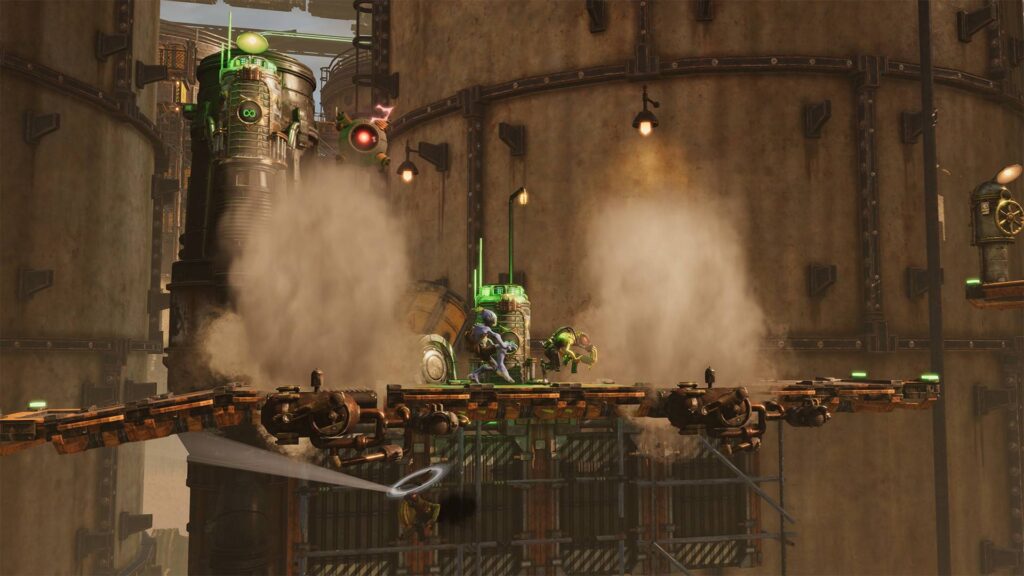
The strongest element, and the clearest evidence of what Lanning was always trying to build. Soulstorm’s world is oppressive, darkly funny, and occasionally genuinely beautiful — a combination the series has always chased and here achieves more fully than ever. Josh Gabriel’s score is exceptional, shifting between the industrial ambience of the factory levels and something more desperate and urgent in the final act. The sound design is equally strong: the specific way a guard reacts to a noise, the bubbling of the SoulStorm Brew, the chant sequences building to something that feels genuinely charged.
The darkness is also more substantive here. Addiction, exploitation, and the specific psychological cost of captivity are not light themes, and Soulstorm does not treat them lightly. It is the most mature entry in the series, and it earns that maturity.
🎮 My honest opinion
Soulstorm is a flawed masterpiece in the most genuine sense — a game with extraordinary vision, spectacular presentation, and a meaningful story, hampered by mechanical inconsistencies and a crafting system that does not always serve the design it is attached to. The launch version was genuinely frustrating. The current version is a much better game, and I think genre fans who dismissed it at launch should give it another look.
It is not as elegantly designed as Exoddus. It is not as pure as Oddysee. But it is the most ambitious thing the series has ever attempted, and the best moments — the train station, the final act, the good ending — are among the best in the entire Oddworld canon. Lanning spent twenty-three years trying to make this game. You can feel every year of that in both its achievements and its frustrations.
Where can I play Soulstorm?
Oddworld: Soulstorm Enhanced Edition is available on PlayStation 4, PlayStation 5, Xbox One, Xbox Series X/S, and Windows via Steam and GOG. The Nintendo Switch version, released in 2022, is the most refined release. It was available on PlayStation Plus at launch, making it one of the more widely played entries in the series despite its divisive reception.
Games similar to Soulstorm
Oddworld: Abe’s Exoddus (1998)
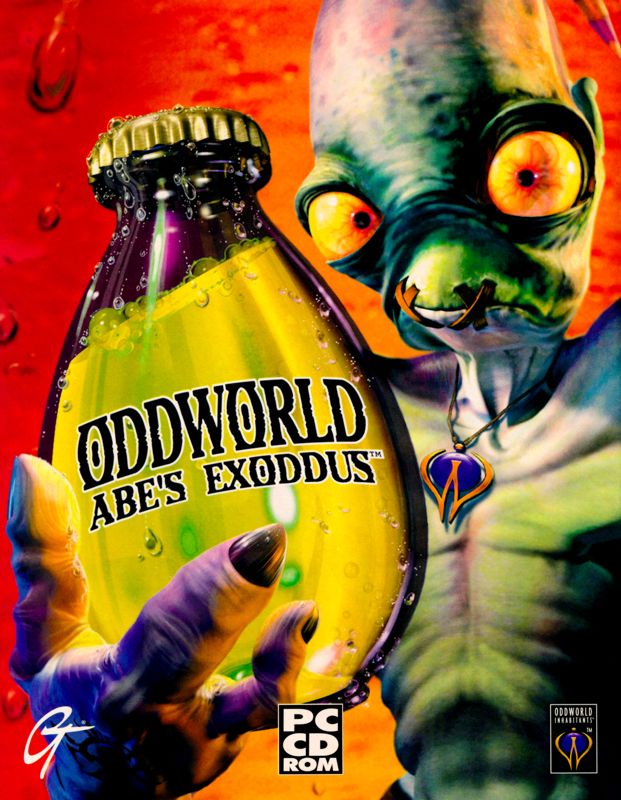
The game Soulstorm reimagines — and the most direct comparison point. Exoddus is leaner, simpler, and more elegantly designed. Soulstorm is more ambitious, more cinematic, and more flawed. Playing both is the only way to fully understand what Lanning was trying to do with the second entry in Abe’s story, and how his ambitions changed across twenty-three years.
Oddworld: New ‘n’ Tasty (2014)
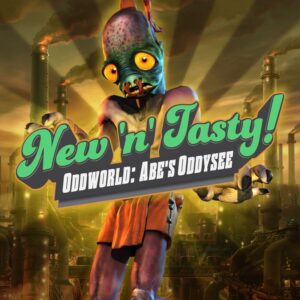
If Soulstorm left you wanting to revisit where the story began, New ‘n’ Tasty is the modern entry point to Oddysee — and the game that made Soulstorm possible by re-establishing the series commercially. The contrast between New ‘n’ Tasty’s faithful remake approach and Soulstorm’s reimagining ambition tells you a lot about how the series has evolved.