

Description
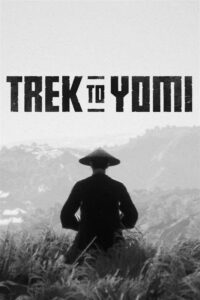
The first screenshot I saw of Trek to Yomi stopped me cold. Black and white, film grain, letterboxed, a lone samurai silhouetted against a burning village — it looked less like a game screenshot and more like a still from a Kurosawa film I had somehow never seen. That is a very specific thing to pull off, and the fact that it was made by a Polish studio best known for first-person shooters makes it all the more remarkable.
Developed by Flying Wild Hog and directed by Leonard Menchiari, Trek to Yomi follows Hiroki, a young samurai who must avenge his fallen master and protect those he loves — a setup that will be immediately familiar to anyone who has seen Yojimbo or Sanjuro. It is a deliberately classic story. Where the game earns its place is not in narrative originality, but in the extraordinary care with which it brings its world to life.
⚠️ A quick note: I am fully aware that Trek to Yomi sits at the edges of this genre. It is combat-heavy, you cannot jump, and calling it a platformer is a stretch. I include it because its fixed camera, deliberate pacing, and atmosphere-first philosophy put it in the same spirit as the cinematic platformers I love. Consider yourself warned.
Year: 2022
Developer: Flying Wild Hog
Atmosphere: Samurai · Melancholic · Cinematic
Visual Style: Black-and-White 3D · Filmic Presentation
Focus / Pace: Action Adventure · Deliberate
Platforms: PlayStation 4 · PlayStation 5 · Xbox One · Xbox Series X/S · Windows · Nintendo Switch
Why Trek to Yomi stands out
Most games that try the Kurosawa aesthetic apply it as a filter — Ghost of Tsushima’s Kurosawa Mode is a great example of exactly that. Trek to Yomi was built from the ground up around that visual language. The fixed camera angles, the film grain, the way light plays against shadow in every scene — none of it is decorative. It is the foundation. And it is one of the most visually distinctive cinematic platformers ever made because of it.
What makes it more than just a visual exercise is the research behind it. Flying Wild Hog consulted a Japanese-American historian throughout development who would flag things like wrong architectural details or inaccurate depictions of Shinto religion. Devolver Digital connected them with Kakehashi Games, a Japanese developer, to make sure the cultural and linguistic details held up. For a Polish studio making a game set in Edo-period Japan, that is a serious commitment — and you feel it in every frame.
The Story
Hiroki trains under a master swordsman, loses him to bandits, and sets out on a path of vengeance that eventually takes him somewhere unexpected — into Yomi itself, the Japanese Shinto underworld, where he must confront not just his enemies but the consequences of his own choices. The story starts feeling familiar, almost generic, but takes a sharp turn around the halfway point that shifts the tone entirely.
I will not spoil what happens. But the second half of this game is not what you think it is going to be, and that tonal shift — from classic samurai revenge story into something darker and more philosophical — is where Trek to Yomi genuinely surprised me.
Graphics
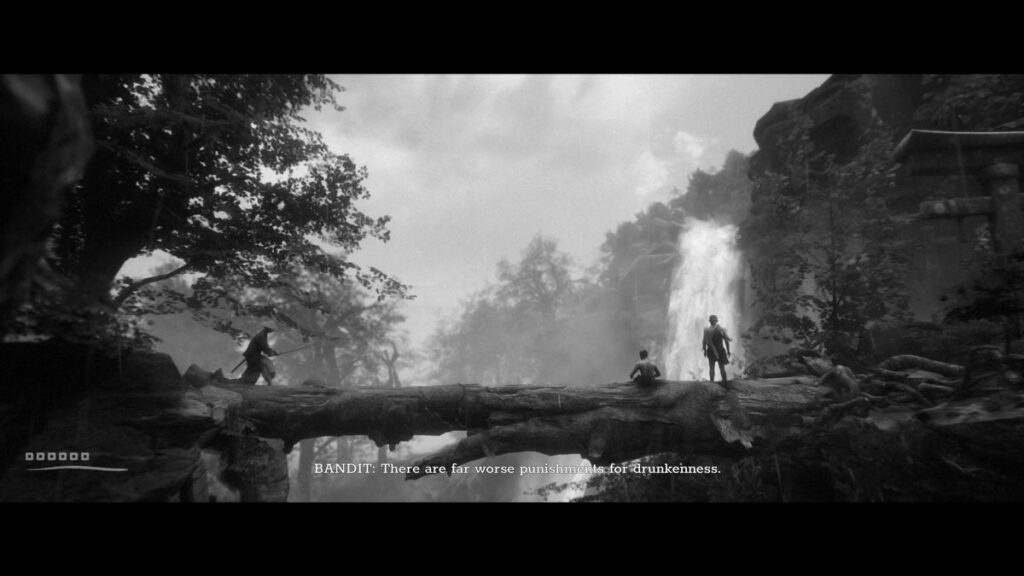
Stunning, full stop. The black-and-white presentation is not a gimmick — it is the entire visual logic of the game, and every scene is framed with the kind of compositional intelligence you associate with actual cinema. Rooftop duels backlit by moonlight. Battles through burning villages where the flames create the only contrast in an otherwise dark frame. Silhouettes moving through shoji screens. The team clearly studied not just how Kurosawa’s films look but why they look that way — how the camera placement, the weather, the movement of figures through a frame all serve the story being told.
It is genuinely one of the most beautiful games in the genre, and I say that knowing the competition is strong.
🎬 Did You Know?
The composers, Cody Matthew Johnson and Yoko Honda, specifically studied Fumio Hayasaka — Akira Kurosawa’s actual composer, responsible for the scores of Rashomon and Seven Samurai — before writing a single note for Trek to Yomi. The finished soundtrack runs to several hours of music for a five to six hour game. For a project of this size and budget, that is an extraordinary commitment to getting the sound right!
Gameplay
Here is where I need to be honest: the gameplay is the weakest part of the package. Trek to Yomi is a parrying-focused combat game — light attacks, heavy attacks, blocks, counters — and it is functional and occasionally satisfying, but it never quite reaches the fluidity of the duels it is clearly trying to evoke. The combat gets the job done without ever making you feel like the swordsman Hiroki is supposed to be.
The exploration between combat sequences is similarly straightforward — some light puzzle solving, a few collectibles, branching paths that occasionally reward curiosity. It reminded me a little of the quieter sections in Heart of Darkness: perfectly pleasant, never particularly demanding. The three different endings give you a reason to replay, but a single playthrough is the experience most people will remember.
None of this kills the game. At five to six hours it never has time to outstay its welcome, and the visual spectacle is strong enough to carry you through the weaker moments. But go in knowing it is more of a cinematic experience than a combat game.
Atmosphere
Exceptional, and largely carried by the sound design and score. Composers Cody Matthew Johnson and Yoko Honda drew directly from the tradition of Kurosawa’s composer Fumio Hayasaka, and the result is a soundtrack that feels genuinely period-authentic — sparse, percussive, occasionally haunting. The entire game is voiced in Japanese with no English option, which was absolutely the right call. It would have lost something irreplaceable with dubbed dialogue.
Combined with the visual presentation, the atmosphere Trek to Yomi creates is unlike anything else in the genre. It genuinely feels like playing through a lost samurai film from the 1960s — which, given how many games have tried and failed to achieve exactly that, is no small thing.
🎮 My honest opinion on Trek to Yomi
Trek to Yomi is a game I admire more than I purely enjoyed playing, and I mean that as a compliment of sorts. It prioritises the cinematic experience over the mechanical one, and it achieves that cinematic experience at a level that almost no other game in this genre reaches. The combat holds it back from being something truly special — but the visuals, the sound, the atmosphere, and the genuine cultural research behind it all add up to something that deserves your attention.
It also sits in a very interesting place in this genre more broadly. If you want to understand why Trek to Yomi is more than just an aesthetic exercise — why the research and the cultural grounding matter — I wrote about exactly that in my feature on cinematic platformers built on real cultural tradition.
Where can I play Trek to Yomi?
Trek to Yomi is available on PlayStation 4, PlayStation 5, Xbox One, Xbox Series X/S, Windows, and Nintendo Switch. It was also available on Xbox Game Pass at launch. At its price point, it is an easy recommendation for anyone with an interest in samurai cinema or cinematic platformers that prioritise atmosphere above all else.
Similar Games
Blackthorne (1994)
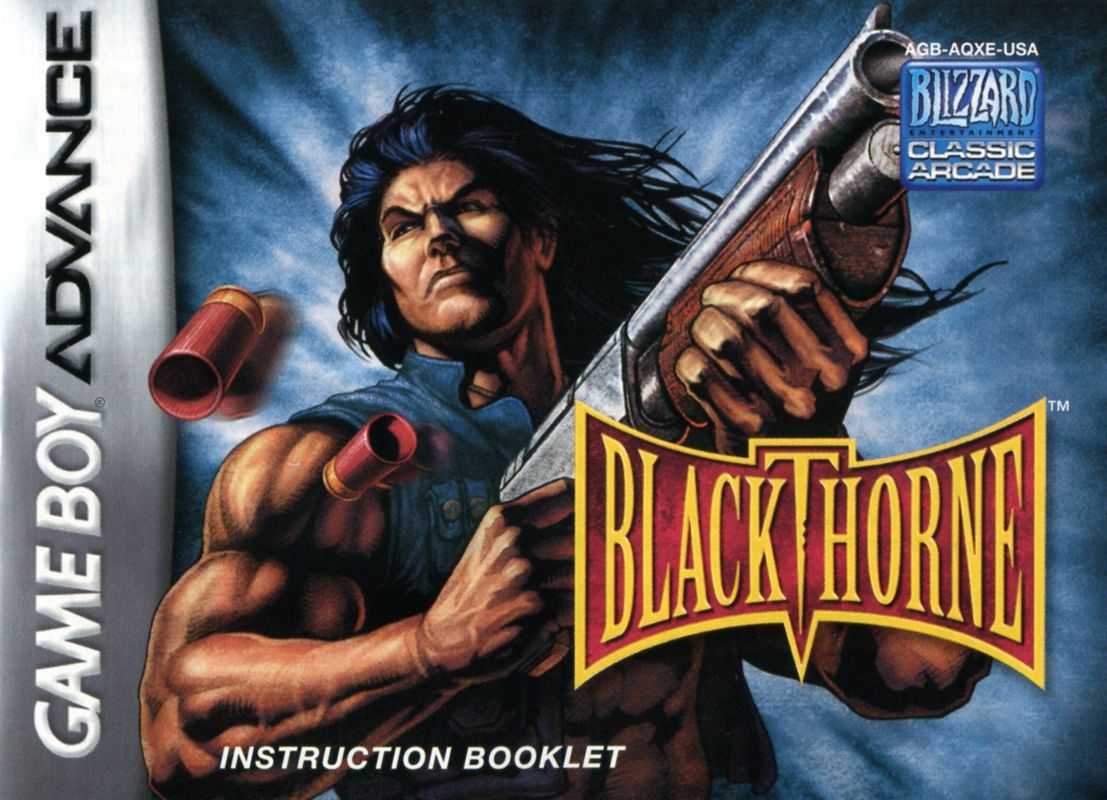
If the deliberate pacing and cover-based combat of Trek to Yomi resonated with you, Blackthorne is worth revisiting — an early Blizzard cinematic platformer built around the same slow, tactical rhythm, with a similarly dark aesthetic and a strong sense of atmosphere.
White Shadows (2021)

White Shadows is the most natural companion piece to Trek to Yomi in the modern genre — another cinematic platformer built entirely around a high-contrast black and white visual language, with the same instinct for using light and shadow as a storytelling tool rather than just an aesthetic choice. Different world, different tone, same underlying commitment to the image.
If the black and white presentation of Trek to Yomi is what hooked you specifically, Limbo and The Mooseman both live in that same monochromatic space, each using the absence of colour to say something the image alone could not.