
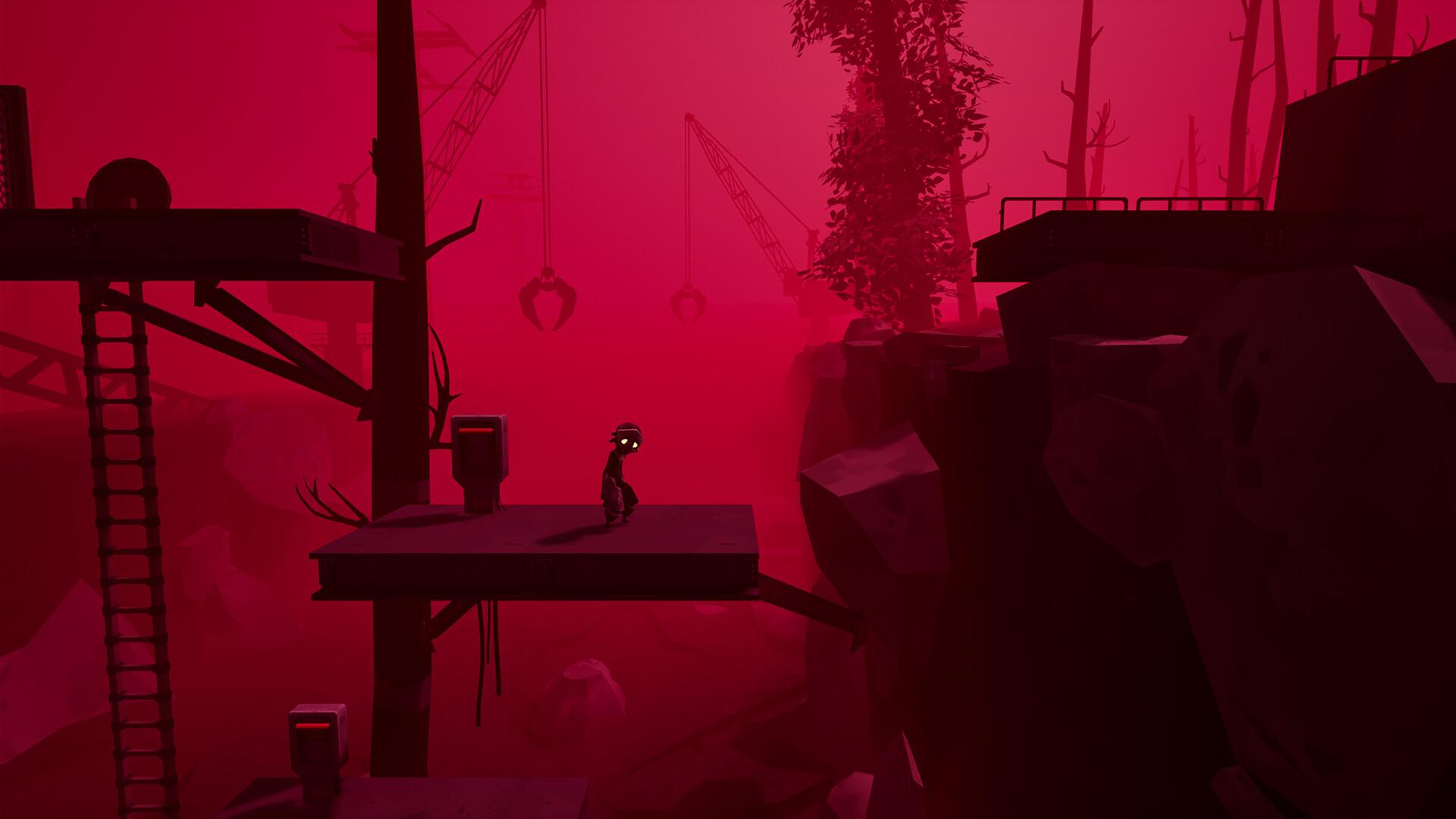
Rumbral is a game I want to like more than I do. The premise is immediately compelling — you wake in a dark, fog-shrouded forest as a strange anthropomorphic creature with no memory of who or what you are, moving through the ruins of a world that collapsed long before you arrived. The atmosphere is genuinely oppressive. The sound design is exceptional — structured silence, distant mechanical sounds, wind through unstable structures, a world that feels empty but not quite dead. For the first twenty minutes, Rumbral made me genuinely curious about what it was building toward.
Then I tried to jump. And that’s where everything broke down.

Year: 2026
Developer: OSEA Innovations
Atmosphere: Post-Apocalyptic · Dark · Mysterious
Visual Style: 2.5D · Dark Minimalism
Focus / Pace: Puzzle Platforming · Deliberate
Platforms: Windows · PlayStation 4 · PlayStation 5 · Xbox One · Xbox Series X/S · Nintendo Switch
Gameplay
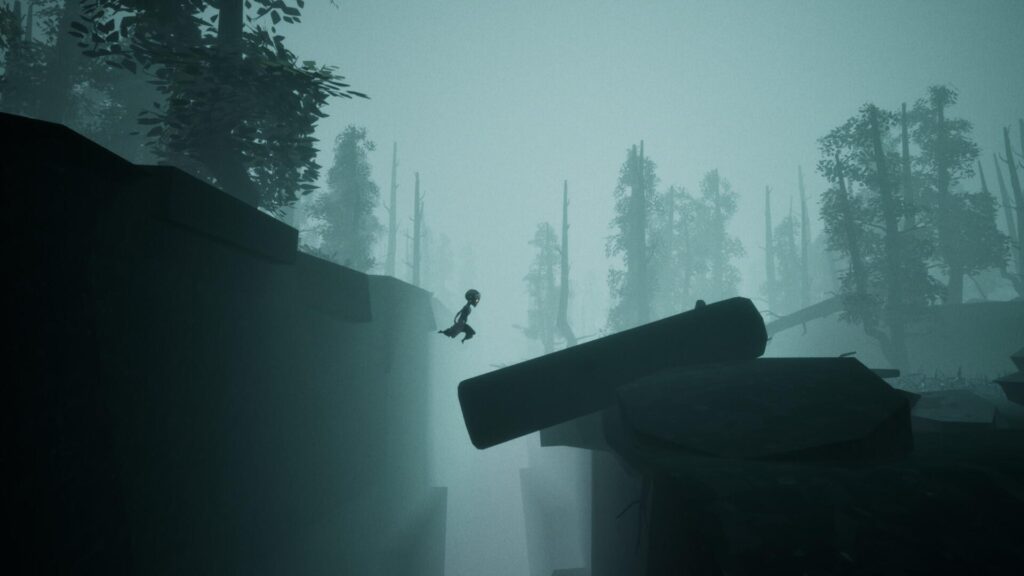
The movement is rigid in a way that undermines everything the atmosphere is trying to achieve. The protagonist cannot grab ledges — you must land squarely on your feet or fail the jump entirely, which is a baffling decision for a game where precise platforming is the primary activity. The physics are floaty, the controls feel designed for patience rather than precision, and there is a chase sequence in the second half that suddenly demands reactive speed the game was never built to support. There are stretches where Rumbral actively fights against the player rather than working with them.
The puzzles themselves are functional but basic — box pushing, pressure plates, switch combinations. Nothing you have not seen before. What redeems the gameplay section is the magenta mechanic, which gets its own section below because it deserves to be discussed separately from everything around it.
The Magenta Mechanic
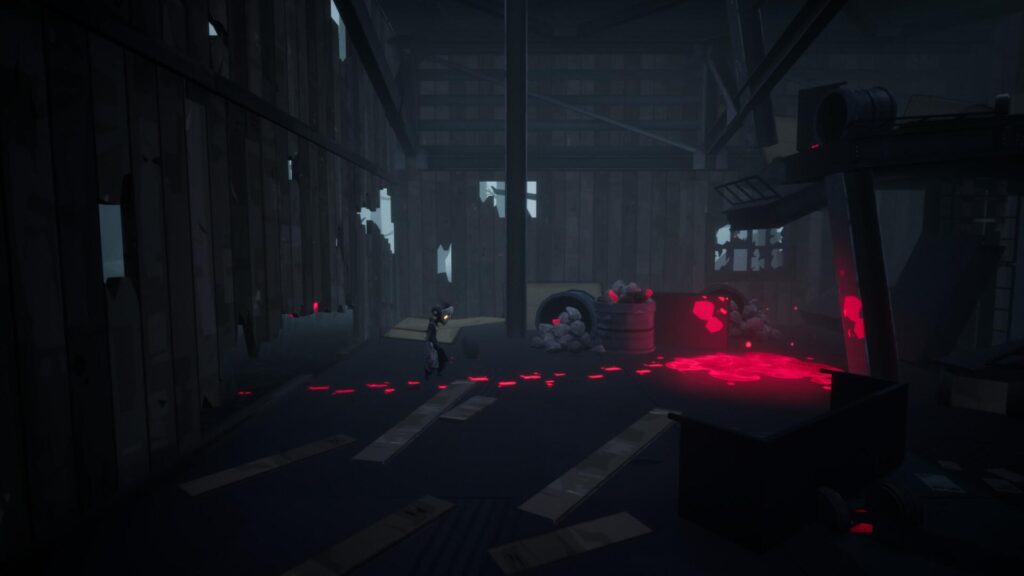
The dimension-switching idea is genuinely clever. Pools of magenta liquid shift you between the desolate present and a version of the world before the collapse — machines operational, doors unblocked, different paths available. The first time you discover it, something clicks. This is the game’s identity. This is what makes it more than a Limbo imitation.
And then the game never fully exploits it. The puzzles built around the mechanic are functional but never complex — fewer combinations than you expect, less structural variation than the concept deserves. Rumbral discovered a strong idea and used it sparingly when it should have built everything around it.
The Protagonist
One detail I find genuinely interesting: you are not playing a human child. The protagonist is an anthropomorphic creature — something slightly alien, something that seems almost part of the ruins themselves. The implied narrative is that you are not a visitor to this world but a remnant of it, which gives the amnesia premise more weight than the standard lost-human setup. I wish the game had leaned into this more explicitly.
🎮 My honest opinion
Rumbral is a first game from a small Spanish studio, and it shows — in both the promising instincts and the unfinished execution. The atmosphere works. The silence works. The magenta mechanic has genuine potential. What does not work is the movement, the puzzle depth, and the ending — which arrives after roughly four hours and resolves nothing, leaving every mystery it raised completely unanswered.
It could be called a “CV game” — a technically functional demonstration of what a studio can do rather than a fully inhabited work. Rumbral proves OSEA Innovations can build atmosphere and conceive interesting mechanics. The next game is the one to watch.
For now: if you have never played Limbo or Inside, play those first. If you have and you want more of that world, Rumbral is worth its modest price — just go in knowing it ends before it truly begins.
Where can I play Rumbral?
Rumbral is available on PC via Steam, PlayStation 4, PlayStation 5, Xbox One, Xbox Series X/S, and Nintendo Switch. Priced at around €12.99 and completable in approximately four hours.
Games similar to Rumbral
Limbo (2010)
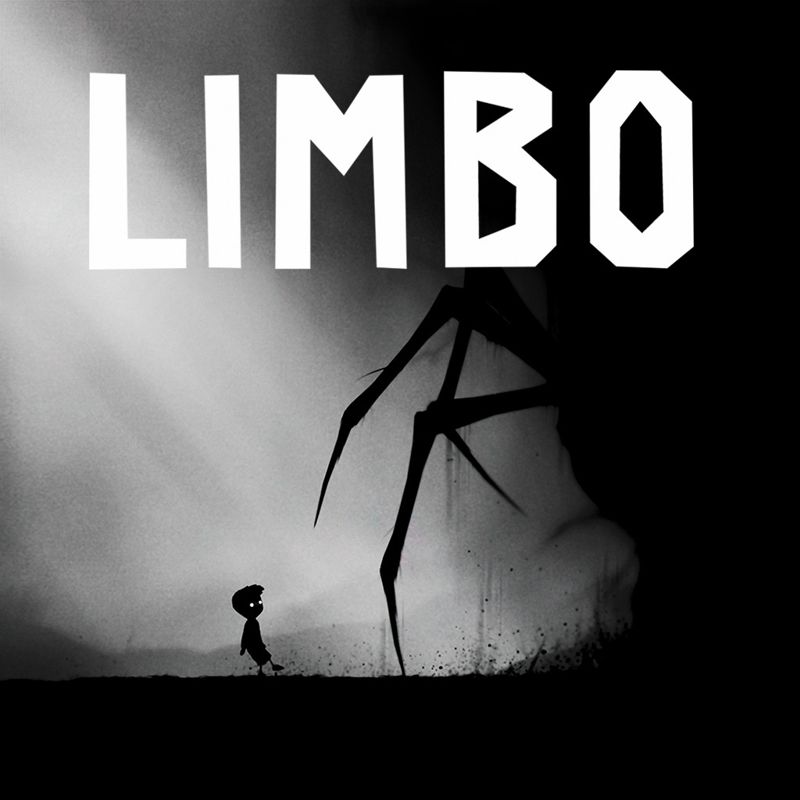
The most obvious comparison — and the game Rumbral most clearly wants to be. Dark, atmospheric, a small protagonist in a hostile world, structured silence. Limbo does everything Rumbral attempts and does it with complete assurance. Play it first if you have not already.
DARQ (2019)

DARQ shares Rumbral’s instinct for a cinematic platformer built around an unusual relationship with space — gravity in DARQ’s case, parallel dimensions in Rumbral’s. Both games have stronger concepts than executions, and both deserve more from their central mechanic than they ultimately deliver.