Descripton
Albert and Otto is one of those games that slipped under the radar almost entirely, and I find that genuinely frustrating because it deserves better. It is a dark, monochromatic puzzle platformer set in 1939 Germany, made almost entirely by one person — South African solo developer Nikola Kostic — with art direction inspired by Tim Burton’s early stop-motion films and a story that uses the shadow of Nazism as its backdrop without ever spelling it out. That is an ambitious combination for a debut title. It does not always land perfectly, but the ambition alone sets it apart.
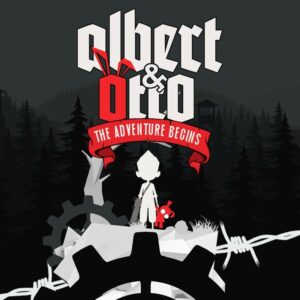
Year: 2015
Developer: K Bros Games (Nikola Kostic)
Atmosphere: Dark Fantasy · Melancholic · Oppressive
Visual Style: Hand-Drawn 2D · Minimalist Monochrome
Focus / Pace: Puzzle Platforming · Deliberate
Platforms: Windows · macOS · PlayStation 4 · Xbox One
The Story
Albert’s sister Anna is taken from their home in the opening minutes — dragged away by a tendril of darkness while he watches. He sets off to find her, and along the way picks up Otto, her stuffed bunny, which turns out to be magical. What looks at first like a straightforward rescue story quietly becomes something stranger and more unsettling. Anna keeps appearing to Albert in visions — and she keeps telling him to stop looking for her.
The story is never explained outright. Instead it is scattered across childlike drawings left in postboxes and fragments you piece together as you go. I find this approach genuinely effective — it trusts you to sit with the unease rather than resolving it. The setting does a lot of quiet symbolic work too: the giant crows, the mechanical bosses stamped with SS lightning symbols, the oppressive industrial machinery. It is all there if you want to read it, never pushed in your face if you don’t.
The one honest caveat: only Episode 1 was ever released. The story ends on a cliffhanger, and the three planned follow-up episodes never came. That is worth knowing before you go in.
Graphics
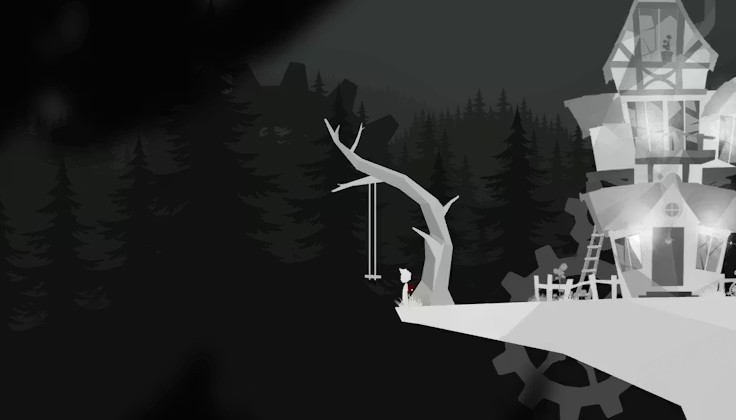
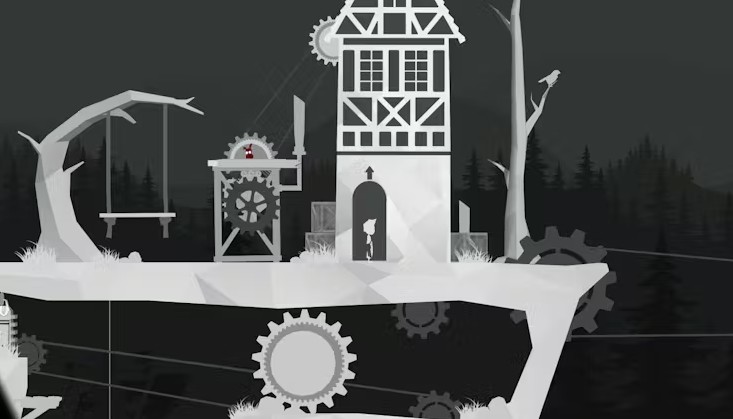
Albert and Otto has a look that will immediately remind you of Limbo — monochrome world, small vulnerable protagonist, oppressive darkness — and that comparison is fair enough to make. But I think it undersells what Nikola Kostic actually achieved here. The art direction has its own distinct character: forests of dead trees giving way to underground caverns, then to grinding industrial machinery, each environment feeling like a page torn from a child’s nightmare. The detail in the backgrounds is quietly impressive for a one-man project.
The one deliberate splash of colour is Otto himself — a deep crimson against all that grey. It is a smart choice, both practically (you can always spot him) and symbolically. It gives the game a visual anchor that Limbo, for all its beauty, never quite had.
Gameplay
The core mechanic is built around the relationship between Albert and Otto, and it works better than you might expect. Alone, Albert can shoot and jump. Carrying Otto, he can double jump, levitate objects, and control electrical switches from a distance. You are constantly switching between the two — leaving Otto on a pressure plate, crossing a gap, calling him back — and the puzzles are built around this push and pull in ways that feel genuinely inventive.
The sheep mechanic deserves a mention because it is genuinely bizarre and I mean that as a compliment. You can levitate sheep and use them as floating platforms, torches in dark caves, or bait to lure wolves away. It is the kind of lateral thinking the game encourages throughout, and when it clicks it feels great.
Where Albert and Otto stumbles is difficulty. The early sections are well-judged, but the game spikes sharply in its later stretches — particularly a cave rafting section that demands precision the controls do not always reliably deliver. Mouse controls especially can feel loose in the moments the game most needs them to be tight. A controller is strongly recommended.
Pacing
Albert and Otto clocks in at around two to three hours, and honestly that brevity works in its favour for most of the experience. The environments shift often enough to keep things feeling fresh, and the puzzle mechanics expand at a pace that feels considered. My main gripe is that the difficulty spike in the final stretch disrupts the rhythm pretty badly — what has been a tense but manageable journey suddenly becomes a gauntlet that feels slightly out of step with everything before it.
Atmosphere
This is where the game earns its place in the genre. The atmosphere is genuinely unsettling in a way that sneaks up on you — not horror exactly, but the specific dread of a child’s world gone badly wrong. The 1939 setting seeps into everything without ever being laboured, and the environmental storytelling does quiet, effective work throughout.
The soundtrack, composed by Robert Frost III in a basement in Minneapolis, is mellow and ambient — almost too calm for what is happening on screen, which is exactly the point. That contrast between the gentle music and the grim imagery gives the whole thing an off-kilter quality that sticks with you.
🎮 My honest opinion
Albert and Otto is a game I feel genuinely conflicted about, and I think that conflict is worth being upfront about. When it works — the Otto mechanics clicking into place, the symbolism landing, the atmosphere doing its quiet thing — it is a really compelling little experience. When it does not, the loose controls and brutal difficulty spikes make it actively frustrating.
What I keep coming back to is the ambition. One developer, a dark fairytale set against the backdrop of Nazi Germany, told entirely through imagery and childlike drawings, with a mechanical twist on a companion that actually adds up to something. That is a lot to attempt, and Kostic mostly pulls it off. The fact that the story was never completed stings more than it should — Episode 1 ends on a cliffhanger that will never be resolved, and that is a genuine shame.
Approach it as a short, flawed, atmospheric experience rather than a complete narrative, and there is a lot here to admire.
Where can I play it?
Albert and Otto is available on Steam for Windows. The macOS version has compatibility issues with newer operating systems, so PC is your safest bet. It is also on PlayStation 4 and Xbox One. It is very modestly priced and frequently on sale — at a few euros, the risk is low and the experience is worth it for fans of atmospheric puzzle platformers.
Similar Games
Monochroma (2014)
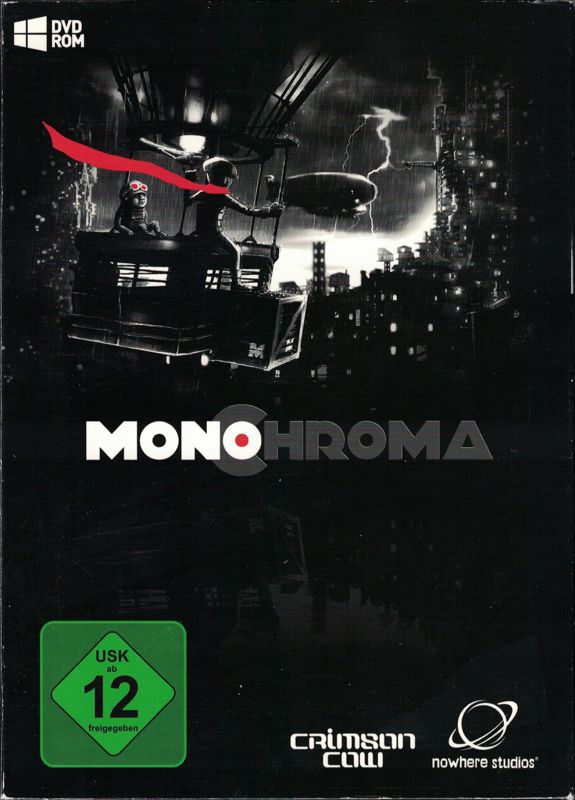
Monochroma is probably the closest thing to Albert and Otto that most people have never heard of. It shares the monochrome industrial world, the oppressive atmosphere, and — most importantly — a companion mechanic built around carrying a younger sibling. Where Albert carries Otto, here you carry your little brother, and that physical responsibility shapes every puzzle and platforming decision you make. If Albert and Otto resonated with you, this one is an easy recommendation.
Little Nightmares (2017)
Little Nightmares shares Albert and Otto’s core feeling more than any technical similarity — that specific dread of a small, vulnerable child moving through a world that is grotesque, oversized, and deeply wrong. The dark fairytale logic, the wordless storytelling, the sense that something terrible has already happened and you are just now finding out what — it is all there, executed with a level of polish that makes it one of the genre’s standout modern entries.