Descripton
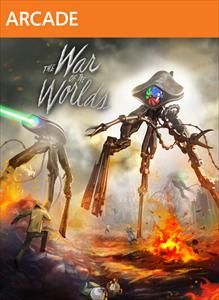
The War of the Worlds is a game I feel has been somewhat unfairly treated by history. Released in 2011 on Xbox Live Arcade by Other Ocean Interactive — a studio with a genuine love for the cinematic platformer tradition — it is a 2D side-scrolling survival game set in 1950s London during H.G. Wells’ Martian invasion, narrated in real time by Patrick Stewart.
That pitch alone should tell you whether this is the game for you. I find it genuinely atmospheric, occasionally brilliant, and yes — also occasionally frustrating. But the frustrations are the kind that come from ambition rather than carelessness, and that matters to me.
Year: 2011
Developer: Other Ocean Interactive
Atmosphere: Sci-Fi · Apocalyptic · Tense
Visual Style: 2.5D · Cinematic Lighting
Focus / Pace: Stealth Platforming · Deliberate
Platforms: PlayStation 3 · Xbox 360
The Story
You play as Arthur, an ordinary man returning to London when the Martian tripods begin their invasion. His goal is simple — survive, and find his family. The story closely follows the 1953 film adaptation rather than the original Wells novel, set in a 1950s London being systematically destroyed around you. What I really enjoyed about this approach is how it keeps the human scale of the story intact — you are not a soldier or a hero, just a man in a suit running through a world ending around him.
Patrick Stewart narrates in real time throughout the entire experience, and I feel this is the game’s single greatest creative decision. His voice — authoritative, slightly detached, deeply literary — gives every moment a quality that elevates the atmosphere considerably above what the gameplay alone could achieve. There are sections where I stopped moving just to listen, which is not something I say about many games.
Graphics
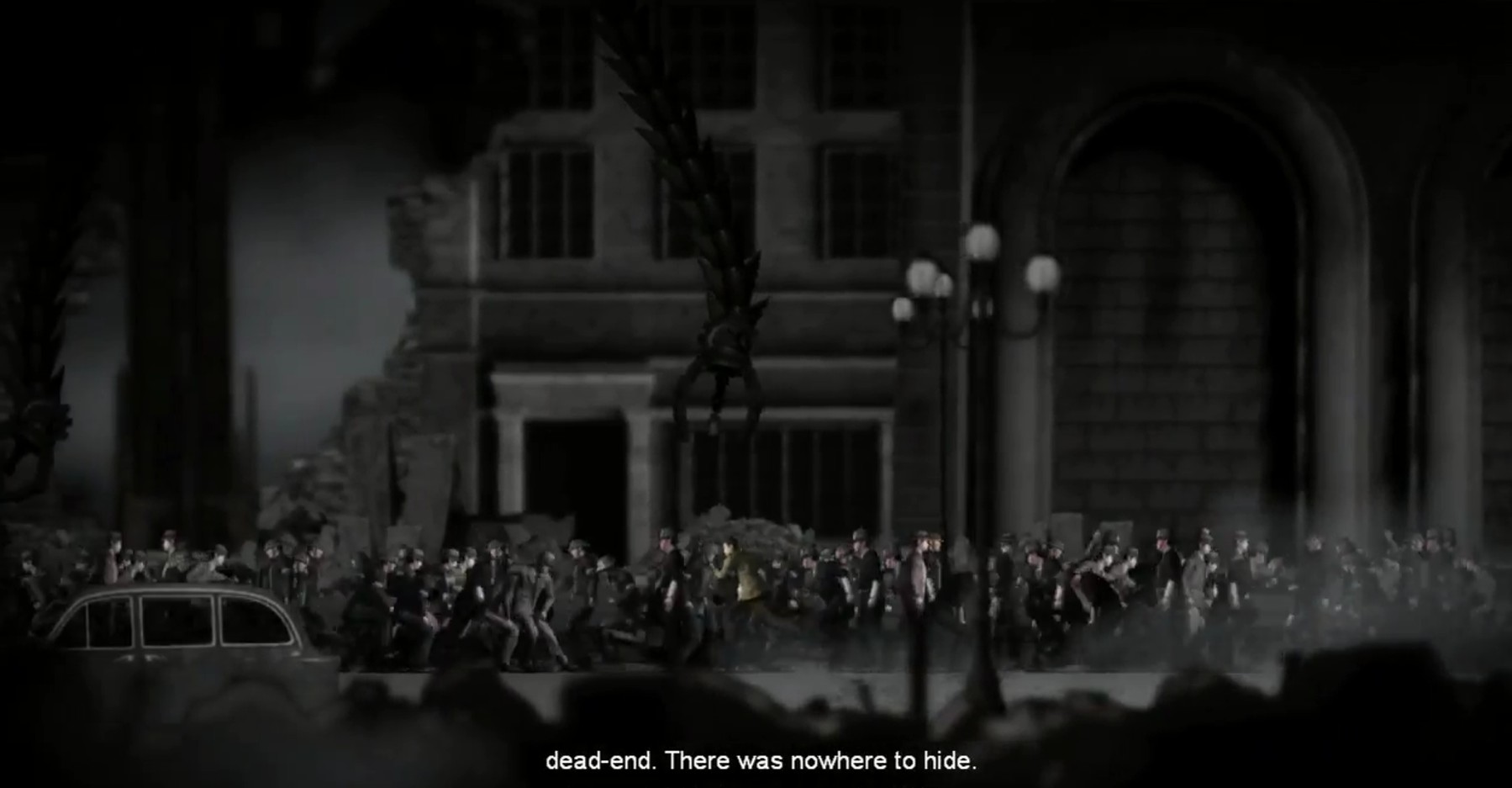
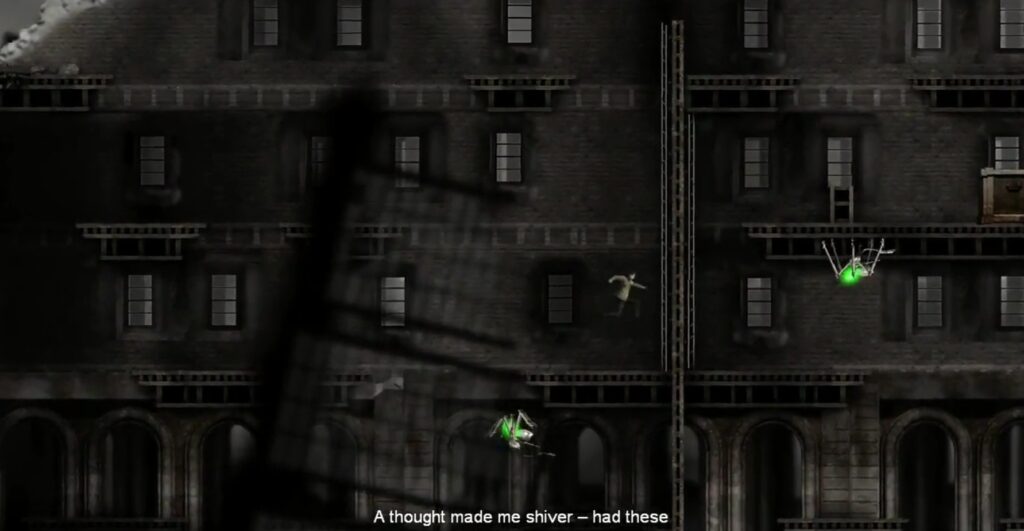
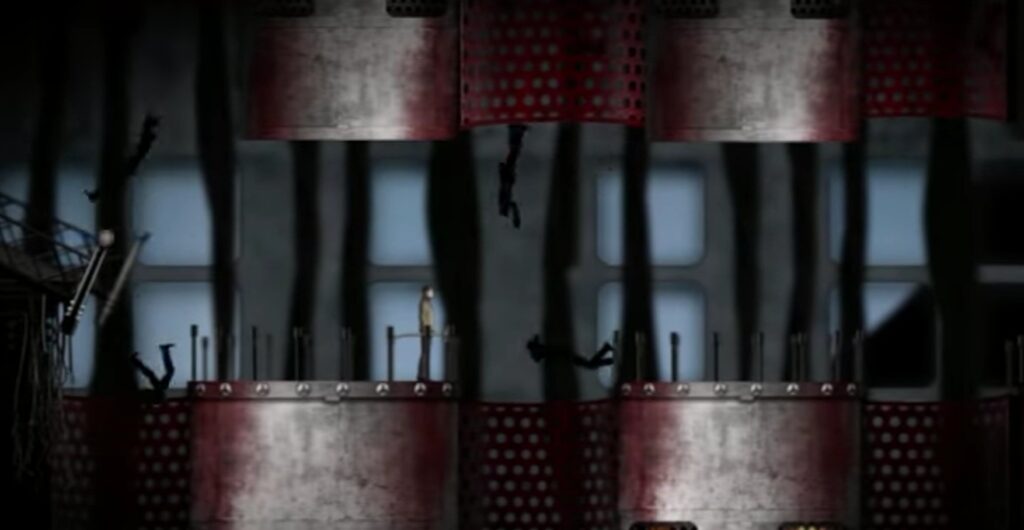
What I noticed immediately about the visuals is the parallax layering — three simultaneous levels of depth moving at different speeds, with foreground objects passing the screen like a cinematic camera, the immediate action plane where Arthur runs and hides, and vast background vistas of London being reduced to rubble by Martian war machines. I find this visual approach genuinely spectacular in its best moments. Tripods striding through distant smoke, buildings collapsing in slow motion behind you, alien drones sweeping floodlights across darkened streets — the scale of destruction is communicated constantly without ever becoming repetitive.
The colour palette is deliberately desaturated — greys, browns, the occasional harsh beam of alien light cutting through the gloom — which suits the subject matter perfectly. London under occupation feels genuinely desolate rather than decorative.
🎬 Did You Know?
Patrick Stewart narrates in real time throughout the entire experience, and I feel this is the game’s single greatest creative decision. His voice — authoritative, slightly detached, deeply literary — gives every moment a quality that elevates the atmosphere considerably above what the gameplay alone could achieve. There are sections where I stopped moving just to listen, which is not something I say about many games.
Gameplay
This is where I want to be honest, because the gameplay is the most divisive element of the game and I think the criticism it received was partly fair and partly too harsh. The controls are rotoscoped and deliberately deliberate — Arthur moves with the committed weight of the Prince of Persia tradition, every jump requiring precise timing and commitment. What I really enjoyed is the stealth dimension: avoiding Martian drones whose searchlights can spot and instantly kill you requires patience and observation, and the tension this creates is genuinely effective.
Where I felt frustrated — and I think most players will too — is the checkpoint system, which is occasionally unforgiving in ways that feel arbitrary rather than designed. Dying to a death ray you could not have anticipated and being sent back further than feels fair breaks the atmospheric spell the game works so hard to cast. It is not a fatal flaw, but it is a real one, and I noticed it most acutely in the game’s later levels.
The ability to eventually use Martian technology against the invaders is a nice late-game escalation that I wished was developed further.
Atmosphere
The atmosphere is, for me, what makes The War of the Worlds worth playing and worth recommending. The combination of Patrick Stewart’s narration, the layered cinematic visuals, and the specific horror of 1950s London being systematically destroyed creates something I find genuinely immersive. The soundtrack by Chris Hülsbeck — the legendary composer behind the Turrican series — is understated and atmospheric, sitting beneath the action rather than driving it, which I think is exactly the right choice for a game built around stealth and vulnerability.
What I appreciate most is the tonal commitment. This is a game that never breaks its own spell to wink at the player. The alien invasion is treated with complete seriousness, and that seriousness is what makes the moments of sudden, arbitrary death feel genuinely alarming rather than merely inconvenient.
🎮 My honest opinion
The War of the Worlds is a game I find myself defending more often than most. The critical consensus at the time focused heavily on the control frustrations — and those frustrations are real, I am not going to pretend otherwise. But I feel the reviews somewhat missed what the game was actually trying to do. This is not a precision platformer. It is an atmospheric survival experience built around helplessness, dread, and the specific sensation of being very small in a world that is ending. Judged on those terms, it succeeds more than it fails.
Patrick Stewart’s narration alone elevates it above the average licensed game. The 1950s London setting is distinctive and evocative. The layered parallax visuals are genuinely cinematic in a way that few 2D games achieve. And the feeling of hiding in shadows while a Martian drone sweeps its light across the rubble above you is one I have not experienced in quite the same way anywhere else in the genre.
It is a flawed game. But the flaws feel like the kind that come from a team stretching beyond their means rather than not caring — and when the atmosphere, the narration, and the visual design are all firing together, I find myself willing to forgive a lot. A game that makes you stop moving just to listen to Patrick Stewart describe a city being destroyed has done something right… Even if the checkpoint system occasionally undoes it.
Where can I play The War of the Worlds?
The War of the Worlds was released on Xbox Live Arcade and PlayStation Network in October 2011. Unfortunately it is no longer available on either storefront as of the time of writing — digital delisting has made it genuinely difficult to access legally. Physical copies for Xbox 360 exist but are uncommon. Emulation options exist for those willing to explore them. It is a genuine shame that a game this atmospheric is so hard to play today.
Similar Games
Deadlight (2012)
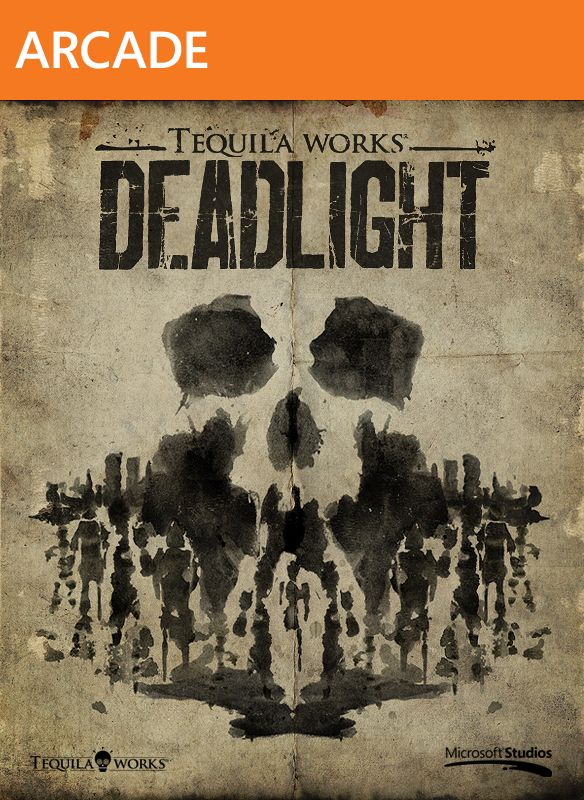
Deadlight shares The War of the Worlds’ specific combination of deliberate rotoscoped movement, stealth-adjacent survival against overwhelming odds, and a cinematic presentation that prioritises atmosphere over action. Released just a year later and set during a zombie outbreak, it feels like a natural companion piece — and benefits from slightly more forgiving controls.
Stela (2019)
A small silent protagonist moving through a world in catastrophic collapse, with no combat and no explanation — just the overwhelming sense of something vast and indifferent happening around you. The deliberate movement, the oppressive scale, and the wordless survival make it a natural companion piece to The War of the Worlds, and it delivers the same emotional register with considerably more polish.
If you are drawn to games that use alien invasion, apocalyptic atmosphere, and the vulnerability of an ordinary protagonist to create genuine dread, Planet Alpha, Somerville, and also Inside all sit in interesting proximity to The War of the Worlds — each one finding its own way into the same emotional territory.