

onEscapee is one of the most fascinating hidden corners of the entire cinematic platformer genre — a game that almost nobody played when it came out, and that almost nobody has heard of since, yet one that absolutely deserves to be talked about. Developed by the Hungarian studio Invictus Team and first released exclusively for the Amiga CD in 1997 before earning a low-key Windows port years later, it is the kind of game that wears its influences openly and proudly.
If you ever wondered what might happen if Another World and Flashback got together and sired a long-lost Hungarian baby, onEscapee is your answer. It is flawed, occasionally frustrating, and deeply obscure — and it is absolutely worth your time.
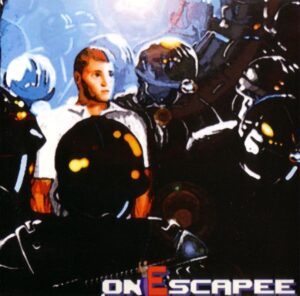
Year: 1997
Developer: Invictus Games
Atmosphere: Alien · Desolate · Mysterious
Visual Style: Rotoscoped · Detailed Pixel Art
Focus / Pace: Escape · Reflexes · Trial-and-Error
Platforms: Amiga · PC · Nintendo Switch
Why onEscapee stands out
Its main strength lies in its powerful audiovisuals and its haunting mood that allow it to stand out in the sparse crowd of cinematic platformers. What Invictus achieved on ageing Amiga hardware is genuinely impressive — over 1000 frames of animation for the main character alone, capable of performing 70 different moves, all wrapped in hand-drawn backgrounds and an atmospheric digitized score.
From the very beginning the game world feels hostile and oppressive, amplifying feelings of being a lone escapee — and Invictus somehow managed to find that sweet spot where things may be dark, but not so dark that you simply give up and stop playing.

The Story
onEscapee — pronounced “One Escapee”, to reflect the nature of the protagonist — follows Daniel White, an ordinary man who finds himself abducted by aliens and stranded on a hostile distant world. Alone, abandoned, and with little chance of returning to civilization, Daniel must survive long enough to uncover what the mysterious alien race is doing — and find a way to stop them from continuing to abduct humans.
The story is told almost entirely without words. Since Invictus is a Hungarian team, to make the game as international as possible, text and speech was kept to a minimum — a creative decision that ends up working strongly in the game’s favour, pushing it closer to the wordless cinematic tradition of Another World. What little narrative exists is delivered through short animated cutscenes and environmental detail, letting the decaying world speak for itself. The ending lands as genuinely bittersweet — Daniel finds survivors and defeats the nemesis, but his body temperature has dropped by the time he reaches the surface, and the survivors, believing him dead, have already left as the world begins to collapse around him.

Graphics
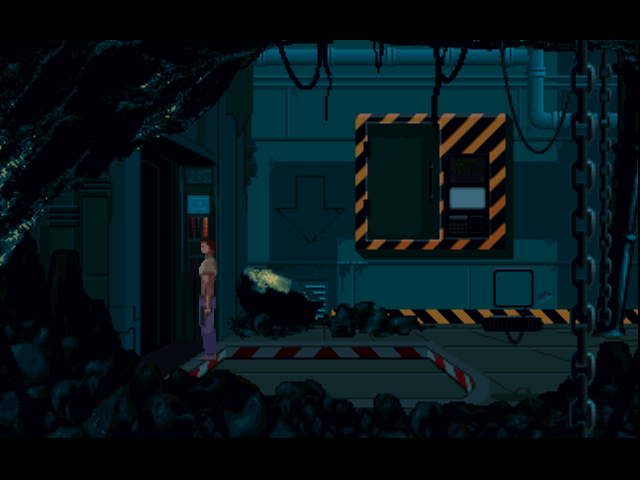
The game opens with an intro sequence that still impresses — a hand-drawn, moody animation worthy of Blade Runner comparisons, complete with a grungy vocal theme song. From there, the visual quality remains consistently striking throughout. The music and visuals are stunning, with beautiful hand-drawn backgrounds and animations, digitized music, and fantastic effects such as reflections, lights, and ocean waves.
What makes the art direction so memorable is how effectively it uses decay and desolation as a visual language. The scrapyard is barely functioning, the alien facility is full of broken down androids and damaged sections — there is barely anyone alive out there. Each area carries its own distinct mood, building an overarching sense of hopelessness that feels entirely deliberate and carefully constructed rather than accidental.
Gameplay
Mechanically, onEscapee feels instantly familiar to anyone who played Delphine Software’s classics. You move Daniel side to side, crouch, run, jump, and eventually shoot, all with deliberate, sometimes finicky controls that can be as frustrating as they are rewarding. The game spreads its action across seven levels, each introducing new environmental hazards, enemies, and puzzle ideas that keep the experience from settling into repetition.
From the first few minutes, you are hemmed in by a fence and an electrified pylon while a hovering craft tries to incinerate you — and the solutions require you to read the environment carefully, baiting threats into doing your work for you. Many of the puzzles are timing-sensitive, and it is entirely possible to die in several different ways, each death triggering its own distinct animated sequence. Scattered throughout the levels are regeneration stations hidden in certain walls — distortions that restore Daniel to full health before ejecting him back into the world, pictured with x-ray shots that imply direct physical repair. It is a small touch, but it adds enormously to the sense of a living, strange world with its own internal logic.
The honest caveat here is that the gameplay does not always match the ambition of the presentation. The gameplay is relatively poorly thought-out and left plenty of people frustrated and turned off. The controls carry that distinctive stiffness common to late 90s cinematic platformers, and some of the puzzle solutions demand a level of trial-and-error patience that not every player will be willing to give. But for those who can meet the game on its own terms, the satisfaction of pushing through is genuine.
Pacing
onEscapee moves at the deliberate, unforgiving pace typical of its era and its inspirations. There are no checkpoints in the modern sense, no handholding, and no map to orient yourself. You are simply dropped into a hostile world and expected to figure it out. There is plenty of help for the early puzzles, which allows the player to adjust to the combat system — a rare concession to accessibility that at least gives you time to find your footing before the difficulty tightens.
The seven-level structure keeps things moving with enough variety to prevent the experience from feeling monotonous. Quieter stretches of environmental exploration alternate with sudden, high-stakes action sequences that snap you back to full attention. Each area has its own distinct mood that adds to the whole, but there is also an overarching theme of decay and hopelessness running through everything — a tonal consistency that gives the pacing a strong sense of direction even when the moment-to-moment challenge is at its most punishing.
Atmosphere
onEscapee’s atmosphere is, without question, its greatest achievement and the main reason it deserves to be rescued from obscurity. From the very beginning the game world feels hostile and oppressive — each area has its own distinct mood, but there is also an overarching theme of decay and hopelessness running through everything. Broken androids slumped in darkened corridors, alien facilities half-collapsed and silent, a scrapyard world that feels like it has been dying for decades — the cumulative effect is genuinely unsettling in the best possible way.
What elevates the atmosphere above simple grimness is the music. The digitized soundtrack shifts and breathes with each new environment, filling the silence of an otherwise wordless game with a strange, melancholic texture that lingers long after you put the controller down. Combined with the hand-drawn visual detail and the consistent sense of isolation, onEscapee creates a world that feels fully realized despite its technical limitations — a remarkable feat for a small Hungarian studio working on hardware that the rest of the industry had already abandoned.
🎮 My opinion on onEscapee
onEscapee is a game that demands a certain kind of patience, and it will not be for everyone. The controls carry the deliberate stiffness of its era, the puzzles can tip from satisfying into genuinely maddening, and finding it in a playable form today requires a little digging. None of that changes the fact that this is one of the most atmospherically accomplished cinematic platformers of the entire 1990s — a game that, had it released on PC at the height of the genre’s golden age, would almost certainly be spoken about in the same breath as Another World and Flashback.
What Invictus achieved here is quietly remarkable. onEscapee was voted Best Amiga Game of 1997, and looking at what the team built — the animation work, the environmental storytelling, the haunting score — that recognition makes complete sense. It doesn’t quite reach the effortless brilliance of its inspirations, but it remains a striking, atmospheric adventure worth exploring — especially if you yearn for more cinematic platformers that truly challenge you. If you love this genre, you owe it to yourself to seek this one out.
Where can I play onEscapee?
onEscapee was originally released for the Amiga in 1997, then re-released as freeware for Windows to coincide with the 10th anniversary of Invictus’s founding. In 2024, onEscapee was also released on Nintendo Switch under the title The Escapee, making it more accessible than it has ever been. All versions of the game are available for free, leaving no excuse to skip it.
Games similar to onEscapee
If the desolate alien atmosphere, wordless storytelling, and punishing trial-and-error pacing of onEscapee resonated with you, these two cinematic platformers belong on your list next.
Another World / Out of This World
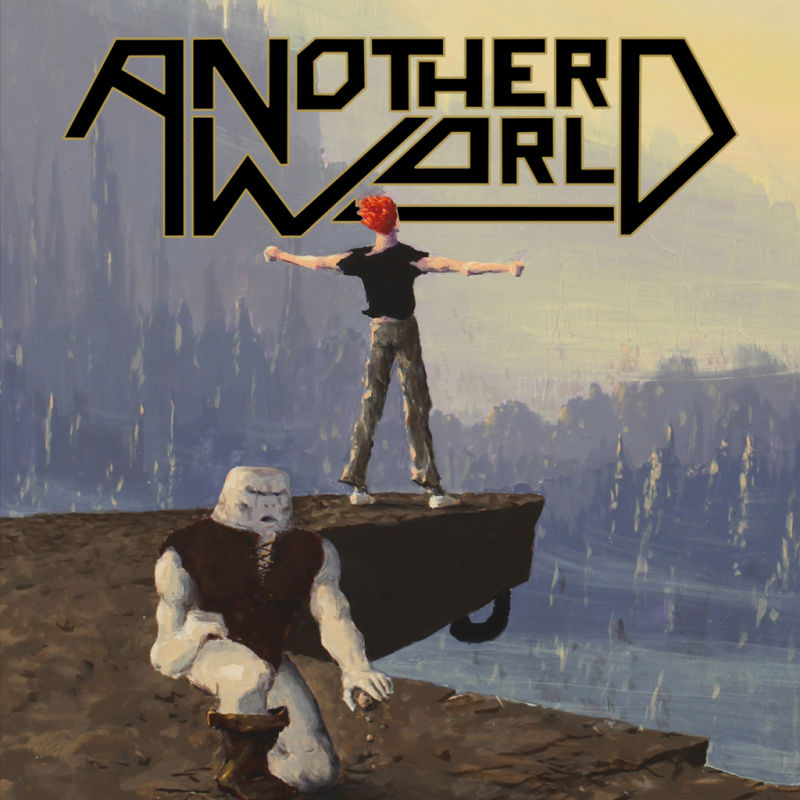
Another World is the game onEscapee wears most openly on its sleeve, and experiencing the original makes the ambition of Invictus’s tribute all the more impressive. Like onEscapee, it drops a lone protagonist into a hostile alien world with no explanation and no dialogue, trusting its animation, atmosphere, and environmental design to carry the entire experience. It is shorter, tighter, and more refined — and essential.
Flashback

Flashback shares onEscapee’s focus on deliberate rotoscoped movement, science-fiction world-building, and environmental puzzle-solving across a hostile alien landscape. Its amnesia-driven narrative and fluid animation set a standard that onEscapee chases closely — and if you appreciate the atmosphere and challenge of one, the other will feel immediately familiar and deeply satisfying.
If you are drawn to games that combine oppressive alien worlds, wordless survival, and that specific late-90s cinematic platformer feeling, titles like Heart of the Alien, Heart of Darkness, and Bermuda Syndrome offer wonderful alternatives that sit right alongside onEscapee in the genre’s overlooked catalogue.