
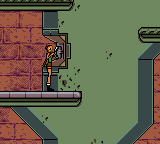
Tomb Raider: Curse of the Sword is the direct follow-up to the surprisingly excellent 2000 Game Boy Color original — and in several ways, it is the more confident and polished of the two. Still developed by Core Design, this time published by Activision, it swaps the ancient temple ruins of the first game for a far more varied and ambitious set of real-world locations that give the whole adventure a fresh, distinctly cinematic energy. Like its predecessor, it sits comfortably among the rarest cinematic platformers of the early 2000s — a period when the genre had almost entirely retreated from mainstream view.
Detail, colour, animation, fluidity — there are few GBC games that can live with Curse of the Sword in terms of presentation standards. It goes toe-to-toe with some of the greats of the cinematic platformer genre and, despite the technological mismatch, gives a tremendous account of itself.
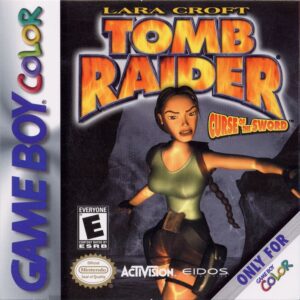
Year: 2001
Developer: Core Design
Atmosphere: Adventure · Ancient Ruins · Isolated
Visual Style: Pixel Art · Side-Scrolling
Focus / Pace: Exploration Platforming · Methodical
Platforms: Game Boy Color
The Story
Tomb Raider: Curse of the Sword is the direct follow-up to the surprisingly excellent 2000 Game Boy Color original — and in several ways, it is the more confident and polished of the two. Still developed by Core Design, this time published by Activision, it swaps the ancient temple ruins of the first game for a far more varied and ambitious set of real-world locations that give the whole adventure a fresh, distinctly cinematic energy. Like its predecessor, it sits comfortably among the rarest cinematic platformers of the early 2000s — a period when the genre had almost entirely retreated from mainstream view.
Detail, colour, animation, fluidity — there are few GBC games that can live with Curse of the Sword in terms of presentation standards. It goes toe-to-toe with some of the greats of the cinematic platformer genre and, despite the technological mismatch, gives a tremendous account of itself.
Graphics & Gameplay
The rotoscope-style animations are straight from the pages of classic cinematic platformers, and this ambitious approach results in some hugely impressive and memorable levels, many of which have hub-like centres from which Lara must explore to find the necessary keys and items. The urban environments are a genuine visual highlight — the Subway stage in particular shows off a more identifiably real-world style of environment that gets better the deeper you go.
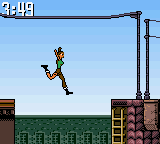
Traversal mechanics — jumping across gaps, swinging from ledges, climbing — are executed with a precision that reflects the era’s platforming discipline, and the level design rewards careful observation and planning, encouraging players to map routes, identify hidden paths, and leverage the environment to their advantage. The game is shorter and more linear than the original, which some will appreciate and others will find a little thin — there are no complex puzzles to speak of, and most players will beat the entire game in less than five hours. But what is there is polished, confident, and consistently enjoyable.
🎮 My opinion on Curse of the Sword
Curse of the Sword is a small, focused, and beautifully crafted handheld adventure that deserves far more attention than it gets. It squeezed absolutely everything it could from the Game Boy Color and marked what was arguably, pound-for-pound, the finest Tomb Raider of the decade. If you enjoyed the first GBC entry, this one is an essential next step — and if you are new to the handheld series, it is actually the stronger starting point of the two.
Where can I play it?
Like its predecessor, Curse of the Sword has never received a digital re-release and can only be found on original Game Boy Color cartridges through second-hand marketplaces. Physical copies are widely available and typically inexpensive. Emulation remains the most accessible option for most players and runs without issues on any standard GBC emulator.
Games similar to Tomb Raider: Curse of the Sword
Tomb Raider (2000, GBC)
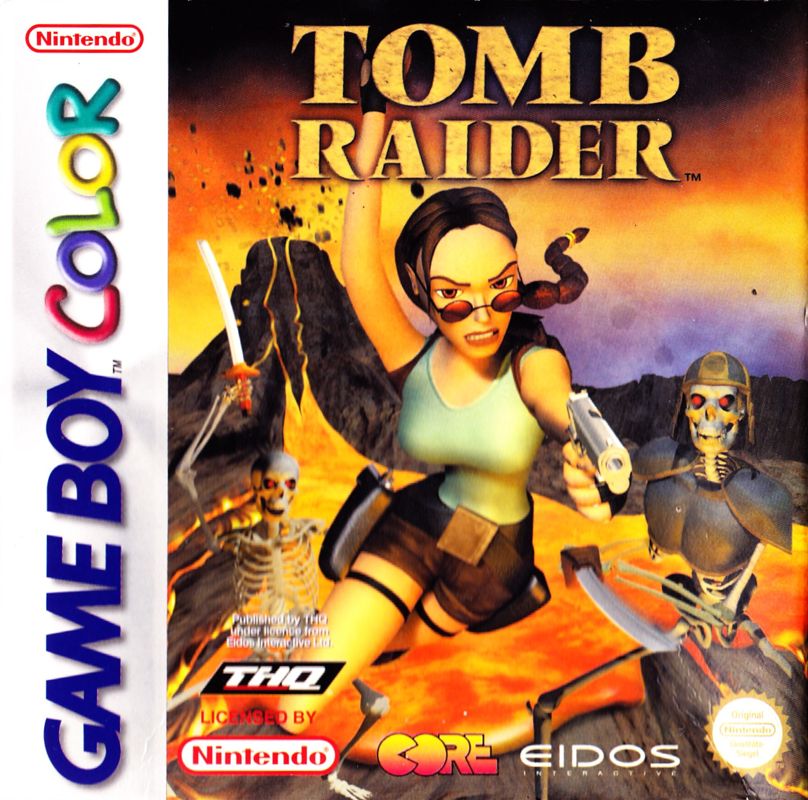
The direct follow-up to this very game, Curse of the Sword builds on everything that made the GBC original so impressive and pushes it even further. Its rotoscope-style animations, tighter level design, and more varied environments make it arguably the stronger of the two handheld entries. If you enjoyed Lara’s first portable cinematic adventure, this one is an essential next step — and it is every bit as overlooked.
Prince of Persia (1989)
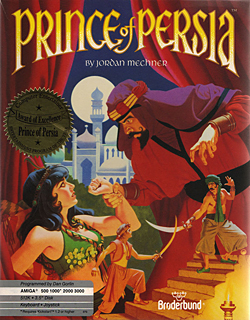
Prince of Persia is the clearest cinematic platformer ancestor to what Core Design built across both GBC entries — precise movement, deliberate traversal, and trap-filled environments that demand patience and observation above all else. If the GBC Tomb Raider series resonated with you, Prince of Persia is essential reading.
If you are drawn to cinematic platformers built around deliberate traversal, real-world inspired environments, and that specific handheld era charm, titles like Flashback, Another World, and Oddworld: Abe’s Oddysee offer wonderful alternatives that sit right alongside Curse of the Sword in the genre’s overlooked catalogue.