
Description
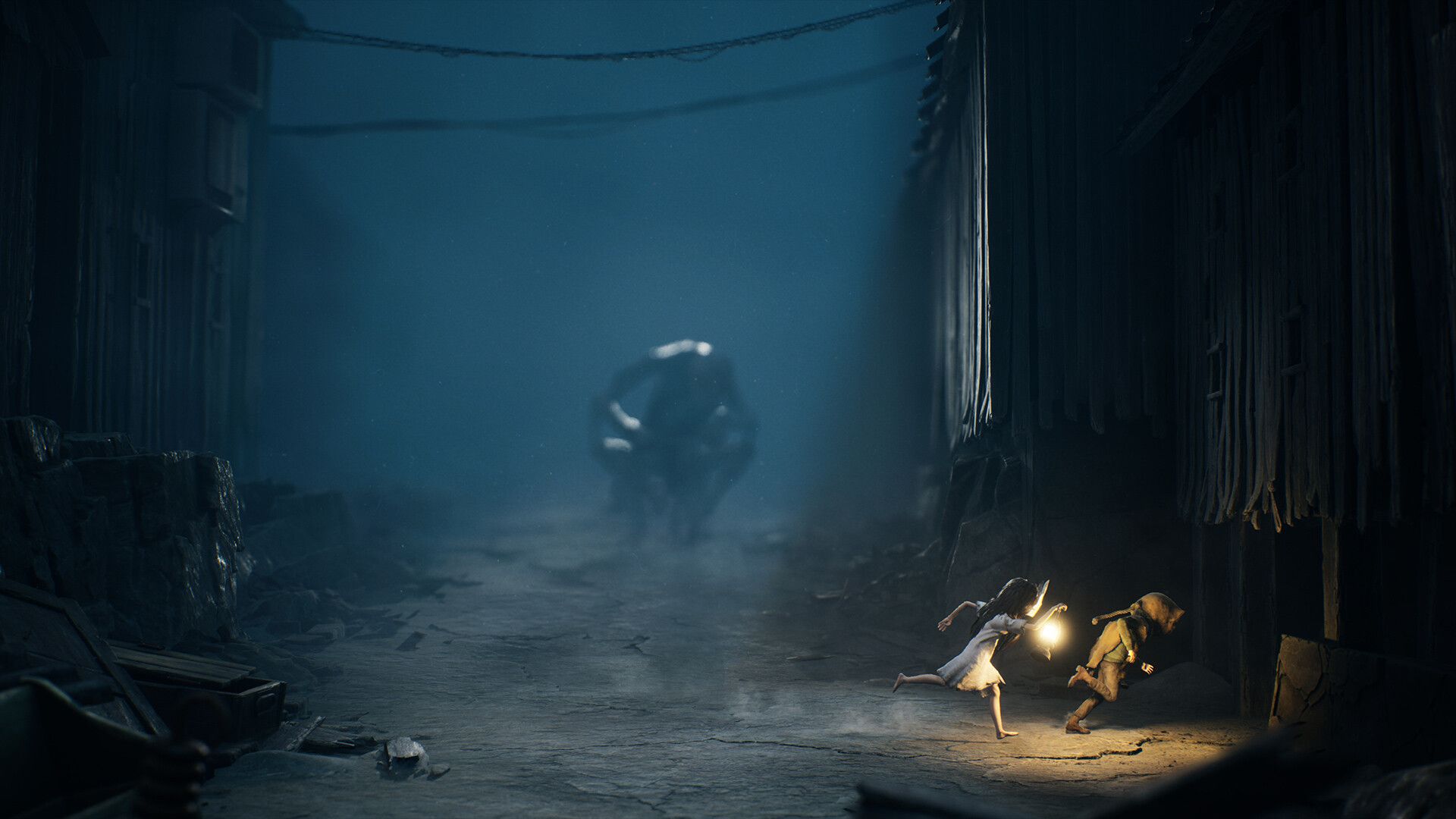
Developed by Tarsier Studios and published by THQ Nordic, Reanimal released in February 2026. You play as orphaned siblings returning to their flooded home island after some kind of catastrophe has torn it apart. Three friends are missing. The island is full of things that want to hurt you. And the truth about what happened is considerably darker than the opening suggests.
I will be honest — when Tarsier Studios lost the Little Nightmares IP after the Embracer acquisition, I was genuinely worried. Supermassive Games took over the franchise and made Little Nightmares III. Tarsier went away to make something new. And I kept thinking: what made Little Nightmares special was not the name. It was Tarsier. Their obsessions, their visual language, their specific gift for making you feel small and hunted in a world that is grotesque and beautiful simultaneously.
Reanimal put those worries to rest within about ten minutes. This is Tarsier’s game. Completely, unmistakably theirs — and in several ways the most ambitious and most disturbing thing they have ever made.
Year: 2026
Developer: Tarsier Studios
Atmosphere: Psychological Horror · Dark · Oppressive
Visual Style: 3D Cinematic · Unreal Engine 5
Focus / Pace: Stealth Horror · Methodical
Platforms: PlayStation 5 · Xbox Series X/S · Windows · Nintendo Switch 2
Reanimal vs Little Nightmares — What Changed?
The most significant change is the cooperative design. Where Little Nightmares gave you a single protagonist alone in a nightmare, Reanimal puts two characters together and builds everything around their proximity. Straying too far from each other means death — the game uses a shared camera that keeps both siblings in frame at all times, designed to maximise claustrophobia and shared terror. I played it with a friend, and I think that is the intended experience — the specific panic of both of you screaming at the same moment when something appears is something the solo experience cannot fully replicate.
The other addition I love is the boat. Between levels the siblings navigate a flooded archipelago, choosing which locations to approach and occasionally finding optional areas off the critical path. It gives Reanimal a light nonlinear structure Little Nightmares never had — and a sense of a world that exists beyond the immediate horror, which somehow makes the horror hit harder when you return to it.
The tone is also noticeably darker. This is not a game about the vague nightmare of childhood — it is about childhood trauma specifically, and revisiting places that once felt safe. That shift in focus gives Reanimal an emotional weight that I find more affecting and more uncomfortable than anything in the Little Nightmares series. Some players will find it overwhelming. I found it exactly right.
The Story
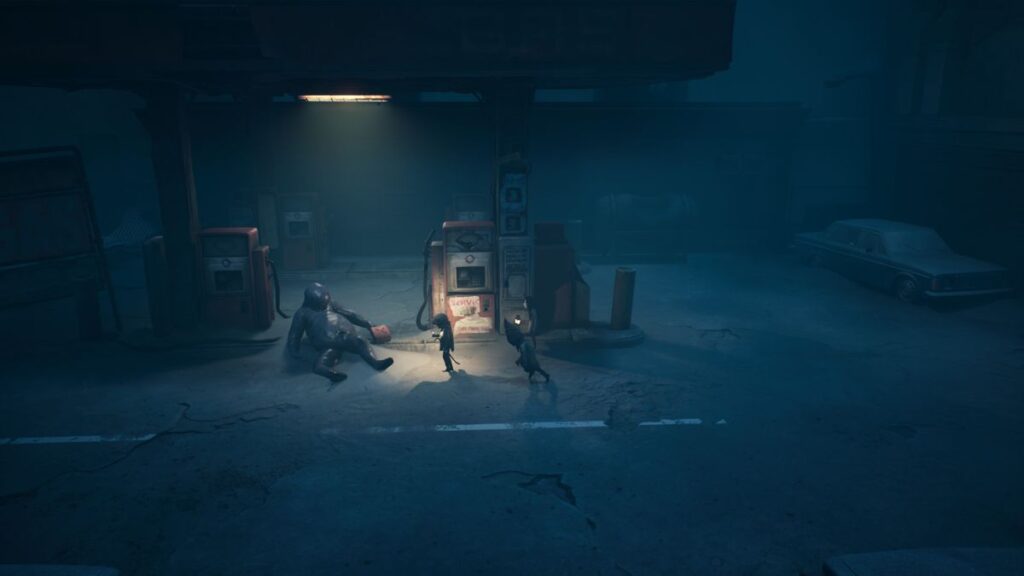
Two siblings. A flooded island. Three missing friends. The story starts simply and gets progressively stranger and more disturbing as it goes. I will not spoil what happens — Reanimal is much better experienced without foreknowledge — but I will say the ending caught me completely off guard and left me sitting quietly for a minute trying to process it. The narrative deals with themes of trauma, guilt, and memory in ways that feel genuinely mature rather than gratuitously dark.
The storytelling is entirely environmental — no dialogue beyond brief exchanges at designated rest points, no text, no explanation. You piece together what happened from what you see. I think this works brilliantly in the early and late game. There are stretches in the middle where the deliberate ambiguity tips into genuine confusion, and I found myself unsure whether I was missing something meaningful or whether some threads simply do not resolve. A small frustration in an otherwise confident piece of storytelling.
Graphics
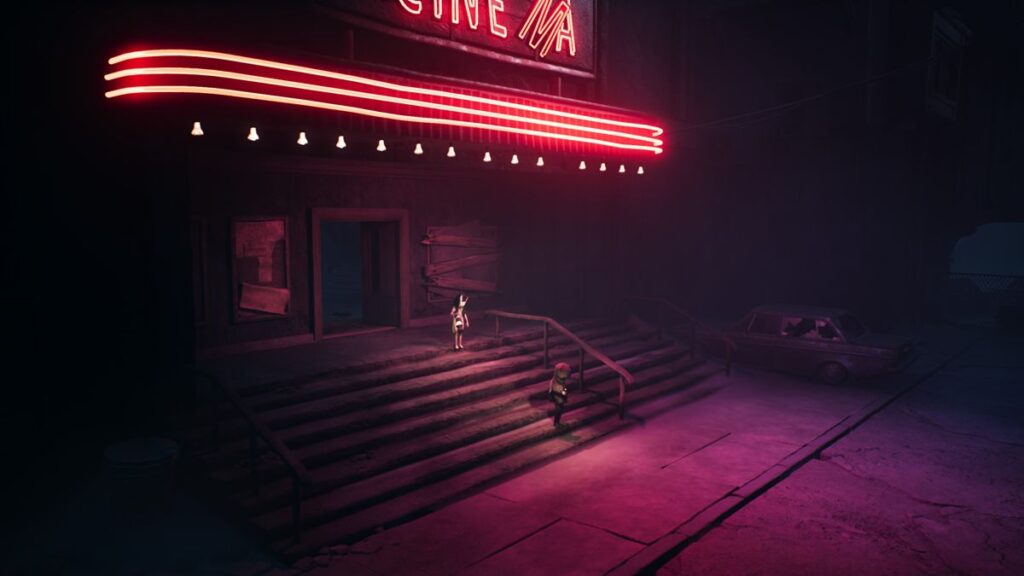
Built in Unreal Engine 5, Reanimal is one of the most visually impressive games in the genre — environments rendered with a level of detail and dynamic lighting that makes the island feel genuinely inhabited, genuinely ruined, and genuinely threatening. The creature design is exceptional: grotesque, specific, and memorable in the way the best Little Nightmares enemies always were. Several set pieces — a burning bridge, a colossal mutated creature giving chase through a flooded city — are among the most spectacular things I have seen in a cinematic platformer.
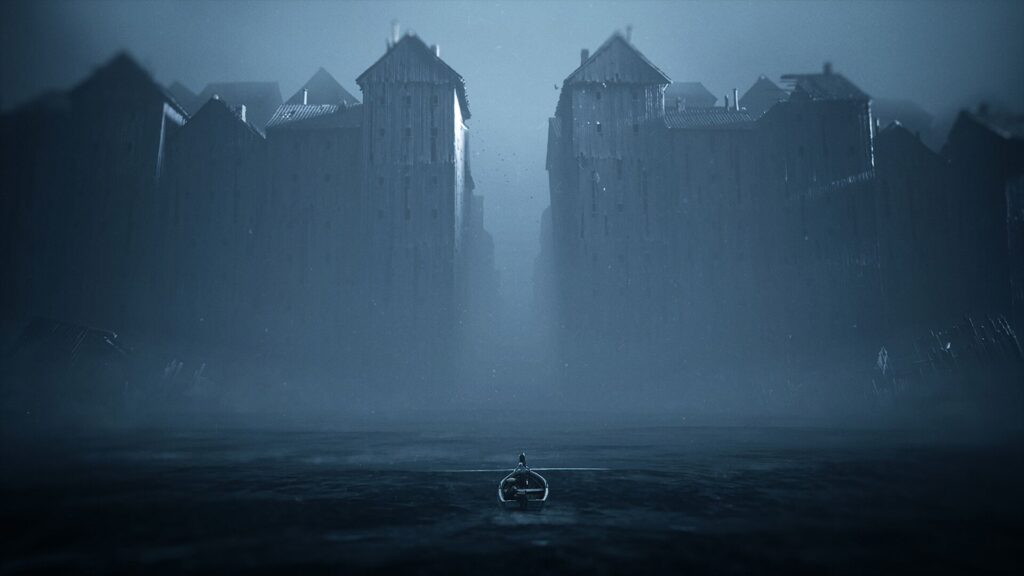
What I find most impressive is the restraint. The game never uses darkness lazily. Every shadow is placed, every reveal is considered, and the moments of unexpected beauty — a quiet sunrise glimpsed through a ruined window, the reflection of the island on still water — hit harder because the surrounding horror has earned them.
Gameplay
Classic Tarsier — stealth, observation, environmental puzzles, and chase sequences that have your heart hammering in ways that feel completely disproportionate to the actual stakes. The puzzle design is light without being trivial, and the variety of situations — sneaking past creatures, driving a boat, briefly controlling an ice-cream truck — keeps the eight-hour runtime feeling varied throughout.
The stealth is the most divisive element and I think the honest verdict is that it works once you understand the rules, which are not always clearly communicated upfront. A few early sections are frustrating precisely because the game has not yet told you how its stealth logic operates. Once it clicks — which happens fairly quickly — the stealth becomes genuinely tense rather than genuinely annoying. Stick with it past the first hour.
👾 Did You Know?
Reanimal was review bombed on Steam shortly after launch — not because of anything wrong with the game, but because the Friend’s Pass feature, which lets a friend join your game for free, was not available on Steam at launch.
Most of the negative reviews were about that single missing feature rather than the game itself. The situation was resolved in a subsequent update. It is one of the stranger review bomb incidents in recent memory — players essentially protesting the absence of generosity rather than the presence of failure.
Atmosphere
The best the studio has ever achieved, and that is saying something. The sound design in particular deserves recognition — the ambient noise of a flooded, abandoned island, the specific way creatures move and breathe, the silence between encounters that somehow makes the next one worse. Josh Gabriel’s score is restrained and atmospheric, and the decision to keep dialogue minimal throughout gives every sound that does occur more weight.
I also want to mention the co-op camera specifically. The shared frame that keeps both siblings in view at all times sounds like a technical constraint but functions as a design masterstroke — it makes you constantly aware of your companion, constantly alert to where they are, and constantly terrified on their behalf as well as your own. I have not felt that specific kind of co-op dread in any other game.
🎮 My honest opinion
Reanimal is Tarsier’s best game and one of the best cinematic platformers of 2026. It is darker, more emotionally complex, and more mechanically varied than Little Nightmares, and the cooperative design gives it a dimension that the earlier games never had. The early stealth sections are frustrating before the rules become clear, the narrative has some unresolved threads, and the length will disappoint players who wanted more. None of that changes my overall feeling about it.
Play it with someone you trust as you will spend most of it grabbing their arm 🙂
Where can I play Reanimal?
Reanimal is available on PlayStation 5, Xbox Series X/S, Windows via Steam and GOG, and Nintendo Switch 2. A free demo is available on all platforms.
Games similar to Reanimal
Little Nightmares (2017)
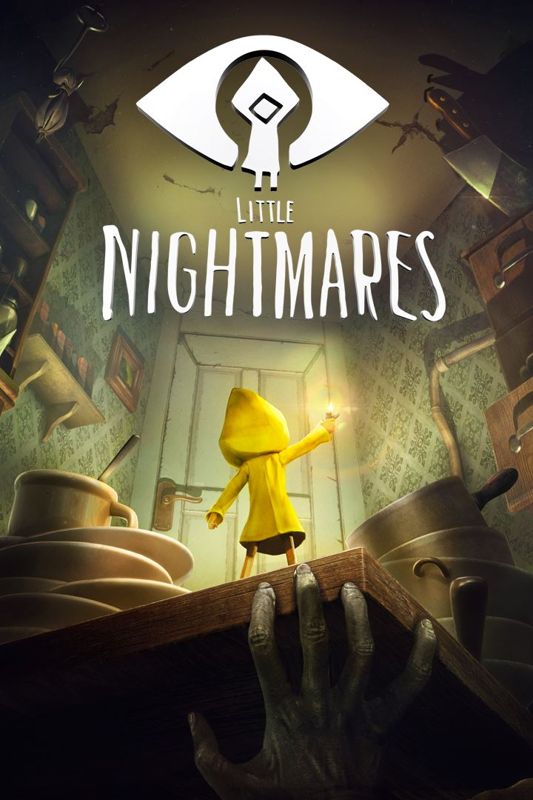
The obvious starting point — Tarsier’s own previous work, and the game that established everything Reanimal builds on. If you have not played it, start there. If you have played it and loved it, Reanimal is the natural next chapter.
Little Nightmares II (2021)
Little Nightmares II introduced the companion dynamic that Reanimal expands on fully — a second character alongside the protagonist, the tension of keeping both alive. The step between II and Reanimal is the clearest creative progression in Tarsier’s work.
If you are drawn to cinematic platformers that use atmosphere and creature design to create genuine psychological dread — games where the horror comes from the world rather than jump scares — Bramble: The Mountain King, DARQ, and Somerville all live in the same dark, beautiful corner of the genre.