Description
I had never heard of Antro before it showed up in my research, and going in blind, I was genuinely intrigued. A rhythm-based cinematic platformer set in an underground dystopian Barcelona, made by a small Catalan studio built around representing urban culture in video games. On paper, that combination is exciting. In practice, Antro is a game I want to like more than I actually do — and I think that gap between ambition and execution is the most honest thing I can say about it.
Developed by Gatera Studio, published by Selecta Play and Astrolabe Games, Antro follows Nittch — a faceless, hoodie-wearing courier who lives at the bottom of an underground megacity. He picks up a mysterious package, gets chased by the authoritarian government La Cúpula, and accidentally becomes a symbol of the resistance Los Discordantes. The setup is familiar — dystopia, oppression, one ordinary person getting swept up in revolution — but the Catalan urban culture angle gives it a flavour I have not seen in the genre before. That alone makes it worth knowing about.
Year: 2025
Developer: Gatera Studio
Atmosphere: Dystopian · Industrial · Urban
Visual Style: Stylized 2.5D · Urban Realism
Focus / Pace: Rhythm Platforming · Fast-Paced
Platforms: PlayStation 5 · Xbox Series X/S · Windows
The Story
Surface-level stuff, honestly. The world has collapsed. One percent of humanity survives underground, divided by class, ruled by propaganda. Nittch delivers a package. Things escalate. There is a resistance. There is a corrupt government. The game ends abruptly without resolving much, with a title card that strongly implies a sequel is coming.
The storytelling is mostly told through environmental details and visual design rather than dialogue, which fits the genre — but unlike the best cinematic platformers, the environmental details do not quite add up to something emotionally resonant. I finished Antro understanding what happened without particularly caring about any of the people it happened to. The setting is interesting. The story told within it is thin.
Graphics
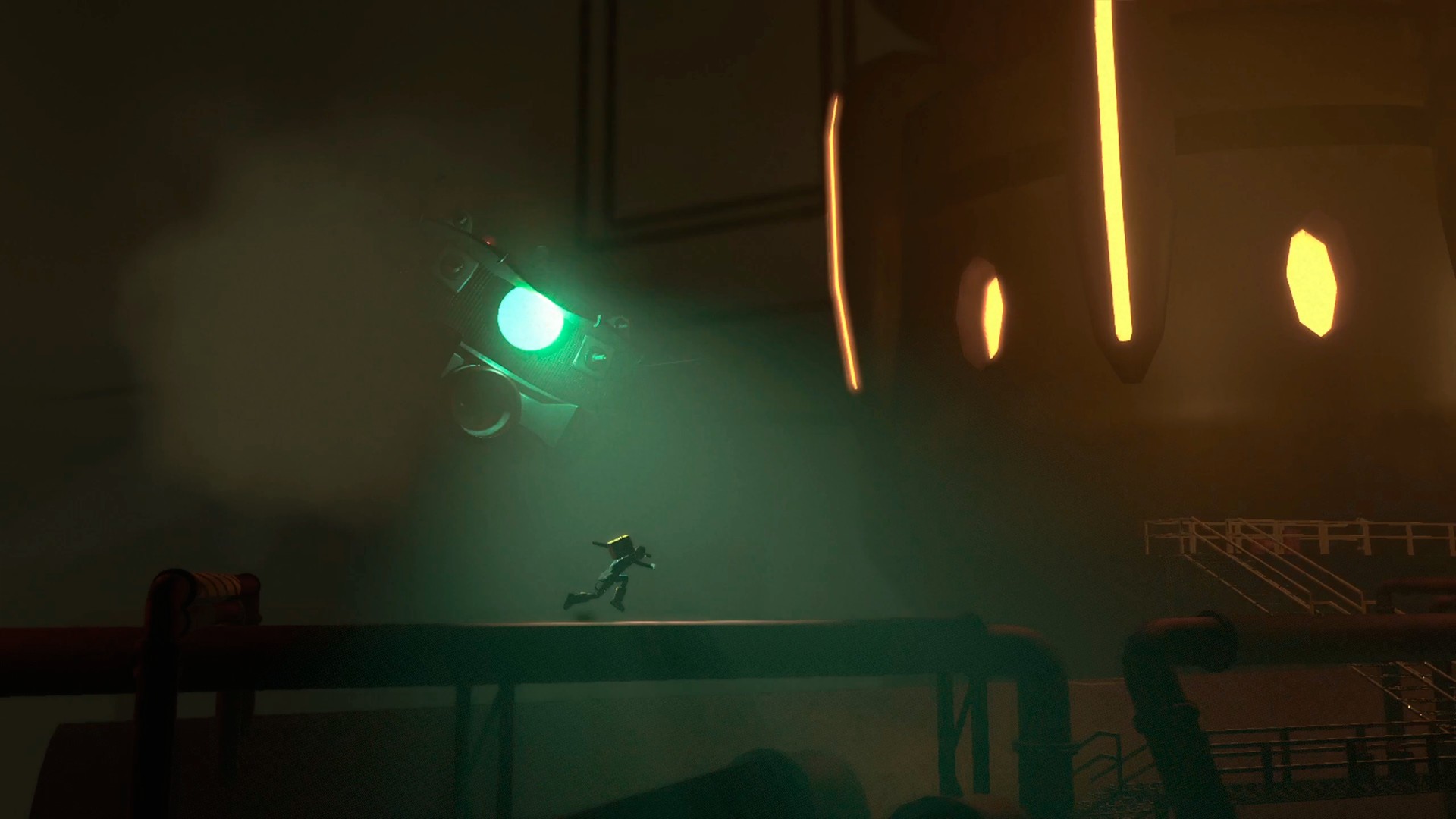
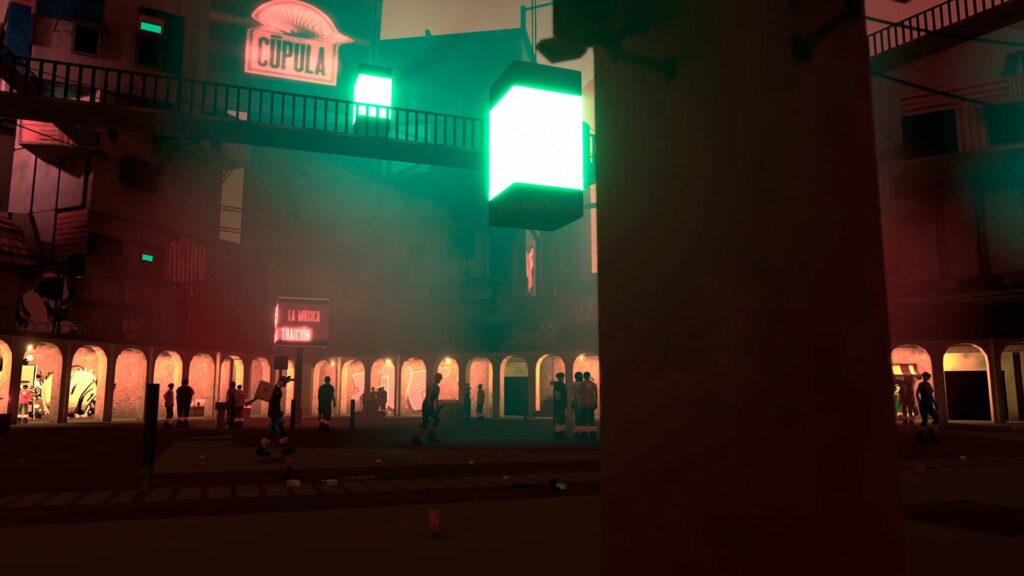
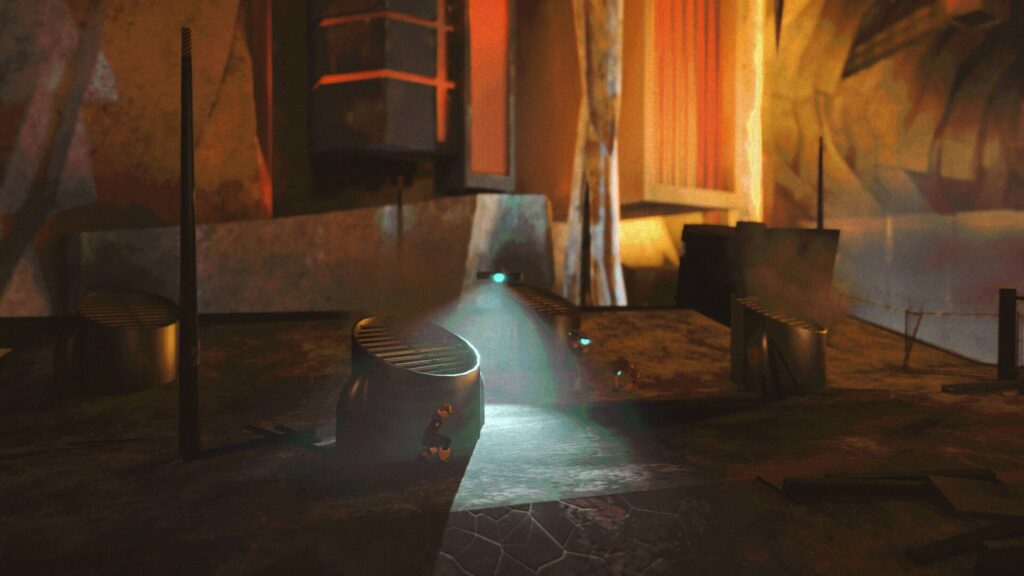
This is where Antro earns some genuine credit. The underground world has a gritty, lived-in texture — dusty browns and yellows, neon highlights cutting through industrial darkness, drones patrolling in sync with the soundtrack, factories steaming in the background. The camera occasionally pulls back to reveal the full scale of the megacity, and those moments genuinely impress. It is not the most visually ambitious game in the genre, but it has a consistent aesthetic identity that holds together.
The character design is deliberately minimal — Nittch and most NPCs are faceless, barely differentiated. I think this is intentional, a comment on the dehumanising effects of the authoritarian world. But it does make it difficult to feel attached to anyone.
Gameplay
Antro splits between two modes. The exploration sections are straightforward cinematic platforming — walk, jump, slide, interact with terminals, collect graffiti cans. Nothing demanding, but serviceable. Then the music kicks in, and the game shifts into its auto-runner sequences: Nittch sprints automatically while you jump over obstacles, slide under barriers, and smash drones with a stick, all supposedly in sync with the beat.
Those auto-runner sequences are the best thing Antro does. When they work — when the timing clicks, the music hits, and you are flowing through a level without thinking — it genuinely feels great. There is a specific kind of momentum that rhythm games chase, and Antro gets there occasionally.
The problem is consistency. The rhythm integration is looser than it should be — sometimes the beat dictates your timing, sometimes it does not, and the game never quite commits to being a real rhythm game in the way that Crypt of the NecroDancer or BPM do. The hitboxes are occasionally imprecise. Mistiming a button press can break the musical sync in a way that is more jarring than the death itself. And there is a hallucination level late in the game — a gas leak sends Nittch into a bizarre, distorted dreamscape — that is by far the most creative and interesting thing in the whole experience. I wanted more of that and less of the straightforward run-and-jump sections.
Pacing and Length
Here is the main issue: Antro is ninety minutes long. Not two hours. Ninety minutes. I respect short games — plenty of the best games in this genre are two to three hours — but Antro at ninety minutes feels less like a tight, complete experience and more like a first act without the rest of the story.
The difficulty curve barely has time to develop, the story barely has time to breathe, and the ending arrives before the game has had a chance to fully introduce its own ideas. It is priced accordingly at around fifteen euros, which softens the blow, but the length is a genuine limitation rather than a design choice.
Atmosphere
The soundtrack is the real reason to play Antro, and it is genuinely excellent. Hip-hop, drill, R&B, and electronic tracks from Spanish and Catalan artists give the game an identity that nothing else in the genre shares. The music is loud and confident in a way the gameplay occasionally is not, and the best moments of the auto-runner sections exist entirely because the music is that good. Play it with headphones. It is a noticeably different experience.
The sound design around the music is solid too — the world feels noisy and oppressive in the right ways, and the contrast between the quieter exploration sections and the pounding auto-runner sequences is well calibrated even when the rhythm mechanics themselves are not.
🎮 My honest opinion
Antro is a game I include in this database because it genuinely tries something different — and because the Catalan urban culture angle, the soundtrack, and the auto-runner concept are all interesting enough to be worth knowing about. But I would be doing you a disservice if I oversold it. The story is thin, the length is frustrating, the rhythm mechanics are undercooked, and the game ends before it has really found itself.
What I keep coming back to is that hallucination level. For a few minutes, Antro becomes strange and creative and genuinely surprising. I think there is a better game somewhere inside this one — a game that commits fully to its rhythm concept, gives its world room to breathe, and follows through on its ending. Maybe that is the sequel the title card is hinting at. I hope so, because Gatera Studio clearly has something worth saying. They just need more time to say it.
Where can I play Antro?
Antro is available on PC via Steam, PlayStation 5, and Xbox Series X/S. At around fifteen euros it is modestly priced, and the soundtrack is available separately on major music platforms — and honestly worth getting on its own terms.
Games similar to Antro
The Cub (2023)
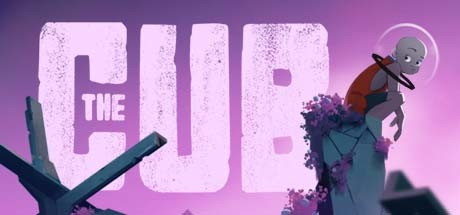
The Cub shares Antro’s satirical anger about the world — the billionaires, the inequality, the systems designed to grind ordinary people down — and delivers it through a more fully realised game with a stronger sense of humour and a better soundtrack integration. If Antro’s politics resonated but you wanted more, The Cub is the natural next step.
Black The Fall (2017)
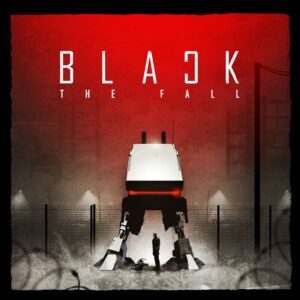
Black The Fall shares Antro’s industrial dystopia in the most direct way — a faceless worker escaping an oppressive authoritarian system through gritty, muted environments filled with propaganda and surveillance. Where Antro is loud and musical, Black The Fall is silent and suffocating, but the political anger underneath both games is recognisably the same. If Antro’s world resonated with you, Black The Fall is worth an hour of your time.
If you are drawn to cinematic platformers with a strong political edge and a distinctive musical identity — games that are openly angry about something — Ministry of Broadcast and 7th Sector all live in the same corner of the genre.