
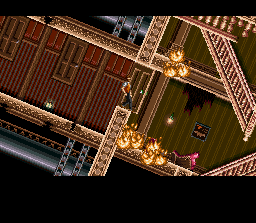
Description
SOS — known in Japan as Septentrion — is one of the strangest and most original games the SNES ever produced, and almost nobody played it. Developed by Human Entertainment and inspired by the 1969 novel and 1972 film The Poseidon Adventure, it puts you inside a capsizing ocean liner in 1921 with one hour of real time to escape. Not a countdown you can ignore.
One actual hour, ticking away whether you are moving or not. The ship is already upside down when you start. It will keep rotating as it sinks. And the whole thing is framed as a film — complete with fictional director credits and a cast list of thinly veiled Hollywood parodies. It is bizarre, ambitious, and unlike anything else on the console.
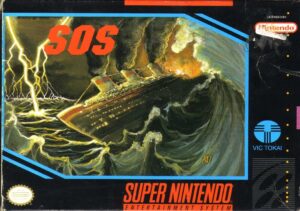
Year: 1993
Developer: Human Entertainment
Atmosphere: Survival · Panic · Claustrophobic
Visual Style: Isometric-influenced · Dynamic Environments
Focus / Pace: Exploration · Survival · Urgent
Platforms: SNES
The Story
The Lady Crithania, a luxury ocean liner, is struck by a massive wave on September 13th, 1921, and capsizes. You choose one of four characters — an architect, a counsellor, a sailor, or a doctor — each starting in a different part of the ship with their own personal stakes and a specific person they need to rescue for the good ending. The outcome depends on who you save and how many survivors you bring with you to the surface.
What is quietly remarkable is how much character the game packs into its premise without a single line of real dialogue. Each playable character has a distinct relationship to the disaster unfolding around them, and the multiple endings — shaped by survivor outcomes — give the whole thing a genuine sense of consequence. The metafictional framing as a “Shuji Yoshida film”, complete with in-game credits listing fake actor names that are barely disguised parodies of Hollywood stars, adds a layer of self-aware cinematic theatricality that feels surprisingly ahead of its time.
Graphics & Gameplay
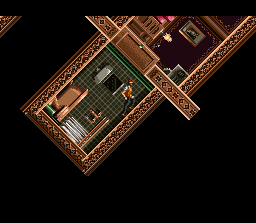
SOS looks functional rather than stunning — character sprites are serviceable, environments are detailed enough to read clearly, but nothing here is going to stop you in your tracks visually. What makes the graphics genuinely remarkable is what the game does with Mode 7.
🎬 Did You Know?
Most SNES players encountered Mode 7 in games like Mario Kart or Pilotwings, where it was used to create the illusion of a flat surface receding into the distance. SOS uses it in a completely different way — to physically rotate the entire ship around you as it tilts and sinks. The corridors you were running through horizontally become vertical shafts. Doors that were on walls end up on the ceiling. It is not a visual flourish — it is the core of the gameplay, and nothing else on the console used Mode 7 quite like this.
That rotating ship is both the game’s greatest achievement and its biggest frustration. When the Lady Crithania tilts to 45 degrees, then 90, then further still, the platforming — already slightly stiff in the Prince of Persia tradition — becomes genuinely punishing. Jumping across narrow platforms at an angle with a hidden timer running is exactly as stressful as it sounds. The survivor AI compounds this: the passengers you are trying to rescue will happily walk into hazards, fall off ledges, or simply refuse to follow you unless your specific character has the right relationship with them.
None of this makes the game unfun. It makes it tense in a way that feels earned — a real ticking-clock survival experience where every wrong turn costs you minutes you cannot afford to lose.
Atmosphere & Pacing
The atmosphere is SOS’s secret weapon. The ship feels genuinely alive in its death — water rising through corridors, the groan of metal, the growing disorientation as the environment rotates around you. The soundtrack, composed by Kouji Niikura, Hiroyuki Naka, and Hiroshi Taniguchi, is tense and orchestral, with a dramatic main theme that absolutely commits to the disaster movie aesthetic.
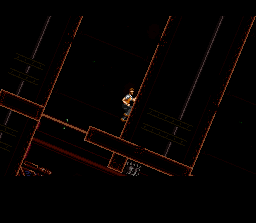
Pacing is largely dictated by that real-time hour, which is both inspired and occasionally maddening. The early sections are exploratory and relatively calm. By the midpoint, when the ship begins its more dramatic rotations and water starts flooding the corridors, the tension becomes almost uncomfortable. The late boiler room sequences are notoriously brutal — precise jumping challenges at awkward angles with steam vents that cost you precious minutes if they catch you. It is the point where the game’s ambitions most visibly outrun its execution.
🎮 Verdict: Is SOS still worth playing today?
SOS is what Hardcore Gaming 101 once called “an almost-masterpiece” — and I think that is exactly right. The core idea is genuinely brilliant: a cinematic platformer where the environment itself is the antagonist, physically rotating around you in real time as a clock ticks down. Nothing on the SNES quite pulls off the same trick, and the four-character structure with branching endings gives it a replayability that most games of the era did not attempt.
What holds it back is execution. The controls never fully rise to meet the ambition of the tilting ship sections, the survivor AI is unreliable at best, and the late-game difficulty spikes into territory that feels less designed than endured. But when it works — when you are sprinting through a flooded, sideways corridor with two survivors in tow and twelve minutes on the clock — there is genuinely nothing else like it.
Is it still worth playing today? I think so — but with the right mindset. At one real hour per run, the time investment is minimal, and the four playable characters give you genuine reasons to go back. Emulation smooths out the roughest technical edges, and experiencing the Mode 7 ship rotation in motion is something every fan of the genre should see at least once. Approach it as a fascinating, flawed experiment rather than a classic, and it absolutely delivers – if you can find a copy of the game!
For fans of obscure genre history, SOS is essential. Just go in knowing it is a flawed gem rather than a polished one.
Where can I play SOS?
SOS was released on SNES in North America in 1994 by Vic Tokai, and in Japan as Septentrion in 1993. Original cartridges exist but tend to fetch collector prices. Your best option today is emulation — it runs well on any SNES emulator and is absolutely worth the hour it takes to complete a run. A Japanese PlayStation sequel, Septentrion: Out of the Blue, was also released but never localised.
Games similar to SOS
The Poseidon Adventure (1972 film)
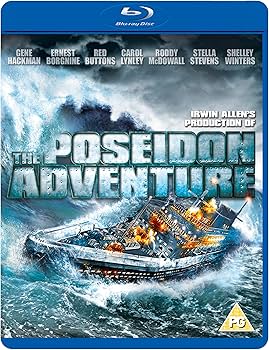
Slightly unconventional recommendation — but SOS is so directly adapted from this film that watching it is genuinely the best companion piece the game has. The capsized ship, the small group of survivors, the race against rising water — it is all here, and seeing the source material makes the game’s design decisions click into place immediately.
Bermuda Syndrome (1995)
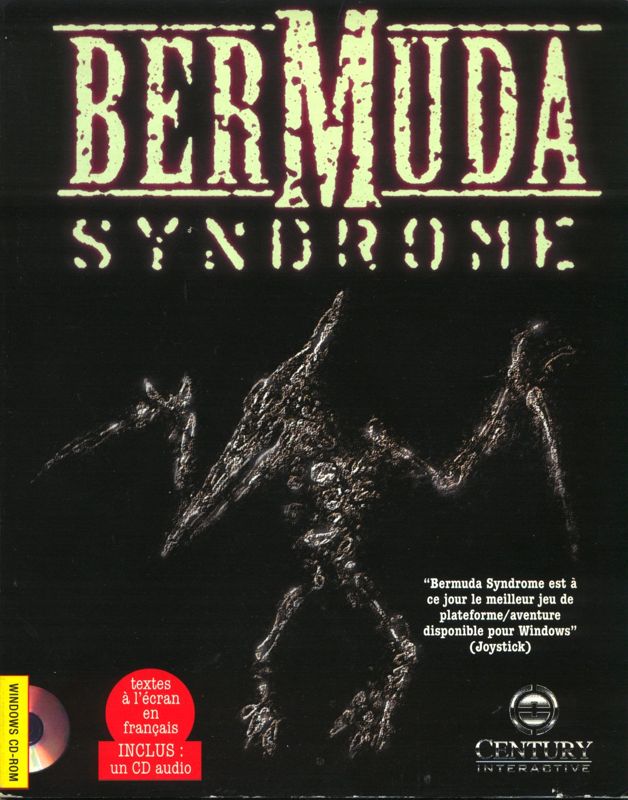
A more conventional cinematic platformer recommendation for players who enjoyed SOS’s tension and deliberate movement but want something with more polished execution. Bermuda Syndrome shares the survival-focused urgency and the rotoscoped movement of the genre’s 1990s golden era, without the frustrations of SOS’s rougher edges.
Gift (2024)

Gift is the most direct modern parallel to SOS — another cinematic platformer built entirely around a sinking vessel and the desperate scramble to escape it. Where SOS gives you an ocean liner capsizing in 1921, Gift follows an elderly man navigating a surreal flooding cruise ship that dynamically shifts and fills with water around him. The setting and tone are very different, but the core feeling — disorientation, urgency, a world physically changing beneath your feet — is exactly the same. If SOS fascinated you as a concept, Gift is proof that someone in 2024 was thinking along very similar lines.