
Descripton
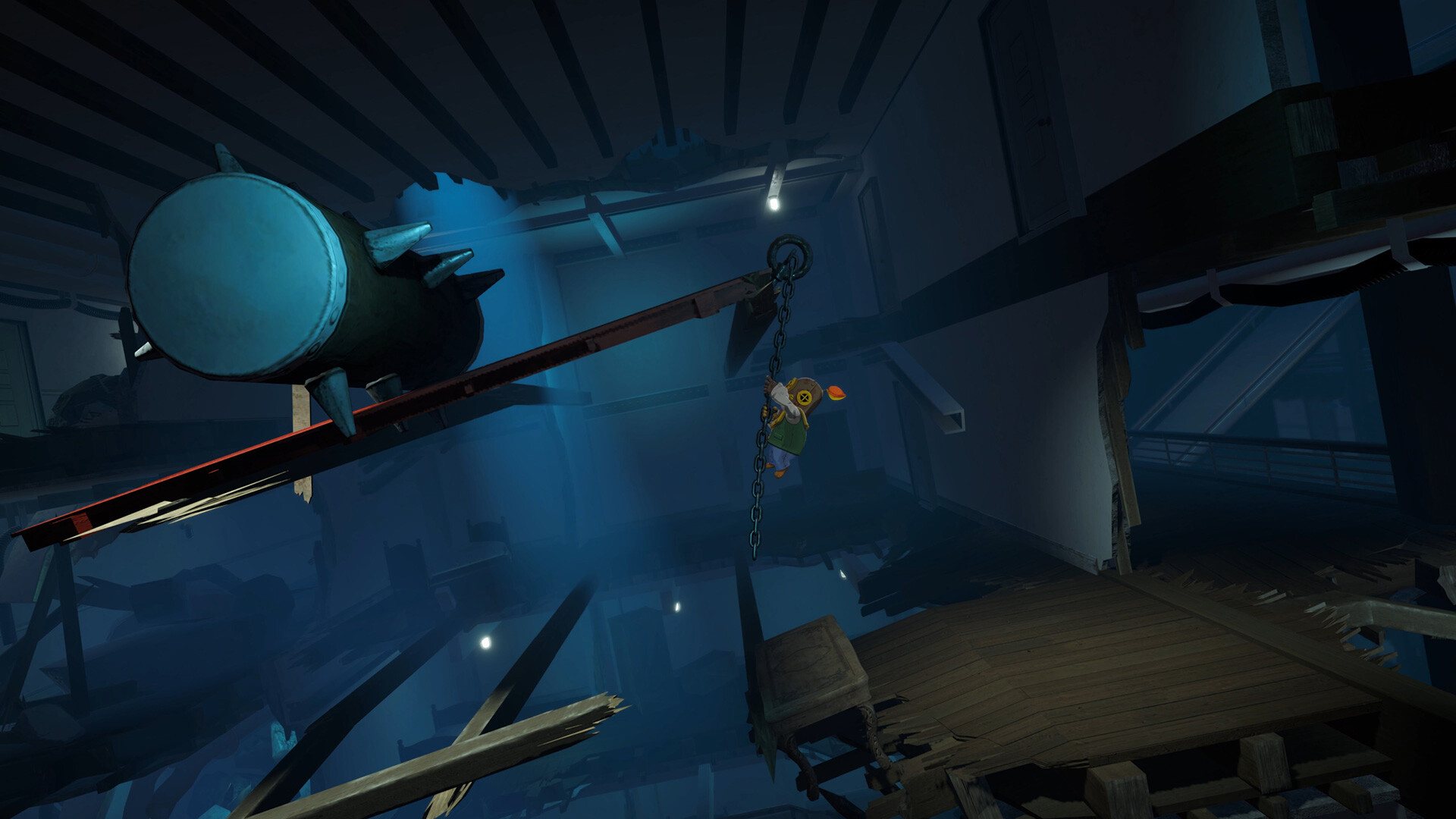
Gift is built around one of the most immediately compelling premises in the genre: an old man wakes up on a sinking luxury cruise ship, and the ship is the level. Not a fixed level — a living, tilting, flooding one. The ceiling becomes the floor. Corridors that were accessible a minute ago are now underwater. A room that seemed like a dead end tilts thirty degrees and suddenly reveals a new path. The ship is not a backdrop. It is the mechanic.
Gift is a small, quiet Japanese puzzle platformer developed by Tokyo-based studios Toydium and Million Edge and published by Bushiroad, it arrived in May 2024 to modest attention and mostly positive reviews — which is a shame, because it is doing something genuinely unusual.

Year: 2024
Developer: Toydium · Million Edge
Atmosphere: Surreal · Emotional · Claustrophobic
Visual Style: Stylized 3D · Storybook Visuals
Focus / Pace: Puzzle Platforming · Deliberate
Platforms: PlayStation 5 · Xbox Series X/S · Windows · Nintendo Switch
A Rare Concept: The Sinking Ship as a Cinematic Platformer
The sinking ship is one of cinema’s most enduring disaster scenarios — The Poseidon Adventure, Titanic, countless others — and yet as a setting for a cinematic platformer it remains almost entirely unexplored. The most direct precedent is SOS (1993) on SNES, a cult obscurity that used the console’s Mode 7 technology to physically rotate the ship around the player as it capsized. Thirty years later, Gift arrives at almost exactly the same idea from a completely different direction — a stylised 3D Japanese indie rather than a rotoscoped 16-bit survival game — and makes it feel fresh all over again.
What both games understand is that a sinking ship is not just a setting. It is a mechanic. The environment itself is the antagonist. Every tilt changes the geometry of the space around you. Water rising through a corridor does not just look dramatic — it closes off options, forces new routes, transforms a puzzle you thought you had figured out into something entirely different. Gift commits to this idea completely, and it gives the whole experience a dynamic quality that static environments simply cannot match.
The Story
An elderly man wakes up in a cabin on a luxury cruise ship. The ship is already sinking. He does not know why he is there — and neither do you. As he makes his way through the flooding corridors, he encounters other passengers who feel strangely familiar, each carrying their own quiet emotional weight.
The story of Gift is told entirely through atmosphere, body language, and the brief emotional exchanges between the protagonist and the people he helps along the way. It takes a while to understand what is actually happening — and the middle section tests your patience before the ending pulls everything together in a way I found genuinely moving.
I will not say more. Just know this: The title only makes sense when you reach the final moments.
Graphics
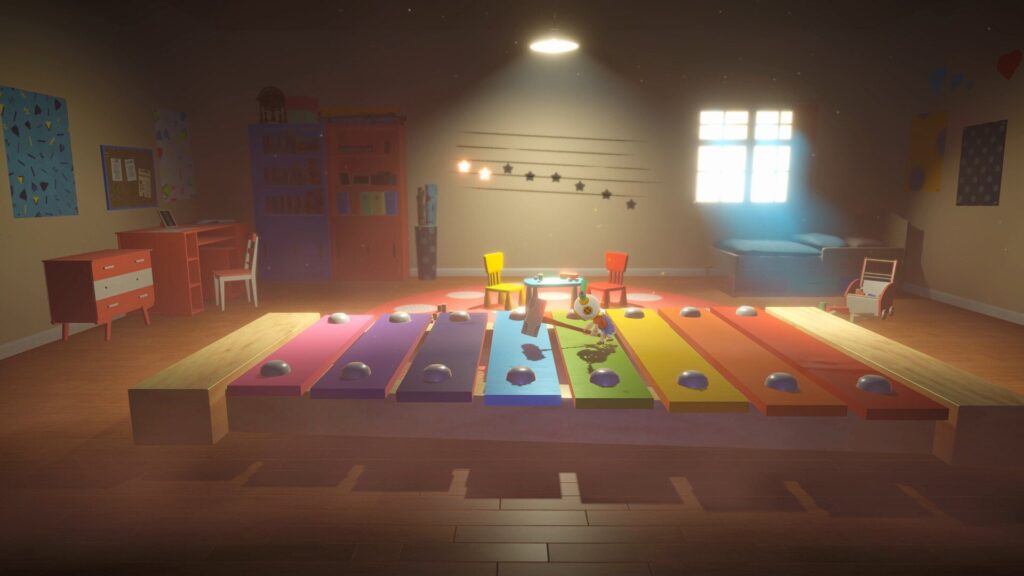
Hand-painted and immediately distinctive — the storybook visual style gives the whole thing a dreamlike quality that sits interestingly against the urgency of the setting. Flooding corridors and tilting ballrooms look beautiful even as they are actively trying to kill you, and the contrast between the ship’s former elegance and its current state of collapse gives every environment a specific kind of melancholy. The atmospheric lighting in particular is excellent — the way water refracts light as it rises through a corridor is genuinely lovely.
It’s a japanese game, and i think it looks distinctly Japanese in its aesthetic sensibility, but closer to an animated film than the gritty realism you might expect from a sinking ship survival game.
🚢 Did You Know?
The sinking ship as a dynamic platforming environment is not a new idea — it was actually pioneered by SOS on the SNES in 1993, a game that used the console’s Mode 7 rotation to simulate a capsizing ocean liner in real time. Gift essentially revisits that same concept thirty years later with modern technology, emotional storytelling, and considerably more nuance. It is a nice reminder that some of the most interesting ideas in games have just been waiting for the right team to try them again.
Gameplay
The core loop is straightforward — navigate the ship upward, solve environmental puzzles, rescue passengers along the way. What keeps it interesting is the constantly shifting environment. The ship tilts mid-section, water levels rise and fall, and areas you passed through earlier return in completely different configurations. A platform that was a floor becomes a wall. A flooded room drains and opens a new route. The game uses this dynamic space consistently well, and the puzzle design is mostly intuitive — solutions tend to emerge naturally from reading the environment rather than trial and error.
Every step forward requires reading the environment rather than just navigating it, which gives the whole game a specific tension that more static cinematic platformers cannot replicate.
New mechanics are introduced gradually — wall jumps, chain swinging, lighting lanterns, hammering specific objects — and the game does a reasonable job of keeping things varied across its three hours. It never becomes particularly difficult, and the generous checkpoint system means frustration is minimal.
The one section that genuinely annoyed me involves a constantly rotating room with multiple exits that requires more trial and error than the rest of the game put together. It feels like a different game briefly, and not in a good way.
Atmosphere
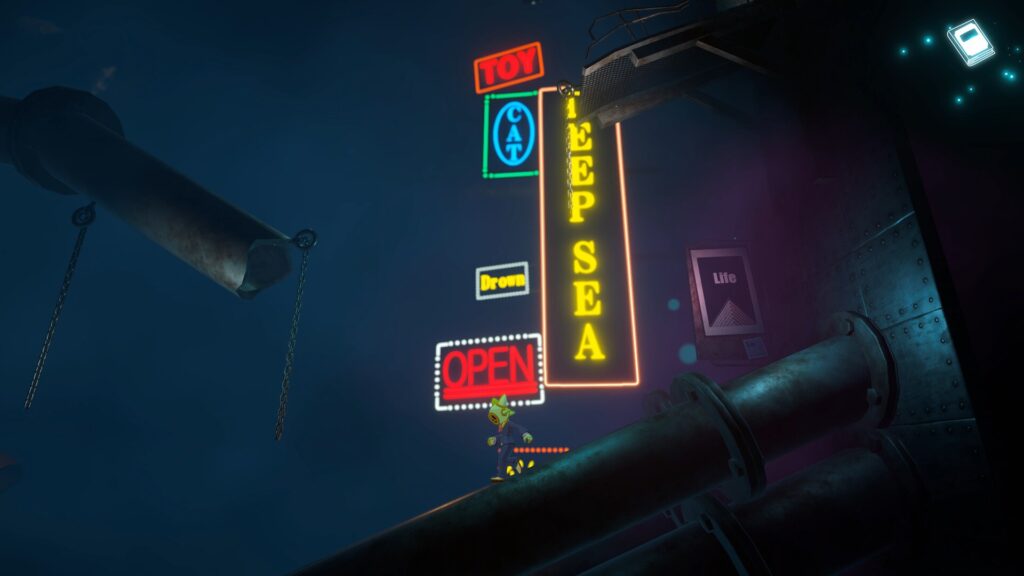
Quiet and slightly unsettling in the best way. The combination of warm, storybook visuals and the slow dread of a ship going down around you creates an atmosphere that is genuinely unlike anything else in the genre — melancholic rather than frightening, elegiac rather than urgent.
The passengers you encounter contribute enormously to this. Each one carries a small emotional story that you piece together from context and gesture, and their presence turns what could have been a purely mechanical survival experience into something that feels quietly human throughout.
The sound design does a lot of heavy lifting — the groan of metal, the rush of incoming water, the echo of footsteps through flooded corridors. The score is understated and appropriately melancholic, and the absence of dialogue gives the whole thing a specific kind of loneliness that suits both the setting and the story being told.
🎮 My honest opinion
Gift is the kind of game that sneaks up on you. Going in, I expected a competent puzzle platformer built around a clever environmental gimmick. What I got was something more affecting than that — a game that uses a sinking ship as a metaphor for something much more personal, and earns it by the final scene.
And the sinking ship mechanic is the most inventive cinematic platformers concept I have encountered in the genre in years — not just as a visual idea but as an actual gameplay system that changes how every room functions.
Combine that with a quietly emotional story and a hand-painted visual style that makes everything look like an illustrated children’s book about death and memory, and you have something worth your three-four hours.
For fans of atmospheric cinematic platformers with emotional storytelling, it is an easy recommendation. It is not flawless — the middle section drags and one room nearly broke my patience entirely. But the ending made up for all of it. Just trust it to get where it is going.
Where can I play Gift?
Gift is available on PC via Steam, PlayStation 5, Xbox Series X/S, and Nintendo Switch. It was later ported to iOS and Android as well. It is modestly priced across all platforms and frequently on sale — at its price point, the risk is minimal and the experience is well worth it.
Similar Games
SOS (1993)
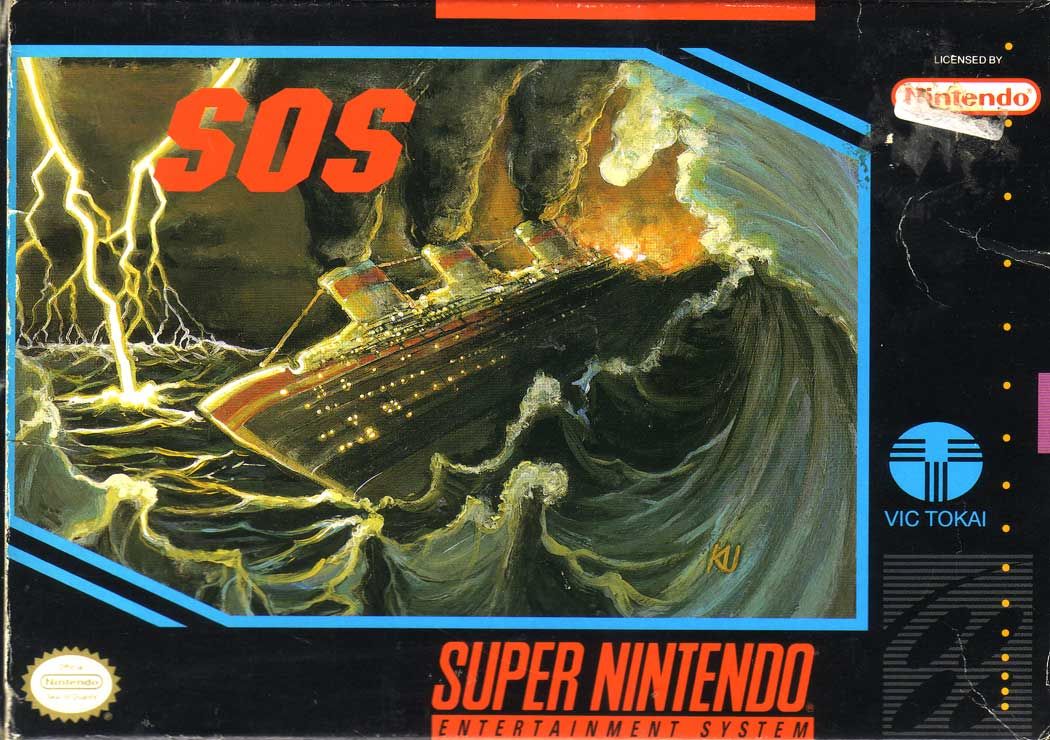
The original sinking ship platformer — a SNES game that used Mode 7 rotation to simulate a capsizing ocean liner in real time, three decades before Gift revisited the idea. Rougher around the edges, obviously, but worth knowing about for anyone fascinated by Gift’s central mechanic.
Darwin’s Paradox! (2026)
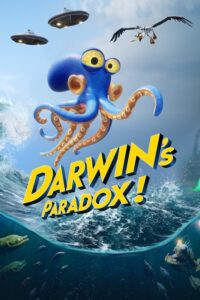
Darwin’s Paradox! shares Gift’s core dynamic — a small, vulnerable protagonist navigating a vast hostile environment that was never designed for someone like them, told entirely without dialogue. Both games are also built around a protagonist whose specific physical nature shapes how they interact with the world. One is an old man on a sinking ship, the other is an octopus in a food factory. Both are far more emotionally effective than they sound on paper.
If you are drawn to cinematic platformers that use their environment as a living, changing system rather than a fixed backdrop — games where the world itself is the puzzle — FAR: Lone Sails, Somerville, and Inside all share that same instinct for making the space you inhabit feel genuinely alive.
And for players drawn to Gift’s emotional storytelling and gentle pacing rather than its survival mechanics, A Tale of Paper is the natural next step. It shares the same quiet, wordless approach to narrative, the same storybook visual warmth, and the same willingness to let a simple premise carry genuine emotional weight.