
Descripton
I have spent a lot of time with dark, oppressive, wordless games — a boy in a grey forest, a child running from giants, a feral cub navigating a ruined Earth. And then here comes Darwin: a small blue octopus with enormous eyes and absolutely no idea how he ended up in a food processing factory.
It reminded me immediately of Finding Nemo — that same colourful, expressive protagonist completely out of their element in a world built to be hostile to something as small and squishy as they are. Darwin’s Paradox! is the most joyful game I have reviewed for this site, and I think the genre needed exactly this.
Developed by Paris-based ZDT Studio and published by Konami, Darwin follows a blue octopus abducted by aliens and deposited outside the UFOOD corporation’s processing plant. His friend is still inside. What follows gets progressively stranger, funnier, and more absurd as it goes.
Year: 2026
Developer: ZDT Studio
Atmosphere: Surreal · Industrial · Playful
Visual Style: Stylized 3D · Expressive Animation
Focus / Pace: Puzzle Platforming · Stealth-Oriented
Platforms: PlayStation 5 · Xbox Series X/S · Windows · Nintendo Switch 2
Why Darwin’s Paradox! Stands Out
Most cinematic platformers are about dread. Darwin’s Paradox! is about charm. That is not a small distinction — it fundamentally changes the entire feel of the genre, and the fact that ZDT Studio pulls it off without sacrificing the atmospheric and environmental storytelling that defines the best cinematic platformers is genuinely impressive.
Darwin is also one of the most expressive protagonists in the genre. No dialogue, no subtitles — just an octopus who communicates entirely through body language and the kind of animated takes that belong in a Looney Tunes short. I laughed out loud more than once, which is not something I expected from a cinematic platformer.
Building an entire game around octopus movement is one of the most original ideas in the genre — discover what makes it unique among the most inventive gameplay idead in cinematic platformers.
The Story
Darwin is abducted from the ocean. His friend is taken. The UFOOD corporation is up to something considerably worse than just putting octopus on the menu. That is as much as I will say — the story takes some unexpected turns and is better discovered than described.
What I will say is that the tone is a lot funnier and more self-aware than the premise suggests. There is a Pixar-like quality to the whole thing: genuinely for everyone, with enough visual gags and absurdist energy to keep adults entertained alongside younger players. The game pays deliberate homage to Metal Gear Solid — stealth sections, cardboard box hiding spots, exclamation marks above enemy heads — and it is charming rather than annoying because ZDT Studio clearly understands what it is doing.
Graphics
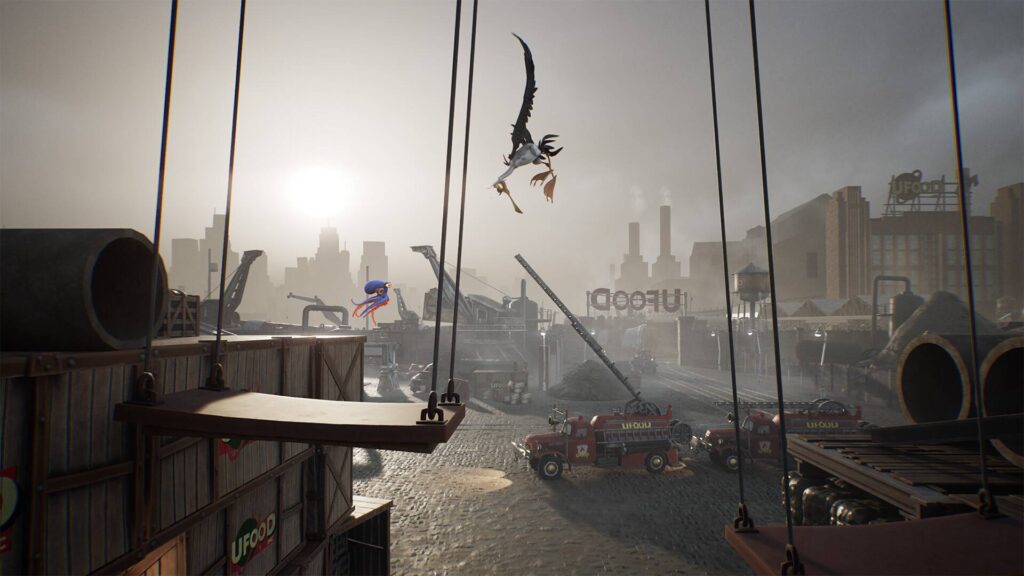
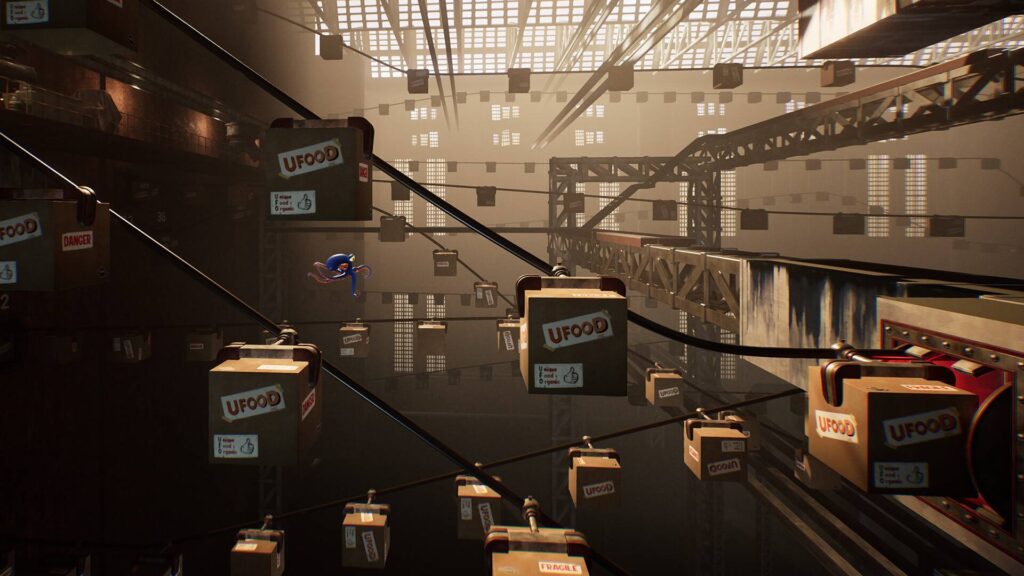
Outstanding — and I say that knowing how strong the competition is in this genre right now. Built in Unreal Engine 5, Darwin’s Paradox! achieves what ZDT Studio set out to do from the beginning: Pixar-level animation quality in a real-time game. The cutscenes in particular are stunning — Darwin moves with a fluidity and expressiveness that rivals animated feature films, and the industrial environments he navigates are rendered with extraordinary detail, from rust-streaked pipes to flickering fluorescent lights to the chaotic machinery of the UFOOD processing plant.
What I find most visually interesting is the contrast between the grimy, oppressive industrial world and Darwin himself — this small, brightly coloured, entirely unbothered creature moving through it. It is the same contrast that made Finding Nemo work: the ocean is vast and dangerous, Nemo is tiny and bright and determined. Darwin’s Paradox! understands that visual language completely.
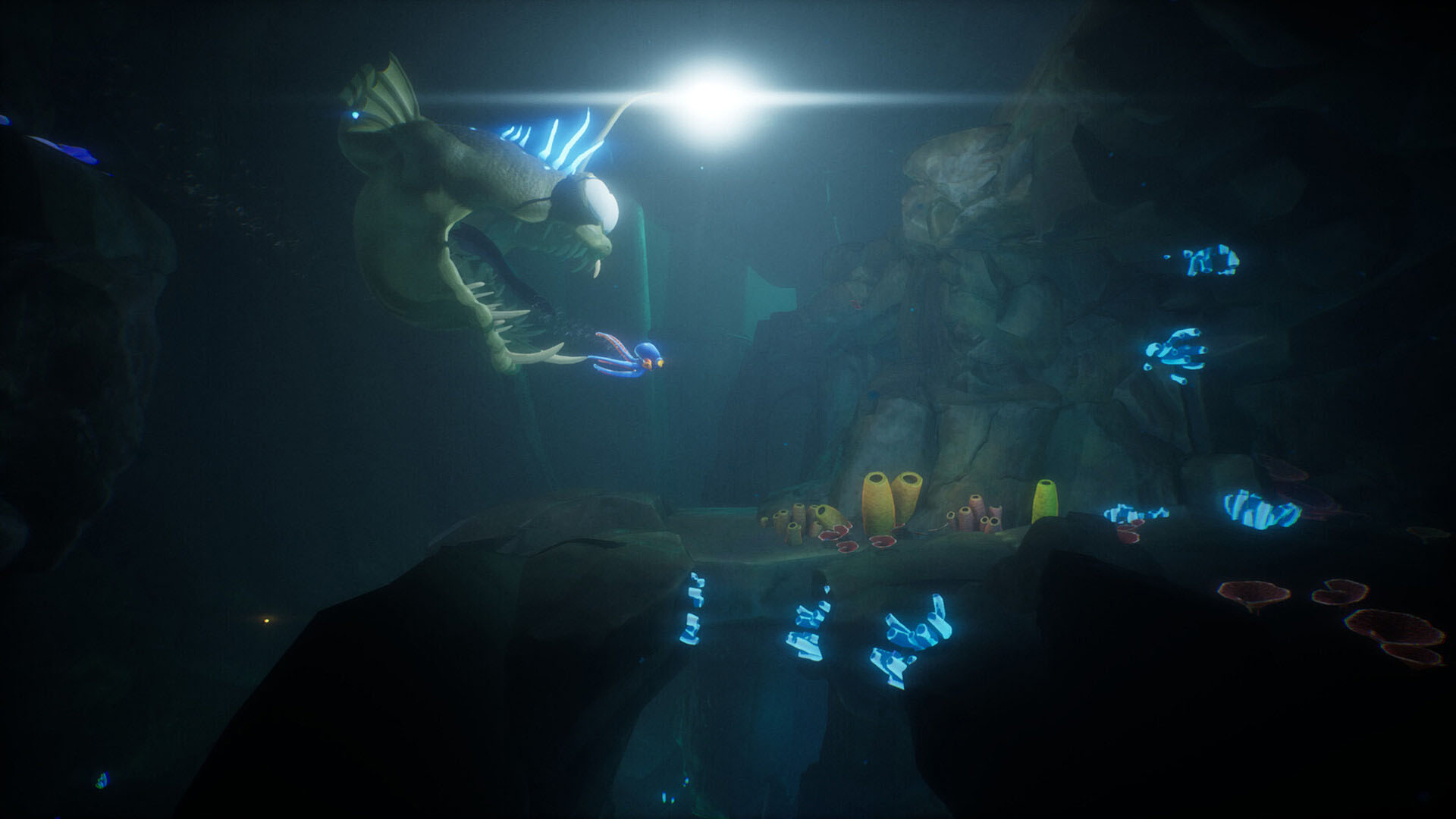
The underwater sections are the showstopper. After hours in the grey-brown industrial complex, the first time Darwin hits water the screen explodes into colour — and I genuinely stopped moving for a moment just to look at it.
🐙 Did You Know?
Art director Mikael Tanguy has said the team kept researching real octopus biology throughout development and kept finding new behaviours that were almost too extraordinary to believe — and every single one of them ended up in the game. Darwin’s abilities are not game design inventions. They are just things octopuses actually do.
Gameplay
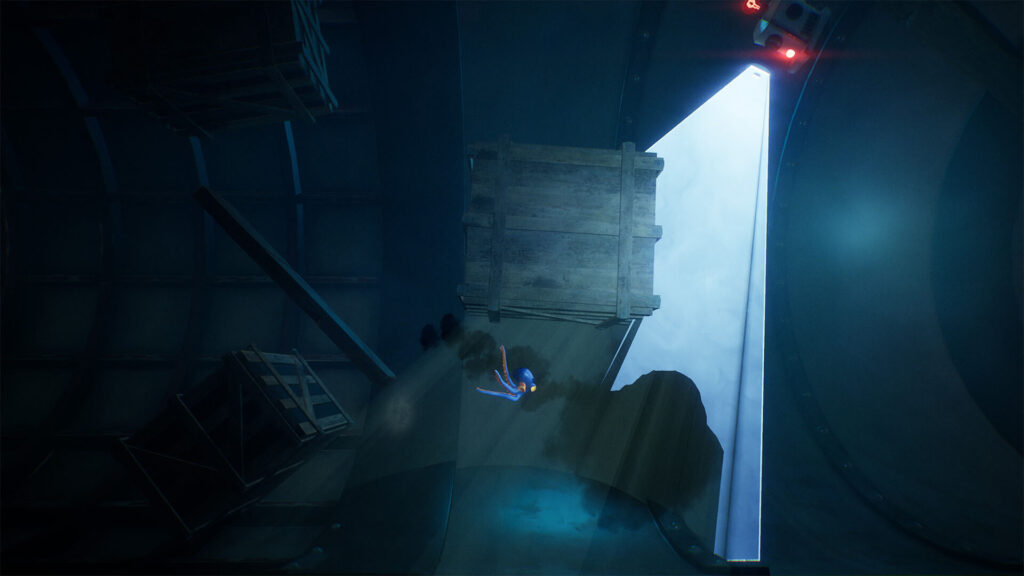
Darwin is an octopus, and ZDT Studio committed to that fully. On land he can stick to any surface with his suckers — walls, ceilings, pipes, machinery — which immediately opens up platforming in ways that humanoid protagonists simply cannot access. He can camouflage against surfaces to stay hidden, fire ink to distract guards or hit distant switches, and squeeze through gaps that nothing bipedal could manage. In water he is fast, graceful, and genuinely a joy to control.
The stealth sections form the backbone of the gameplay, and they work well for most of the game — avoiding searchlights, timing movements around patrol routes, using ink clouds as distractions. They are playful rather than tense, which fits the tone. Where they become less enjoyable is in a handful of late-game sections where the timing requirements tighten and the trial-and-error starts to outpace the charm. The game is at its best when it trusts Darwin’s abilities to be the solution — when it lets you be creative rather than precise.
The puzzle design is solid without being demanding — solutions are inventive but rarely difficult. I think that is the right call for a game that clearly wants to be accessible. But players coming from Bionic Bay or The Swapper looking for a mechanical challenge will need to adjust their expectations.
Pacing
At five to six hours, Darwin’s Paradox! is well-paced and confident. The alternation between land and water sections creates a natural rhythm — tense industrial stealth followed by the relief of open underwater traversal — and new abilities are introduced at a pace that keeps things feeling fresh throughout. The only pacing issue is the very end, which rushes where it should breathe. Everything before that final act is handled with real assurance for a debut game.
Atmosphere
Warm, funny, and occasionally genuinely surprising. The score sits somewhere between adventure film and cartoon — playful and energetic in the action sections, quieter and more curious in the exploration passages. The sound design is excellent: Darwin’s movement across different surfaces has a specific tactile quality that makes controlling him feel satisfying even in the quieter moments.
What I keep coming back to is how refreshing the atmosphere is. This genre defaults to darkness and dread, and Darwin’s Paradox! proves that you can do something completely different — something warm and funny and full of colour — without losing any of the cinematic craft that makes the genre special. If anything it made me realise how much I needed a break from the gloom.
🎮 My honest opinion
Darwin’s Paradox! is not the deepest or most mechanically demanding cinematic platformer I have reviewed for this site. The stealth occasionally frustrates, the ending disappoints, and the puzzle design could push harder. But it is one of my favourite games to spend time with — genuinely funny, visually extraordinary, and built around a protagonist so charming that I found myself rooting for him in a way I rarely do for a silent character in this genre.
It is also proof that the genre does not have to be dark to be good. Darwin’s Paradox! is bright and loud and full of colour and completely unashamed of it. In a genre that sometimes takes itself very seriously, that feels like a small revolution!
Where can I play Darwin’s Paradox!?
Darwin’s Paradox! is available on PC via Steam (discounted keys availableat Fanatical), PlayStation 5, Xbox Series X/S, and Nintendo Switch 2. A free demo — the Tactical Octopus Action demo — is available on all platforms including Steam, and is genuinely worth trying before committing. At around twenty-five dollars, it is modestly priced for the quality on offer.
Games similar to Darwin’s Paradox!
Oddworld: Abe’s Oddysee (1997)
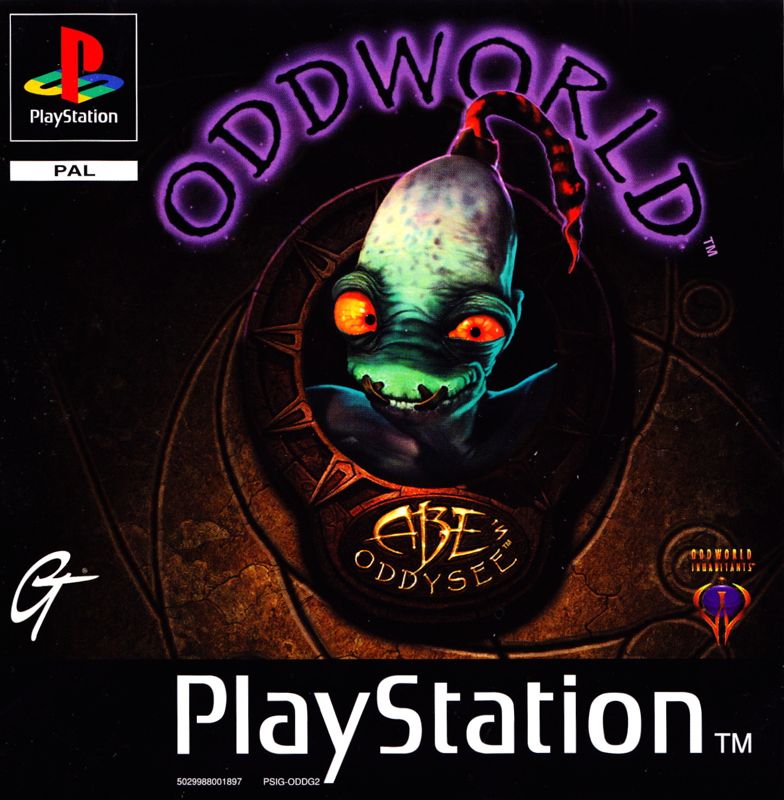
Darwin’s Paradox! wears its Oddworld influence openly — a small, vulnerable protagonist escaping a food corporation that wants to process them, navigating an industrial world through stealth and environmental puzzles. Abe’s Oddysee is darker and more punishing, but the DNA is unmistakably shared. If Darwin’s irreverence made you curious about where the idea came from, Abe is the answer.
Little Nightmares (2017)
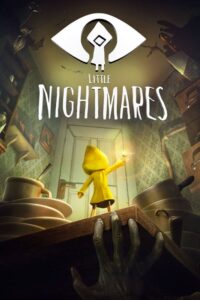
Little Nightmares shares Darwin’s core dynamic — a tiny, expressive protagonist navigating a grotesque industrial world built entirely for things much larger than them. Where Darwin’s Paradox! is funny and warm, Little Nightmares is unsettling and oppressive. The two games are essentially opposite emotional responses to the same structural idea, which makes them a fascinating pair.
If you are drawn to cinematic platformers with a strong visual identity and a protagonist whose movement system defines the entire experience — games where who you are playing changes how you play — A Tale of Paper, Silt, and Hoa all share that same character-first design philosophy, each in very different emotional registers.