
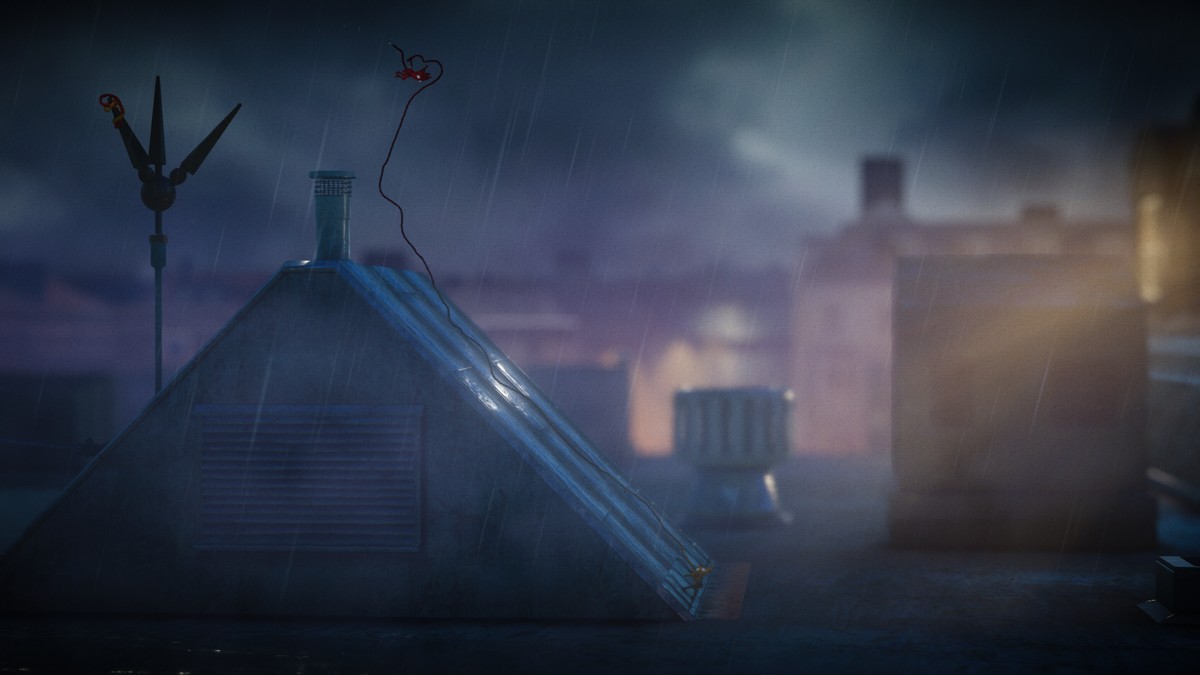
Description
Developed by Swedish studio Coldwood Interactive and published by EA, Unravel 2 surprised everyone by being announced and released on the same day at E3 2018 — no wait, no hype cycle, just: here it is. Two Yarnys, a thread between them, and a beautiful world to move through together.
Unravel 2 is a game I keep recommending to people who do not usually play games. Not because it is easy — though it is — but because it is one of the warmest, most immediately joyful cooperative experiences in the genre, and the thread connecting the two Yarnys is one of the most quietly clever mechanics I have come across. There is something genuinely lovely about the physicality of it: two tiny yarn creatures, literally tied together, figuring out how to use that connection rather than fight against it.
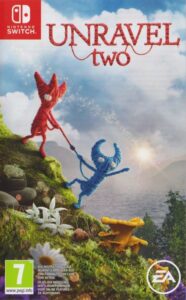
Year: 2018
Developer: Coldwood Interactive
Atmosphere: Warm · Hopeful · Bittersweet
Visual Style: Photo-Realistic Environments · Yarn Animation
Focus / Pace: Cooperative Platforming · Relaxed
Platforms: PlayStation 4 · Xbox One · Windows · Nintendo Switch
The Story
Two Yarnys — one red, one blue — find each other on a rocky shore after a storm and decide to travel together. The story running in the background, told through environmental vignettes rather than dialogue, follows two children navigating a difficult home situation — the warmth and danger of their relationship with adults who are not quite safe. It is more impressionistic than explicit, and I think that is mostly the right call. The emotion comes through the visual details rather than the narrative, and by the end I found it more affecting than I expected.
The one thing I would say is that the first game’s story had a more personal, specific quality — a life told through memories — that Unravel 2 does not quite match. The sequel is warmer but less distinctive in what it is trying to say.
Graphics
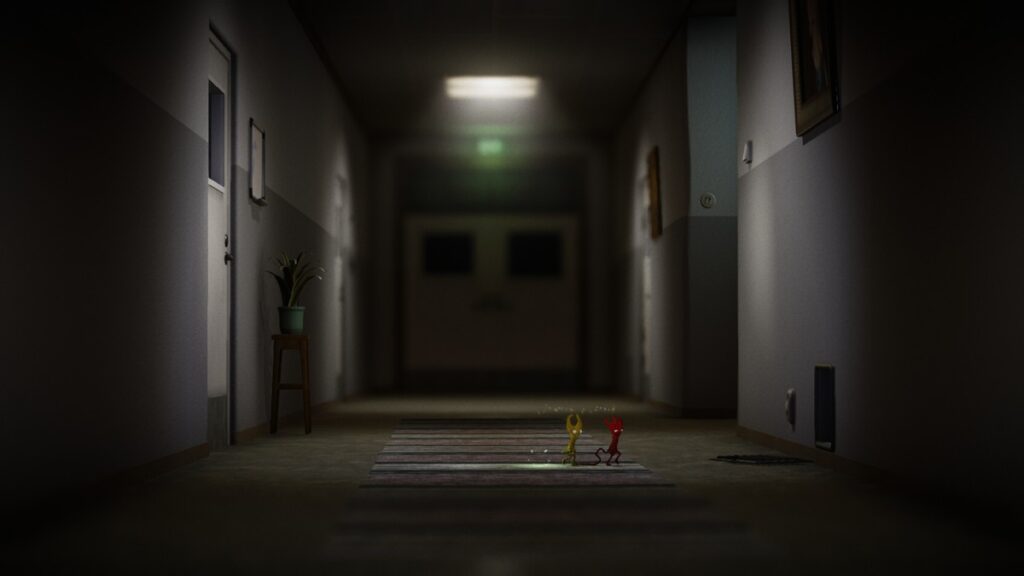
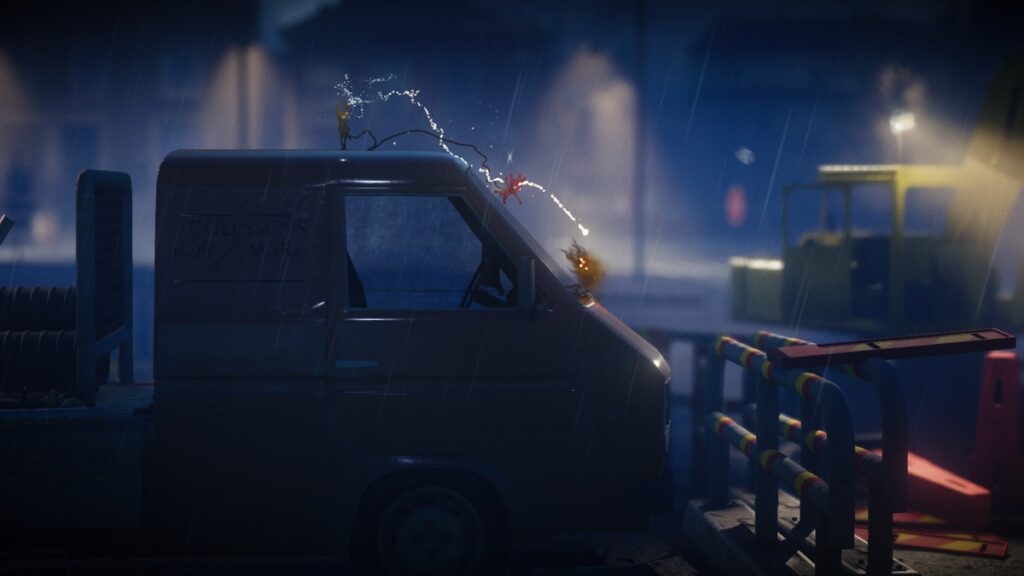
Coldwood’s photorealistic environments — Swedish forests, rocky coastlines, urban environments at night — have always been the series’ most immediately impressive quality, and Unravel 2 is no exception.
The contrast between the hand-crafted, almost toylike Yarnys and the richly detailed real-world environments they inhabit creates a specific visual magic that is immediately recognisable. Every level looks like a diorama made by someone who genuinely loves the places they are depicting.
Gameplay
The thread is everything. The two Yarnys are connected by a length of yarn at all times, and the game is built entirely around using that connection — swinging one from the other, using one as an anchor while the other climbs, combining into a single Yarny when the path requires it, launching one high into the air from the other’s position. It is a mechanic that is immediately understandable and consistently inventive — the game keeps finding new applications for the same basic idea without the design ever feeling forced.
I want to be honest though: the first four levels are noticeably easier and less inventive than what comes later. There were stretches where my companion and I were solving puzzles almost without thinking, which felt slightly below the potential of the mechanic. The later levels — particularly five and six — are where Unravel 2 genuinely delivers, with puzzle design that requires real coordination and produces that specific co-op satisfaction of two people clicking into sync. I wish the whole game operated at that level.
The difficulty is also flexible in a way I find genuinely smart: if one player is struggling, the other can absorb them and carry them through the section, which means the game is accessible to players of very different skill levels without ever feeling condescending.
👾 Did You Know?
Unravel 2 was announced and released on the exact same day — June 9, 2018 — during EA’s E3 press conference. No pre-release hype, no review embargo window, no waiting. Coldwood Interactive simply showed it and put it out.
It was one of the most genuinely surprising E3 moments of that year, and the decision to skip the usual release cycle entirely felt very much in keeping with the game’s personality — warm, unpretentious, and completely uninterested in ceremony.
Atmosphere
Warm, gentle, and carried by a beautiful score from Frida Johansson and Henrik Oja — the same composers as the first game. The music shifts with the environments in a way that always feels organic, and the overall mood of Unravel 2 is consistently pleasant in a way that I mean as genuine praise rather than faint praise. This is a game you want to spend time in. The world feels like somewhere that exists beyond the edges of the screen.
🎮 My honest opinion
Unravel 2 is the best game to play with someone you want to feel close to. That sounds sentimental and I mean it entirely literally — the thread mechanic makes cooperation feel physical and present in a way that most co-op games never achieve, and the experience of finishing it with the right person stays with you.
It is not the most mechanically demanding game in the genre, and the first half undersells what the second half can do. But it is generous, beautiful, and made with genuine warmth.
Where can I play Unravel 2?
Unravel 2 is available on PC via Steam and Origin, PlayStation 4, Xbox One, and Nintendo Switch. It is frequently available for a very modest price, particularly through EA Play or on sale. The Switch version is a solid port and ideal for local co-op on a single device.
Games similar to Unravel 2
Voyage (2021)

Voyage shares Unravel 2’s core emotional premise — two companions moving through a beautiful world together, connected by something invisible but always present. Both games are less about challenge and more about the experience of not being alone somewhere you would otherwise find frightening. Play it with the same person you played Unravel 2 with.
A Tale of Paper (2020)

A Tale of Paper shares Unravel 2’s instinct for small protagonists in vast, photorealistic environments — the same sense of scale, the same warmth, and the same quietly devastating ending. Solo rather than cooperative, but the emotional register is recognisably similar.
One last thing: if Unravel 2 resonated with you, the original Unravel (2016) is worth going back to — slower, more melancholic, and with a more personal story than the sequel.
The two games sit beautifully alongside each other. Start with Unravel 2 if you want the better game. Start with Unravel if you want the fuller emotional picture. Either way, Coldwood Interactive is one of the most underappreciated studios in this genre, and both games deserve more attention than they typically get.