
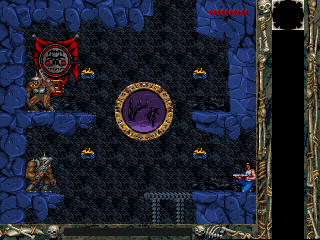
Description
Blackthorne is one of those games that surprises you when you learn who made it. In 1994, a small studio called Blizzard Entertainment — the same team simultaneously developing Warcraft: Orcs and Humans — released a cinematic platformer about an exiled prince returning to an alien world to take revenge on the tyrant who stole his kingdom. Brooding, muscular, armed with a pump-action shotgun and absolutely no patience for Sarlac’s army of darkness.
The cover art was drawn by legendary comic artist Jim Lee. The protagonist’s name was inspired by Kyle Reese from The Terminator. And internally, the orc designs created for Blackthorne fed directly into what would become Warcraft. This is a game with more history behind it than most people realise, and it is considerably better than its relative obscurity suggests.
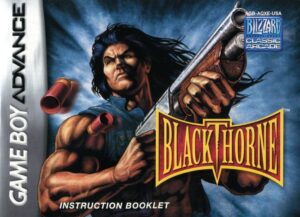
Year: 1994
Developer: Blizzard Entertainment
Atmosphere: Dark Fantasy · Industrial · Oppressive
Visual Style: Gritty Comic Book · Realistic Animation
Focus / Pace: Action Platforming · Tactical
Platforms: SNES · MS-DOS · Sega 32X · Game Boy Advance · Nintendo Switch · PlayStation 4 · Xbox One · Windows
The Story
Kyle Vlaros — known as Blackthorne — was sent to Earth as a child when his father’s kingdom on the planet Tuul fell to the evil warlord Sarlac. Twenty years later, Kyle returns to liberate his people, the Androthi, from Sarlac’s grip. The story is simple but delivered with genuine cinematic flair — a strong intro sequence, cutscenes that feel purposeful rather than decorative, and a protagonist with more personality than most of his contemporaries.
Kyle is not a silent archetype or a blank slate. He is an angry, competent man with a shotgun and a score to settle, and that specific energy gives the game a flavour that distinguishes it immediately from the Prince of Persia clones surrounding it.
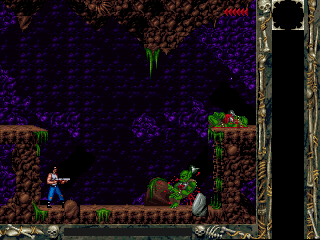
Graphics
The art direction is striking and holds up well. Blizzard’s team originally attempted rotoscoping — filming live actors and drawing over the footage — but abandoned it as too time-consuming, opting instead for hand-drawn frame-by-frame animation using the same number of frames. The result is fluid and expressive, with Kyle moving through the game’s four environments — the mines of Androth, the Karrellian forests, the Wasteland desert, and Shadow Keep — with a physicality that feels genuinely weighty.
The environments themselves are detailed and varied, shifting from industrial darkness to alien wilderness to gothic fortress interiors. I find the visual identity immediately distinctive — darker and more saturated than most SNES games of the era, with a gritty comic book quality that feels entirely appropriate for the story being told.
Gameplay
Where Blackthorne genuinely sets itself apart from the rest of the genre is the cover mechanic. Both Kyle and his enemies can press against walls to avoid incoming fire — a tactical element that gives every gunfight a deliberate, almost chess-like quality. You learn to read enemy positions, time your shots around their cover patterns, and use Kyle’s ability to fire blindly behind him to pick off enemies you cannot directly face. It is a simple system that adds enormous tactical depth to what could have been straightforward shooting.
Kyle’s shotgun upgrades over the course of the game — gifted by Androthi slaves he rescues along the way — becoming faster, more powerful, and eventually capable of firing explosive rounds. Those rescued slaves sometimes offer useful advice or items, which gives the exploration a light companion dimension that rewards thoroughness. The seventeen levels across four worlds provide genuine variety, and the Sega 32X version adds a fifth snowy mountain area not found in any other version.
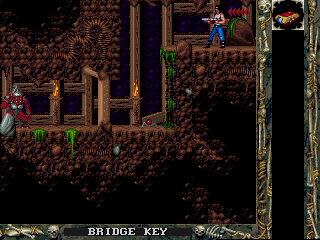
Atmosphere
The atmosphere is one of Blackthorne’s most underrated qualities. The planet Tuul feels genuinely alien and oppressive — a world that has been under occupation long enough that the darkness feels structural rather than temporary. The soundtrack by Glenn Stafford — who would go on to compose for Warcraft and StarCraft — is moody and industrial, composed under strict eight-voice SNES limitations that Stafford has described as creatively liberating rather than restrictive.
The overall feel of the game sits closer to a gritty sci-fi graphic novel than a fantasy platformer, which I find refreshing given how samey the genre’s aesthetic can be.
🎮 My opinion: Is Blackthorne still worth playing today?
Blackthorne is a game I feel genuine affection for — partly because of what it is, and partly because of what it represents. A small team at Blizzard, working simultaneously on Warcraft, produced a cinematic platformer with Jim Lee cover art, a Kyle Reese-inspired protagonist, and a cover-based combat system that most games of the era never attempted. That combination of ambition and execution is rare in 1994 and it shows.
The game is not without its limitations — some levels are longer than they need to be, and the cover system occasionally works against you when enemy positioning becomes unpredictable. But the combat feels genuinely satisfying, the world is distinctive, and the escalating power fantasy of the shotgun upgrades is one of the most purely enjoyable progressions in the genre.
The best news is accessibility — Blackthorne was made available for free on Battle.net in 2013, and was included in the Blizzard Arcade Collection in 2021, making it one of the easiest games on this entire database to legally play today. And that is something you definitely shoudl do!
Where can I play Blackthorne?
Blackthorne is available as part of the Blizzard Arcade Collection on Nintendo Switch, PlayStation 4, Xbox One, and Windows — a package that also includes The Lost Vikings and Rock n’ Roll Racing. It is modestly priced and the easiest legitimate route to the game on modern hardware. The original SNES cartridge exists but commands collector prices.
Similar Games
Flashback (1992)
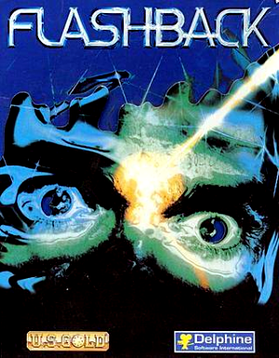
The game Blackthorne is most directly in conversation with — same deliberate movement, same sci-fi world-building, same sense of a protagonist navigating a hostile alien environment with methodical purpose. Flashback is more puzzle-focused and more cinematically refined, but if Blackthorne clicked for you it is the essential companion piece.
Nosferatu (1994)
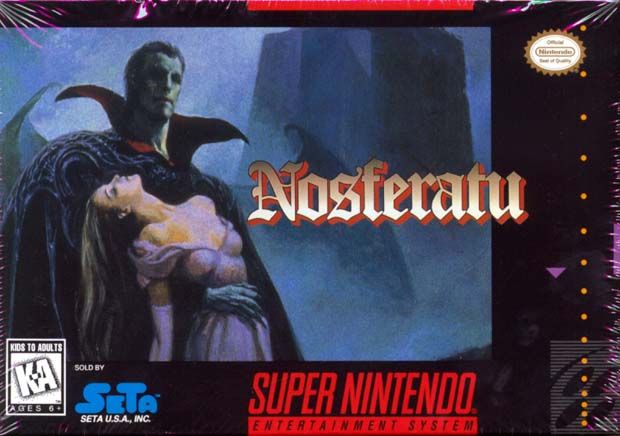
Released the same year and sharing the same SNES platform, Nosferatu makes for a fascinating double bill alongside Blackthorne — both games take the Prince of Persia formula and push it somewhere more atmospheric and more thematically specific. Where Blackthorne goes sci-fi and tactical, Nosferatu goes gothic and brutal. Together they represent the 1994 SNES cinematic platformer at its most distinctive.
If you are drawn to Blackthorne’s blend of deliberate movement, tactical gunplay, and dark sci-fi atmosphere, Shadow Complex, Deadlight, and The Eternal Castle Remastered all offer modern takes on the same satisfying combination.