
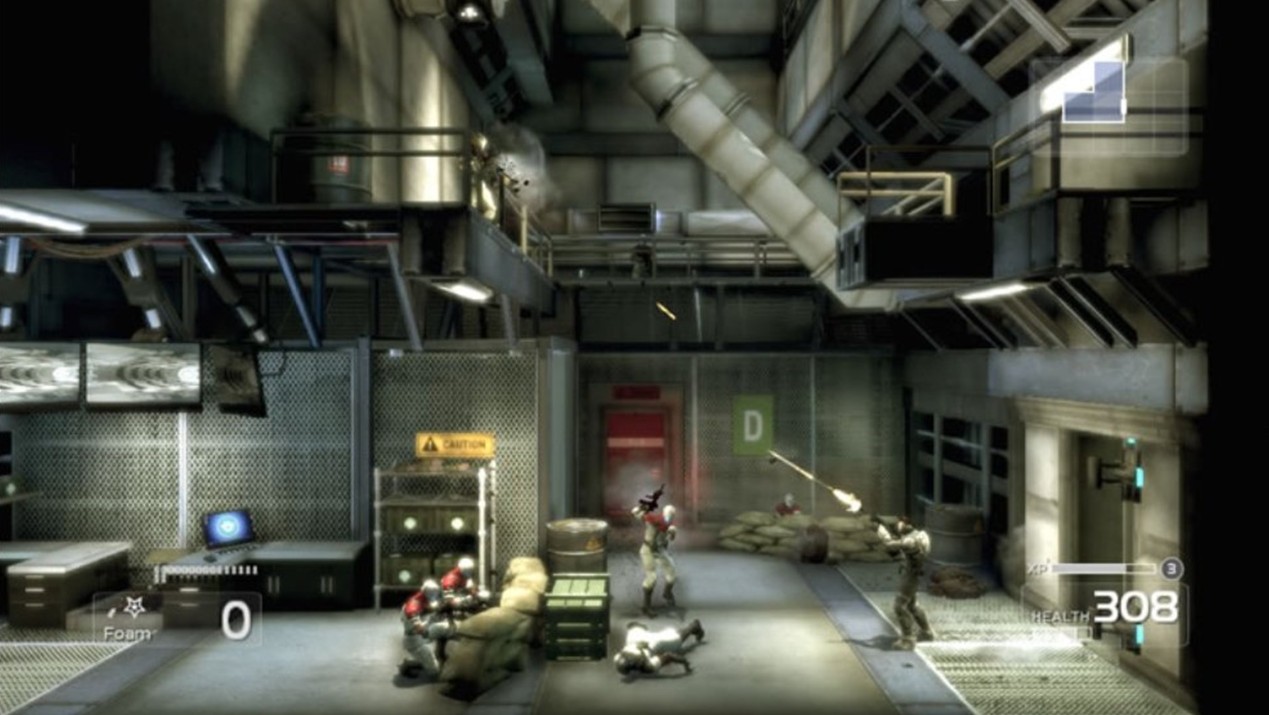
Descripton
Shadow Complex is a game I find myself thinking about more than its reputation might suggest — not because it is obscure, but because of where it sits in the genre’s history. Released in August 2009 on Xbox Live Arcade, it is a Metroidvania-style 2.5D action platformer built by a team of eleven people at Chair Entertainment, a small Salt Lake City studio backed by Epic Games.
It arrived at a moment when the cinematic platformer was at its lowest commercial ebb — the 2D side-scroller had been largely abandoned by the industry for years — and proceeded to sell 200,000 copies in its first week, winning more than 45 Game of the Year awards and becoming one of the top-ten Xbox Live Arcade games of all time. It is not a perfect game, and it is not quite a cinematic platformer in the traditional sense. But it is a genuinely important one.
Year: 2009
Developer: Chair Entertainment Atmosphere: Sci-Fi · Military · Suspenseful
Visual Style: 2.5D · Real-Time Lighting
Focus / Pace: Exploration Action · Fast-Paced
Platforms: Xbox 360 · Windows · PlayStation 4 · Xbox One
Shadow Complex and the History of the Genre
This is the section I find most interesting to write about Shadow Complex, because the game’s historical placement is genuinely remarkable. It arrived in August 2009 — eleven months before Limbo launched in July 2010 and effectively announced the modern cinematic platformer revival to the world. Shadow Complex was part of the same Summer of Arcade promotion that Limbo would join a year later, and its commercial success — 200,000 first-week downloads, nine E3 awards, IGN’s Game of the Year — demonstrated convincingly that 2D side-scrollers could compete commercially in a market dominated by 3D action games.
I think Shadow Complex deserves more credit for what came next than it typically receives. It did not invent the Metroidvania revival — that credit belongs to others — but it proved on a mainstream platform, at a mainstream commercial scale, that a small team with a brilliant 2D engine and a clear design philosophy could build something that stood alongside the biggest games of the year. Limbo arrived into a market that Shadow Complex had already primed. That matters.
The Story
Jason Fleming and his girlfriend Claire are hiking in the Olympic Mountains when she wanders into a cave and does not come back. Following her, Jason discovers a vast underground military complex run by a shadowy organisation called the Progressive Restoration, which is planning a coup against the United States government. The story is connected to the Orson Scott Card novel Empire — a Chair-owned intellectual property that Card was licensed to adapt — though you do not need any knowledge of the book to follow the game. Jason is voiced by Nolan North, which in 2009 felt like every game at once.
I will be honest — the story is the weakest part of Shadow Complex. It is a serviceable military thriller that exists primarily to justify the setting and the escalating power fantasy, and it never reaches for anything more than that. The game’s strengths lie elsewhere entirely.
Graphics
For 2009 the visual presentation is genuinely impressive. Shadow Complex uses Unreal Engine 3 to create a 2.5D world with real-time lighting, detailed 3D environments seen from a side-scrolling perspective, and a sense of visual scale that most games of this type — built on sprite art and flat backgrounds — could not achieve.
The underground complex feels like a real, functioning place: machinery humming in the background, soldiers patrolling corridors that recede into three-dimensional depth behind the action plane. It looks better in motion than in screenshots, and it still holds up reasonably well today in the Remastered Edition.

Gameplay
This is where Shadow Complex genuinely earns its reputation. Chair’s creative director Donald Mustard described Super Metroid as “the pinnacle of 2D game design” and the team spent the first month of development replaying the Metroid series before writing a single line of code. That obsession shows — the ability-gated exploration, the backtracking through earlier areas with new tools, the gradual escalation from vulnerability to power — all of it is executed with a fluency that suggests a team that understood exactly what made their inspiration work and built deliberately on top of it.
Jason begins with almost nothing and ends as a one-man army, acquiring a foam gun, a mirrorgun, a jetpack, grenades, and a powered exosuit across the course of the game. Each new ability opens previously inaccessible areas and transforms how you move through the complex. The combat is fast, responsive, and satisfying — considerably more action-oriented than a traditional cinematic platformer, but never losing the deliberate, exploratory quality that makes the genre worth caring about.
Atmosphere
The atmosphere is functional rather than distinctive — the underground military complex is well-realised but not particularly original, and the game leans more into the thriller genre than the atmospheric unease of the cinematic platformer tradition.
What gives it atmosphere in a different sense is scale — the feeling of a vast, interconnected world slowly revealing itself as you acquire new abilities and push into previously locked areas. That sense of a world with its own internal logic, waiting to be uncovered, is genuinely compelling even if the aesthetic does not linger the way Limbo or Inside does.
🎮 My honest opinion
Shadow Complex is not the most atmospheric game in this database, and it is not the most emotionally ambitious. The story is forgettable, the setting is generic, and if you approach it looking for the contemplative environmental storytelling of the genre’s best entries you will find yourself slightly displaced. What it is instead is one of the most purely enjoyable 2D action games of its era — a Metroidvania built with genuine craft and ambition by a team of eleven people who spent a month replaying Super Metroid before touching the engine.
Is it still worth playing today? Yes — the Remastered Edition on PC and modern consoles holds up well, and the exploration loop remains as satisfying as it was in 2009. Approach it as a bridge between the genre’s 1990s roots and its 2010s revival, and it rewards exactly that framing.
Where can I play Shadow Complex?
Shadow Complex Remastered is available on PC via Steam and Epic Games Store, PlayStation 4, and Xbox One. It was released as a free download on Epic Games Store in 2016 and may still be in your library if you claimed it then. The remaster retains the source code of the original while updating the visuals — and deliberately kept the speedrunning exploits intact, which says everything about how much the team respected the community that built up around the game.
Similar Games
If FAR: Lone Sails resonated with you, these games share its love of wordless journeys, desolate worlds, and atmosphere that does all the talking.
Deadlight (2012)
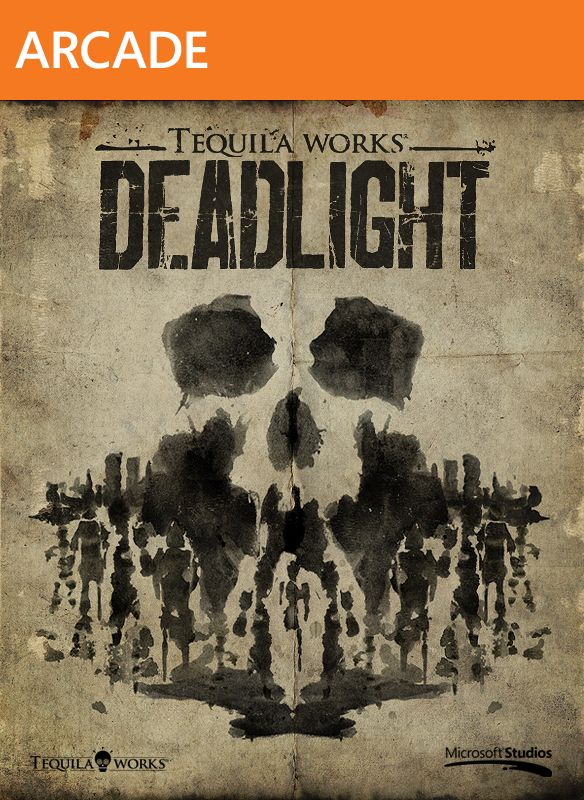
Deadlight shares Shadow Complex’s placement in the 2D action-platformer revival of the early 2010s and its cinematic presentation of a single protagonist navigating a vast hostile environment. Where Shadow Complex leans into power fantasy, Deadlight leans into survival and atmosphere — but the deliberate pacing and the sense of a world with its own geography connect them clearly.
Oddworld: Abe’s Oddysee (1997)

For players drawn to Shadow Complex’s ability-gated exploration and the feeling of gradually unlocking a vast connected world, Abe’s Oddysee offers the same structural satisfaction from a completely different tonal angle — stealth and puzzle-solving rather than combat, but the same sense of a world that rewards careful, methodical exploration.
If you are drawn to games that blend deliberate 2D exploration with escalating combat and ability progression, Blackthorne, The Eternal Castle Remastered, and The Cub all sit in interesting proximity to Shadow Complex — each one finding its own version of the side-scrolling action-exploration formula.