
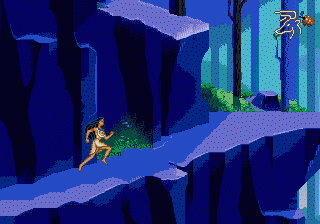
Description
I will be honest: Disney’s Pocahontas is a game I almost did not include in this database. The Disney branding, the film tie-in, the 1996 release date — everything about it signals a rushed licensed product designed to sell copies off the back of a movie poster. And then I actually played it, and I felt slightly embarrassed for having assumed.
Pocahontas is a genuinely good cinematic platformer that got almost no credit for it. Developed by Funcom Oslo on contract with Disney and released on the Sega Genesis in 1996, it follows Pocahontas and her raccoon companion Meeko across four large levels of environmental puzzle platforming — no combat, no enemies to defeat, just two characters working together to navigate a beautifully drawn natural world. The Disney label buried it. Genre fans never bothered. It slipped away quietly and has been largely forgotten ever since.
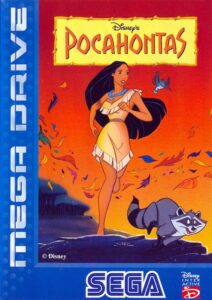
Year: 1996
Developer: Funcom Oslo
Atmosphere: Natural · Peaceful · Adventurous
Visual Style: Disney Cell Animation · Hand-Drawn
Focus / Pace: Puzzle Platforming · Slow-Paced
Platforms: Sega Genesis · Game Boy
Why it deserved more attention
The dual-character mechanic is smarter than it looks. Pocahontas can gain abilities from animal spirits — running, swimming, scaring off settlers — while Meeko handles the environmental manipulation: pushing boulders into position, crossing crevices she cannot reach, finding hidden paths. The game requires you to think about both characters simultaneously, which gives the puzzle design a genuine depth that most licensed games of the era never attempted.
It is slow and deliberate — more adventure game than action platformer — and that is probably the other reason it was overlooked. In 1996, next to the energy of Aladdin and The Lion King, Pocahontas felt sedate. Coming to it now, the pacing feels like a feature rather than a flaw.
Graphics
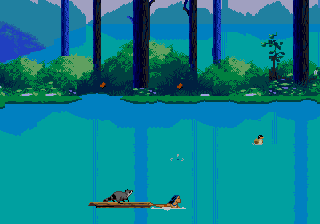
The strongest element. The hand-drawn environments are beautiful — autumnal forest colours, river crossings, cliff faces rendered with a care that reflects genuine artistic investment. The game captures the film’s visual language faithfully without feeling like a simple reskin. Meeko in particular is wonderfully animated — fluid, expressive, the best-moving character in the game by some distance.
Gameplay
Simple puzzles, intelligently designed. The animal spirit ability system gives the game a light Metroidvania structure — new powers unlock new paths — and the environmental puzzles are satisfying without being demanding. The difficulty is gentle throughout, which will frustrate players looking for a challenge but suits the game’s measured, exploratory tone perfectly.
The controls are slightly stiff — Pocahontas moves with less fluidity than Meeko — and the four-level structure means it is over in roughly an hour. Both are real limitations. But within those constraints the design is consistently thoughtful.
🎮 My honest opinion
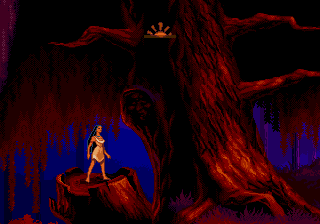
Disney’s Pocahontas is not a masterpiece. It is short, it is easy, and the Disney branding will forever make it look like something it is not. But it is a well-crafted, genuinely inventive little puzzle platformer that deserved a better fate than being dismissed as a children’s licensed game in 1996 and then forgotten.
If you have any interest in the outer edges of this genre — the games that did something quietly interesting without anyone noticing — this one is worth an hour of your time.
Where can I play Pocahontas?
Disney’s Pocahontas is available on the Sega Genesis via emulation. The SNES version was developed but cancelled before release. Original cartridges are available cheaply on the secondhand market.
Games similar to Pocahontas
If the gentle pacing, handcrafted aesthetic, and wordless emotional storytelling of A Tale of Paper resonated with you, these two cinematic platformers are well worth your time.
Never Alone (2014)
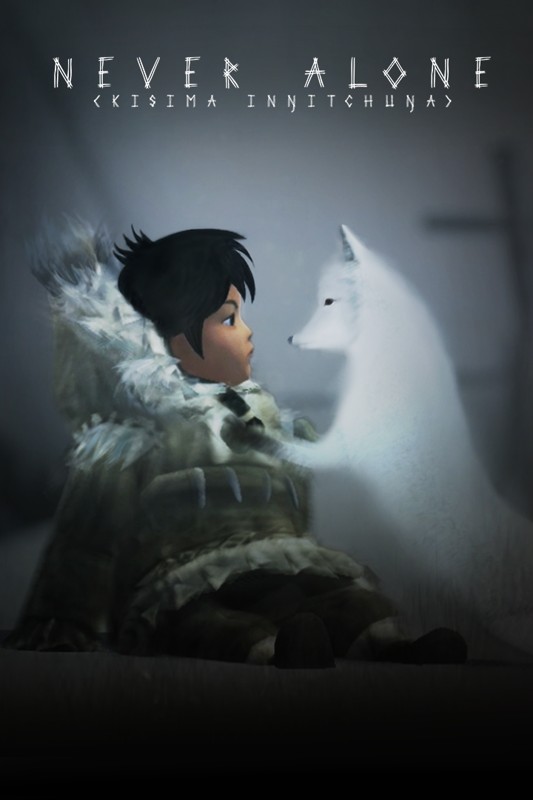
Never Alone shares Pocahontas’s dual-character mechanic — a protagonist and an animal companion who must work together — and its grounding in genuine indigenous cultural storytelling. The tonal kinship is real, and Never Alone is the more fully realised game in every respect.
Planet of Lana (2023)
Planet of Lana is the modern equivalent of what Pocahontas was attempting — a puzzle platformer built around a girl and her animal companion navigating a natural world together, told without violence and with genuine warmth. Everything Pocahontas gestured toward, Planet of Lana delivered.
If you are exploring the Game Boy library for cinematic platformers, Tomb Raider on Game Boy Color is the most obvious companion piece — another game built around a female protagonist navigating a dangerous world through movement and observation rather than combat. A very different tone, but the same instinct for deliberate, thoughtful traversal on a small screen.