
Description
The Mooseman is one of the most genuinely unusual games on this database — and I find myself thinking about it far more than its modest profile suggests I should. Made by just two people from Perm, Russia — Vladimir Beletsky handling code, art and programming, and Mikhail Shvachko composing the sound — it began as a game jam project that kept growing into something larger and more ambitious than either of them planned.
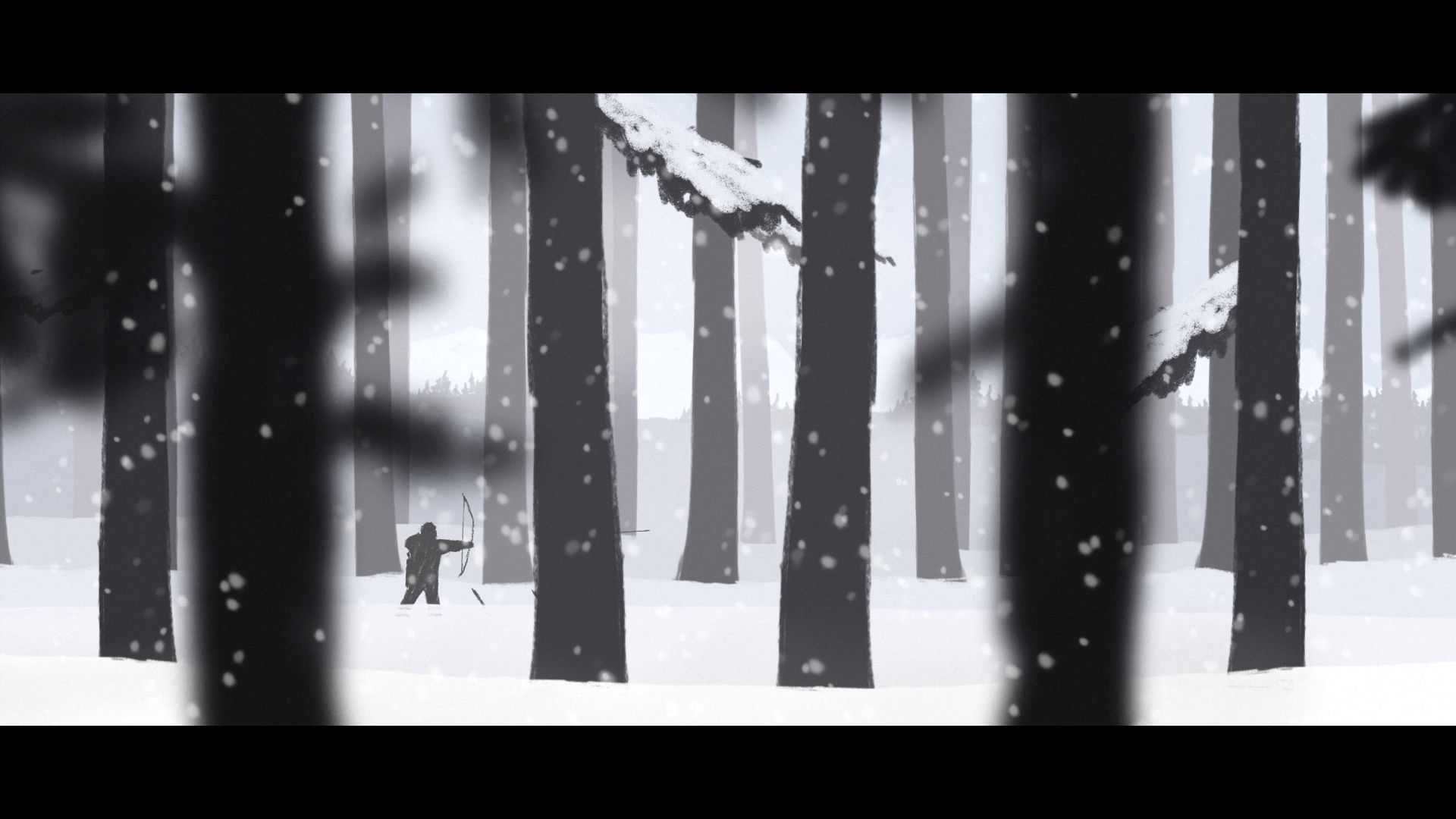
It is a short, slow, monochromatic side-scrolling adventure built entirely around the mythology of the Komi, Mansi, and Saamic peoples of the Ural region. You play as a shaman — half god, half human — moving through the Lower, Middle, and Upper worlds of ancient Finno-Ugric cosmology. There is almost nothing else like it in the genre.
Year: 2017
Developer: Morteshka Atmosphere: Mythological · Spiritual · Minimalist
Visual Style: Monochrome 2D · Folk Art Influence
Focus / Pace: Exploration · Slow-Paced
Platforms: Windows · macOS · Nintendo Switch · Xbox One · PlayStation 4 · iOS · Android
The Story
The Mooseman is one of the seven sons of Yen, the creator god. When Shondi — the sun — is lost and the world plunges into eternal cold, the Mooseman must travel through the three layers of creation to retrieve it. The story is told without dialogue, through visual imagery and an in-game encyclopedia that unlocks as you pass idols and artefacts scattered across the levels. I find this approach genuinely compelling — the encyclopedia entries are concise and carefully researched, pulling from actual scientific literature and consultation with the Perm Regional Museum, and they give the mythology a weight and specificity that feels earned rather than invented.
What I noticed most about the presentation is how committed it is to its source material. The developers released the game on February 17th, 2017 — the day of the Komi-Permian language — and had parts of it voiced by a native speaker. That level of cultural care is rare in any medium, and it gives the whole experience an authenticity I find genuinely moving.
🎬 Did You Know?
The Mooseman was released on February 17th, 2017 — deliberately timed to coincide with the Day of the Komi-Permian language. Parts of the game are voiced by a native Komi-Permian speaker, and the developers consulted the Perm Regional Museum and a body of scientific literature to reconstruct a mythology that no longer fully exists in living tradition. For a two-person side project that started as a game jam entry, the level of cultural rigour is extraordinary.
Graphics
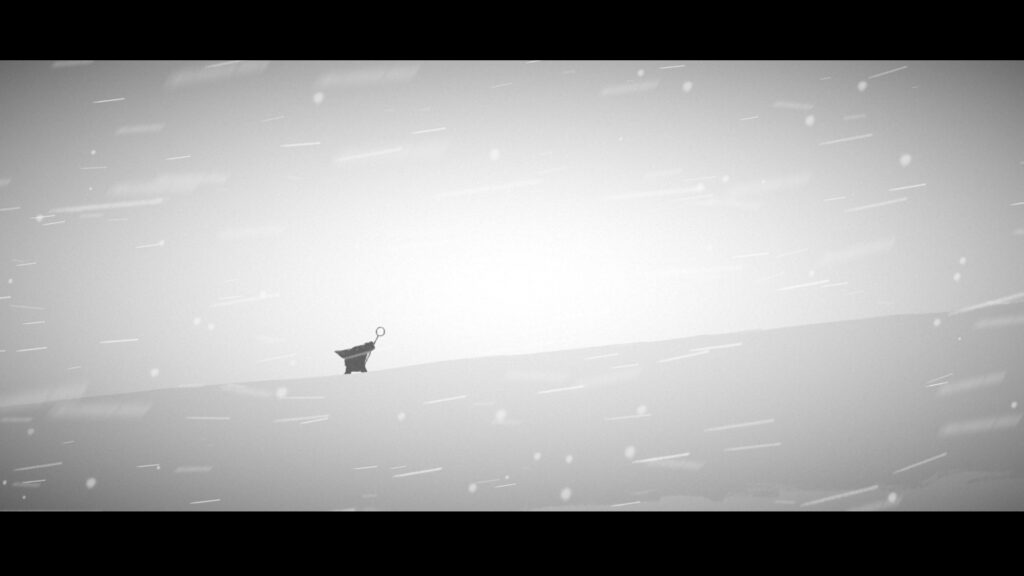
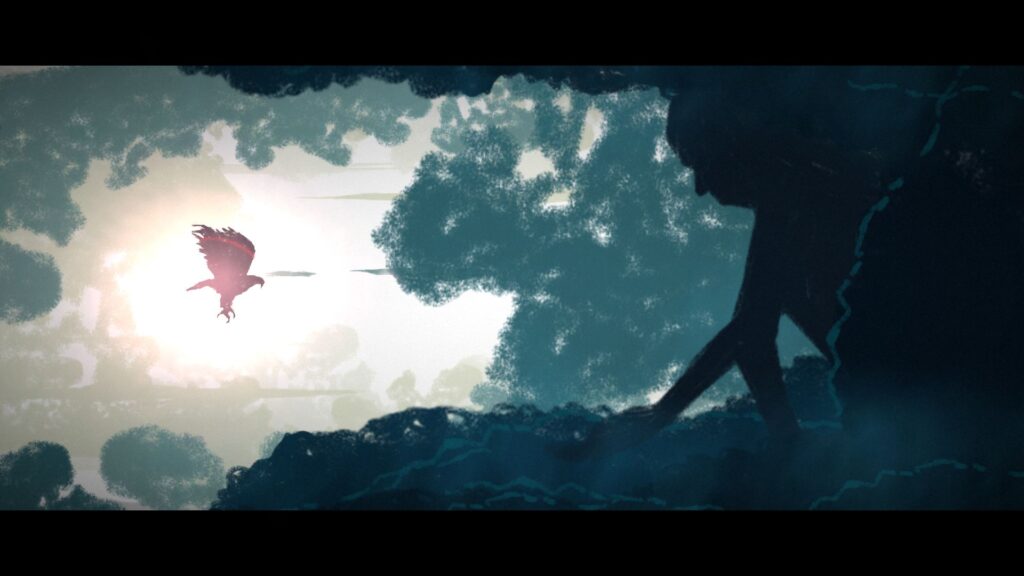
The visual style is based on the Perm Animal Style — a distinctive metalwork aesthetic from Finno-Ugric tribes that existed until the 12th century — and the result is unlike anything else I have seen in this genre. The world is built from monochromatic silhouettes, mostly greys and deep blues, with occasional splashes of colour from the bronze artefacts hidden across the levels.
I think it has a feeling like everything was drawn in chalk. The Lower World in particular — a dark, tar-like underworld full of spirit shapes and ancient creatures — is visually stunning in a way that feels genuinely ancient, like something excavated rather than designed.
Gameplay
I want to be honest here — the gameplay is The Mooseman’s weakest element, and it is worth knowing going in. The core mechanic is elegant: switching between the spirit plane and the material world reveals hidden platforms, creatures, and paths that are invisible without the ability.
It is a simple idea used consistently and inventively throughout all three worlds. But the puzzle design beyond this is modest, and the controls are minimal — you can only move left and right, with an auto-walk mode for atmospheric stretches where nothing threatens you.
This is not a mechanical challenge. It is closer to an interactive folktale than a traditional game, and I mean that as a description rather than a criticism — but players expecting significant puzzle depth will find themselves wanting.
Atmosphere
This is where The Mooseman earns everything. The atmosphere is unlike anything else in this genre — deeply specific, genuinely ancient-feeling, and completely committed to its own world. I felt something moving through the Lower World’s river of sinful souls, the spider-god Cheran’s web, the sacrificial clearing where rabbits are offered to the forest deity Vorsa. The soundtrack — composed by Shvachko and performed partly by the Perm Krai College of Arts and Culture using actual Komi folk melodies — is extraordinary. It does not feel composed for a game. It feels excavated from somewhere older.
One reviewer called it “an academic study in video game form” and I think that framing is genuinely useful. The Mooseman is doing something that very few games attempt — preserving and reconstructing a culture’s mythology through interactive art — and it does it with a reverence and beauty that I find genuinely humbling for a two-person side project.
Also: The Mooseman is one of the most culturally specific games in the genre — if that dimension of it resonated, our feature on cinematic platformers built on real cultural tradition explores exactly why it matters.
🎮 My honest opinion
The Mooseman is an hour or two long and asks almost nothing of you mechanically. I would not recommend it to someone looking for a challenging cinematic platformer — it is not that. What it is instead is one of the most distinctive atmospheric experiences in this entire database — a window into a mythology that most of the world has never encountered, rendered with genuine folk art beauty and accompanied by music that sounds like it belongs to the earth it came from.
I find myself recommending it specifically to people who love this genre for its atmosphere and its capacity for quiet wonder rather than its mechanical challenge. On those terms, The Mooseman delivers something genuinely irreplaceable. And at its modest price point, the question of whether it is worth your time essentially answers itself.
Where can I play The Mooseman?
The Mooseman is available on PC via Steam, Nintendo Switch, Xbox One, PlayStation 4, iOS, and Android. It is very modestly priced across all platforms. A physical PlayStation 4 edition was released in a limited run of 999 copies by Red Art Games — and in a remarkable footnote, it was also one of the last two games ever to receive a physical PlayStation Vita release.
Similar Games
Never Alone (Kisima Ingitchuna) (2014)
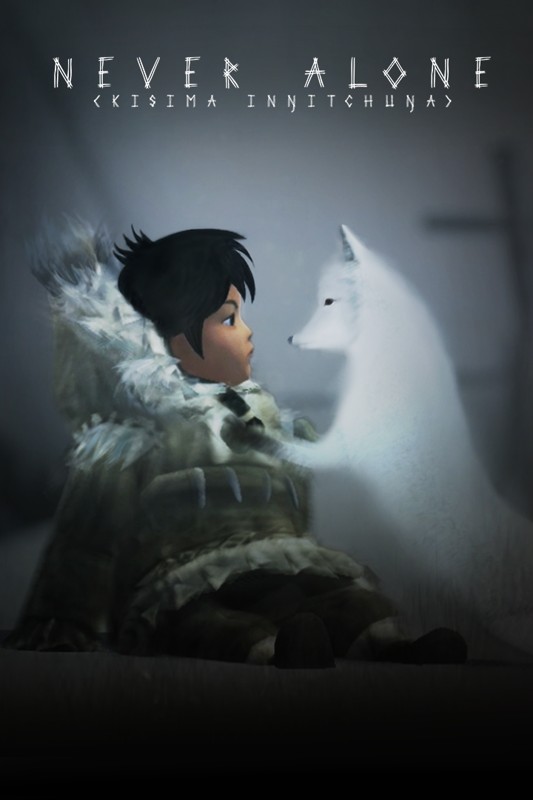
The closest companion piece to The Mooseman in this entire database — another game built in close collaboration with an indigenous community to bring their mythology and folklore into interactive form. Never Alone draws from Iñupiat tradition rather than Finno-Ugric, and is more mechanically substantial, but shares the same commitment to cultural authenticity and the same capacity for quiet atmospheric wonder.
Gris (2018)
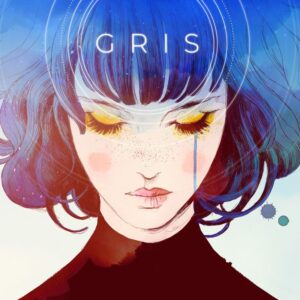
For players drawn to The Mooseman’s slow, contemplative pacing and its use of visual art to carry emotional and narrative weight, Gris offers the closest modern equivalent — wordless, beautiful, and built entirely around an atmosphere that the gameplay exists to serve rather than compete with.
If you are drawn to games that use folklore, mythology, and indigenous cultural traditions to build genuinely distinctive atmospheric worlds, Projection: First Light, Hoa, and A Juggler’s Tale all sit in interesting proximity to The Mooseman — each one finding its own cultural and aesthetic starting point for the same kind of quiet, meaningful journey.