
Descripton
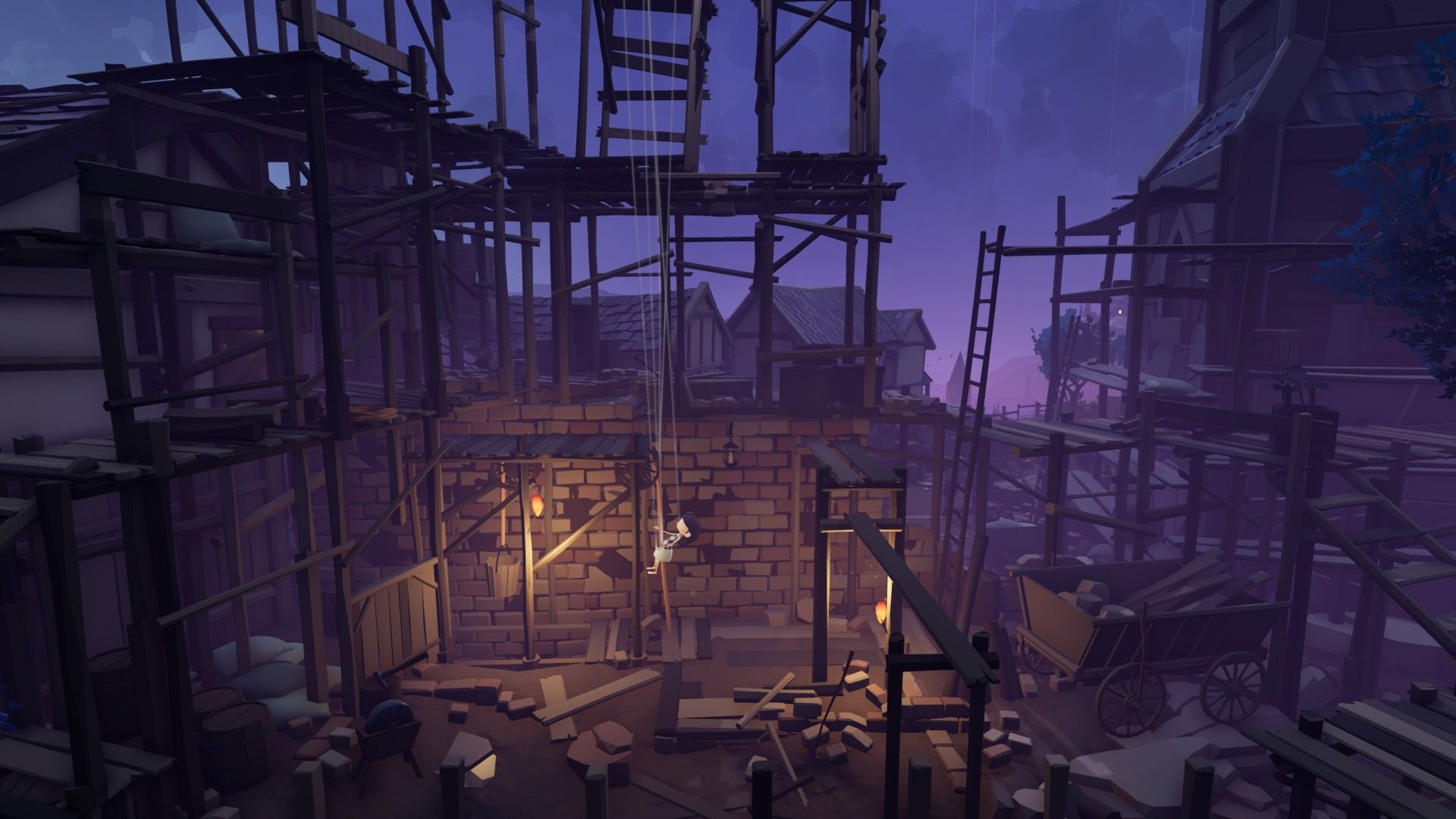
There is a moment early in A Juggler’s Tale where Abby — a marionette juggler, strings and all — tries to walk under a low-hanging branch, and the strings catch. She just… stops. Cannot go further. And the game quietly asks you to figure out how to clear the path for the strings, not just for the character. That is the moment I knew this game was doing something genuinely clever. It is such a simple idea, and it reframes everything you think you know about how cinematic platformers work.
Developed by Munich-based studio kaleidoscube and published by Assemble Entertainment, A Juggler’s Tale is a dark fairytale about a puppet named Abby who escapes the circus that has kept her caged and makes a run for freedom — pursued by her furious former ringmaster and his hired hunter. It is short, beautiful, and a lot darker than its storybook presentation suggests.

Year: 2021
Developer: kaleidoscube
Atmosphere: Dark Fairytale · Theatrical · Melancholic
Visual Style: 2.5D · Puppet Theatre Aesthetic
Focus / Pace: Puzzle Platforming · Narrative-Driven
Platforms: PlayStation 4 · PlayStation 5 · Xbox One · Xbox Series X/S · Windows · Nintendo Switch
Why A Juggler’s Tale stands out
Every character in this world is a puppet. Everyone has strings. And the game commits to that idea completely — both as a visual identity and as a mechanical foundation. Abby’s strings are not decoration. They are a constraint, a puzzle element, and eventually a metaphor. The whole thing hangs together with a coherence that a lot of more ambitious games never manage.
🎬 Did You Know?
A Juggler’s Tale started life as a second-year student project at the Filmakademie Baden-Württemberg in Germany. The founding members of kaleidoscube produced a single chapter as a coursework submission, always envisioning it as a five-chapter experience — and then kept going, eventually completing and releasing the full game as their graduation project. What began as a student exercise became one of the most distinctive cinematic platformers of 2021!
The Story
Abby performs at the circus every night and lives in a cage the rest of the time. One day she has had enough, escapes, and the chase begins. The whole story is narrated in rhyming verse by Jack, a puppeteer who addresses Abby directly — and occasionally pulls her strings to correct her when she falls or makes a mistake. It is a neat narrative device that keeps the theatrical framing alive throughout, and the voice acting is genuinely excellent: warm, a little sinister, and always aware that it is performing for an audience.
What surprised me is how quickly the tone shifts. The early chapters are gentle and whimsical — a small puppet girl wandering through forests and villages — but A Juggler’s Tale gets noticeably darker as it goes. The ending in particular caught me off guard. I will not spoil it, but it earns its emotional weight in a way that a two-hour game really has no right to.
Graphics
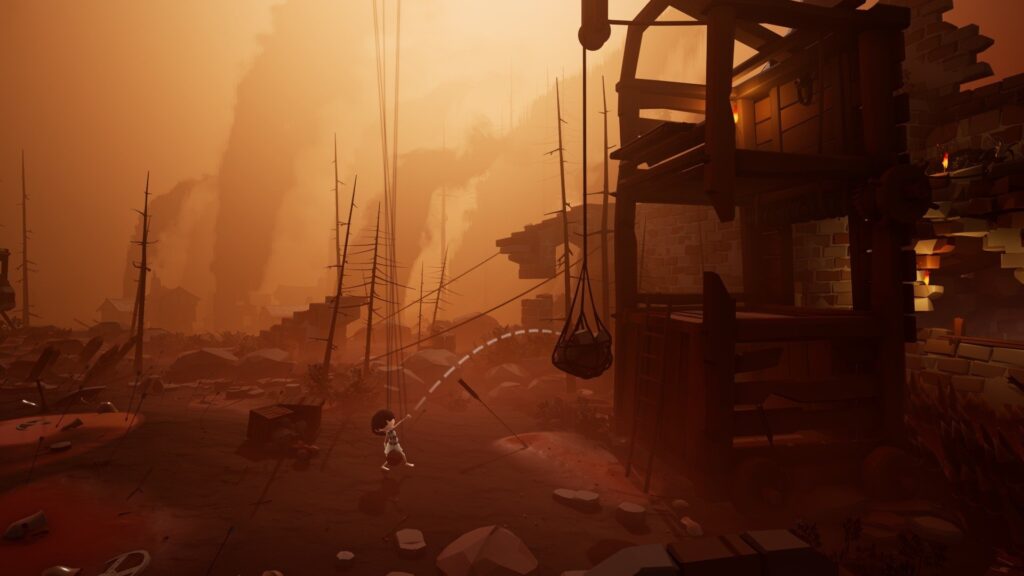
Beautiful and immediately distinctive. The world is presented as an actual puppet show — characters move on visible rods, set pieces assemble themselves around Abby as she moves through them, and the backgrounds layer depth through overlapping planes of illustrated scenery. It reminded me a little of the theatrical staging in Projection: First Light, but where that game leans into shadow and silhouette, A Juggler’s Tale goes for something warmer and more storybook — rich autumn colours, candlelit interiors, mossy forest greens.
Even at its darkest moments — a wet forest at night, a bandit camp in the rain — it looks gorgeous. The art direction never lets the darkness become oppressive, which keeps the fairytale feeling intact even when the story goes to uncomfortable places.
Gameplay
If you have played Limbo or Inside, the basic vocabulary here will feel immediately familiar: walk, jump, push boxes, pull levers, navigate environmental obstacles. What sets A Juggler’s Tale apart is the string mechanic, and I think it genuinely beats both of those games on puzzle creativity. In Limbo and Inside, you only have to think about where your character can go. Here, you have to think about where your character and her strings can go — which means low-hanging branches, overhead platforms, and tight gaps all become puzzles not of height or timing but of clearance and path management.
It sounds like a small addition. It is not. Some of the puzzle solutions I found genuinely satisfying in a way that surprised me — that specific eureka feeling of realising the string is not just an obstacle but a tool, that you can use it to tap objects above Abby’s reach that she could never jump to herself.
The one weak spot is the throwing mechanic. Picking up a rock, angling the throw, and releasing it feels fussier than it needs to be, and I accidentally dropped things far more often than I intended. It is a minor frustration in an otherwise tight design.

Pacing
At two to three hours, A Juggler’s Tale moves at exactly the right pace. Each of its five chapters introduces a new environment and a new wrinkle to the string mechanic — a torch that can burn away obstacles, a section where your strings behave differently as the story shifts. It never outstays its welcome, and the escalating darkness of the narrative gives the pacing a natural momentum that carries you through to the end. I played it in a single sitting without really noticing the time passing, which is probably the best thing I can say about a game this length.
Atmosphere
The narration carries a lot of the atmosphere here, and it works beautifully. Jack’s rhyming commentary gives the whole thing the feeling of a bedtime story being told slightly wrong — a little too knowing, a little too comfortable with what is about to happen to Abby. The score is understated but effective, shifting between playful and melancholic as the chapters progress.
The overall mood sits somewhere between A Tale of Paper’s warmth and the unease of Little Nightmares — not scary, but never entirely safe either. That balance is hard to get right, and kaleidoscube nails it.
A Juggler’s Tale sits in interesting company when it comes to cinematic platformers rooted in real artistic traditions — our feature on the subject explores where it fits.
🎮 My honest opinion
A Juggler’s Tale is one of those games that punches well above its weight. For a graduation project from a student studio, the level of craft here is remarkable — the string mechanic is genuinely inventive, the narrative framing is smart, and the ending stuck with me longer than I expected. It is not a long game and it is not a difficult one, but it is a complete and confident piece of work that knows exactly what it wants to be.
If you have ever wanted a cinematic platformer that uses its central gimmick as something more than just a visual trick — where the mechanic and the story are actually saying the same thing — this is one of the best examples of that in the genre.
The puppet string mechanic puts A Juggler’s Tale in rare company — find out why it made the list of the most inventive cinematic platformers ever made.
Where can I play A Juggler’s Tale?
A Juggler’s Tale is available on PC via Steam and on PlayStation 4, PlayStation 5, Xbox One, Xbox Series X/S, and Nintendo Switch. A bundle including the digital artbook is available on Steam. At its price point, it is an easy recommendation.
Similar Games
Projection: First Light (2020)
Like A Juggler’s Tale, Projection: First Light builds its entire identity around a single theatrical art form — shadow puppetry — and makes that form the foundation of both its visuals and its mechanics. Both games are short, handcrafted, and far more thoughtful about their central idea than most games twice their length.
Little Nightmares 2 (2019)
If the darker undercurrent of A Juggler’s Tale resonated with you — the fairytale world that gets progressively less safe — Little Nightmares takes that feeling and runs with it into full horror territory. A different tone entirely, but the same DNA: a small, vulnerable protagonist in a world that was never designed for her. Usually i recommend the first one, but let’s be crazy and go for number two!
If you are drawn to cinematic platformers that use their presentation — puppet theatre, shadow play, storybook illustration — as genuine storytelling tools rather than decoration, A Tale of Paper, Hoa, and The Mooseman all live in the same thoughtful corner of the genre.