

Description
Feist is a game that started in 2008, got nominated for Excellence in Visual Art at the Independent Games Festival in 2009 — before Limbo even existed — then quietly disappeared for six years while its two-person Swiss development team kept working on it alone.
When it finally released in 2015, the silhouette-based atmospheric platformer had become a crowded space, and Feist arrived looking superficially like a Limbo clone to anyone who glanced at a screenshot. That comparison is understandable and also slightly unfair. Feist is doing something genuinely different — and I find it more interesting than its modest profile suggests.
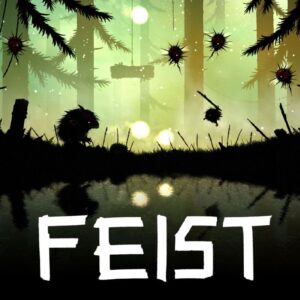
Year: 2015
Developer: Bits & Beasts Atmosphere: Wilderness · Dangerous · Tense
Visual Style: Silhouette Art · Organic Animation
Focus / Pace: Action Platforming · Survival-Oriented
Platforms: Windows · macOS · Linux · PlayStation 4 · Xbox One · Nintendo Switch
Story & Presentation
A small, fuzzy creature escapes from a cage and sets off through a dangerous forest to rescue its kidnapped mate. That is the entirety of the story, told through a handful of brief cutscenes and the logic of the world around you. I find this simplicity entirely appropriate — Feist is not interested in narrative complexity. It is interested in the specific, primal feeling of being very small in a world full of things that want to eat you, and the story serves that feeling rather than competing with it.
The visual inspiration — cited by the developers as The Dark Crystal, Hedgehog in the Fog, and illustrated children’s books like Where the Wild Things Are — gives Feist a distinctly organic, hand-crafted quality that I noticed immediately. This does not look like a computer game trying to look like a painting. It looks like a painting that has decided to become interactive.
Graphics
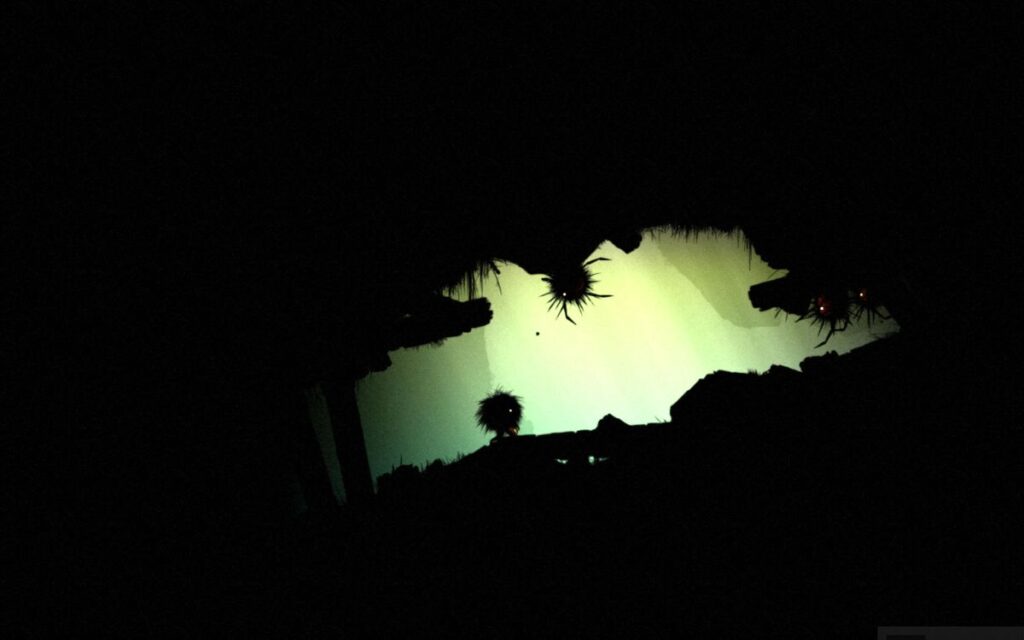
The silhouette art is beautiful and the comparison to Limbo is visually fair — dark foreground figures against richly coloured backgrounds, forests and caves rendered with an atmospheric contrast that creates genuine visual depth. But where Limbo leans into industrial grey and oppressive emptiness, Feist feels genuinely alive. Rain falls. Light shifts. The forest breathes around you.
What I really enjoyed is how the environment feels like an ecosystem rather than a set — logs roll, spikes impale, branches sway — and the creature animations in particular are remarkable, each beast moving with a physicality that feels genuinely animal.
Gameplay
This is where Feist earns its distinction from Limbo most clearly, and it is the thing I want to emphasise most. Feist does not use scripted sequences or preset enemy behaviour. Everything is governed by physics and AI — enemies react to the player and to each other, objects interact dynamically, and the same encounter can play out differently every time. I noticed this immediately: enemies that I expected to simply patrol instead chased me into traps, grabbed objects I had put down, and responded to sounds in ways that felt genuinely unpredictable.
The combat is survival-oriented and scrappy — grabbing sticks, throwing rocks, luring enemies into their own traps, knocking out flies and using them as improvised weapons. There is no health bar, and the creature can only take a few hits before dying, which keeps every encounter tense. Where I felt the game strains is difficulty — the boss fights in particular can spike into frustrating territory, and the lack of any guidance occasionally crosses from organic into opaque. But when it flows, it flows like nothing else on this list.
🕹️ Did You Know?
Feist was nominated for Excellence in Visual Art at the Independent Games Festival in 2009 — a full year before Limbo was released. The game that would go on to define the silhouette platformer aesthetic was already being compared to Feist’s art style when Limbo finally arrived. Two people in Zurich had been quietly building this world since 2008, and by the time the genre caught up with what they were doing, they had spent six years refining it into something no one else had quite managed to replicate.
Atmosphere
The atmosphere is genuinely unsettling in a way I find hard to pin down. The forest feels ancient and indifferent — not malevolent, just completely unconcerned with your survival. The soundtrack by Tomek Kolczynski is sparse and haunting, sitting at the edge of ambient and organic sound in a way that makes the world feel vast and alive. Combined with the dynamic environment and the creature animations, Feist creates a sense of place that I find more immersive than many games with far larger budgets.
🎮 My humble opinion
Feist is a game I feel deserves more credit than it typically gets, partly because the Limbo comparison follows it everywhere and partly because it arrived at a moment when the silhouette platformer had become genuinely crowded. Taken on its own terms — a physics-driven, emergent survival experience built around the primal feeling of being small and fragile in a dangerous natural world — it is doing something that nobody else in the genre has quite replicated.
The difficulty can work against it, and the boss fights are the least graceful part of the experience. But the combination of the organic visuals, the dynamic AI, and the specific scrappiness of its survival combat make it a genuinely distinctive entry in the genre. Seven years in development, two people, and a game that started before Limbo existed. That is worth something.
Where can I play Feist?
If Feist resonated with you, these two games share its commitment to brutal survival, small vulnerable protagonists, and worlds that feel genuinely dangerous rather than designed around your comfort.
Similar Games
Unto the End (2020)
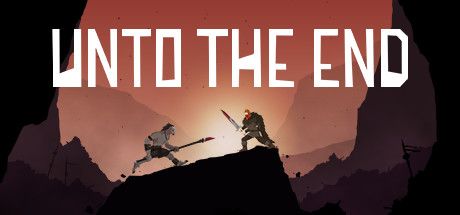
Unto the End shares Feist’s most distinctive quality — the scrappy, improvised, brutally unforgiving combat against creatures that feel genuinely dangerous rather than mechanically predictable. Both games ask you to read your environment, use objects around you, and accept that death is information rather than failure. If the survival combat of Feist is what hooked you, this is the most direct next step.
Orphan (2018)

Orphan shares Feist’s core premise almost exactly — a small, silent creature moving through a vast hostile wilderness that has no particular interest in your survival. The post-apocalyptic natural world, the silhouette-heavy visual language, and the sense of ancient environmental danger place it right alongside Feist in the genre’s darker, more primal corner.
If you are drawn to games that use silhouette art, natural environments, and the specific terror of a small creature in a world built to kill it, Albert and Otto, Never Alone, and The Eternal Castle Remastered all sit in interesting proximity to Feist — each one finding its own corner of that wild, vulnerable feeling.