Description
I came away from the original Planet of Lana genuinely charmed but with one lingering thought: the puzzle design felt like it had more room to grow. The world was extraordinary, the atmosphere was warm and generous, but the mechanics occasionally felt like a vehicle for the visuals rather than something interesting in their own right. Planet of Lana II: Children of the Leaf addresses that criticism directly — and in doing so, becomes the more complete and satisfying game.
Two years have passed since the events of the first game. Lana and Mui are back on their home planet, the machines now pacified. But a new threat has emerged — a faction called the Dijinghala, who are mining the planet’s resources in ways that are putting everything at risk. Lana’s sister falls ill, a cure requires ingredients scattered across the planet, and so begins another journey. It is a simpler premise than the first game’s apocalyptic machine invasion, but I think it serves the story well — this time the threat is slower, more political, more ambiguous, and considerably more interesting.
Year: 2026
Developer: Wishfully
Atmosphere: Sci-Fi · Emotional · Dreamlike
Visual Style: Hand-Painted 2.5D · Cinematic Landscapes
Focus / Pace: Puzzle Platforming · Relaxed
Platforms: PlayStation 4 · PlayStation 5 · Xbox One · Xbox Series X/S · Windows · Nintendo Switch
Planet of Lana I vs. II — What Does the Sequel Bring?
This is the question that matters for anyone who played the original, and I think the honest answer is: meaningfully more, in all the right places.
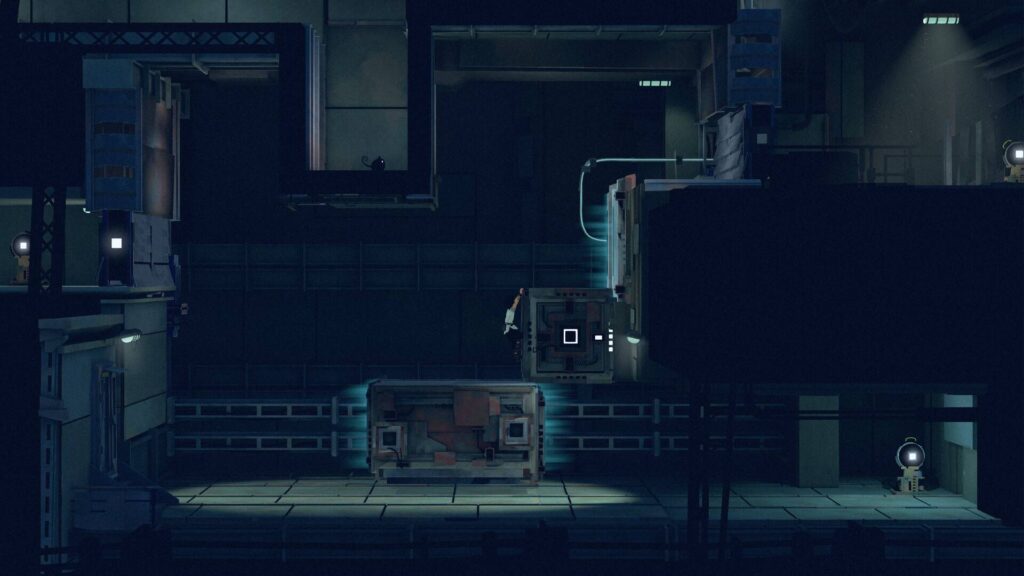
The first game was beautiful but gentle — puzzle solutions arrived quickly, and Mui’s role, while charming, was fairly limited. Children of the Leaf expands both significantly. Lana now has a slide and a wall jump, which makes traversal feel noticeably more fluid and opens up more varied platforming sections. More importantly, Mui can now take control of creatures in the natural world alongside machinery — small fish that create ink clouds for cover, puffball creatures that leave flammable trails, large bugs that can move water and activate mechanisms. When the game asks you to combine Lana’s mechanical hacking with Mui’s animal control and time the whole thing against a moving obstacle, it genuinely makes you feel clever in a way the first game rarely did.
The story is also considerably more ambitious. Where the original kept its world deliberately mysterious, Children of the Leaf starts to answer some of those questions — about Mui’s origins, about the history of the planet, about the relationship between its civilisations and the machine entities. Some of those threads do not fully resolve — the ending lands on a cliffhanger that I found slightly frustrating — but the attempt to say something more complex about coexistence and the cost of progress gives the game a thematic weight the first instalment was missing.
The Story
Lana’s sister Ila is sick. The cure requires Lana to travel far beyond her village, through new territories and into contact with peoples and factions she has never encountered before. The story is told in the same invented language as the original — no English subtitles, no translated dialogue — and everything is communicated through expression, gesture, and the details of the environments.
I noticed that this approach works even better in the sequel because Wishfully have become more confident at using it. Brief updates on secondary characters cut between Lana’s sections in ways that build a genuine sense of a world in motion rather than a single linear journey. The subplot about the Dijinghala — and the ethical questions around whether controlling machines is meaningfully different from enslaving them — is more interesting than anything the first game attempted narratively. The ending, though abrupt, hit me harder than I expected given how telegraphed the final reveal was.
Graphics
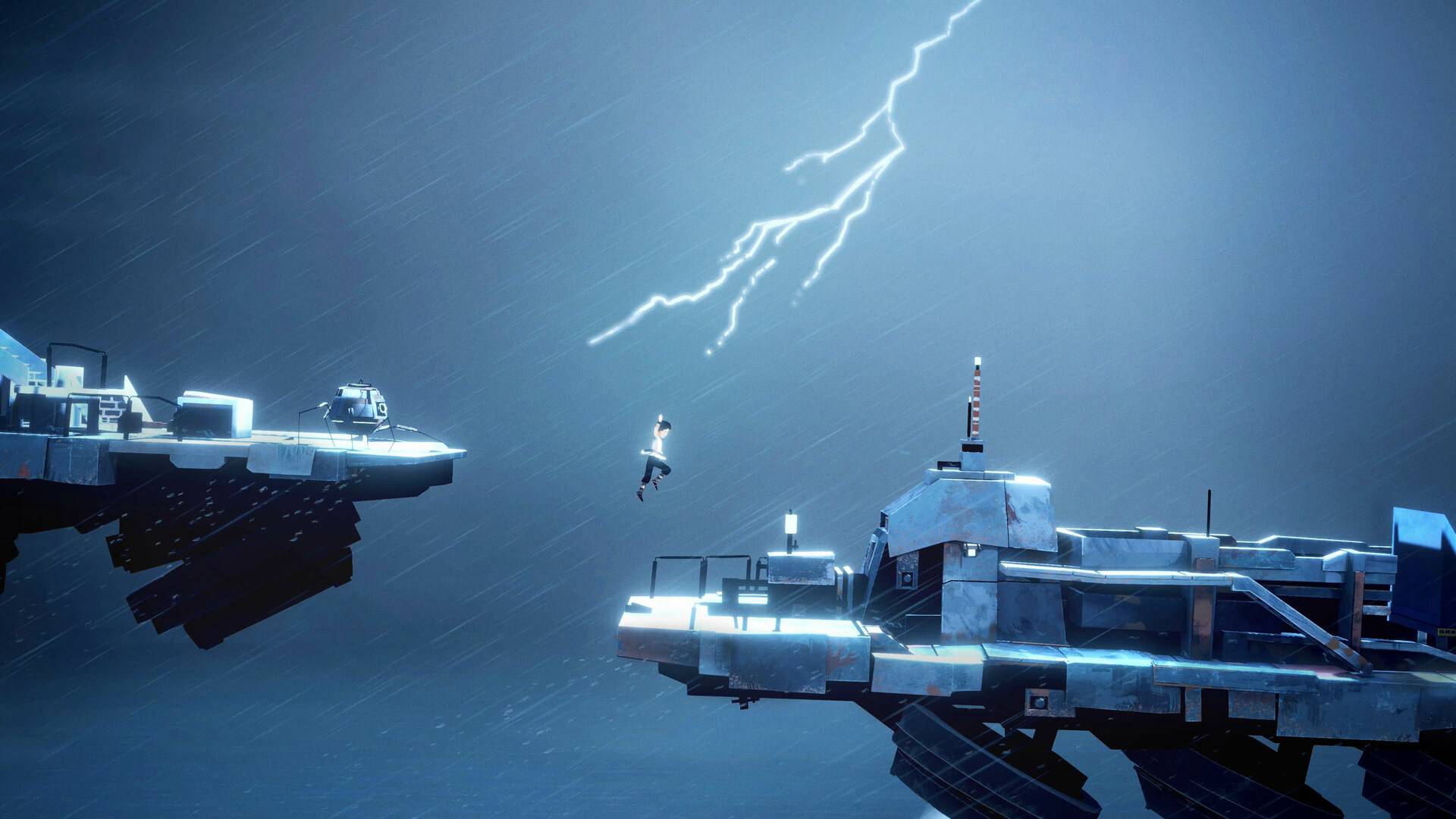
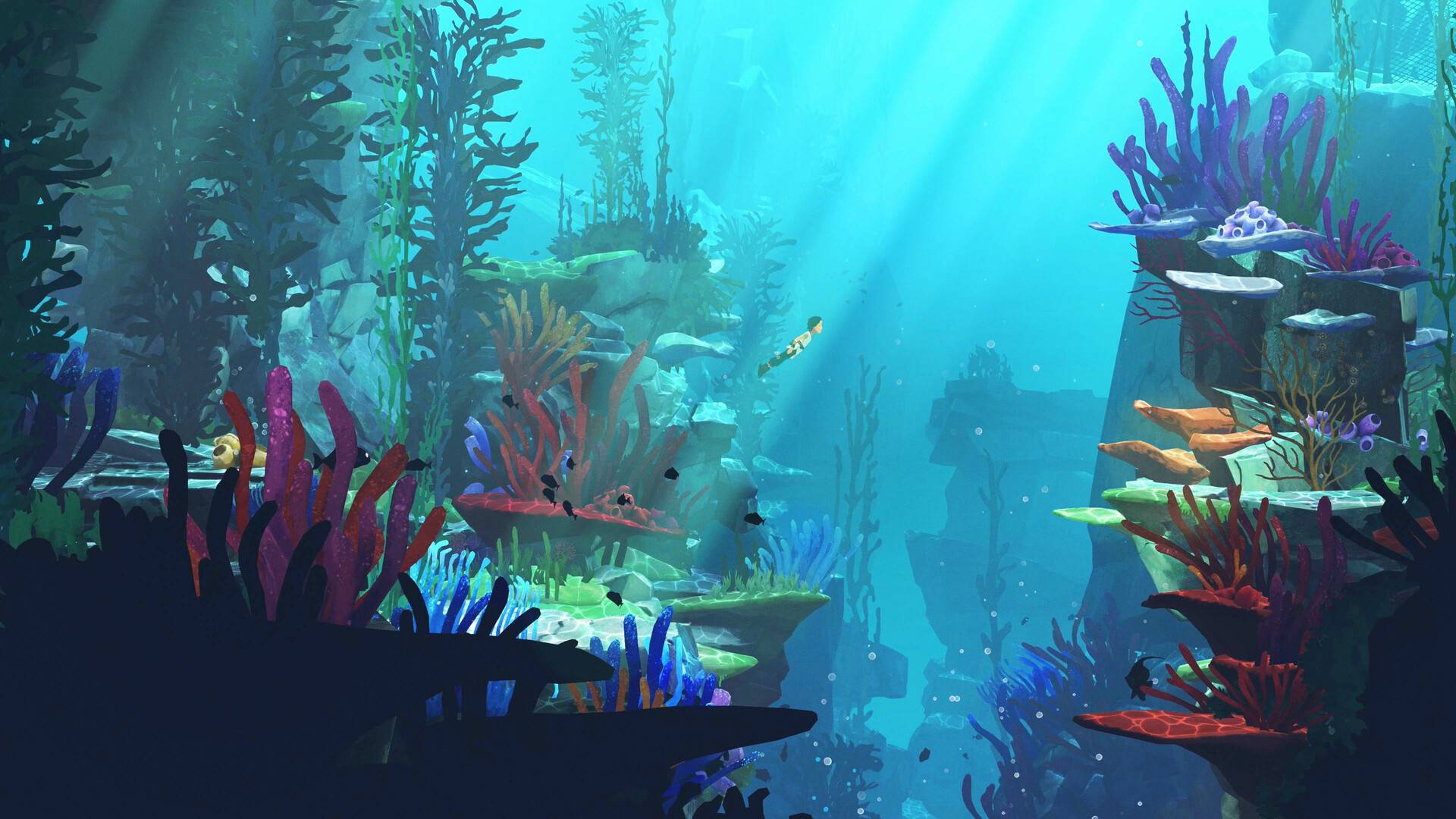
If anything, Children of the Leaf is more visually impressive than its predecessor — which I did not think was possible. The environments are more varied: snowy mountain peaks, deep underwater sections, dense jungle, ancient ruins, flooded valleys. Each biome is painted with the same extraordinary care as the original, and I found myself doing the same thing I did in the first game — stopping to look around, reluctant to move forward and leave a particularly beautiful screen behind.
I caught myself doing something I have never done with a game before — leaving it running on my TV while doing other things around the house, just for the ambiance. The art and the score are that good – it is sort of a moving painting!
Gameplay
This is where the sequel genuinely improves on its predecessor in ways that matter. The puzzle design is more layered, more inventive, and occasionally genuinely head-scratching in the best possible way. The combination of Lana hacking machines, Mui controlling animals, and both of them working against environmental hazards simultaneously creates moments of real satisfaction that the first game’s simpler structure could not deliver.
The difficulty curve is well calibrated — new mechanics are introduced clearly and then tested in increasingly creative combinations before the game moves on. I noticed a few late-game puzzles where juggling Lana’s controls, Mui’s commands, and the behaviour of possessed creatures simultaneously gets slightly overwhelming, but those moments are rare enough to feel like peaks rather than a persistent problem.
The floaty controls that some players found frustrating in the original are still present here, and still occasionally cause minor friction in timed sequences. It is a stylistic choice that I have made my peace with — the slight sluggishness is part of what makes Lana feel fragile and human — but it is worth knowing going in.
Atmosphere
Takeshi Furukawa returns as composer, and the score is even more expansive this time — the original’s key musical motif reappears and develops across the runtime in ways that are genuinely moving. The underwater sections, in particular, have a sound design that I found completely immersive: strange, slightly unsettling, and beautiful in equal measure.
The game still communicates entirely through invented language and visual storytelling, and I think by this point Wishfully have mastered that approach. There were moments in the final act where I felt more emotionally invested in characters I had never heard speak a word of real dialogue than I do in games with hours of voiced cutscenes. That is a remarkable achievement.
🎮 My honest opinion
Planet of Lana II: Children of the Leaf is the game the first Planet of Lana was pointing toward — more ambitious, more mechanically interesting, and narratively braver. It does not reinvent the formula, but it deepens it in all the right places, and the result is one of the best cinematic platformers released in recent years.
If you played the original and wanted more — more puzzles, more world, more story — this delivers. And if you never played the first game, there is a recap sequence at the start that gets you up to speed, making it perfectly accessible as a starting point too.
I left it wanting a third game immediately. Given that the ending is a cliffhanger, I suspect that is exactly what Wishfully intended.
Where can I play Planet of Lana II?
Planet of Lana II: Children of the Leaf is available on PC via Steam (get a discounted Steam key on Fanatical), PlayStation 4, PlayStation 5, Xbox One, Xbox Series X/S, Nintendo Switch, and Nintendo Switch 2. It is also available via Xbox Game Pass. The original Planet of Lana is widely available on the same platforms and worth playing first, though the sequel includes a recap for newcomers.
Games similar to Planet of Lana II
Planet of Lana (2023)
The obvious place to start if you have not already. Shorter, gentler, and with simpler puzzles — but the same gorgeous world, the same wordless storytelling, and the same Lana and Mui. Children of the Leaf is the better game, but the original is still well worth your time.
Hoa (2021)
Hoa shares Planet of Lana II’s commitment to hand-painted visual beauty and a world that prioritises warmth and wonder over challenge. Both games are about being somewhere genuinely lovely rather than somewhere threatening, and both trust their art direction and soundtrack to carry the emotional weight completely.
If you are drawn to cinematic platformers that combine hand-painted beauty with genuine emotional storytelling — games that treat every screen as a composition worth pausing for — Neva, Gris, and Voyage all belong in the same conversation.